

Have you ever pictured your aquarium coming alive with a gentle glow?
Freshwater angelfish make a lovely addition, filling your tank with warmth and splashes of bright color.
Originating from the warm streams of the Amazon, these elegant fish bring a lively feel to any setting, much like morning sunshine glistening over water.
This friendly guide will walk you through creating a perfect spot for your angelfish so they can truly shine and fill your aquatic haven with extra joy.
Complete Guide to Freshwater Angelfish Care
Freshwater angelfish come from the warm, lively waters of the Amazon basin. These beautiful fish grow to about 6 inches in a home tank, showing off graceful fins and stunning stripe or marbled markings that instantly catch your eye. They have a gentle charm that lights up any aquarium, like the first light of dawn over a quiet stream.
Your tank should feel as natural as a tropical stream. Aim for water temperatures between 78 and 82°F, a pH between 6.5 and 7.2, and water hardness under 10 dGH. Think of it like setting up a cozy little room for your fish, adjust the temperature and water chemistry so that every splash feels like a gentle, welcoming hug.
Angelfish have a semi-aggressive personality. They do best in a community with other calm species. They eat a mix of foods, from quality flakes to live, freeze-dried, or tubifex treats. This varied diet helps keep their colors bright and their health top-notch. Their breeding is pretty simple when the tank conditions are just right, so you might even get to see them form natural pairs right before your eyes.
Regular care and attention to water quality will keep your aquarium sparkling. When your tank is neat and balanced, these majestic fish shine like precious jewels underwater. Enjoy every moment as you watch your little aquatic world come alive.
Freshwater Angelfish Species Diversity and Pattern Variations

There are three main types of freshwater angelfish that bring a splash of beauty to any aquarium. The most common one is P. scalare. This friendly fish usually grows to about 6 inches in home tanks, though in the wild it can stretch up to 10 inches. It’s like having a graceful dancer swirling in your water.
Then there’s P. altum, the big shot among them. Its body measures around 7 inches and its fins can reach up to 9 inches in height, giving it a majestic look as it moves through the water.
Finally, the rare P. leopoldi is a real jewel for collectors because of its unique appeal. Enthusiasts treasure it just like finding a rare seashell on the shore.
Most of the angelfish we see in homes come from P. scalare. Over the years, careful breeding has led to many eye-catching types. Many aquarium fans love choosing from a range of styles like silver, zebra, koi, black lace, golden, marble, red, and even super red. Each type has its own special coloring and fin shape that tells its story.
These fish show an amazing variety of patterns. Some have bold stripes that seem to ripple over their bodies, while others boast soft, marbled designs. Imagine a koi morph gliding by, a moving brushstroke of color that captivates anyone who watches. These subtle details give you endless ways to create a little piece of living art in your own tank.
Pterophyllum Aquarium Setup Guide for Freshwater Angelfish
When setting up a new home for your freshwater angelfish, remember that space is key. These graceful fish need a tall tank so they can flutter their long, delicate fins without bumping into the glass. For a pair, a 20-gallon tank is a great start, giving them plenty of room to swim around like elegant dancers.
Keep the water flow calm and gentle, much like a slow-moving stream in the heart of the rainforest. A filter with an adjustable flow not only cleans the water by removing debris but also maintains a soothing, natural rhythm. Think of your filter as the beating heart of your aquarium, quietly circulating water to create a peaceful underwater world.
It’s also important to keep the water at just the right temperature. Aim for a warm range between 78 and 82°F each day, making your angelfish feel as cozy as if wrapped in a soft blanket. Along with temperature, balancing the water chemistry is essential. Try to maintain a pH between 6.5 and 7.2 and keep water hardness below 10 dGH, which mirrors the soft waters these fish love.
When arranging your tank, you have plenty of creative freedom. Whether you’re going for a bare setup, a lively community tank, or a vibrant planted display, every option works. Adding plants like java fern is a smart move since they naturally soak up extra nutrients, keeping the water clear and healthy. Imagine designing your aquarium like decorating a cozy living room, each element, from the filter to the plants, plays its part in creating a welcoming habitat that makes both you and your angelfish smile.
Nutritional Guidelines and Feeding Practices for Freshwater Angelfish

When caring for your angelfish, offering a mix of foods is the secret to keeping them vibrant and healthy. Try giving them a blend of krill flakes, freeze-dried or frozen bloodworms, tubifex worms, and Hikari Vibra Bites. Frozen bloodworms are a great treat, especially when you're getting your fish ready to breed.
Feeding time is a fun, quick ritual. Feed your angelfish two to three times a day using just a small portion they can finish in about two minutes. For example, you might sprinkle a tiny bit of krill flakes with a couple of bloodworms and watch them nibble happily away. This schedule makes sure they get all the nutrients they need without too much extra food left behind.
Remember to scoop out any uneaten food soon after feeding. Leftovers can cause ammonia levels to rise, which isn’t good for your tank's balance. A quick, simple cleanup after each meal helps keep the water clear and the environment stable. When your fish eat up their food fast and any extras disappear, they can show off their bright colors and even get ready to breed.
A steady, thoughtful feeding routine is like hosting a mini underwater banquet, one that ensures your lovely angelfish stay healthy and full of life.
Compatible Tankmates and Community Dynamics for Angelfish
Angelfish can show a bit of rough behavior sometimes, so choosing the right friends for your tank is really important. Friendly fish like tetras, gouramis, and rasboras are great choices because they swim gently around the tank and match the angelfish's elegant style. Imagine a small school of rasboras circling around like a soft, protective current that keeps the peace.
It’s best to avoid fin-nipping species like tiger barbs. Their tendency to nip at delicate fins can stress out your angelfish and disturb the calm of your underwater world. This is extra important during breeding times, when angelfish might get more protective of their space.
Regularly watching what’s happening in your tank is a smart move. Small groups of calm fish can help keep things balanced, ensuring every fish has enough room to shine. When every species plays its part, it creates a community that flows together as smoothly as water over rocks.
Common Health Issues and Disease Prevention in Freshwater Angelfish

Keeping a close eye on your angelfish is the first step to a happy, healthy tank. Watch out for signs like tiny white spots (ich), crumbling fins (fin rot), a fuzzy look (velvet), or even a pitted head (hole-in-head disease). When a fish starts swimming odd or seems less interested in food, it might be trying to tell you something. Ever notice a fish with fins held tight or quick gill movements? Those could be gentle hints of trouble, like ich beginning to show with salt-like spots on its body.
It helps to act fast. Always keep new fish in a separate tank for about two weeks so you can catch any sneaky illnesses before they join the rest of your school. Keeping the water clear and balanced is just as important as feeding; think of regular water changes like letting a cool breeze freshen up a stuffy room.
If you spot an infection, treat your fish gently with safe options like copper-based medicine or methylene blue, just be sure to follow the label directions carefully. A simple, caring routine and tidy tank can keep your angelfish thriving and their colors glowing. In truth, a little daily check really turns your aquarium into a safe, joyful home for your fishy friends.
Breeding Techniques for Freshwater Angelfish: Pairing to Fry
Start off by gathering around six young angelfish, each about 2–3 cm long. This lets your fish choose their own partners naturally. As they grow, keep an eye out for one pair that sticks together when they reach around 3–4 inches in size. When you see a natural pair forming, it's a great sign they’re ready for breeding.
Next, set up a special breeding tank that holds about 20 gallons. A taller tank works best because it gives plenty of room for their long, flowing fins. Add something vertical like a smooth rock or a sturdy plant stem where the fish feel safe to lay their eggs. Make sure the water stays warm around 80°F so it feels just like home.
Get your future parents in top shape with a protein-rich diet. You can feed them frozen treats such as bloodworms or brine shrimp to build their strength for spawning. Once the pair lays their eggs, you should see them hatch in 2–3 days, and in about 5–7 days, the little fry will start swimming freely.
Keep the water clean with frequent small changes and ensure the flow is gentle to protect the eggs and fry. Also, a slow and careful acclimation for any new fish, along with a short quarantine, can save you from unnecessary worries. This setup creates a cozy, nurturing spot where you can enjoy watching your angelfish bring new life into the tank.
Maintenance Scheduling and Water Quality Management for Angelfish Tanks
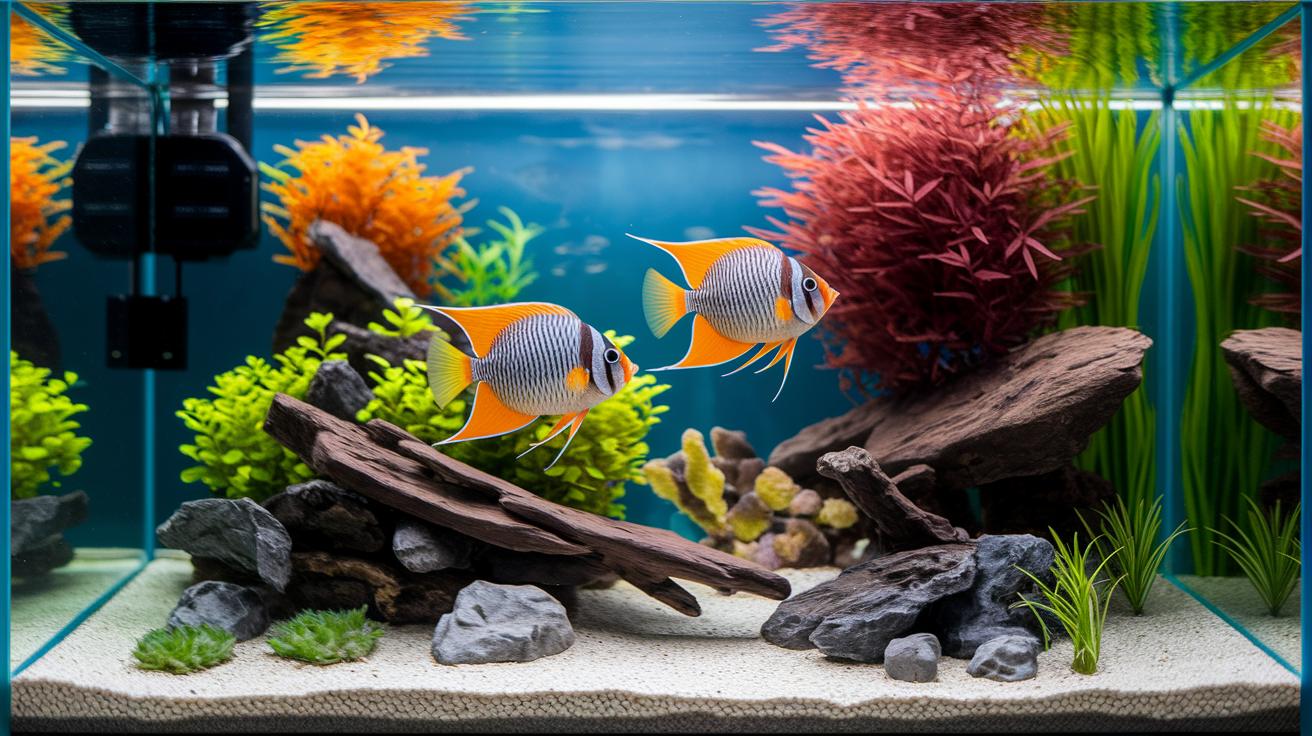
Keeping your angelfish happy starts with a consistent, caring routine. Every week, change 25% of the water to keep your tank feeling fresh and balanced, kind of like giving your fish a little spa day that makes all the difference.
It’s a good idea to test your water once a week using a liquid test kit. This helps you check levels of ammonia, nitrite, and nitrate, which are like a quick health check for your tank. If you notice even a small spike in ammonia, that’s your cue to tidy things up a bit more. And always use a dechlorinator with each water addition to shield your fish from harsh chemicals.
Here’s a handy checklist to keep everything running smoothly:
- Weekly: Change 25% of the water and test it for ammonia, nitrite, and nitrate.
- Daily: Check the pH, temperature, and hardness of the water, imagine it as taking the heartbeat of your tank.
- Monthly: Gently clean the filter media to keep the helpful bacteria undisturbed.
- During water changes: Vacuum the substrate and scoop out any debris, much like tidying up a cozy room.
Think of your tank as a little underwater world that needs a regular refresh, just like you might clear away clutter at home. Regular upkeep not only brightens the water but also creates a healthy and happy space where your angelfish can swim and shine every day.
Purchasing Freshwater Angelfish and Understanding Market Trends
Before you hit that “buy now” button, here’s a fun fact: many online shops sell tiny scalare juveniles that are only about 0.8 to 1.2 inches long, with bright, clear eyes and strong fins, a clear sign they’re off to a great start. In our world of angelfish, most are P. scalare, so it makes sense to pick fish that look healthy right from the beginning.
When you shop online, you’ll notice prices usually range from $5 to $20 per fish, with the cost changing a bit depending on the type. It’s a good idea to compare prices at trusted sellers who care about sustainable breeding. If you have a local breeder nearby, they’re a great choice too because they often offer fish that are disease-free and already used to their surroundings. Just remember, in the winter months, the fish might be harder to find, so planning ahead can really help.
Here are a few tips to keep in mind:
- Look for young angelfish with bright eyes and fins that aren’t damaged.
- Check the reputation of the seller and make sure they source their fish ethically.
- Think about shopping both online and locally to find the best fish for your tank.
And if you’re also on the hunt for excellent aquarium supplies, check out this recommended link for everything you need to create a thriving aquatic home.
Final Words
In the action, we explored species traits, tank setup, feeding habits, and community dynamics to create a cozy home for your freshwater angelfish. We touched on optimal water conditions, neat decor ideas, and effective care practices that keep your tank lively.
The guide shared practical care tips, from managing water quality to tackling health issues, making it easier to build and maintain an inviting aquatic habitat. Enjoy watching your fish thrive in their safe, balanced underwater world.
FAQ
Freshwater angelfish for sale
Searching for freshwater angelfish for sale means finding trusted breeders or specialized stores. Healthy fish display clear eyes and intact fins, and options vary by morph and availability.
Freshwater angelfish size
The freshwater angelfish size shows that adults typically grow to about 6 inches in body length in home aquaria, giving them room to display graceful, wing-like fins.
Freshwater angelfish price and Angel fish price
The freshwater angelfish price usually ranges between $5 and $20 per fish. Prices depend on factors like size, morph, and local market conditions.
Koi Angelfish
The koi angelfish features unique, vivid color patterns similar to koi carp, offering a captivating display in your tank that stands out from traditional morphs.
Platinum Angelfish
The platinum angelfish is a special morph known for its metallic shimmer, providing a standout accent in your aquarium that appeals to enthusiasts.
Saltwater angelfish
The saltwater angelfish live in ocean habitats and require a different setup and care than their freshwater cousins, making their care unique and specialized.
Freshwater angelfish tank mates
The freshwater angelfish tank mates should include peaceful species like tetras, rasboras, or gouramis, which help maintain a balanced community without fin-nipping issues.
How many freshwater angelfish should be kept together?
The number of freshwater angelfish to keep together is best when grouped in threes or more, as this setup helps reduce aggression and promotes a harmonious tank environment.
Are freshwater angelfish friendly?
The freshwater angelfish friendly nature is seen in their generally peaceful demeanor when kept with compatible species, although they can show mild aggression toward fin-nippers.
Are freshwater angelfish hard to keep?
The freshwater angelfish hard to keep question is answered by proper care—maintaining stable water conditions, providing an appropriate tank, and following a routine all make their care manageable.
What is the prettiest freshwater angelfish?
The prettiest freshwater angelfish often depends on personal taste; many admire morphs like koi, platinum, and zebra for their distinct and eye-catching patterns.