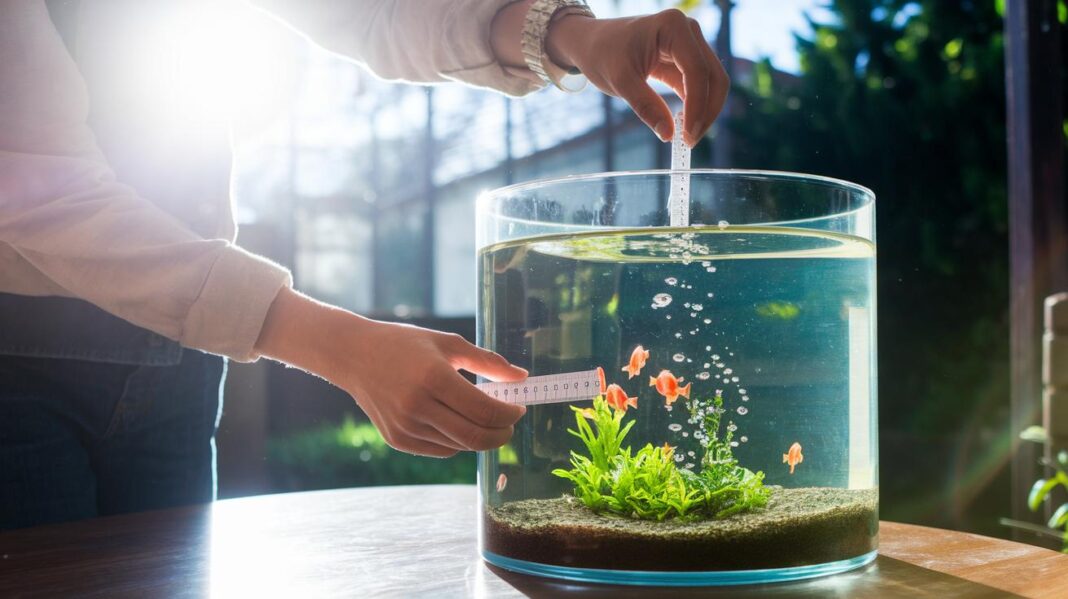

Have you ever stopped to wonder if your fish tank really holds exactly what it claims? The fish tank calculator is like a friendly guide that helps you know your aquarium inside out. Just pop in your tank’s length, width, and height, and it quickly tells you the true volume in both gallons and liters.
It’s almost like getting a snapshot of your tank’s secret world, showing you just how much space your finned friends really have to swim around, and even giving you the weight of a full tank.
In this post, I’ll share how using this handy tool makes planning a safe, comfy home for your aquatic pals both smart and simple.
Interactive Fish Tank Calculator Features
The interactive fish tank calculator is a friendly tool designed to help you plan your aquarium with ease. Its neat layout lets you quickly enter your tank's length, width, and height so you can see the volume of water available for your finned friends. It even shows a real-time comparison between the labeled tank size and what you truly get, making sure every fish has a safe home.
Just plug in your measurements, and you'll instantly see the volume in both gallons and liters. The tool takes care of converting your numbers automatically, even if manufacturers round off figures differently. For instance, a tank sold as 10 gallons might actually hold 11 or 12 gallons. If you need a reference, you can check out 10 gallon tank dimensions here: https://sweetfysh.com?p=124.
The calculator also figures out the weight of a full tank by using water's standard density of 8.34 pounds per gallon. This handy feature helps you plan for the right stand support and safe placement in your space. With its smart accuracy, you can set up your aquarium with confidence, knowing every detail is taken care of. Enjoy planning and creating a vibrant, water-filled world for your aquatic buddies!
Calculating Fish Tank Volume with Measurements

Before we dive in, measuring your fish tank's length, width, and height is key. Once you've got those numbers, multiply them together to get the total space inside. For many of us, it's as easy as L x W x H. Then, change that number to gallons by dividing by 231 cubic inches per gallon. Just note that sometimes tank makers round off their numbers, so the real volume might be a gallon or two extra.
Getting your measurements right is super important when you're building a safe home for your fish pals. Knowing your tank's true volume helps you pick the right filter, keeping the water clean and healthy. It also makes sure your fish have plenty of room to swim around. This guide helps you take every inch into account so your aquarium is just right.
Rectangular Enclosure Volume Calculation
For a rectangular tank, simply multiply the tank's length, width, and height. That calculation gives you the space in cubic inches. Then, change that figure into gallons by dividing by 231. It’s a quick, reliable trick that many aquarists use to estimate their tank’s size.
Cylindrical Vessel Volume Calculation
If your tank is round, use the formula π r² h, where r is the radius and h is the height. Once you work out the volume in cubic inches, divide it by 231 to find the number of gallons (or liters if you like that better). Both methods remind us just how important accurate numbers are to ensure your fish have the perfect space to flourish.
Unit Conversion and Weight Estimation in Fish Tank Calculation
Planning your fish tank setup starts with proper unit conversion. Think of it like mixing the perfect batch of water for your fish, knowing that 1 gallon equals 3.785 liters helps you see the big picture. For instance, if you have a 20-gallon tank, converting its volume makes it clear how much space your fish really have, like watching water ripple over a smooth stone.
Weight estimation is just as important. Water typically weighs about 8.34 pounds per gallon. This quick check can save you from surprises later on by ensuring your stand or table is strong enough to hold your tank. Multiply the number of gallons by 8.34, and you've got a clear idea of how heavy your filled aquarium might be. It’s like making sure your favorite rock is steady enough for your new aquatic friends.
Our calculator also makes it easy to work with any unit you like. Whether you're using inches and gallons or centimeters and liters, the tool keeps everything straightforward. It’s all about making your planning as smooth and effortless as a gentle stream.
Optimizing Effective Tank Volume with Equipment and Substrate
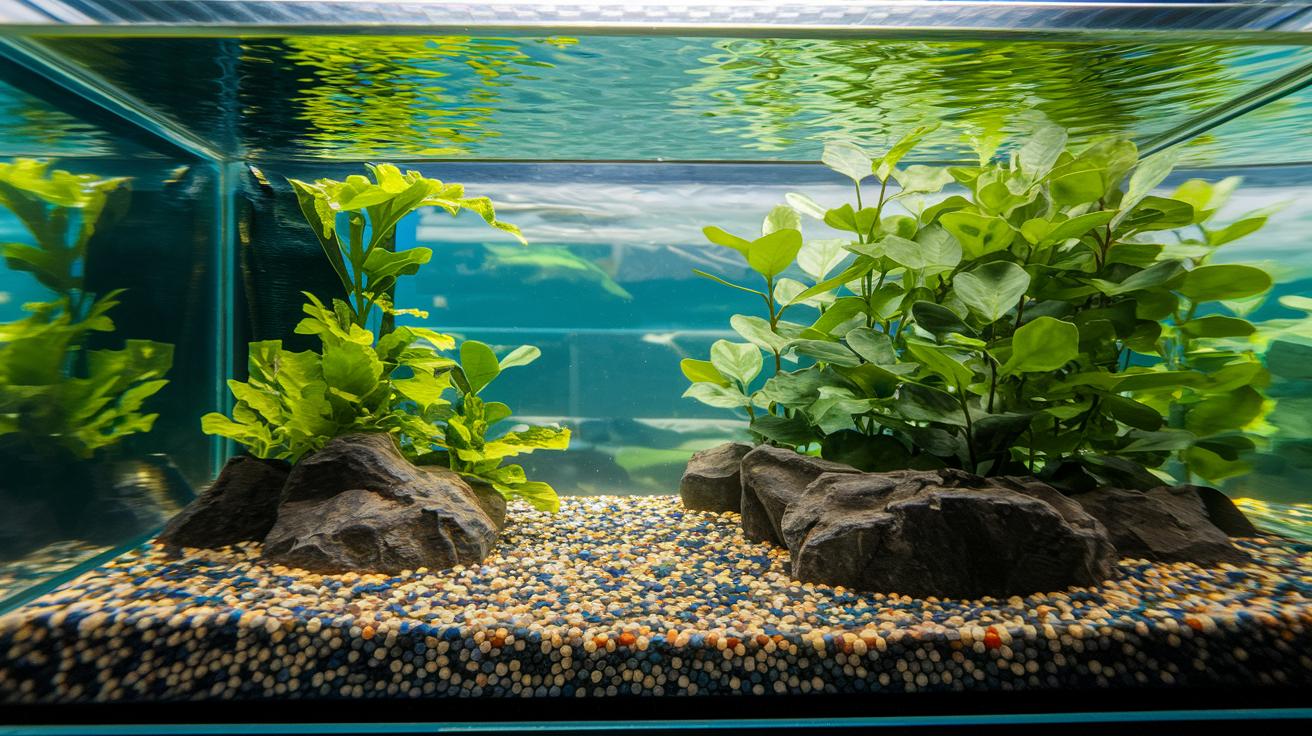
When you use a fish tank calculator, it gives you a nice starting number for your tank's volume. But, in a real setup, things like substrate, decorations, and filters take up space, just like pebbles in a stream disturb the flow. For example, a 1-inch layer of substrate can take away around 10% of the water space, and a 2-inch layer might reduce it by about 20%. In a bigger tank, that loss can add up to nearly 8 gallons less water for your fish to swim in. Knowing these details helps you understand the true room available for your aquatic friends.
And it's not just the substrate, decorations, internal filters, and live plants also steal a bit of that watery space. Think of the calculator as your starting point: a basic volume number that you then need to adjust by subtracting the space taken up by these extras.
| Factor | Impact |
|---|---|
| Substrate depth | Reduces water volume |
| Gravel | Takes up space |
| Decorations | Occupies water space |
| Internal filters | Uses up room |
| Live plants | Cut into water volume |
Fish Stocking Guidelines with the Tank Capacity Calculator
Running a small tank can make life tough for your fish, especially if you're working with tanks under 10 gallons that might only really hold 7 or 8 gallons of water. When there's not enough room, your finned friends can feel squeezed and stressed. It’s best to count the actual water space rather than just the tank’s label. Think of it like giving your fish a spacious home where they can glide freely instead of being crammed into a tight space.
The neat tank capacity calculator makes setting up your aquarium a breeze. It uses a smart tool that checks a database of 917 tropical fish species to figure out the right number of fish for your tank. With easy search and sort options, you can quickly find out how many fish can live happily in your water. For more advice on stocking ratios, check out how many fish in a 20 gallon tank and get a clear picture of safe limits for your setup.
Final Words
In the action, this guide walks through the use of our fish tank calculator to measure, convert, and adjust for real-life factors. The article covers how to calculate tank volume, estimate weight, and account for equipment and substrate. It also shares smart advice for safely stocking your tank for a healthy underwater world. Every insight helps you build a balanced, inviting environment for your aquatic friends. Enjoy shaping your perfect aquatic home, and let every step bring a smile to your fish care routine.
FAQ
What does a fish tank calculator app do?
The fish tank calculator app helps you estimate your tank’s volume by using its dimensions, then converts the measurements into gallons or liters for quick, accurate results.
How does a fish tank volume calculator convert dimensions to liters?
The fish tank volume calculator estimates raw volume using length, width, and height then converts the volume into liters, using the conversion factor that 1 gallon equals 3.785 liters.
How is fish tank capacity calculated?
The fish tank capacity is calculated by multiplying the tank’s length, width, and height, then converting the result from cubic inches to gallons (using 231 in³ per gallon), ensuring accurate measurements.
How can I determine how many fish to put in a tank using a calculator?
The calculator uses your tank’s volume and safe stocking guidelines to estimate the number of fish your tank can comfortably hold, helping to avoid overcrowding and promote healthy conditions.
How do I calculate the volume of tanks like a 30x12x12 or 32x16x16 tank?
For such tanks, multiply the length, width, and height in inches to get the volume in cubic inches and then divide by 231 to convert to gallons, ensuring an easy and accurate volume conversion.
How do I determine the volume in liters for a 3ft by 2ft fish tank?
For a 3ft by 2ft tank, convert feet to inches, compute the tank’s volume using its dimensions, and translate the result into liters, making it simple to understand and use for stocking.