

Ever think a tiny fish could completely change your tank’s vibe? Freshwater algae eaters are like nature’s little cleaning buddies, they gently nibble away pesky green algae while adding a splash of charm to your underwater world. They not only tidy up unwanted growth but also infuse your aquarium with life and personality. Each type has its own little quirks and needs, making them wonderful partners for any freshwater home. Today, we’re diving into some of the top algae eater fish that could lift both the health and beauty of your tank.
Top Freshwater Algae Eater Fish: Species Profiles
Choosing the right algae eater can really make your aquarium shine. These little helpers not only nibble away at unwanted green growth but also add a splash of life to your tank. Each type has its own perks, needs a certain tank size, and enjoys specific foods. Matching your tank with the perfect algae eater keeps the water clear and the ecosystem healthy.
- Reticulated Hillstream Loach: This charming loach grows up to about 3 inches and shows off golden-brown spots with black stripes. It’s especially good at cleaning algae on the vertical walls and rocks of your tank.
- Bristlenose Pleco (Ancistrus spp.): Growing to around 4–5 inches, this pleco works best in tanks of 25 gallons or more. It thrives on a diet that includes sinking wafers, frozen bloodworms, and gel food.
- Siamese Algae Eater (Crossocheilus oblongus): Ever seen a fish go after algae like it’s a favorite treat? Juveniles of this species can grow to 6 inches and are quite aggressive in eating algae, even the stubborn black beard kind, though adults might need a little extra food.
- Otocinclus Catfish (Otocinclus spp.): With a size of about 2 inches, this catfish is a pro at removing diatom and green algae from glass and plant leaves. It does best when you add a few veggies to its diet.
- Amano Shrimp (Caridina multidentata): Typically around 2 inches long, these shrimp are happiest in groups of four or more. They do a great job cleaning both hair and black beard algae.
- Nerite Snails (Neritina spp.): These snails work hard to scrape off tough green spot algae, and a neat bonus, they won’t breed in freshwater.
- Cherry Shrimp (Neocaridina davidi): Measuring around 1.5 inches, these shrimp like being in groups so they can clean up substrates and sneak into plant crevices with ease.
- Florida Flagfish: At about 2.5 inches, these flagfish target hair and black beard algae. Just be cautious as they might nibble on delicate plants sometimes.
- Molly Fish (Poecilia spp.): These fish are not only colorful additions to your tank, they use their flat jaws to gently grab algae while adding style.
- Rosy Barb (Pethia conchonius): Growing to around 3 inches, rosy barbs work best in a group of 6–10 in tanks that hold 29 gallons or more. Keeping more females than males helps keep any rough behavior in check.
Matching the right species to your tank’s size, water volume, and décor creates an environment that’s as balanced as a calm, clear pond. Enjoy watching your aquatic haven stay fresh and lively every day!
Essential Care Tips for Freshwater Algae Eater Fish

Keeping your tank healthy starts with good water and proper feeding. A simple mix of algae wafers, sinking pellets, and some blanched veggies works wonders for these fish. And don’t forget to change about 25% of the water every week to keep nitrates low and those pesky extra algae away.
Another helpful tip is to give your fish the right portions every day. Match the amount to their size and type so they get the nutrients they need while doing their job as natural cleaners. For example, sinking pellets help spread out the meal evenly, making sure extra food doesn’t sink to the bottom and spoil your tank’s floor.
It’s also a good idea to keep your lights under control. Try limiting your aquarium lights to 8–10 hours a day. This not only eases algae growth but also gives your fish a natural rhythm that feels just like nature.
Good filtration is key to keeping your water clean and clear. Use a filter that suits the size of your tank and swap out the media every month. If you’re new to caring for algae eaters, start with just a few fish and let them slowly get used to their new home. Enjoy watching your little cleaners flourish in their fresh, clear water!
Algae Eater Fish Freshwater Compatibility in Community Tanks
When mixing algae-eating fish with other species, it helps to think about each fish’s personality and how active they are. Some algae eaters are very peaceful and get along well with small tetras, rasboras, and livebearers. Others might show a bit of territorial behavior as they grow, so it’s best to keep them with fish that have a similar energy and enough room to roam.
Peaceful Bottom Grazers
Otocinclus, cherry shrimp, and nerite snails are great cleaners that stick to the bottom. They naturally live alongside small schooling fish, quietly munching on algae without causing trouble. Their calm nature helps keep the aquarium as serene as a quiet pond.
Semi-Aggressive Mid-Level Eaters
Fish like Siamese Algae Eaters and Florida Flagfish tend to become more spirited as they mature. They do best when teamed up with hardy mid-level swimmers, such as various barbs. A spacious tank that gives them room to swim helps keep these lively fish relaxed and stress-free.
Nocturnal Clean-Up Crew
Bristlenose Plecos and hillstream loaches really come to life at night. They prefer dim, tucked-away spots, think cozy caves and plenty of plants, to carry out their cleaning routines. Setting up your tank with these secret retreats lets them follow their natural habits and keeps everything balanced.
Creating different flow zones and safe spots encourages natural behaviors and helps your community tank stay as harmonious as a gently flowing stream.
Feeding Strategies and Nutrition for Algae Grazers
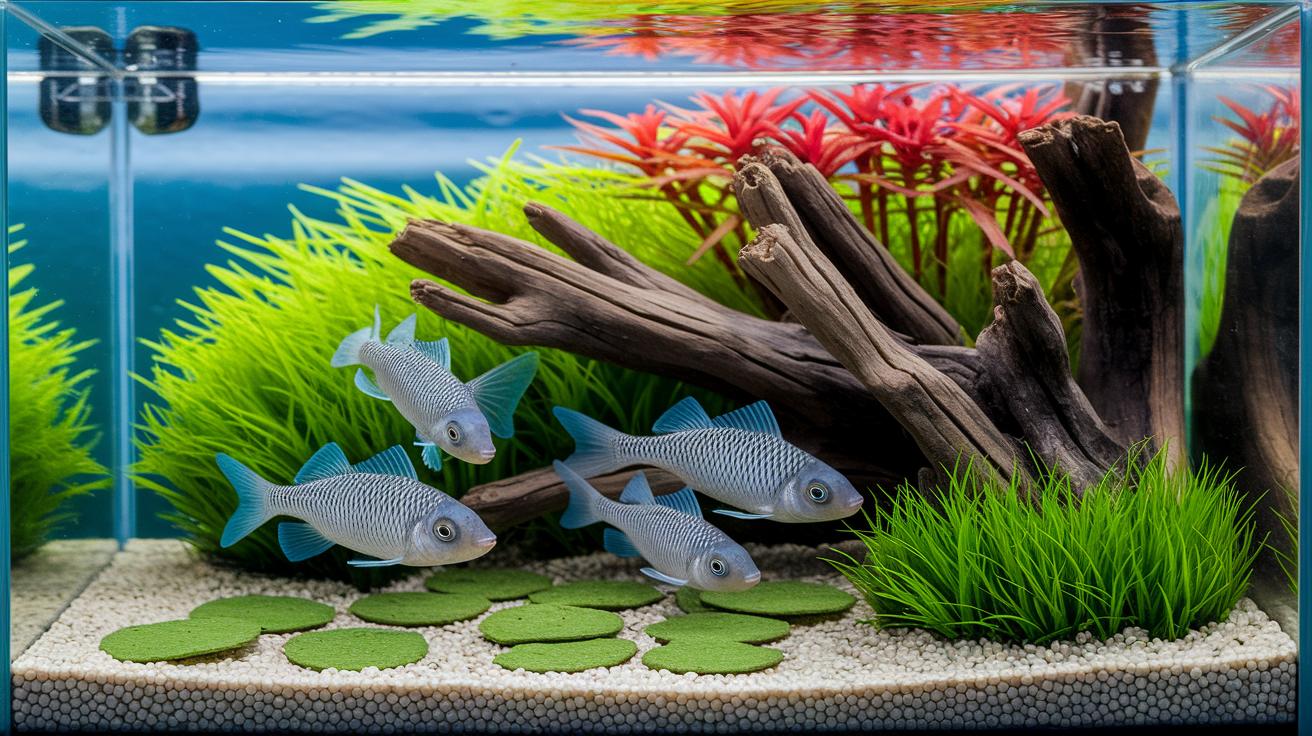
A steady feeding routine does more than just satisfy your algae eaters, it keeps them ready to help clean your tank naturally. When you blend their favorite algae and a few extra treats, you ensure your fish stay healthy and your aquarium sparkles.
- Daily feeding: Give them algae wafers or sinking pellets once a day so all your grazers get a constant little meal.
- Portion sizes: Adjust how much food you offer based on your fish size. For instance, some Plecos might munch on nearly half to three-quarters of their body weight in algae each week.
- Vegetable options: Add some variety by offering blanched cucumber, zucchini, or spinach a couple of times a week. This not only spices up their menu but helps keep their stomachs happy.
- Uneaten food removal: After about 2 hours, scoop out any food left behind. This small step helps keep the water clear and the tank feeling fresh.
Keep a close eye on your fish. If they start behaving a bit differently or if the algae scene changes dramatically, try a small tweak in how much or how often you feed them. It’s all about finding that perfect balance, just like watching the gentle dance of water over smooth stones.
Tank Setup Essentials for Algae Eater Fish Freshwater
Choosing the right tank is like finding the perfect home for your little water buddies. For example, Otocinclus thrive in tanks that hold at least 10 gallons, Amano shrimp need 20 gallons or more to feel comfortable, and adult Plecos do best with 25 gallons or larger. Matching your tank size to your fish’s needs helps them stay healthy and keeps algae under control.
Keeping the water steady is just as important. Imagine the gentle warmth of water between 72 and 82 °F, with a pH around 6.5 to 7.5. Plus, balancing water hardness, keeping KH between 4 and 8 dKH and GH between 5 and 12 dGH, gives your fish a friendly, cozy environment. This consistency not only cuts down on unwanted algae blooms but also lets your fish enjoy their natural algae munching.
| Parameter | Recommended Range |
|---|---|
| Temperature | 72–82 °F |
| pH | 6.5–7.5 |
| KH | 4–8 dKH |
| GH | 5–12 dGH |
| Flow | Moderate–Strong (for loaches) |
When setting up your aquarium, think of designing a mini underwater landscape. Adding smooth rocks, driftwood, and plants like Anubias or Java fern not only makes the tank look great but also creates natural spots where biofilm can grow gently. These little zones invite algae to form in controlled areas, giving your fish easy access to their favorite snack. Plus, having areas with different water flows helps species like hillstream loaches find both lively currents and calm retreats.
Troubleshooting Freshwater Algae Eater Fish Challenges

Algae eater fish can sometimes run into a few common challenges that upset your tank's balance. When you don’t feed them enough, they may become weak and struggle to keep algae in check. Also, if you don’t adjust their diet as needed, you might see algae taking over your aquarium. And sometimes, especially with grown Chinese Algae Eaters, they can get territorial and end up stressing out their tank mates.
- Not feeding them enough can leave your fish unhealthy and less effective at controlling algae.
- You can manage heavy algae blooms by adding a UV sterilizer, scraping off some algae now and then, or reducing the lighting to about 6 or 8 hours a day.
- Territorial behavior in mature Chinese Algae Eaters means it might be best to move them to a larger tank of at least 75 gallons or set up a separate area just for breeding.
- If you’re looking to save a few bucks, try adding fast-growing plants like Vallisneria to compete with the algae, and use phosphate removers to keep your water quality in check.
Mixing the right tools with natural fixes gives you a steady, long-term way to control algae in your tank. This blend of practical gear and budget-friendly techniques helps keep your aquatic world healthy while letting your algae eaters shine as nature’s own cleaners.
Sourcing Algae Eater Fish Freshwater: Where to Buy
If you're looking to add some helpful algae eaters like Otocinclus or hillstream loaches to your tank, you’ve got a couple of friendly options. Buying online means you can choose from a big variety and enjoy shipping guarantees, while a visit to your local pet store lets you check out the fish in person, confirm their health certificates, and set up a quarantine area for your shrimp and snails.
• Check vendor reviews and ask if they can trace the fish’s broodstock to be sure of quality.
• Pick sellers known for high survival rates so you get healthy, happy fish.
• Make sure local shops follow strict health protocols and can offer quarantine tips.
• Look for bulk deals when buying groups of schooling catfish or shrimp to save some cash.
Always quarantine new grazers before adding them to your tank so your underwater world stays safe and thriving.
Final Words
In the action, we covered key species profiles, proper care, compatible community tank setups, and feeding and maintenance tips. Each section helped explain how control of algae can create a balanced, visually pleasing aquatic home. We also touched on equipment advice, troubleshooting challenges, and reliable sourcing tips. If you bring these insights together, your tank will thrive with healthy algae eater fish freshwater. Enjoy a clean, vibrant underwater world where every fish and invertebrate can flourish.
FAQ
What are popular algae eater fish choices in a freshwater aquarium?
The popular algae eater choices include Otocinclus, Bristlenose Plecos, Siamese Algae Eaters, and various loaches, each fitting different tank sizes and cleaning needs.
What is the best freshwater algae eater?
The best freshwater algae eater depends on your setup; many aquarists lean toward Otocinclus for small tanks and Bristlenose Plecos for larger aquariums.
Which fish clean algae in aquariums?
The fish known for cleaning algae include Siamese Algae Eaters and Bristlenose Plecos, often teamed with invertebrates like Nerite Snails and Amano Shrimp for extra sweeping power.
What is the best fish for eating algae in a pond?
While ponds require different care, many experts suggest Florida Flagfish for their algae-eating habits alongside native plant competition for balance.
Which algae eater stays small for a small tank?
Otocinclus, growing about 2 inches, stays small and is ideal for limited spaces where a gentle algae clean-up is needed.
Where can I buy algae eater fish for freshwater tanks?
You can find healthy algae eaters from trusted online retailers and local pet stores, checking reviews and certifications to secure quality, active specimens.