

Ever wondered if your fish feel too chilly or too toasty? Water temperature isn’t just a number, it keeps your fish active and happy. Even a small change in heat can change how your fish eat and frolic.
In this post, we explore the best temperature for tropical fish and others, helping you see why a steady water climate is so important. Think of it like keeping your favorite pond just right, where every ripple feels calm and safe.
We’ll also share some easy tips and tricks so you can keep your tank at the perfect warmth, ensuring your fish continue to thrive. Ever noticed how a balanced tank can feel as soothing as a quiet stream on a busy day?
Fish Tank Temperature Fundamentals: Ideal Ranges and Impact on Fish Health
Keeping your fish happy means giving them water that's just the right temperature. Different fish have different needs. Tropical fish really thrive when the water sits between 24°C and 27°C (75°F to 80°F). Platy fish, for example, are best off in a slightly narrower range, around 24°C to 25.5°C (75°F to 78°F), while goldfish enjoy cooler water, preferring 19°C to 23°C (66°F to 74°F).
Fish rely on the water around them to control their body heat, so even a small dip of 2°C can really throw them off. It might even stop them from eating, which makes them more prone to sickness. Wow, just a tiny change can cause a big stir!
The simple trick to keep everything on track is to check your tank's temperature regularly with a reliable thermometer. Plus, adjusting your heater correctly, placing the tank away from any direct heat sources, and doing small water changes can all help create that steady, calming environment your aquatic friends need.
Choosing and Using Aquarium Heaters for Temperature Control

Choosing the right aquarium heater is like setting the perfect stage for a peaceful swim, it makes all the difference for your fish. If your room isn’t heated or you’re outside tropical areas, a heater with a built-in thermostat is a must. A simple rule to follow is 1 Watt per liter, so a 200-liter tank usually needs around 200 Watts. Some aquarists even go for a bit more wattage to warm up the water faster.
There are two main designs to pick from. Submersible heaters sit right inside your tank and deliver a comforting direct heat, while inline heaters attach to your filter plumbing, keeping extra gadgets out of sight. You might even find external filter units with a built-in heater, which save space but need a little extra attention when you clean them.
Here’s a quick list to help you choose the right heater:
- Figure out your tank volume in liters
- Multiply by 1 W per liter to find the needed wattage
- Decide between a submersible or inline design based on your tank layout
- Check the built-in thermostat for accurate readings before installing
Here's a good tip: After installation, take a moment to check the thermostat readout. It's a bit like reading your favorite book and finding the perfect ending, ensuring you and your fish are on the same page. Regular maintenance is key, so keep an eye on your heater to make sure it stays on track. This careful attention will create a steady, cozy environment that helps your aquatic friends truly thrive.
Monitoring Fish Tank Water Temperature: Thermometers and Calibration
Watching your fish tank's water temperature is key to keeping your fish happy and healthy. There are several tools you can use. You might choose a glass tube thermometer, a stick-on strip that changes color with the water, or a digital probe that gives you constant updates. I like using a digital one because it tells me the temperature instantly, just like checking the time on your phone.
It really helps to check the temperature every day. That way, if there’s a sudden change, you can catch it early before your fish get stressed. A fixed thermometer installed in your tank makes it easy to keep an eye on things. Keeping a daily note of the temperature is like writing a little journal about your favorite underwater moments.
Don’t forget about calibration. To make sure your readings are true, check both digital and glass thermometers every month with a known reference, like boiling water at 100°C. This simple step makes sure your measurements are as reliable as the gentle flow of water in your tank.
Maintaining Temperature Stability: Preventing Fluctuations in Fish Tank Water Temperature
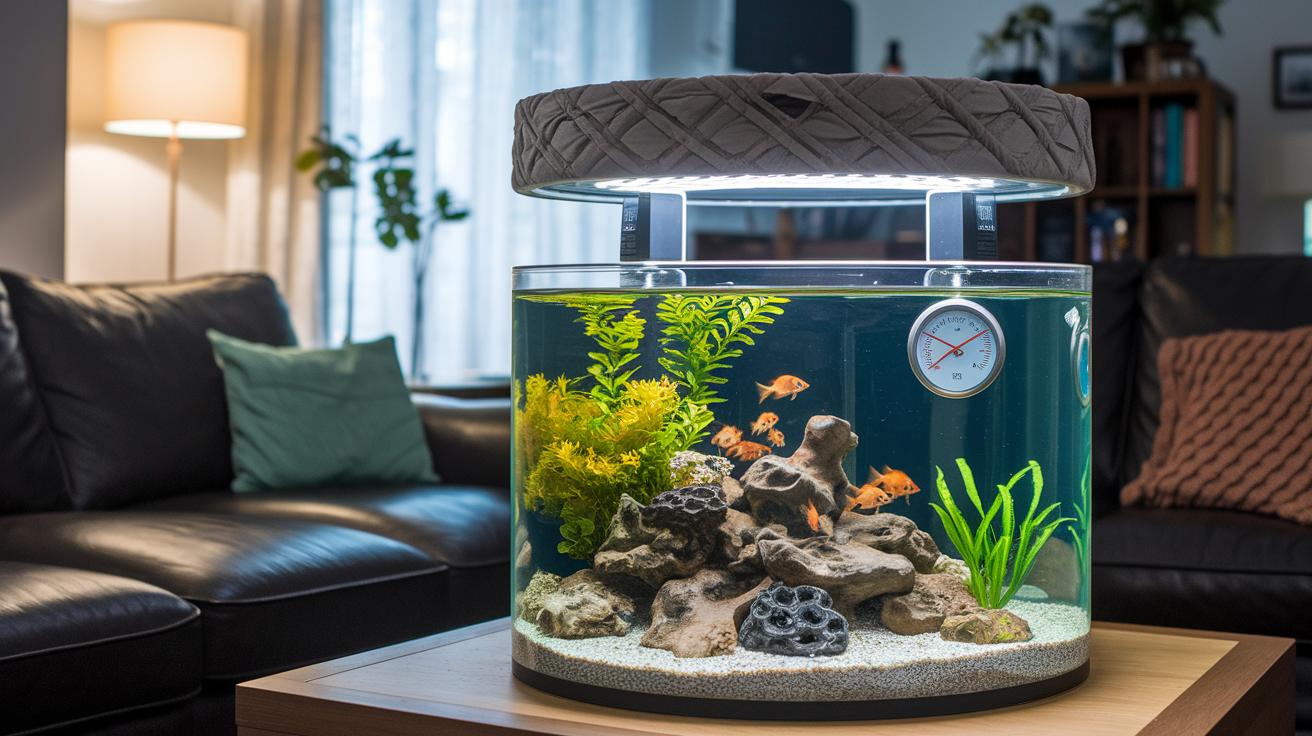
When the room cools down, give your fish tank a little extra care by using an insulated lid or an aquarium skirt kit. These tools work like a warm blanket, gently keeping your water cozy even when the temperature dips.
It helps to change only about 10% to 20% of the water at a time. This small, steady refresh keeps the tank's temperature balanced without a big shock.
Practical tips:
- Use insulated lids or aquarium skirt kits.
- Change about 10% to 20% of the water regularly.
- Let your heater's thermostat do its job automatically.
Seasonal Adjustments for Fish Tank Water Temperature Management
Keeping your fish happy means keeping their water just right all year long. Even when winter brings a chill to the air, your fish still need a warm, steady home. Let your heater run like a cozy, warm current and check that any gaps around the stand or cover are sealed tight. Think of it as wrapping your fish’s home in a snug, dependable sweater to help keep the cold out.
When summer shows up with high heat, things can get a bit tricky. If your room temperature climbs over 30°C, using a clip-on fan to give a gentle breeze around the tank can really help. You might leave the hood just a little open to invite some fresh air, or even switch on a chiller when it’s extra hot. Insulating the rear and side panels of your tank adds another layer of comfort, much like putting on an extra piece of clothing on a sweltering day. Programmable timers also work great by adjusting how long the heater runs, saving energy while keeping the temperature steady and safe for your aquatic buddies.
Optimal Fish Tank Water Temperature for Popular Aquarium Species

Keeping your aquarium’s water at the right temperature is super important for your fish to feel at home. Every fish has its own comfort zone, much like how we prefer a cozy room temperature. For instance, betta fish feel happy and active in water that stays between 24°C and 26°C (75°F to 79°F). Neon tetras also love a temperate setting, doing best between 22°C and 26°C (72°F to 79°F) so they can swim around without feeling too stressed.
Goldfish enjoy cooler waters, thriving when the temperature is between 19°C and 23°C (66°F to 74°F). This cooler environment matches their slower pace. On the other hand, angelfish like a bit more warmth; they do best in water that is between 24°C and 27°C (75°F to 80°F), letting them glide through the water with ease. Oscar fish prefer a little extra heat, flourishing in conditions from 25°C to 28°C (77°F to 82°F) which supports their active swimming and proper digestion. Discus fish need even warmer water, between 27°C and 30°C (80°F to 86°F), to suit their sensitive, tropical nature. And then there are cichlids, who enjoy a lively environment at around 24°C to 28°C (75°F to 82°F).
| Species | Optimal Range (°C) | Optimal Range (°F) |
|---|---|---|
| Betta | 24–26 | 75–79 |
| Neon Tetra | 22–26 | 72–79 |
| Goldfish | 19–23 | 66–74 |
| Angelfish | 24–27 | 75–80 |
| Oscar | 25–28 | 77–82 |
| Discus | 27–30 | 80–86 |
| Cichlid | 24–28 | 75–82 |
Sticking to these temperature ranges helps keep your fish stress-free and boosts their natural defenses. A reliable thermometer is a must-have to check that your water stays just right, ensuring your aquatic buddies have a vibrant place to flourish.
Advanced Temperature Control: Chillers, Smart Controllers, and Automation
When your tank gets too warm, advanced chillers work like a cool underwater current to bring the temperature down. These chillers are perfect for reef or planted tanks where your water needs extra care. Some units even combine a digital thermostat with a cooling module, keeping your setup neat and efficient.
Smart heater controllers with WiFi-enabled thermometers are a real breakthrough. They send you quick alerts on your phone if the water temperature drifts off track, kind of like a friendly nudge when things get too warm. Then, automated systems adjust the heating or cooling without you even having to lift a fin, which not only eases stress on your fish but also makes tank care a breeze.
Some top-notch filtration systems now come with both digital thermostats and cooling features, offering a smooth and precise way to keep your aquarium just right.
Final Words
In the action, we explored the basics of maintaining proper fish tank water temperature, showing why consistency matters for fish health. We reviewed heater choices, proper thermometer use, and seasonal adjustments, all key to sustaining a balanced underwater home.
Each section linked practical steps to keep your tank comfortable and safe. With these simple tips and insights, achieving a vibrant and healthy aquatic environment is within reach. Enjoy creating your very own underwater sanctuary!
FAQ
How can I use a fish tank water temperature chart in Celsius or Fahrenheit?
The fish tank water temperature chart helps you see the recommended ranges for different species. It shows temperatures in both Celsius and Fahrenheit so you know what’s right for your fish.
How do I maintain water temperature in my fish tank?
Maintaining your fish tank temperature means using a reliable heater with a built-in thermostat, placing your tank away from heat sources, and doing small, regular water changes to keep conditions steady.
What does it mean when my fish tank water temperature is too warm?
When the water gets too warm, fish can become stressed and prone to illness. This happens if the heater is set too high or the tank is near extra heat, so adjust your setup to reduce the temperature.
What is the ideal temperature for a fish tank, and is 80°F too hot or is 70°F too cold?
The ideal temperature depends on the fish type. Tropical fish typically need around 75°F–80°F, while species like goldfish do best around 66°F–74°F. A tank at 80°F suits tropical fish but might be too warm for goldfish, and 70°F could be too low for tropical species.
What are the optimal temperature ranges for popular aquarium species like tropical fish, goldfish, discus, and Siamese fighting fish?
For example, betta and Siamese fighting fish thrive at 75°F–79°F (24°C–26°C), goldfish prefer 66°F–74°F (19°C–23°C), and discus require warmer water around 80°F–86°F (27°C–30°C) to stay healthy.