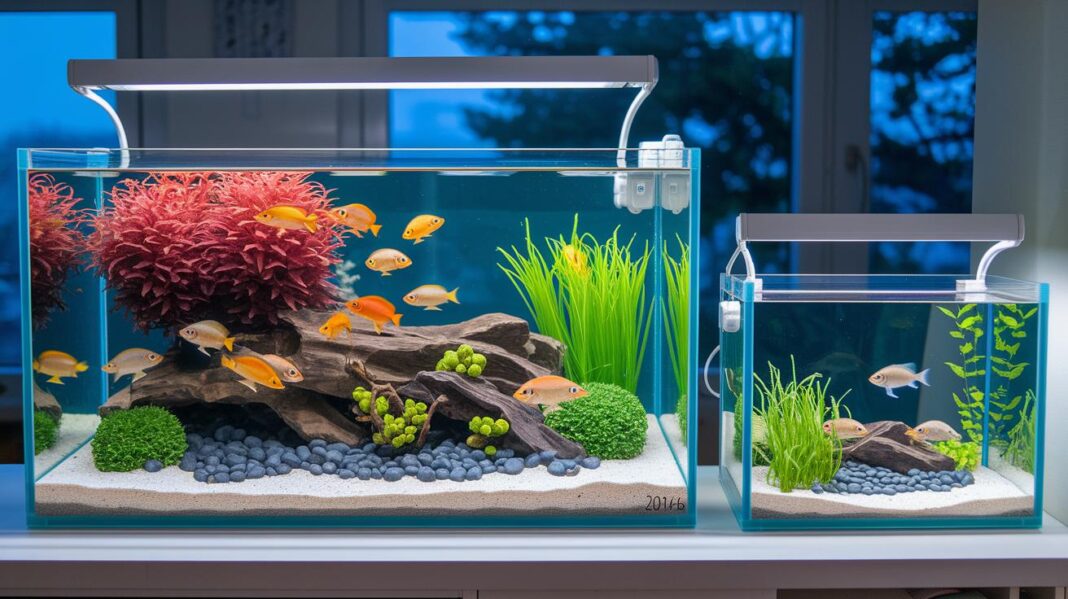

Ever think your aquarium could be the star of your room? It’s not just a home for your fish – the right tank size helps them grow strong and lets their colors shine.
Imagine a space that feels built just for them, where every fish can glide freely like a gentle ripple on water. We’re diving into five different tank sizes that each bring something special to the table, fitting various spaces while keeping your aquascape lively and healthy.
Stick with me, and let’s discover the perfect size that makes your underwater world pop!
5 aquarium tanks sizes that impress
Getting the right aquarium tank size is key to keeping your water clear and your fish happy. It lets your finned friends swim freely and helps create a balanced, healthy home. For example, a 10-gallon tank feels just right for small groups like neon tetras, while a 20-gallon tank gives a bit more space for lively fish like danios and barbs.
A 29-gallon tank is a great middle-ground option that works well whether you want a mix of species or a beautiful planted scene. Bigger tanks, such as a 55-gallon setup, are perfect if you plan on keeping larger fish like angelfish or even bigger cichlids without them feeling cramped. And when you step up to a 90-gallon aquarium, you’re setting the stage for a gorgeous aquascape with plenty of room for both fish and vibrant plants.
A fun fact to brighten your day: A well-sized tank can help reduce harmful toxins and encourage your fish to show off their natural behaviors, almost like watching a lively underwater ballet!
| Gallons | Dimensions L×W×H (in inches) | Volume (liters) |
|---|---|---|
| 10 | 20 × 12 × 12 | 38 |
| 20 | 30 × 12 × 12 | 76 |
| 29 | 30 × 15 × 15 | 110 |
| 55 | 48 × 13 × 20 | 208 |
| 90 | 60 × 18 × 20 | 341 |
Matching your tank size to your room and your stocking plans is really important. A smaller tank might be perfect for a cozy space or a minimalistic setup at home, while a larger tank allows the water to flow more naturally, giving fish plenty of room to explore. Think about your future plans too, if you might expand your fish family down the line, a tank just a bit bigger than your current need can be a lifesaver by making care and maintenance simpler.
Calculating Aquarium Water Volume and Weight
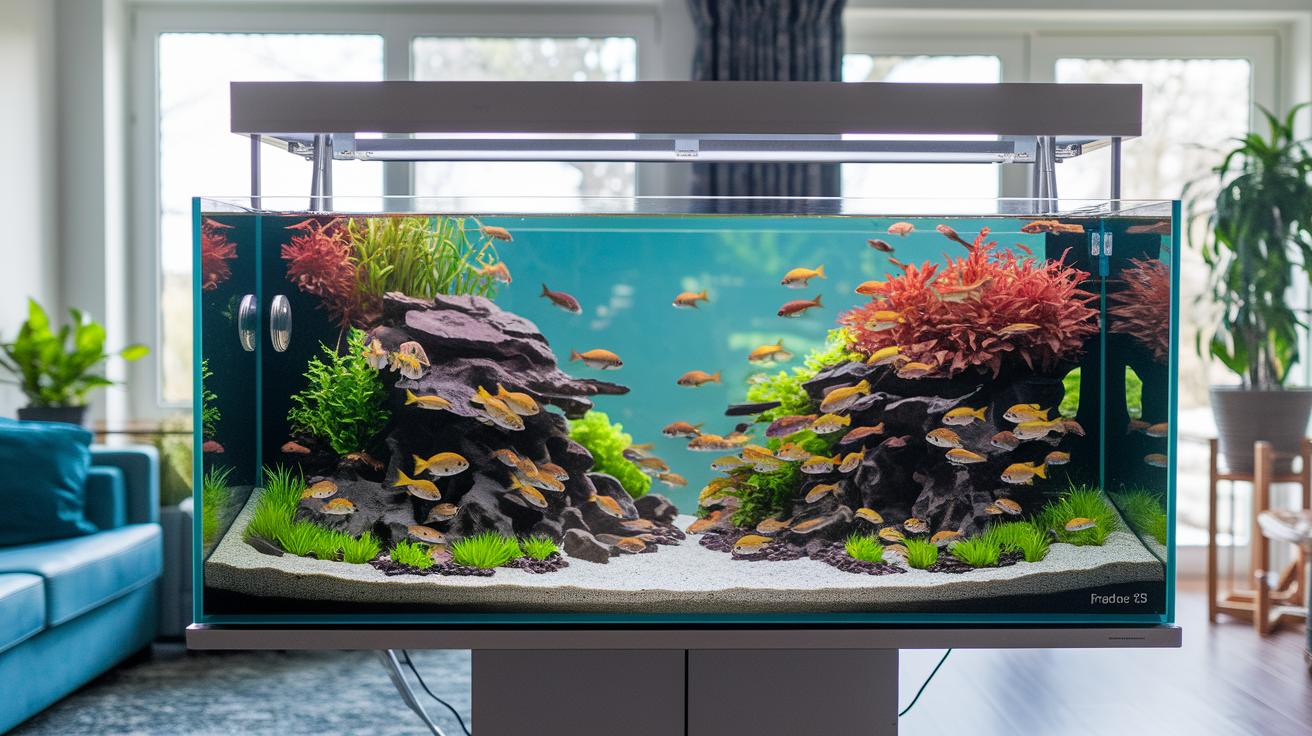
It’s very important to know how much water your tank holds and weighs. This helps you choose the right stand and plan how to move it. The water’s heft plus the weight of the tank tells you how sturdy your support needs to be. It even helps when you want to rearrange your space or add new décor.
- Rectangular aquarium: Volume = L × W × H (make sure you use the same units)
- Cylindrical aquarium: Volume = π × r² × H (π is about 3.14)
- Square tank: Volume = L × L × H (it’s just a special kind of rectangle)
- Elliptical tank: Volume = π × a × b × H (where a and b are the semi-axes)
Let’s dive into an example with a 55-gallon rectangular tank. Imagine a tank that measures 48 inches long, 13 inches wide, and 20 inches high. When you use the formula, you see it holds about 55 US gallons. Since 1 US gallon is roughly 3.785 liters, your tank holds around 208 liters of water.
Now, one US gallon of freshwater weighs about 8.34 lbs. So, 55 gallons weigh close to 459 lbs. Remember, you also have extra weight from decorations like rocks and substrate, plus the thickness of the glass. All these factors will help you decide on a strong stand and safe ways to move your tank.
Ideal Aquarium Capacacities for Different Inhabitants
Picking the right tank size is a bit like choosing the perfect home for your fish. You’ve got to think about how many fish you have, how big they are, their personality, and even the number of live plants you keep. Plus, how often you clean the tank and your budget all matter. A bigger tank can help lower stress and give your fish room to grow naturally. That’s why many folks choose a tank that’s 10–20% larger than the minimum needed.
- Fish count: More fish need plenty of space so they can swim around freely without feeling squished.
- Species type: Active swimmers like danios need wide open areas, while gentle types such as neon tetras do well in cozier settings.
- Planting density: If your tank has lots of live plants, you’ll want extra room so both plants and fish can thrive.
- Maintenance frequency: Even though a well-kept tank might work in a smaller space, a little extra room makes cleaning a lot easier.
- Budget: More water generally means a bit more cost for extra supplies, energy, and equipment.
Choosing a tank that's just a bit larger than needed can give your fish a more natural, relaxing habitat, almost like their own private underwater oasis.
Advanced Tips for Custom Aquarium Tank Sizing and Design
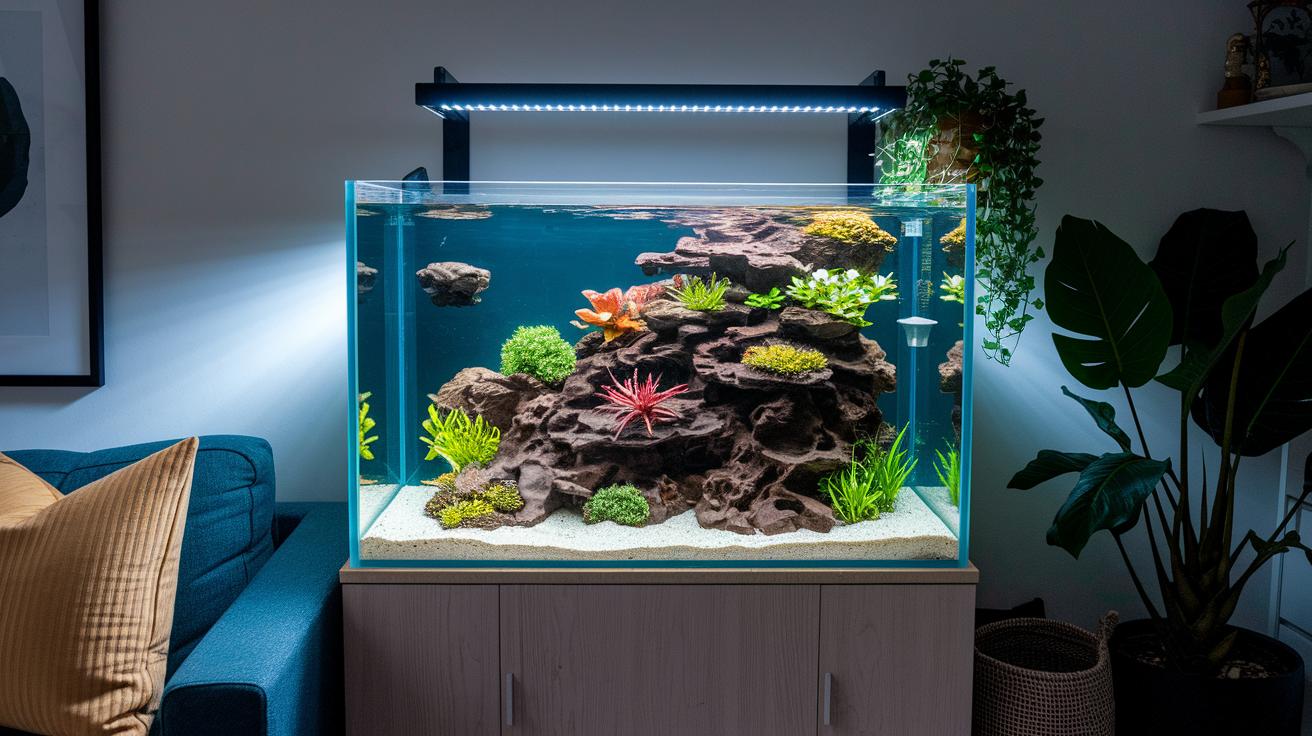
Sometimes a regular aquarium just doesn't capture your vision for that perfect, one-of-a-kind setup. A custom tank can be a real game-changer, blending style with smart design. Imagine a tank with smooth, rimless edges and gentle curves at the front, it’s not just eye-catching; it lets you control how the water flows and how you enjoy every view.
When your space has its own quirks or special equipment needs, a custom tank is a friendly way to make sure everything fits just right. It’s a bit like building your dream mini ocean in your own home.
Here are some tips to help you along the way:
- Measure the stand footprint. Knowing exactly where your tank will sit makes sure you don’t run out of space.
- Specify the glass thickness. Use 1/4 inch for smaller tanks up to about 20 gallons, 3/8 inch for medium tanks ranging from 30 to 50 gallons, and 1/2 inch for tanks of 75 gallons or more. This keeps your tank strong and safe.
- Plan the corner radii. Rounded edges not only add to the tank’s charm but also help the water move in a gentle, natural flow.
- Leave room for equipment. Make sure there’s space for filters, lights, and other gear so your setup can work smoothly.
- Choose between rimless and framed designs. This choice shapes the look of your tank and even affects how water moves inside it.
- Think about the lid style. A clear lid can boost the view and safety of your aquarium at the same time.
Every little measurement and detail matters when building your custom aquarium. The way your tank is shaped and built can change its overall performance and beauty. And for larger or unique builds, chatting with a professional fabricator can be a smart step. They’ll help bring your innovative ideas to life while ensuring everything is safe and sound, just like watching a gentle current ripple by in a quiet stream.
Selecting the Right Aquarium Tank: Buying Guide and Maintenance FAQs
When you’re deciding between glass and acrylic, think about how each serves your needs. Glass tanks are sturdy and resist scratches, while acrylic ones are lighter and let more light pass through. Whether you're setting up a cozy nano tank (about 5–10 gallons), a trusty mid-range tank (30–55 gallons), or a grand show tank (100+ gallons), your choice will affect things like how much weight your stand can hold and if you need extra care for leveling.
| Size Category | Material | Stand Load | Visibility |
|---|---|---|---|
| Nano | Glass or Acrylic | Low | High |
| Mid-Range | Glass | Moderate | Moderate |
| Large Show | Acrylic | High | Excellent |
Here are a few questions you might ask as you set up your tank:
- How does weight distribution affect my tank’s stand?
- What can I do to keep the tank nicely level?
- How often should I check for leaks or any little cracks?
- Which waterline markers work best to keep an eye on water levels?
- How can I make sure there’s enough room for all my equipment?
Keeping a simple record of your tank's details and getting a professional look every now and then, especially with larger tanks, can help you catch issues early. This makes taking care of your underwater world that much easier and more enjoyable.
Final Words
In the action, this article walked us through standard aquarium tank sizes and dimensions, explained how to calculate water volume and weight, and matched tank capacities to your aquatic friends' needs. It also shared tips on custom designs and buying strategies that support a healthy, beautiful underwater habitat.
Keep exploring aquarium tanks sizes to create a space that both looks good and provides a thriving environment for your fish. Enjoy every moment spent caring for your aquatic world!
FAQ
Aquarium tanks sizes chart
The aquarium tanks sizes chart provides a quick reference for common tank capacities and dimensions. It helps you easily compare different options for the perfect aquatic setup.
Large aquarium tanks sizes
The large aquarium tanks sizes highlight big tanks measured in gallons. They are ideal for showcasing expansive displays and housing larger or more active fish.
Aquarium tanks sizes in inches
The aquarium tanks sizes in inches detail the length, width, and height of a tank. This information ensures that the tank fits your space and supports proper equipment setup.
Aquarium size Calculator
The aquarium size calculator computes the tank’s volume by using its length, width, and height. It makes it easier to plan water volume and ensure your fish have enough room.
Aquarium size chart
The aquarium size chart lists popular capacities along with their dimensions and volume. It serves as a helpful guide when selecting the right tank for your fish and decoration needs.
Aquarium tanks sizes in feet
The aquarium tanks sizes in feet convert measurements from inches to feet. This helps you visualize larger displays and choose a tank that fits both your room and design plans.
Aquarium tanks sizes calculator
The aquarium tanks sizes calculator converts dimensions into volume. Using it ensures you get accurate readings, making sure your tank meets the space and welfare needs of your aquatic pets.
75 gallon aquarium dimensions
The 75 gallon aquarium dimensions typically include measurements that suit a medium setup. They provide a balance of space and water volume ideal for a variety of fish and aquascaping styles.
What are the standard aquarium sizes?
The standard aquarium sizes include common capacities such as 10, 20, 29, 55, 75, 90, and 125 gallons. These options help you match a tank size with your fish species and room space.
Do fish prefer tall or wide tanks?
The fish’s preference for tall or wide tanks depends on the species. Active swimmers enjoy wide tanks for horizontal movement, while some species may be fine with taller, more compact tanks.
What size tank is 30x12x18?
The tank measuring 30x12x18 inches is designed for a mid-range setup. Its volume generally meets the needs of both fish health and aquascape aesthetics.
How many gallons is a 24x12x16 tank?
The tank with dimensions 24x12x16 inches usually holds around 20 to 30 gallons. This size fits well with small to medium aquariums, supporting both fish wellbeing and decor.