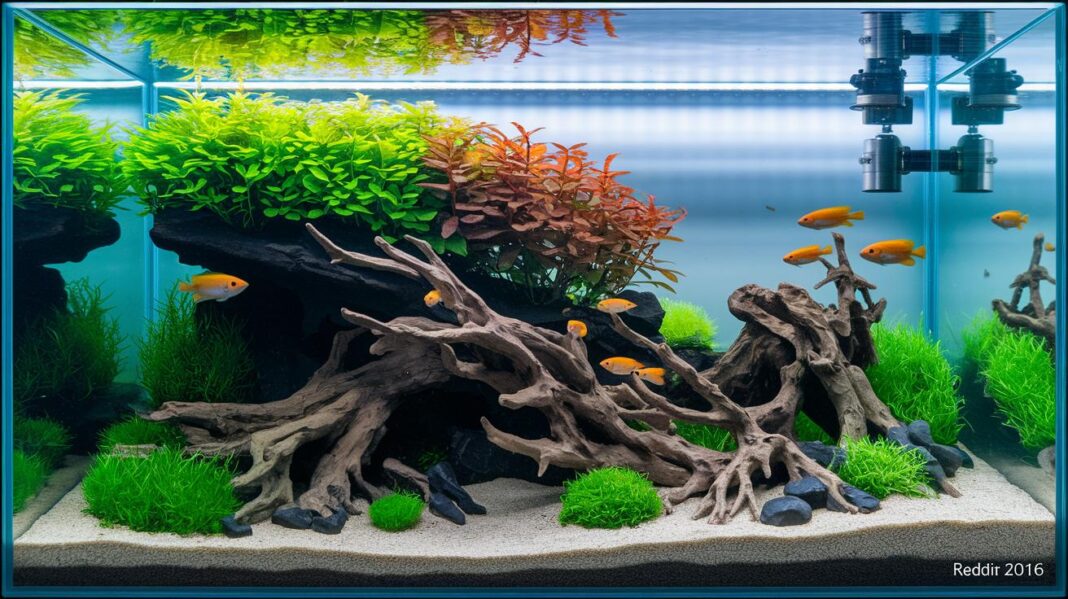

Have you ever thought your aquarium could be a little living work of art? Takashi Amano turned tanks into peaceful underwater landscapes, mixing driftwood, stones, and plants like nature’s own design. His approach shows us that blending these elements can truly elevate your tank’s look, almost like watching sunlight dance on rippling water. In this post, we'll dive into his unique techniques and explore how to bring that serene, nature-inspired vibe right into your own aquatic world.
Key Elements of Takashi Amano Aquascaping Style
Takashi Amano’s aquascaping brings art and nature together in a way that makes any aquarium feel alive. He creates what he calls a Nature Aquarium by mixing driftwood, rocks, and plants into designs that look as natural as a flowing stream or a quiet forest. Imagine a single piece of driftwood placed off to one side, much like a lone tree in a wide, open field, it makes the scene both balanced and captivating.
His work is also inspired by Japanese gardening ideas like Wabi-sabi, which finds beauty in imperfections, and the simple style of Zen art. His gardens show us that less is sometimes more, using open space, layers of substrate that help water and nutrients flow, and soft slopes that echo rolling hills. This approach turns a tank into a peaceful, mini-landscape that feels as natural as a hidden pond.
Back in 1977, Amano was one of the first to use CO₂ injection in planted tanks. In simple terms, this helps plants grow faster and look lush and full of life. He also brought in creatures like Amano shrimp to keep algae in check, letting nature take its course. This smooth blend of living plants and carefully placed rocks keeps the aquarium looking like a underwater work of art that both new and seasoned fish lovers find inspiring.
Biography and Aquatic Landscape Artistry of Takashi Amano

Takashi Amano was born on July 18, 1954, in Niigata, Japan, and his early life was full of determination and passion. Before turning to his famous aquarium art, he earned his keep in the world of professional cycling from 1974 to 1990. Racing in 1,078 events and earning over £1,000,000, he nurtured a competitive spirit and a sharp eye for detail, qualities that would soon lead him in a whole new direction.
In 1977, while watching soda bubbles dance gracefully, Amano saw nature’s simple magic. This small moment sparked a big idea, leading him to add carbon dioxide into planted tanks so that aquatic plants could grow strong and vibrant. By 1982, he had founded Aqua Design Amano Co., Ltd. (ADA), a name that soon came to be trusted for premium aquascaping equipment. He even discovered a special type of algae-eating shrimp and gathered thousands of them to help keep freshwater tanks balanced and healthy.
And wow, in 2013, Amano took on an incredible challenge. He designed and set up the world’s largest Nature Aquarium at Lisbon’s Oceanario in just one week, a true nod to his knack for creativity and precision.
Though he passed away in 2015 at age 61 from pneumonia, his legacy still flows through the world of aquascaping. His journey mixed the endurance of a cyclist with the creative vision of a nature artist, and today, his work continues to inspire aquarists everywhere.
Signature Techniques in Takashi Amano Aquascaping
Takashi Amano’s approach goes well past the basics, using smart techniques that add magic to every part of your aquarium setup. His methods make sure that every detail shines, much like watching sunlight dance on the water.
Using ADA aqua soils, Amano builds the tank floor in careful layers. Think of it as putting together a delicious layered cake, each stratum feeds the plant roots and creates a sturdy base for healthy growth.
He also groups plants by their size and shape to make the aquarium look lively and natural. It's like painting a mural: shorter, carpet-like plants in the front blend with medium stems in the middle and taller species at the back to form a balanced scene.
For lighting, he uses high-output LEDs set at just the right angles. Imagine soft beams of light gently highlighting every vibrant color while keeping the ecosystem perfectly balanced.
| Technique | Key Focus |
|---|---|
| Layered Substrate | Nutrient release and root health |
| Plant Zoning | Visual depth and growth efficiency |
| Light Management | Enhanced photosynthesis and color rendition |
Landmark Nature Aquariums and Projects by Amano

One of Takashi Amano's most famous works is the Oceanario de Lisboa Nature Aquarium. In 2013, this indoor aquarium made a big splash by becoming the world's largest of its kind. Amano treated the space like a blank canvas, adding huge trunks, tall rocks, and lush green plants to mimic nature. The setup took only one week, and each rock and plant was placed with the careful attention of someone creating a living piece of art. It’s like walking into a quiet underwater garden where every detail is meant to make you pause and appreciate nature’s beauty.
Another great example can be seen at the ADA flagship showroom. These live exhibits are creative underwater compositions that have caught the eye of visitors in high-profile galleries and museums around the world. From small nano-tanks to large public displays, every installation shows a mix of artistic vision and practical design. Here, nature and art come together as each display tells its own story of balance and harmony, inviting you to take a closer look at how water and life interact.
Amano’s work is a gentle reminder that even in a controlled water world, nature can be celebrated with passion and care.
Practical Steps: Recreating Takashi Amano’s Aquascaping at Home
Think of this as building your own little underwater art world, one where every stone, plant, and bubble plays its part in a balanced scene. You’re setting the stage for an enchanting aquatic garden that feels both natural and thoughtful.
-
Begin with your tank and substrate. Pick a tank that suits your space and dream, then lay down ADA substrate like a firm, nurturing bed for your plants.
-
Create your hardscape. Arrange driftwood and stones off to one side, much like shaping a gentle hill or a winding riverbed. This gives your tank inviting gaps that help draw your eye into the scene.
-
Install a CO₂ system. A steady flow of 1 to 2 bubbles per second acts like a soft current, pushing fresh life into your aquatic garden and helping your plants grow strong.
-
Group your plants by height. Place low-growing carpeting plants in the front, medium ones in the middle, and taller ones in the back. This layered look brings natural harmony, just like a wild riverside in nature.
-
Set up high-output LED lighting. Run your lights for 8 to 10 hours a day and adjust the colors to match each plant’s needs. This keeps your tank bright and full of lifelike color.
-
After your tank has cycled, add Amano shrimp or small critters. These little helpers naturally manage algae and make your underwater world even livelier.
-
Make weekly water changes, about 20 to 30%, and trim your plants to keep things neat. Keep an eye on your water, aiming for a pH between 6.5 and 7.2 and a hardness (GH) of 3 to 8 dGH. For more tips on caring for your aquatic plants, check out the advice at this link: caring for aquarium plants.
Inspirational Galleries: Showcasing Serene Submerged Aesthetics by Amano

Takashi Amano’s Nature Aquarium photo series, as seen in his books, shows lush green scenes with a misty touch and artfully arranged rocks and plants. Each picture feels like a gentle invitation to step into a calm underwater retreat. Imagine water flowing softly over natural forms, with hints of green blending together like a peaceful stroll through an untouched forest.
In these images, you’ll notice smooth curves like little hills, clear water that acts like a window to quiet depths, and thick clusters of plants that remind you of a forest floor or a mountain valley. All these elements come together to create a scene that feels both lively and balanced, naturally guiding your eyes from one lovely detail to the next.
Light and shadow play a big role in making these underwater landscapes feel real. The soft dance between bright spots and gentle shadows gives the pictures a three-dimensional feel. As you look closer, every ray of light and every soft shadow adds to the sense of calm and natural beauty, inviting you to explore this magical, serene world.
Legacy and Influence of Takashi Amano Aquascaping
Takashi Amano mixed art and science in a way that changed the game. His smart ideas helped shape modern aquarium tools and turned aquascaping into a lively form of water art. He blended creative vision with simple, practical methods to inspire makers to design gear that brings underwater worlds to life.
His fresh ideas sparked the Nature Aquarium movement that many aquarists now adore. He dedicated countless hours, pretty much a 10,000-hour journey, sharing his tips, photos, and set-ups with fellow enthusiasts. This friendly, community approach encouraged many to try new designs and experiment with creating vibrant underwater scenes.
Today, Amano’s influence flows through every aquascaping contest, podcast, and art show. His work reminds us that a mix of creative passion and clear scientific insight can turn a tank into a living masterpiece. Ever feel the calm when you watch water ripple over smooth stones? That gentle vibe is his legacy in action.
Final Words
In the action, we explored Amano’s style, from his organic layouts and minimalist hardscapes to the careful trickle of CO₂ that helped bring his vision to life. We looked at his renowned projects, practical home setups, and the vibrant galleries that capture serene submerged aesthetics. Each section of the article highlighted tips to create balanced underwater habitats while echoing his timeless design. Sweetfysh.com celebrates takashi amano aquascaping, inspiring you to craft your aquatic art with passion and care.
FAQ
What can you tell me about Takashi Amano’s museum and exhibition spaces?
The question refers to Amano’s museum-quality displays, where his Nature Aquarium art is showcased. These exhibits capture his signature natural layouts and organic, serene submerged aesthetics in public spaces.
Who was Takashi Amano and what is his legacy in aquascaping?
The question highlights Amano’s role as a pioneering water artist. His blend of artistry and science reshaped aquarium design, leaving an enduring influence on modern aquatic landscape aesthetics.
What books or aquascape guides has Takashi Amano published?
The inquiry references Amano’s influential aquascape books. These guides offer insights into his nature-inspired style and practical tips on setting up tanks for both beginners and enthusiasts.
Where are Takashi Amano’s aquariums located, including in Portugal or his personal house displays?
The question points to Amano’s installations, from public displays like Lisbon’s Oceanario to select private showcases. They exemplify his innovative approach to organic, living aquascapes.
What were the circumstances surrounding Takashi Amano’s death?
The inquiry notes Amano’s passing. He died at 61 from pneumonia, marking a significant moment in aquascaping history while his creative legacy continues to inspire hobbyists worldwide.
What is the Takashi Amano Iwagumi style in aquascaping?
The question describes Amano’s Iwagumi style, which features minimalist rock arrangements balanced with driftwood and plants. This approach reflects a natural, asymmetrical beauty rooted in Japanese garden philosophy.
Who is known as the father of aquascaping?
The question acknowledges Amano’s title as the father of modern aquascaping. His innovative techniques and artistic vision revolutionized how aquariums are designed and appreciated today.
What is the best fish for aquascaping?
The question seeks the ideal fish for aquascaping. Small, peaceful species like tetras are favored as they add color and movement without disturbing the carefully arranged aquatic landscape.
What is the largest tank Takashi Amano has made?
The question refers to Amano’s most impressive creation, the Nature Aquarium at Lisbon’s Oceanario. This massive display features towering rocks, large trunks, and abundant native flora in a breathtaking underwater scene.
What does the golden ratio for aquascape design mean?
The question explains that the golden ratio in aquascaping is about achieving a balanced and harmonious layout. This design principle arranges elements so that the overall scene is naturally pleasing and balanced.