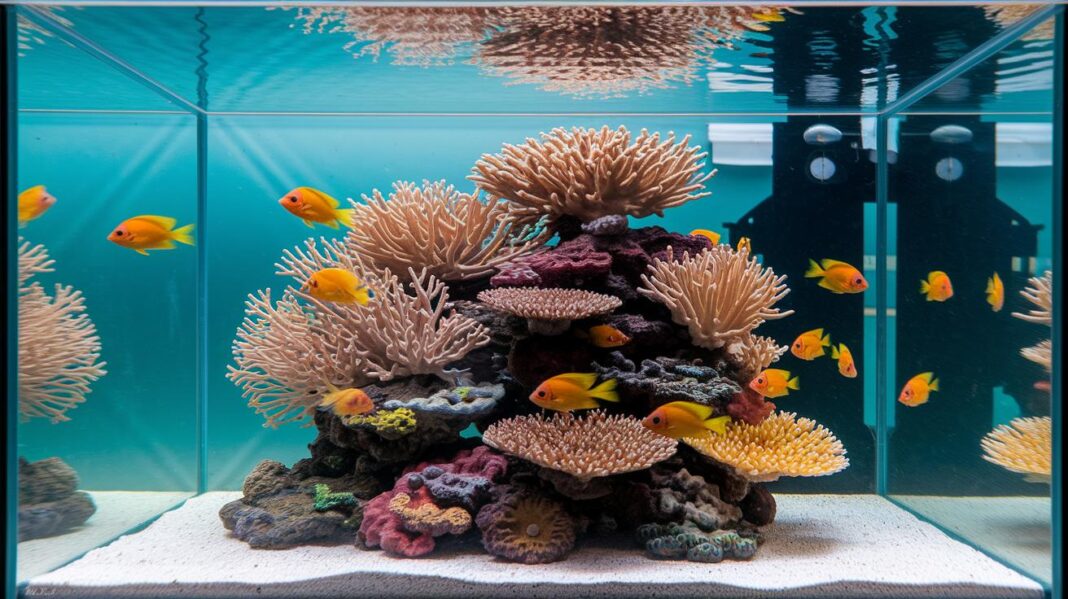

Have you ever thought your reef tank could be both a safe home and a delightful work of art? Reef tank aquascaping is like designing a little underwater paradise that cares for your corals and fish. Many fish lovers say that a smart rock setup not only makes the tank look stunning but also gives your marine friends plenty of space to thrive.
In this guide, we’ll share simple tips on picking decorations that do double duty, captivating your eyes and keeping your aquatic buddies healthy. Imagine every rock and plant arranged with care, as if painting a charming picture beneath the waves.
Reef Tank Aquascaping Fundamentals: Balancing Aesthetics and Function
Designing a reef tank is a bit like painting a picture underwater while taking care of your marine friends. This guide offers 15 handy tips that balance eye-catching beauty with the practical needs of your corals and fish. For instance, many aquarium enthusiasts have found that a simple rock setup not only shines visually but also boosts coral growth. Every rock and decoration in your tank serves a dual purpose: it adds to the look and supports your marine life’s health.
The idea of "less is more" can make a big splash in your reef setup. Using fewer rocks gives space for SPS corals to spread out and keeps the tank cleaner, letting water glide smoothly without sneaky dirt spots. It’s a good idea to start with larger, flat rocks to build a sturdy base. You then secure them with a saltwater-proof epoxy that hardens like concrete. Think of placing a standout rock following the Rule of Thirds, it makes the whole scene balanced and inviting.
Good composition also adds depth and excitement to your tank. Focal points, clever depth, and playful color contrasts help create a lively underwater scene. Picture a bright, bold coral set right where two groups of rocks meet; it grabs your attention while harmonizing with the surroundings. These little details encourage you to play around with different shapes and hues that remind you of the natural marine palette.
Water flow is another key player in your tank’s design. Planning paths for water ensures that it moves freely around the rocks, much like current flowing gently over a sandy shore. This helps prevent the build-up of unwanted nutrients and gives your corals the oxygen-rich water they need to thrive.
When you mix artistic layout with smart, practical techniques, you end up with a reef that is as healthy as it is beautiful. Every choice you make, whether spacing your rocks just right or choosing the perfect piece to be the centerpiece, plays a part in keeping your underwater world vibrant and sustainable. Enjoy the creative journey and notice how calming a well-designed reef tank can be on a busy day!
Planning Your Reef Layout: From Inspiration to Blueprint
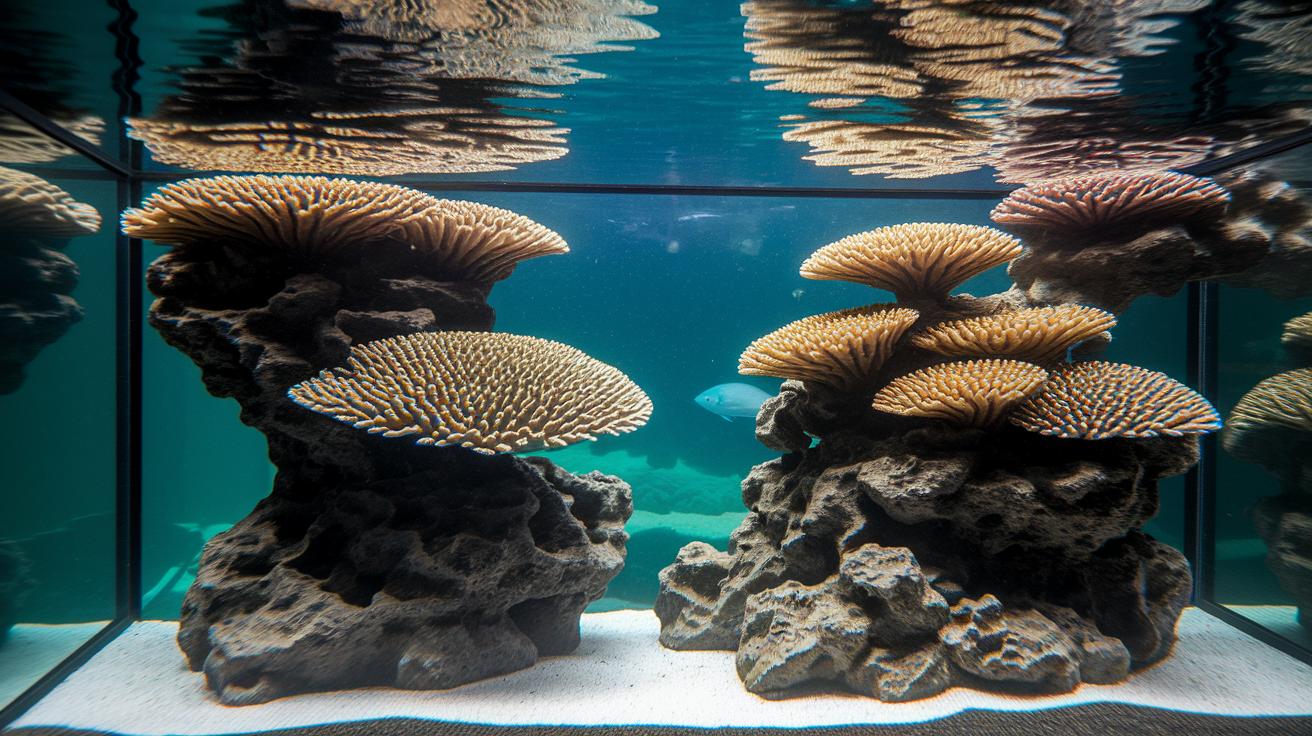
Start by diving into reef image galleries, Pinterest boards, and social media places filled with water-inspired ideas. These spots are like hidden treasure chests filled with design gems that can spark your own underwater dream. Picture yourself scrolling through images of tanks with natural rock formations and bursts of colorful coral. It might make you think, "This could be my own little ocean escape!"
Then, grab a piece of cardboard or MDF cut to the size of your tank. This hands-on method lets you play around with different setups without stressing about your materials. Cut out shapes that represent rocks and islands, and move them around until the design feels balanced, kind of like arranging puzzle pieces of your very own aquatic world.
Plan for areas where water can naturally flow by creating channels and island spaces. For example, imagine a 225-gallon tank that used 100 pounds of live rock to form two islands with a central gap. This clever layout not only looks cool but also guides the water smoothly throughout the display, encouraging a healthy and vibrant environment.
- Think about your tank’s size
- Try different positions for islands and channels
Sketching your ideas on a small scale helps you plan ahead and avoid surprises when you build your underwater haven. It’s like testing a recipe before serving the meal, a little trial run to make sure everything flows just right.
Building the Foundation: Live Rock Types, Placement, and Stability
When you start a reef tank, your first job is picking the right rock. Live rock brings a burst of natural life but might lose some of its living parts when it’s getting used, while dry rock like Marco Rocks skips that early change. I once set up a tank with live rock and watched a few pieces lose some of their charm during the curing process. It was a gentle reminder that every rock has its own personality.
Here’s a little tip: don’t use egg crate material under your rock formations. Let the natural sand do its job so that everything stays clean and the sand keeps shifting without trapping debris. And of course, make sure each rock is secure. I usually use reef cement or epoxy putty for the heavy pieces. Think of it like building a small castle where every stone needs to be perfectly in place, a wobble here or there could let the whole structure sink.
I remember a lesson from a 90-gallon tank. An overpacked live rock wall started to collapse, smothering the coral growth. That taught me that too much rock can be just as tricky as too little. Instead, plan out your rock placement to mimic how nature arranges things. Picture your rock stack like a handcrafted sculpture, where every piece adds both beauty and stability.
| Tip | Why It Helps |
|---|---|
| Secure heavy rocks with marine-grade epoxy | Keeps stones stable and safe |
| Avoid egg crate bases | Allows the natural sand to sift and clean your substrate |
By following these steps, you’ll create a reef setup that’s as dramatic and durable as a vibrant underwater landscape. Enjoy shaping your own little slice of the ocean!
Composition Techniques: Rule of Thirds, Depth, and Focal Points in Reef Aquascaping

Picture your tank as if it were a lively underwater painting, brimming with natural beauty. The Rule of Thirds is like a friendly guide that ensures balance. Place a standout coral at one of the imagined crossing points, and you'll see your reef take on a whole new charm. Ever notice how a simple change can instantly make everything feel more dynamic?
Next, think about layering. By arranging rocks of different sizes and shapes, you give your tank a sense of depth and space, like the gentle rise and fall of a natural reef. Even in a small tank, clever stacking can make it seem much larger, echoing the smooth slopes found in nature.
Focal points are the stars of your underwater scene. A unique coral or a dramatic overhang can instantly draw the eye, much like a lighthouse guiding ships through a shimmering sea. These striking elements become the heart of your setup and invite everyone to take a closer look.
- Align key elements using the Rule of Thirds
- Layer differently sized rocks to build visual depth
- Place eye-catching coral or rock formations to create natural focal points
| Technique | Effect |
|---|---|
| Rule of Thirds | Creates balance and draws the eye naturally |
| Layering Rocks | Adds a sense of hidden depth and space |
Optimizing Water Flow and Coral Growth Space
Water flowing smoothly through your reef tank is like the heart pumping life into your underwater world. When water moves well, it clears away stagnant spots and keeps extra nutrients in check, so your corals stay happy and healthy. If you pack rocks too closely together, you block those essential currents. Picture your tank as an underwater highway where every coral gets a refreshing burst of clean water.
Next, plan your rock layout to create clear paths where water can easily slide through caves, overhangs, and hidden crevices. Adding a water pump or regulator helps guide the flow gently, keeping it both natural and effective. This careful planning not only boosts coral health but also enhances the overall look of your tank.
- Leave enough space between rocks so your corals have room to grow.
- Design open channels that let water stream through every nook.
- Keep cave entrances and overhangs clear to allow free water movement.
For more tips on water pumps and circulation systems, check out "Understanding Aquarium Water Pumps and Circulation Systems" at https://sweetfysh.com?p=2006.
Coral and Invertebrate Arrangement: Crafting Hiding Spots and Overhangs
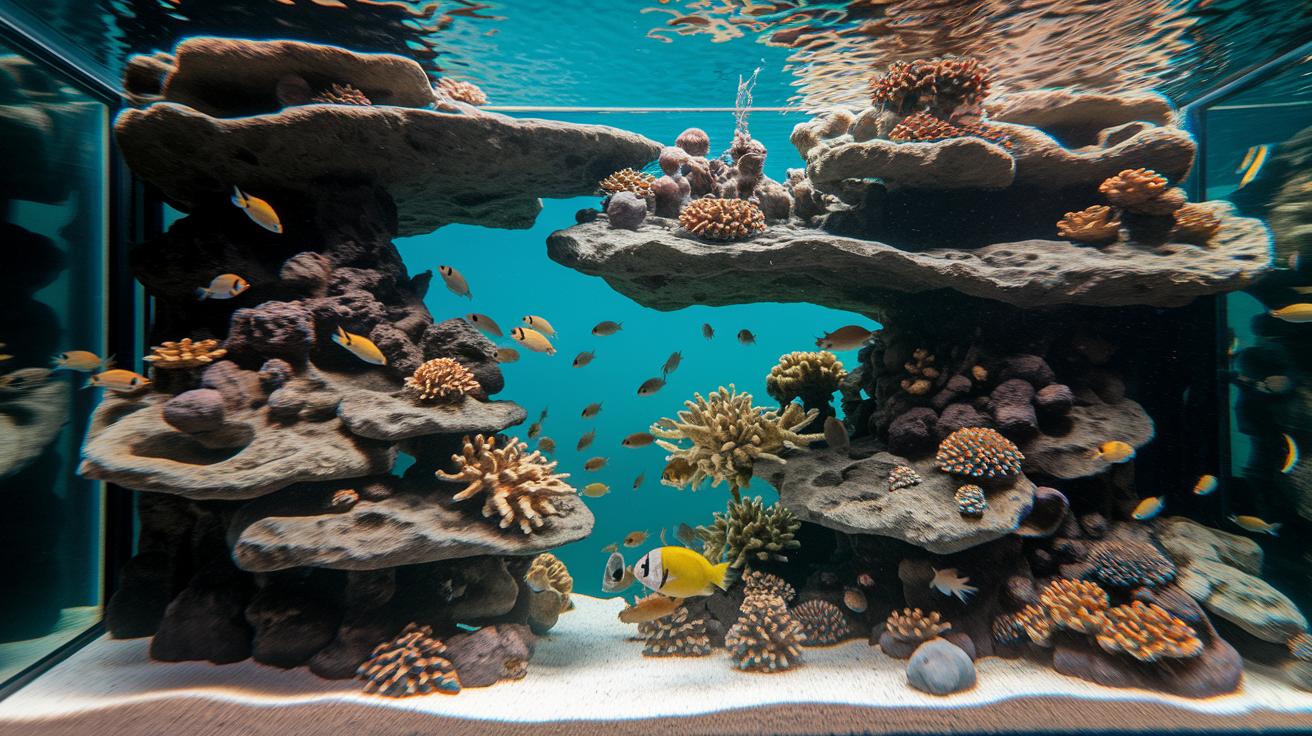
Setting up your reef tank is like creating your own little underwater haven. Think of it as designing an art piece where each shrimp and small fish gets its own cozy retreat. Instead of crowding your tank with rocks, try shaping natural caves and gentle ledges that open up the space. This "less is more" vibe lets your marine pals swim freely while letting your corals show off their vibrant colors.
Imagine a rock formation with just the right curve, a snug little nook where a shrimp can hide for a quiet moment. And a well-placed ledge isn’t just pretty to look at; it naturally guides fish through open areas. Picture a tiny crevice made especially for a fairy wrasse to rest during its downtime.
- Keep rock placements light to preserve open space
- Create gentle overhangs that serve as retreats for invertebrates
- Design caves and ledges that echo the natural hideaways of the ocean
These smart, simple ideas highlight the beauty of your corals while ensuring each creature enjoys its own safe corner. Try sketching different layouts on paper or using a small model first to discover which design fuels your aquatic scene with that creative spark.
Essential Equipment and Materials for Reef Aquascaping
Start with your trusty toolkit. Imagine carefully stacking your favorite rocks with saltwater epoxy and reef cement, just like putting together a tiny castle beneath calm waves. These marine-safe adhesives don’t break down easily, so they keep your setup snug and secure.
Then, grab some zip-ties, rods, and PVC supports to hold everything in place. It’s a bit like reinforcing a small bridge to make sure every piece stays exactly where it should.
Next, think about the special tools that help your tank really come alive. Auto top-off systems keep water levels steady, while aquarium controllers fine-tune the conditions so all your marine pals can thrive. Dosing pumps and calcium reactors add the right nutrients to help your corals grow bright and healthy. LED lights bring out every beautiful curve and nook, and test kits give you the comfort of knowing that all is balanced.
- Secure heavy pieces with saltwater epoxy and reef cement.
- Use zip-ties, rods, and PVC supports for a sturdy frame.
- Add auto top-off systems, controllers, dosing pumps, calcium reactors, LED lights, and test kits to complete the picture.
| Equipment | Purpose |
|---|---|
| Saltwater epoxy & reef cement | Hold rocks firmly for lasting stability |
| Zip-ties, rods & PVC supports | Build a strong, steady structure |
| Auto top-off systems & controllers | Keep water level and conditions just right |
| Dosing pumps & calcium reactors | Deliver key nutrients for vibrant coral growth |
| LED lighting & test kits | Highlight your aquascape and monitor water quality |
Think of this list like setting up your very own water garden. Every tool and material plays its part in building a reef aquascape that is not only beautiful but also built to last.
Maintenance for Long-Term Aquascape Health

Keep your reef tank feeling healthy and bright by doing regular checks. Make sure to see that the rocks and epoxy joints are still solid. If you notice a rock softening or see tiny cracks in the epoxy, it might be time for a little fix-up.
Don't forget to watch the water flow, too. As your corals stretch out, they might block the current, causing debris to pile up and nutrients to get unevenly distributed. Keep an eye on those water channels and adjust your setup if things look jammed. Imagine it like a little river gracefully winding around, making sure every area gets a refreshing current.
- Check your rocks and epoxy bonds every week
- Look closely at water channels for any signs of blockage
- Give your corals plenty of space to grow without constant re-arrangements
- Fix any little shifts quickly before they grow into bigger issues
Patience is key to keeping your tank in top shape over time. Instead of rearranging everything all the time, let your reef settle and come into its own. A bit of regular, hands-on care makes your aquascape both secure and lively. With a calm routine of check-ups and small tweaks, your underwater world will keep thriving, offering a beautiful and healthy home for all your marine friends.
Reef tank aquascaping: Bright marine artistry
Nano-reef setups add a refreshing twist to underwater design. They use carefully placed rocks and a few chosen corals to pack a stunning visual treat into a small space. In each miniature tank, every stone and coral is picked with care to make a big impact, blending modern seascape ideas with natural marine design techniques for a look that's both tidy and eye-catching.
Neat geometric layouts are a big part of these trendy tanks. When you line up rocks and coral pieces in simple patterns, you create a balanced scene that naturally draws the eye. Using a color wheel is like choosing the right hues for a painting, helping ensure that every part of your setup works together in harmony. For example, mix gentle blues with cozy coral tones to make your tank feel modern and natural at the same time.
Another smart idea is to use a black backdrop. This simple trick makes your coral colors really pop and adds a touch of drama to your overall scene.
- Experiment with minimal coral clusters for a modern twist
- Use geometric organization to emphasize structure
- Consider a dark backdrop to accentuate bright colors
These tips show that creating a stylish reef tank doesn't mean you need a lot of rocks; a bit of creativity can go a long way.
Natural Reef Case Studies: Drawing Inspiration from the Wild

Have you ever marveled at a real reef and felt inspired to bring that magic to your own tank? Nature's underwater masterpieces serve as a warm canvas for our creativity. Take the Grand Barrier Reef as an example – its huge boulder corals and gentle spaces invite you to imagine your tank filled with bold, natural shapes.
Then, think of Raja Ampat, where bright bommies add life and color, much like a splash of sunshine dancing on water. And when you gaze upon West Papua’s rugged, dramatic walls, it sparks ideas for arranging rocks in different sizes and natural curves. Even the mysterious formations of the Marianas Trench whisper a surprise, urging you to choose coral spots that capture the wild spirit of the deep sea.
Let these stunning scenes guide you. Model your rock stacks and coral displays after these wonders, and you might just create a tank that flows as naturally as ocean currents. Nature’s endless patterns are there to explore, each ripple and curve a gentle reminder to design with heart.
Final Words
In the action, this guide walked you through core ideas of reef tank aquascaping, from choosing rock formations and planning layouts to balancing water flow and creating natural hiding spots. We explored practical tips like the “less is more” approach and careful equipment selection while building a visually pleasing underwater scene.
Every step is a chance to create a friendly space for your aquatic friends. Enjoy watching your reef come to life and let your creative touch bring comfort and beauty to your aquatic habitat.
FAQ
What are some reef tank aquascape ideas, including nano and reef rock designs?
Reef tank aquascape ideas range from spacious layouts to compact nano displays. They use reef rock arrangements to set natural, balanced backdrops that support coral growth and create visually pleasing water paths.
Where can I find a reef tank aquascape for sale?
Reef tank aquascape options for sale are available online and at specialized marine shops. They offer ready-designed displays that blend style and function, making setup easier while ensuring a balanced saltwater habitat.
How do I set up or DIY my reef tank aquascaping?
A DIY reef tank aquascaping setup involves planning your rock layout, securing pieces with saltwater-proof epoxy, and designing water flow channels. This method helps create a safe, attractive marine home for your corals and fish.
What makes for the best reef tank aquascaping?
The best reef tank aquascaping combines a “less is more” approach with strong rock foundations, clear water flow, and artful coral placement. This creates a stunning yet practical underwater environment that promotes healthy marine life.