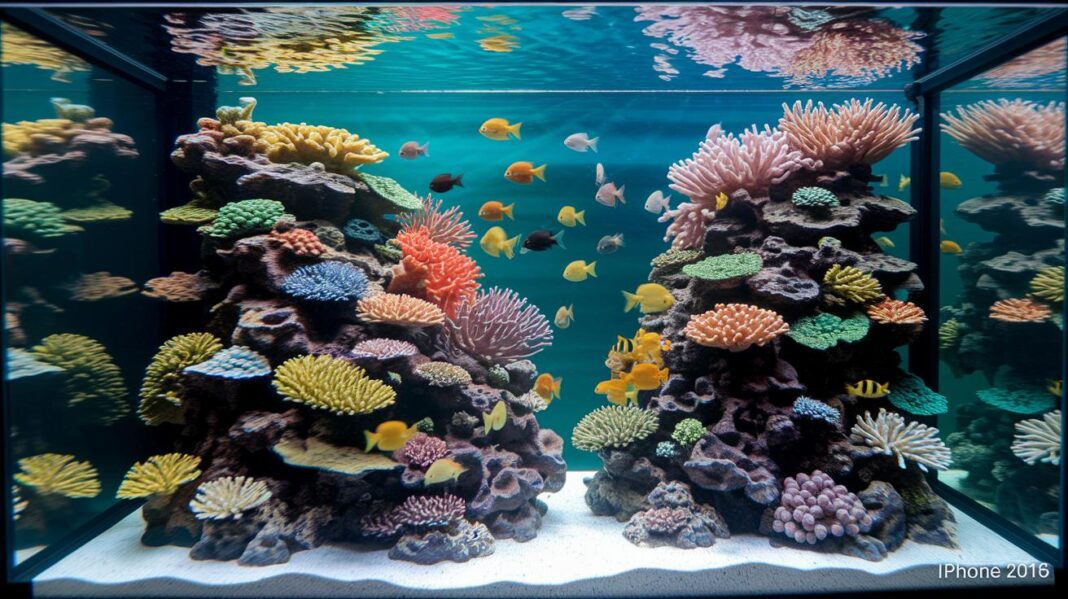

Ever wondered why some reef tanks glow with natural charm? Picture an underwater world where each piece of live rock creates its own little hideaway, adding both beauty and balance to your tank.
This guide shows you how using cured rock with a clever design can bring about a gentle water flow and a healthy home for your aquatic pals. Get ready to create a reef tank that is not only eye-catching but also safe, like a small masterpiece that welcomes you just like a calm stream on a sunny day.
aquascaping reef tank ideas Radiate Natural Elegance
Start by choosing live rock that’s been cured. This means the rock has had time to settle, so it forms natural caves, overhangs, and snug hideaways for your tank’s residents. Imagine a little secret nook where tiny shrimp can slip away during feeding time. Taking the time to cure your rock helps keep your water safe and chemical-free.
Keep your rock pieces to a minimum so water flows nicely through your tank. Packing too many rocks can slow down the current, which makes it easier for unwanted nutrients to build up. Think of it like a little stream where every rock helps create a soft, natural current. Especially if you’re just starting out, a simple setup can be both beautiful and healthy.
To hold your rock formations together, use a saltwater-safe epoxy that cures as strong as concrete. This sturdy glue not only keeps everything secure but also sets the stage for future coral growth. Picture it as laying down a solid foundation that lets your tank become a miniature masterpiece, inspired by the wonders of the Great Barrier Reef or the vibrant life of the Red Sea.
Mix different shapes and sizes of rock to create a natural, flowing design. Remember to leave plenty of space for aquatic life to swim and explore. This balance of form and function keeps your aquascape feeling alive and easy to maintain. Enjoy the creative process as you build a small underwater world that feels both natural and inviting.
Planning and Inspiration for Creative Reef Tank Ideas
First things first: draw inspiration from wherever your eyes wander. Surf through Pinterest boards that showcase neat aquascape designs, swing by your local fish store to see real-life tank setups, or flip through magazines to catch up on the latest trends for DIY aquatic habitats. I once checked out a board called "Tale of Two Tanks" and pinned over 50 design ideas featuring bright corals mixed with clean, simple layouts. It’s a fun way to get your creative juices flowing!
Next, give your ideas a test run with simple mock-ups. Grab some cardboard or MDF and a bit of painter’s tape, and mimic your tank’s size on the floor. This lets you play around with placements and sizes without any real risk. Think of it like sketching your design before painting your masterpiece. Then, sit down with your measurements and see how your plans can blend with the rest of your home décor – ensuring everything flows together as smoothly as a gentle current.
Finally, don’t be shy about checking out online video guides or reef-building kits. These step-by-step tools are like having a friendly mentor right there with you, showing exactly where to place rock formations or create inviting caves. This careful planning turns your creative sparks into a reef that looks not only beautiful but also works perfectly in your space.
Establishing a Solid Foundation with Rock and Structure in Reef Tank Ideas
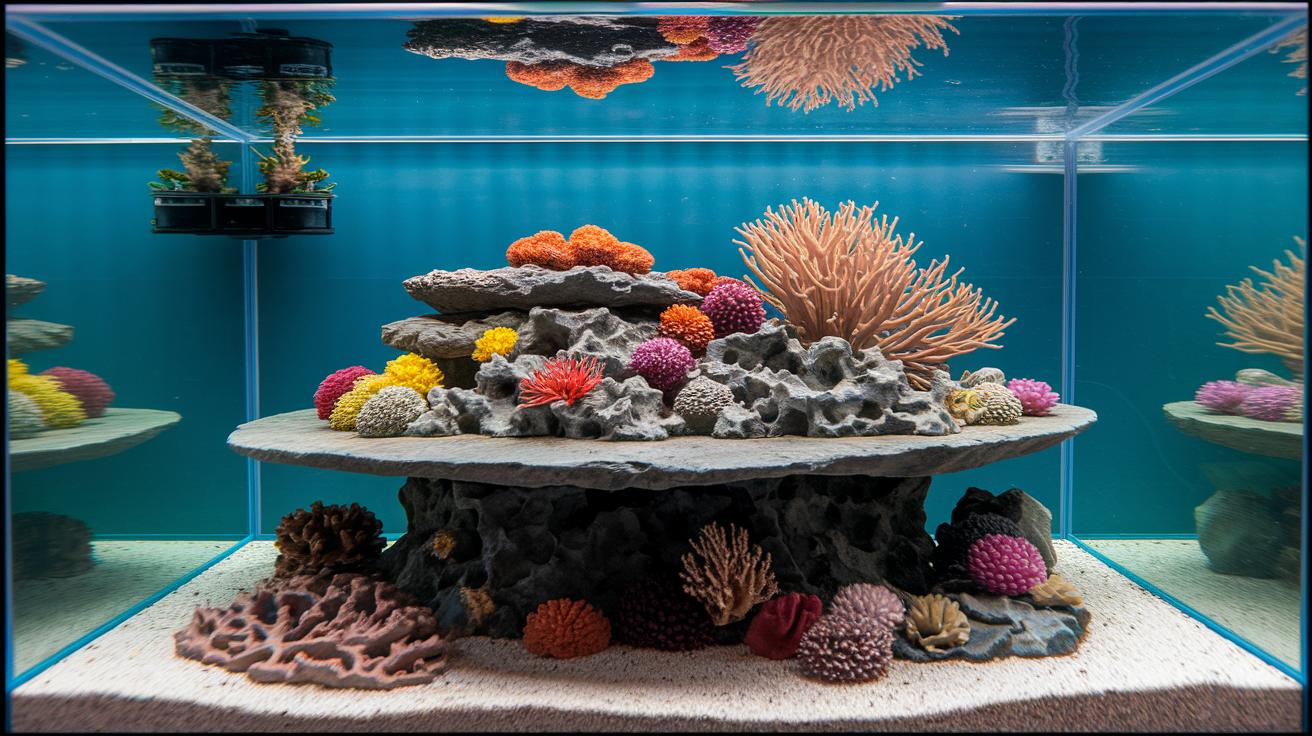
Start with a big, flat rock that forms the base of your underwater world. Think of it like the solid floor beneath a majestic coral castle. This rock gives every added structure a safe and steady home.
Then, attach smaller rocks with reef-safe epoxy, a kind of super-strong glue that holds everything together. It helps create natural caves and secret hideaways for your fish, just like a little oasis in your yard.
For those tall, eye-catching formations, use support rods, PVC pipes, and zip-ties. They work like scaffolding, keeping your design safe and sturdy as you build up. This not only adds a dynamic, layered look but also stops any risky shifts as your aquatic setup grows.
Also, steer clear of under-tank egg crate. This material might block the neat sand-sifting work of snails and other critters, a process that helps keep your tank’s floor looking natural.
- Begin with a large, flat base rock.
- Attach smaller pieces with reef-safe epoxy.
- Use support rods, PVC pipes, and zip-ties for tall structures.
- Avoid using under-tank egg crate.
Plan your layout with care so your tank looks beautiful today and stays safe for years to come.
Depth, Balance, and Color: Visual Techniques in Aquascaping Reef Tank Ideas
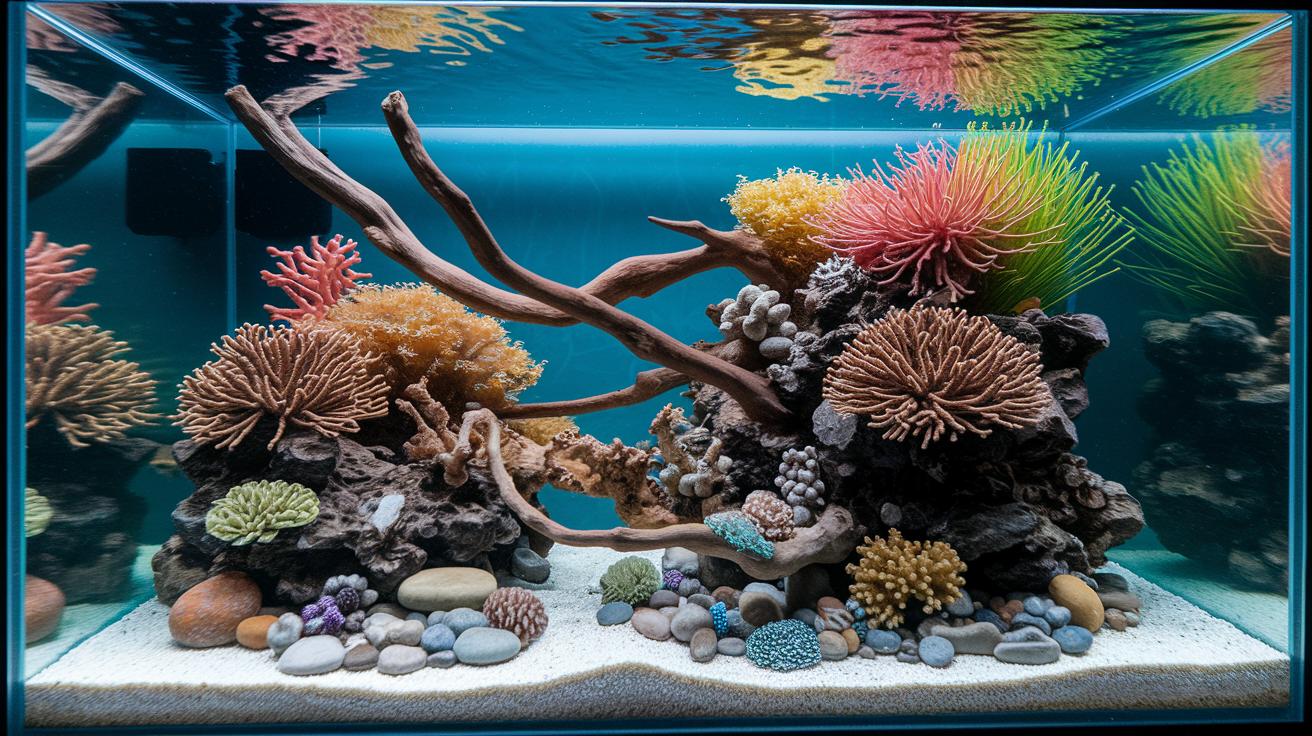
First, try using the Rule of Thirds to arrange your main rock or coral clusters. Instead of centering everything, place a coral branch slightly off to one side. Imagine a striking coral just to the right of center, gently guiding your eyes through the tank. This simple trick creates a balanced yet lively feel.
Mix different rock sizes while leaving plenty of open space. Picture smooth stones paired with more textured coral formations, almost like a tiny underwater landscape inviting you to explore its hidden details. The contrast between sleek rocks and branching corals adds a natural charm that keeps your display interesting.
Another smart tip is to use a color wheel to pick coral hues that work well together. This thoughtful step can turn your tank into a vibrant piece of art. For instance, painting the back of the tank black makes those bright coral colors pop, while also keeping equipment out of sight.
By blending a clean, minimalist ocean style with creative color ideas, you end up with a crisp, modern look that really elevates your reef design. Ever notice how a well-planned tank feels like a serene slice of the ocean right in your living space?
Natural Elements: Integrating Driftwood, Stones, and Coral Clusters in Reef Tank Ideas
Start by adding a piece of driftwood to your tank, it brings a cozy, natural feel, like finding a cool log by the stream. Secure it to a base rock using epoxy, much like setting a solid foundation that forms the heart of your underwater world. This piece not only shapes your tank but also warms up the whole scene.
Next, try placing Seiryu stones in an upright position. They stand tall and make a real statement, like natural monuments rising from the floor. Picture a Seiryu stone proudly reaching upward, drawing your eye like a beacon in the water.
Then, group your corals based on how fast they grow. Fast-growing soft corals can sit beside the slower SPS and LPS types, creating beautiful layers that echo the natural order of the ocean. This thoughtful grouping not only adds contrast and visual interest but also helps you keep things balanced as your coral garden evolves.
When it comes to choosing between live rock and dry rock, remember that live rock offers extra life to your tank with its beneficial bacteria. Just be sure to cure live rock before you add it so that it doesn’t overheat your tank with unwanted die-off. And don’t forget to leave about 1 to 2 inches of space above your structures, that’s where your corals can stretch out and flourish over time.
Scaling from Nano to Large Aquascaping Reef Tank Ideas
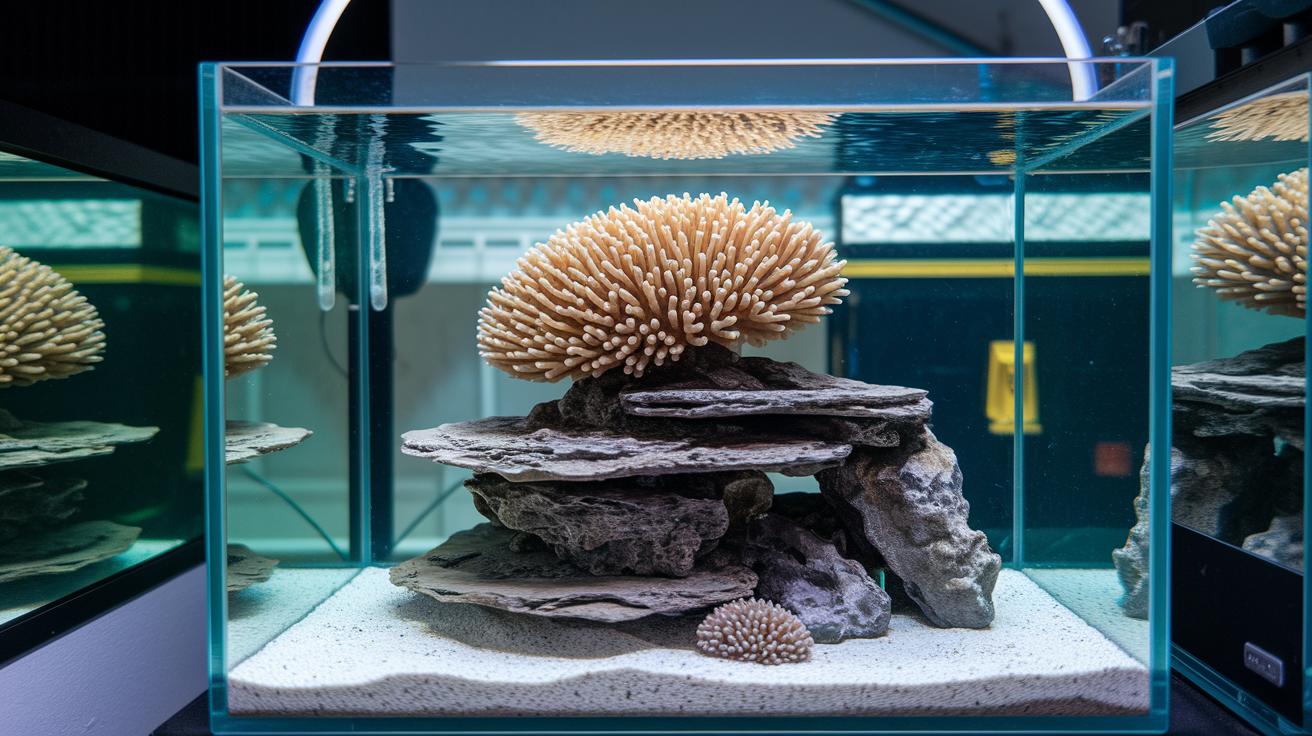
For nano tanks, try a 5- to 20-gallon setup paired with a strong filter pump that makes the water move like a gentle current. Keep things simple by letting one striking rock or a splash of coral shine as the main feature. This single centerpiece naturally draws the eye, much like choosing the perfect decor for a special meal.
In bigger tanks, you have plenty of room to get creative with layers and hidden swim-through spots. Build multi-level rock formations that let your fish explore little tunnels, similar to a natural coral reef in the ocean. Not only does this look really cool, but it also gives your aquatic buddies extra space to enjoy.
- Pick a strong pump for nano tanks.
- Show off one standout rock or coral.
- Build layered rock setups in larger tanks.
- Remember, nano systems might need more frequent water changes.
If you're just starting out, consider a turnkey marine decorating kit to simplify your setup. Each tank size brings its own design tricks and care tips to help ensure your reef looks as beautiful as it feels.
Maintenance and Durability for Aquascaping Reef Tank Ideas
Keep your reef in tip-top shape by treating your tank like a lively underwater home. A weekly water change of 10–15% is like giving your aquatic garden a refreshing boost; it keeps those pesky algae away and stops nutrient peaks from upsetting the calm flow.
Take a moment every 6–12 months to check on your rock formations and their support, much like examining the smooth stones along a stream. Look over your epoxy bonds and support rods to catch any little signs of wear before they turn into bigger issues. This habit helps you build a lasting, sturdy aquascape that feels as steady as a peaceful tide.
When it comes to cleaning, stick with coral-safe cleaners and eco-friendly filtration media. These gentle products work in step with the natural rhythms of your tank, like the soft murmur of water in a quiet cove. As your corals flourish, tweak your light schedules and water flow just as you would adjust the sun and breeze on a perfect day to keep every nook and cranny safe and sparkling.
- Change 10–15% of your tank water weekly.
- Inspect epoxy bonds and support rods every 6–12 months.
- Use coral-safe cleaners and eco-friendly filtration media.
- Adjust lighting and flow as your corals mature.
- Choose corrosion-resistant materials for a durable setup.
Following these simple steps not only preserves the beauty of your reef but also boosts its overall health. For more handy advice on keeping your tank pristine, check out aquarium equipment maintenance tips for longevity. And when picking out new pieces, take a peek at how to choose the right aquarium equipment for an eco-friendly marine decor that stands the test of time.
Final Words
In the action, this blog post shows how to create natural reef structures and plan creative rock arrangements that mirror real underwater scenes. It explores how to design a space that feels both stylish and safe, from choosing materials to mapping out the layout. Practical upkeep tips help keep your water clear and your aquatic home inviting. With aquascaping reef tank ideas, every detail makes your underwater world a thriving, beautiful haven. Enjoy the rewarding process of building your vibrant environment!
FAQ
Q: What are some simple and small aquascaping reef tank ideas?
A: Simple and small aquascaping reef tank ideas include using cured live rock with caves and overhangs, limiting rock volume for better water flow, and replicating natural reef features to create cozy, realistic displays.
Q: How can I explore aquascaping reef tank ideas on Pinterest?
A: Aquascaping reef tank ideas on Pinterest showcase creative layouts and visual inspiration, featuring photos of natural reef designs and innovative setups that can help you plan your own unique aquatic scene.
Q: How do I start with DIY aquascaping reef tank ideas for beginners?
A: DIY aquascaping reef tank ideas for beginners involve planning layouts using cardboard mock-ups, cycling live rock to avoid ammonia spikes, and securing formations with reef-safe epoxy for a stable and natural setup.
Q: Where can I find a reef tank aquascape for sale or a premade reef aquascape?
A: Reef tank aquascapes for sale and premade setups offer ready-built, secure designs, ensuring all rock structures and coral groupings are arranged to give you a hassle-free, naturally appealing marine environment.
Q: What are nano reef aquascape ideas?
A: Nano reef aquascape ideas focus on smaller tanks (5–20 gallons), emphasizing a strong focal point, efficient water circulation, and a compact design approach to achieve vivid and manageable marine displays.