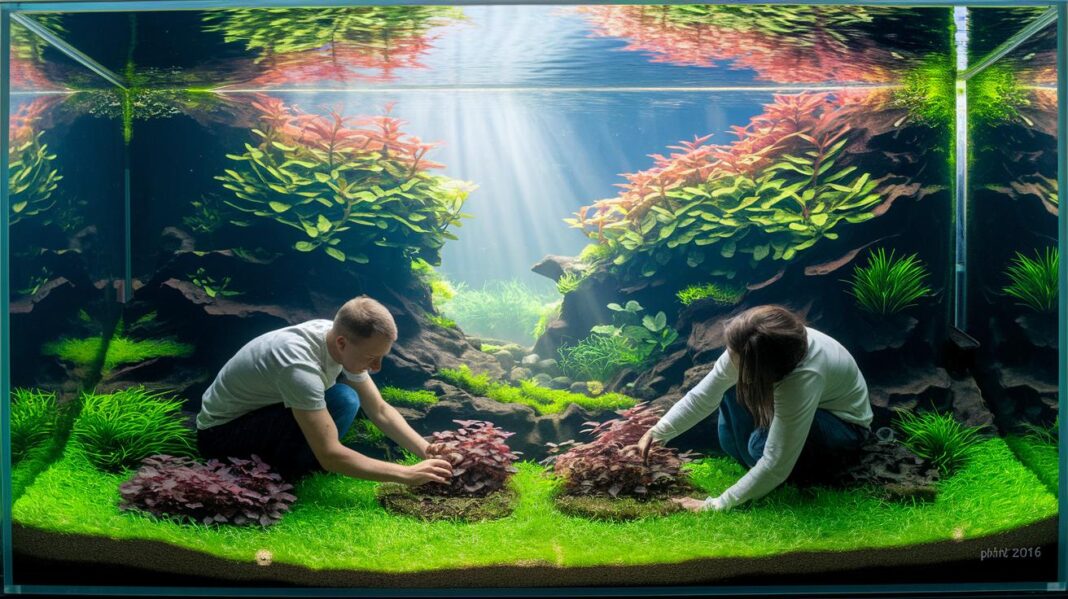

Ever feel like your fish tank could use a splash more life? With just a couple of simple planting tricks, you can turn it into a lively underwater garden that glows like a sunny reef.
Start by giving your substrate a gentle slope, setting the stage like smooth sands beneath gentle waves. Then, treat your plant roots with care, washing them and anchoring them just right helps them grow strong, much like sturdy coral in a busy reef.
I discovered that these easy steps can make a big difference, creating a fresh, beautiful aquascape that sparkles and feels natural. Enjoy watching your underwater world come alive!
Effective Planting Techniques for Aquascaping Success
When you're setting up your very own aquatic garden, the first thing to do is prepare your substrate. Begin by creating a gentle slope in the substrate, shallow at the front and slowly rising toward the back. This simple trick not only adds a lovely sense of depth to your underwater scene but also gives your plants plenty of room to build strong roots.
Next, take a moment to remove any plastic pots or rock wool from your live plants, whether they are rhizomes, stems, or bulbs, and give their roots a good rinse. I remember when I was getting my Anubias ready, I took off its pot and washed the roots so it could easily attach to the driftwood.
For stem plants like Bacopa and Pogostemon, grab a pair of tweezers and gently hide their roots 2 to 3 inches deep while keeping the top, or crown, clear of the substrate. This careful planting helps them form a sturdy root system and lets them spread naturally.
When it comes to epiphyte plants like Java fern, it’s best to secure them to hard surfaces like rocks or driftwood. Use a bit of super-glue gel or thin thread to fasten them just so. They don’t need to be buried, instead, let them rest on the surface where they will thrive.
Lastly, heavy root feeders like swords and crypts love an extra nutrient kick. Simply place a root tab near their roots to support their vigorous growth.
Here are the core steps:
- Grade the substrate with a shallow front and a gentle slope to the back.
- Remove any plant pots or rock wool.
- Plant stem types by burying their roots a few inches deep while keeping their crowns above.
- Attach epiphytic plants to rocks or driftwood.
- Place a root tab near heavy feeders for an extra nutrient boost.
Following these simple tips will transform your aquarium into a vibrant underwater garden filled with lush, healthy vegetation.
Planning the Substrate: Layering, Slope, and Materials for Underwater Gardens

Imagine your tank’s bottom as the blank canvas for your underwater masterpiece. Start with a top layer of smooth cosmetic sand, about 1–2 mm in size. Its soft, neutral tones make your colorful aquatic plants pop. It’s like picking a gentle, light-colored paper before drawing something special.
Then, add a layer at the back using a nutrient-rich base like laterite or aqua soil to feed the plant roots. Cover this with inert gravel to keep any extra nutrients in check. You can toss in a few small pebbles into the front sand to give the scene a natural feel and help catch debris. It’s a bit like scattering tiny stones along a sandy beach, creating a textured, inviting landscape.
A gentle slope is the secret to making your aquarium look deeper. Try a rise of 1–2 cm over a 30 cm span. This careful tilt gives your plants room to spread and build strong roots. Ever felt the wonder of a soft underwater hill? That’s the effect you’re aiming for, each angle drawing your eye like shimmering light on water.
| Substrate Type | Pros | Cons |
|---|---|---|
| Nutrient-rich base | Feeds plant roots | Might cloud water at first |
| Inert gravel | Easy to maintain | Doesn’t provide nutrients |
| Mixed sand/pebbles | Natural, textured look | Can compact over time |
For extra details on using nutrient-rich bases, check out the guide on soil for aquarium plants at Sweetfysh. This thoughtful substrate setup not only nourishes your aquatic life but also creates a beautiful, natural underwater garden that keeps your water quality in top shape.
Aquascaping Planting Techniques and Plant Categories
Start by getting your plants ready. For plants like Anubias and Java fern, gently remove any plastic pots or rock wool that might be holding them in place. Rinse their roots softly under running water, then attach them to a piece of driftwood or a rock using a bit of super glue gel or thread so they sit right on the surface, looking natural, almost like they’ve always belonged there.
Next, for plants with a rosette or sword shape like Amazon sword and Cryptocoryne, make a small hole with your fingers or planting tweezers. Tuck the roots about 2 to 3 inches deep, and be sure the crown stays clear of any sediment so it can breathe well. It’s a good idea to add a root tab right next to the buried roots to give them a little extra nutrition.
For stem plants such as Bacopa and Pogostemon, strip off the lower leaves to reveal fresh growth. Plant these at the same 2–3 inch depth while allowing room for the stolons to spread out beautifully. Carpeting plants like Monte Carlo and Baby tears thrive with good light, a bit of pressurized CO₂, and regular liquid fertilizers along with occasional root tabs to help them form a dense carpet.
Floating plants like Duckweed and Frogbit are pretty simple, they just sit on the water’s surface. Keep an eye on their numbers, because too many can block light from reaching the plants below. When managed well, they create a playful, dynamic top layer that gently moves with the water.
| Plant Category | Technique Summary |
|---|---|
| Rhizome and Epiphytes | Remove pots or rock wool, rinse roots, then secure to wood or rock |
| Rosette and Sword | Create a small hole, plant 2-3 inches deep, keep crown free, add root tabs |
| Stem and Carpeting | Strip lower leaves, plant at 2-3 inches deep, allow space for stolons, use fertilizers and root tabs |
| Floating Plants | Place on the water’s surface and manage their density to keep light flowing |
Lighting Configuration and CO₂ Enrichment for Healthy Planting

When setting up your tank, start with LED lights that shine a full spectrum at about 6500 K. Keep them on for 8 to 10 hours each day. This mix helps your plants grow strong while keeping algae from taking over. For a light setup that isn’t too bright, aim for PAR values between 30 and 50 µmol/m²/s. If you have a bit more light in your tank, target 50 to 80 µmol/m²/s. Ever notice how a small change in light can bring your underwater garden to life, like a burst of sunlight on a calm pond?
Next, team up your lighting with a good CO₂ system. A pressurized CO₂ setup does the trick by keeping levels steady between 25 and 30 mg/L. A drop checker is super helpful here, letting you watch little bubbles that show your CO₂ levels are just right, kind of like watching a gentle dance of air in your water.
DIY methods like yeast CO₂ systems can be fun, but they might give you uneven CO₂ doses and cause pH swings. They need extra care and close watching so your plants don’t get stressed.
When you blend these lighting and CO₂ tips together, your aquatic garden will really thrive. With both systems working in harmony, your underwater world becomes a balanced haven where plants soak up nutrients and light evenly, turning your tank into a lush, living wonder.
Nutrient Dosing and Maintenance for Vibrant Aquatic Vegetation
Keeping your aquascape thriving is a lot like tending a little underwater garden. Start by dosing your tank with liquid EI, which is like a nourishing drink that gives your plants all the big and small nutrients they need to flourish. And if you have plants that feed mostly on their roots, treat them to some root tabs every three to four months for an extra boost, just as you might add a sprinkle of fertilizer to your favorite potted flower.
A regular routine goes a long way! A weekly water change of about 20–30% helps refresh the tank. It washes away extra waste and resets nutrient levels, much like a gentle rinse keeps a garden’s soil clean and balanced.
Every couple of weeks, trim your stem plants to encourage new, healthy growth. Replant those cuttings right away to create a denser, more vibrant display. It’s like giving your garden a little snip here and there to help it bloom even brighter.
Keep a close watch on your plants. If you notice yellowing leaves, they might be signaling a lack of nutrients, whereas a sudden bloom of algae could mean there’s too much going on. By checking in regularly, you can tweak your routine before a small adjustment turns into a big concern.
| Task | Details |
|---|---|
| Liquid EI Dosing | Feeds overall nutrients for lush growth |
| Root Tabs | Extra boost for heavy root feeders every 3-4 months |
| Water Change | A 20–30% weekly change keeps things fresh |
| Stem Plant Trimming | Trim biweekly and replant cuttings for fuller growth |
| Observation | Watch for yellow leaves or algae buildup and adjust dosing |
Common Planting Pitfalls in Aquascaping and Practical Solutions

Sometimes we bury a plant's crown too deep by mistake. When you plant, let the crown sit above the substrate, just like keeping your head above water, to avoid rot. If you see the roots looking a bit droopy, pause and gently adjust the depth. It really makes a difference, like giving your fish a well-tempered ripple to swim in.
Another thing to watch out for is not having enough substrate. Plants need at least 3 centimeters of substrate to feel secure, much like sturdy legs keeping a table steady. Without enough depth, your plants might shake or lean, which can throw off the whole balance of your aquascape.
It’s also important to match each plant with a spot that suits its needs. Some plants love bright, direct light, while others do better in a darker, quieter corner. Placing a low-light plant in a sunny spot might stress it out and lead to weak growth, much like a fish out of water.
Regular trimming is key too. A few snips here and there encourage a fuller, bushier look and even help keep unwanted algae in check, almost like a refreshing swim that shakes off the day's buildup.
And don’t forget about water circulation. Poor flow can create spots in your tank that don’t get enough nutrients, leaving plants struggling. Adding a powerhead or adjusting the current can refresh the whole tank, keeping everything lively and balanced.
- Keep the crown above the substrate to prevent rot.
- Use at least a 3 cm substrate for strong root anchoring.
- Place each plant in a zone that matches its light needs.
- Trim regularly to promote fuller growth and reduce algae.
- Boost water flow with a powerhead or by adjusting circulation.
Final Words
In the action of aquascaping, your underwater world takes shape with care and smart choices. We covered substrate leveling, proper handling of live plants, precise root burial, and careful nutrient dosing. Remember these core steps:
- Substrate grading,
- Removing plant packaging,
- Root burial for stem plants,
- Attaching epiphytes to hardscape,
- Placing root tabs for heavy feeders.
Using aquascaping planting techniques as your guide, your tank will glow, keeping both beauty and health in balance. Enjoy every gentle ripple!
FAQ
What are key aquascaping planting techniques for beginners?
The aquascaping planting techniques for beginners combine step-by-step practices like grading substrate, removing plant packaging, burying roots, attaching epiphytes, and using root tabs for nutrient support, making it simple to create balanced underwater displays.
Where can I learn aquascaping planting techniques on YouTube?
The aquascaping planting techniques on YouTube offer visual guides that walk you through substrate preparation, precise planting, and basic maintenance, enabling you to see each step in action and build confidence in your tank setup.
How can I set up a planted aquarium without CO₂?
The planted aquarium without CO₂ can be set up using low-light, hardy species that thrive without additional CO₂. Supplementing with liquid fertilizers and root tabs, along with careful water management, keeps plants healthy and vibrant.
How do I plant live plants in my aquascape?
The live plant aquascape planting process involves removing pots or packaging, rinsing the roots, then burying stem plant roots about 2–3 inches deep while keeping crowns exposed, and attaching rhizome plants to hardscape elements.
What does the rule of thirds in aquascaping mean?
The rule of thirds in aquascaping means dividing the layout into three equal parts to position focal points along imaginary lines, creating a balanced, natural look that enhances the overall visual appeal of your tank.
How long should I leave plants in a dry start aquascape?
The dry start aquascape method suggests leaving plants dry for roughly four to six weeks, allowing roots to establish before slowly reintroducing water, which helps ensure stable, long-term growth once submerged.
What are the common styles of planted aquascapes?
The common styles of planted aquascapes include nature, Dutch, Iwagumi, and biotope layouts. Each style focuses on different plant arrangements and hardscape choices to create a distinct underwater scene.
What are some starter ideas for a live plant aquarium?
The live plant aquarium for beginners starts with selecting hardy species like Java fern or Monte Carlo, setting up an easy-care substrate, and establishing a simple maintenance routine that creates a lush, satisfying underwater garden.