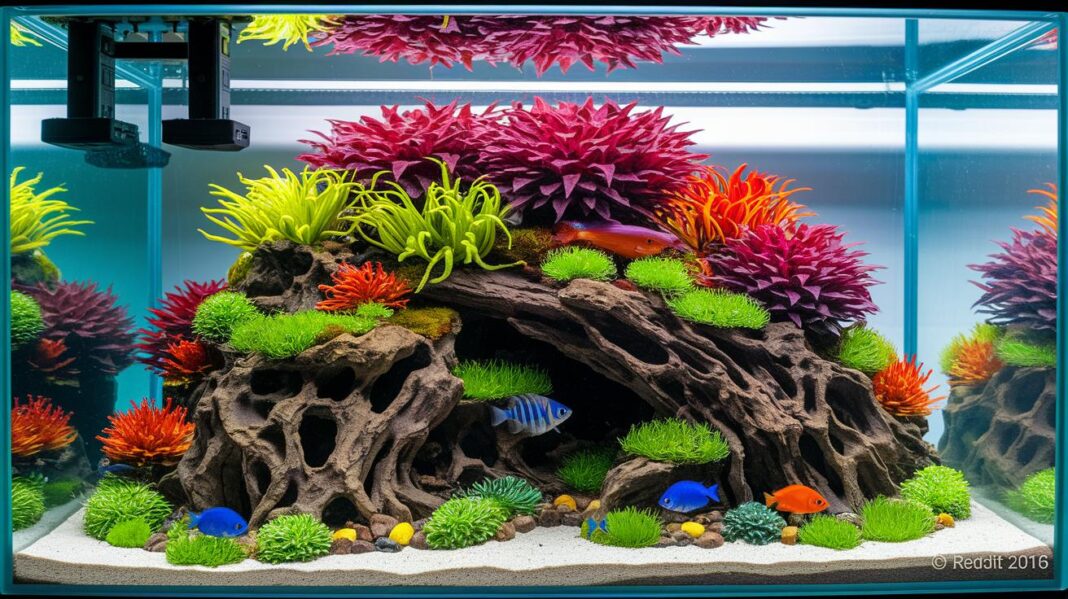

Ever notice how some aquascapes look as balanced as a calm stream? It’s like they have a secret recipe where art meets a pinch of smart science.
By mixing creativity with a few clever tricks, you can turn your tank into a glowing underwater retreat. Imagine picking just the right rocks and soil tactics, so your aquarium mimics nature's charm while showing off a little twist of your own.
Today, we're diving into three cool styles and sharing some insider secrets to upgrade your aquatic display into a true work of art. So come along and discover simple ideas to make your underwater world sparkle even more.
Foundations of Expert Aquascaping Techniques
Aquascaping is like giving your underwater world a beautiful garden makeover. You arrange plants, stones, and driftwood so your tank looks like a natural scene, a little mountain range, a quiet forest, or a calm lake. It’s a blend of creative art and simple science, much like setting up a lovely little underwater home.
Many skilled aquascapers enjoy three main styles. The Nature Aquarium style, which caught on in the 1990s, uses a special balance called the golden ratio (a neat trick for arranging things naturally). Then there’s the Iwagumi style from Japan. This one uses an odd number of carefully chosen stones, like Senmigawa or Manten, to create a quiet and balanced scene with only a few plants. Lastly, the Dutch style fills the tank with lots of plants arranged in neat layers, using a simple rule, the rule of thirds, to make sure special spots stand out.
Starting your aquascape is a step-by-step adventure. It all begins with picking the right tank. Smaller tanks can be a bit more sensitive to changes, while larger ones offer more steady water conditions. The basics include filters that help good bacteria turn harmful substances like ammonia into harmless compounds, LED lights that mimic sunrise and sunset, and CO₂ diffusers to give your plants a boost. Keeping an eye on water quality is super important, too, using trusted test kits, like those recommended on Sweetfysh (https://sweetfysh.com?p=2105), makes sure everything stays just right.
To plan your setup, start by choosing the style you love. Then sketch out your layout, gather your substrates and hardscape materials, create a gentle slope in your tank’s base, place your stones or driftwood, decide where you want your plants to go, and finally, fine-tune your equipment. Think of your aquascape as a living blueprint where every choice helps build a calm and dynamic home for your aquatic friends.
Precision Hardscape and Substrate Strategies in Advanced Aquascaping
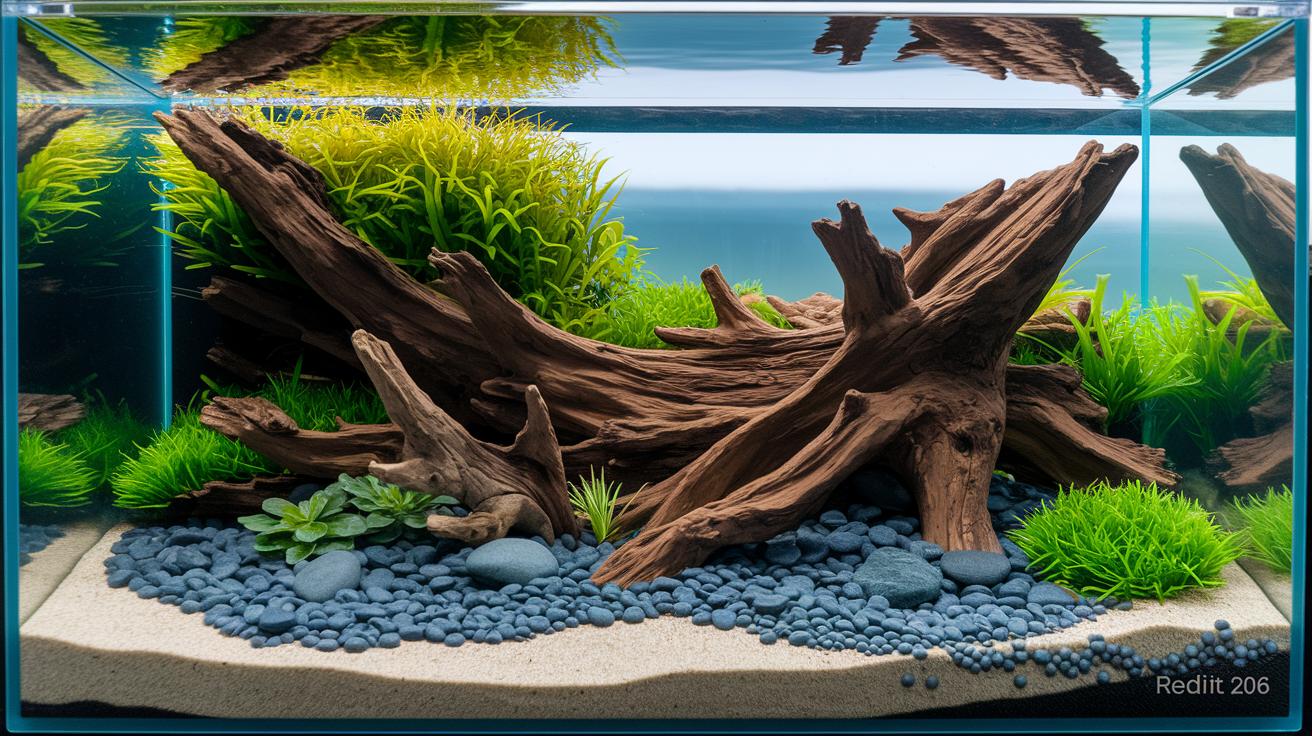
Advanced aquascaping is like setting up a living art piece underwater. You need to balance careful substrate work with smart hardscape placement to create a view that's both pleasing and balanced. Begin with a thin layer of substrate at the front and let it gradually deepen toward the back. This layered approach not only helps plants grow strong roots but also gives your tank a sense of depth. A mix of soft, neutral sand with bits of larger pebbles adds texture while also collecting waste.
When it comes to designing your hardscape, think about placing rocks in a naturally creative way. Odd groups of stones like Seiryu or Senmigawa are great for Iwagumi styles, while a tiered stone setup lends charm to Dutch designs. A well-placed piece of driftwood can act as a focal point and gently guide the water’s flow. If you need more tips on choosing the right substrate, a quick online search for trusted guides might be the way to go.
Here’s a table that compares some main substrate options:
| Material | Grain Size | pH Effect | Best For |
|---|---|---|---|
| Fine Sand | 0.2–0.5 mm | Neutral | Front slopes, carpet plantings |
| Coarse Sand | 0.5–1.0 mm | Lean alkaline | Midground bases, drain layers |
| Peat | <1 mm | Acidic | Low-light setups, pH control |
| Mineral Gravel | 1.5–3.0 mm | Varies | Strong-rooted plants, structural base |
Mix these elements with care, and your aquarium will become both smart and stunning. Ever notice how a well-planned tank can feel as soothing as the gentle ripple of a stream?
Advanced Aquascaping Techniques Boost Aquarium Brilliance
When picking aquatic plants for your tank, think of it as designing your very own underwater garden. Stem plants like Rotala and Limnophila become the main showstoppers in your background. By grouping these stems closely and giving them regular trims, you encourage more side branches to form, creating lush canopies that catch light just like a well-tended garden.
Carpeting plants such as dwarf hairgrass and Marsilea deserve a special spot up front. Keeping these plants trimmed to only a few inches high creates a neat, textured layer that adds depth to your aquarium, much like a small, perfectly kept lawn that gently stretches out before your eyes.
Mixing different kinds of plants can mimic the natural flow of water in the wild. Imagine combining bushy Anubias with the softer look of Cryptocoryne. This mix brings a lively contrast of shapes and colors, reminding you of nature’s ever-changing design.
A good layout is like layering a sandy beach. Start with tall stem plants in the back, add mid-layer grasses, and finish with a detailed foreground of carpets and scattered epiphytes (plants that attach to surfaces without roots in the soil). This arrangement not only makes your tank easier to clean but also gives every corner a unique, balanced vibe, making the whole aquarium sparkle with life.
Dynamic Water Chemistry and Next-Gen CO₂ Mastery for Advanced Aquascaping
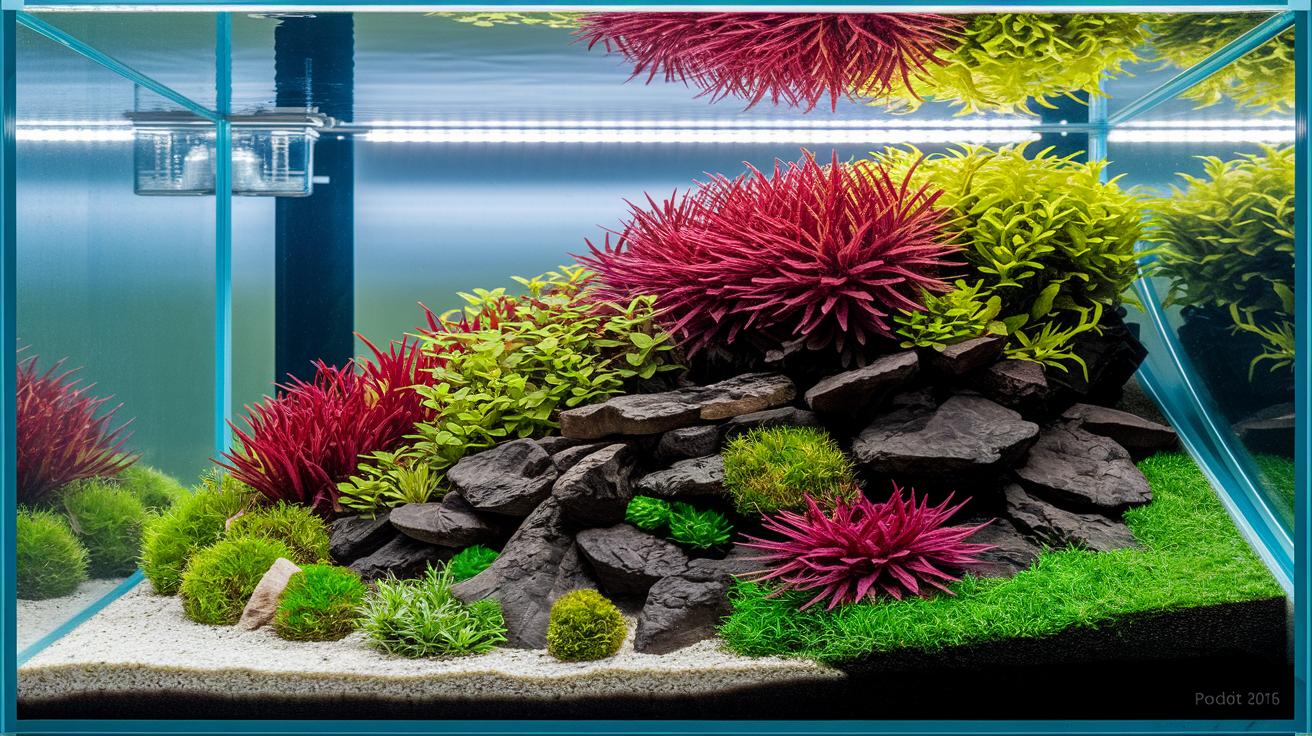
Aquascaping isn’t just about arranging stones and placing plants. It’s more like nurturing your own little underwater world, where every drop makes a difference. When you keep the water chemistry lively and use modern CO₂ systems, your plants can really shine. Try to keep your CO₂ levels around 20–30 mg/L to help photosynthesis work its magic. At the same time, a few regular water tests will help ensure the pH stays between 6.5 and 7.5, nitrates remain below 20 ppm, and phosphates under 0.2 ppm. A weekly water change of 20–30%, along with some GH/KH buffering, keeps the carbonate hardness just right, creating a friendly environment for your aquatic world.
CO₂ System Calibration
Set your CO₂ regulator to about 1–2 bubbles per second and check with a 4 dKH drop checker to see that everything is flowing smoothly. It’s a bit like fine-tuning a gentle current that helps your plants thrive. For a more detailed guide, you can explore how to install a CO₂ system for planted aquariums on our website.
Nutrient Dosing Strategies
Give your underwater garden a balanced diet by starting with a baseline dose: around 10–15 ppm nitrate (NO₃) and 0.5–1 ppm phosphate (PO₄) each week, plus a little micro trace-element boost every day. Think of it as serving your plants the perfect meal. Every couple of months, rotate your liquid fertilizers to keep the mix fresh and avoid any buildup. Using automated dosing pumps makes this care routine as simple as watching ripples form on still water.
Water Parameter Monitoring
Keeping an eye on your water is key to a thriving aquascape. Use handheld testers for quick checks on pH and nitrates, and rely on digital sensors for continuous feedback. Regular monitoring lets you catch any changes early, ensuring your underwater haven stays as vibrant as a sunlit stream. With this balanced approach, your aquatic garden will look like a living work of art every day.
Experimental Lighting and Filtration Innovations in Advanced Aquascaping
Modern aquascaping is taking a fresh dive into the future with full-spectrum LED arrays that mix precision with energy savings. These smart systems use timers to mimic the natural flow of day into night and adjust light levels (PAR, which is short for the specific light plants need) between 50 and 150 µmol/m²/s. It’s like giving each plant its own little spotlight, making their colors pop and keeping them happy. For a closer look at the details, check out the guide on LED vs fluorescent aquarium lighting: what you need to know.
When it comes to water care, innovative canister filters are making a big splash. These units combine mechanical, biological, and chemical processes in one go, sometimes even adding a UV feature to fight off unwanted germs. They push water through the tank 5 to 10 times its full volume every hour, which not only helps nutrients move around but also keeps the water as clear as a calm pond.
Digital automation is another breakthrough that’s changing the game. IoT-enabled controllers now handle lighting, CO₂ injection, and dosing schedules all by themselves. With wireless sensors checking on temperature and water conductivity, you can easily adjust conditions from afar. Together, these advances create a balanced and inviting underwater scene where every plant and fish can thrive.
Automated Maintenance and Algae Control Strategies for Aquascaping Techniques
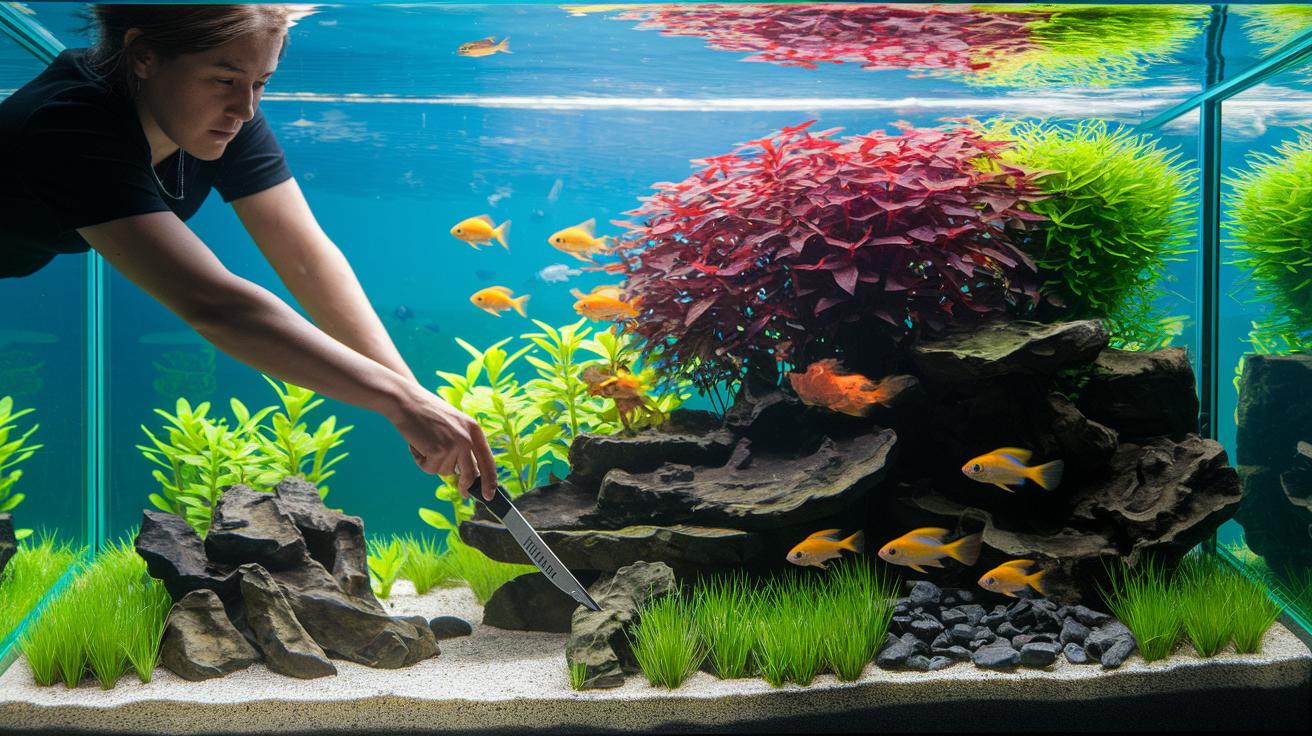
Keeping your underwater world vibrant is all about routine care that feels as refreshing as a gentle current. A simple, regular routine makes sure your aquascape stays lively and healthy.
Start by giving your aquatic garden a little attention every week. Every two weeks, trim your plants so they grow evenly, just like a careful snip keeps your favorite hedge in shape. Regularly vacuum the tank’s bottom to clear out any bits of debris, and every four to six weeks, swap out your filter media to keep the water sparkling and your plants thriving.
- Trim your plants every two weeks for a neat, balanced look
- Vacuum the substrate routinely to remove debris
- Change the filter media every 4–6 weeks to maintain clear water
Keeping pesky algae in check is another part of the fun. Balance the nutrients in your tank, think of it like serving just the right treats to your fish, and limit your lighting to 8–10 hours each day. Adding algae eaters, such as Otocinclus or Aman
Final Words
In the action, each step of your aquascape comes together like the gentle flow of water. You planned the layout, mixed substrates, and placed plants to achieve balanced underwater designs. Careful water testing, CO₂ management, and smart lighting work hand in hand with these efforts. With advanced aquascaping techniques guiding your approach, your tank becomes a lively, soothing underwater retreat. Keep experimenting and enjoying the calm care that comes with every swim of color and life.
FAQ
What are advanced aquascaping techniques shared on Reddit and online?
Advanced aquascaping techniques shared online mix creative rock placement, precise plant selection, and smart water chemistry management to build beautiful and healthy underwater environments.
How is rock placement managed in aquascaping?
Aquascaping rock placement arranges stones to mimic natural landforms, using techniques like Iwagumi layouts with odd-numbered stones to create visual balance and a natural flow in your tank.
How should I plan an aquascape?
Planning an aquascape means defining your style, mapping layout zones, and selecting substrate, rocks, and plants, which builds a harmonious and thriving underwater garden.
What is the best rock for an aquascape?
The best rock for aquascaping blends visual appeal with function; stones such as Seiryu or Senmigawa offer natural texture and balance, forming a solid foundation for your setup.
What features define top aquascapes?
Top aquascapes showcase thoughtful rock placements, layered plant arrangements, and stable water chemistry, all combined to create visually stunning and naturally balanced underwater gardens.
What is an introduction to aquascaping for beginners?
An introduction to aquascaping teaches you to arrange plants, rocks, and driftwood into a miniature underwater world, making it an enjoyable craft that rewards creativity and careful planning.
How do dragon stone and driftwood enhance an aquascape?
Using dragon stone with driftwood creates a striking, natural look by anchoring focal points and guiding water movement, which supports healthy plant growth and adds depth to the design.
What is the Iwagumi method in aquascaping?
The Iwagumi method in aquascaping uses an odd number of stones arranged in harmony, a Japanese technique that produces a balanced, minimalist layout with a clear focal point.
How can I make my aquascape look better?
Enhancing your aquascape involves careful substrate slopes, well-grouped plants, and balanced lighting, alongside regular cleaning and water testing to ensure a fresh and appealing display.
What is the golden ratio for aquascaping?
The golden ratio in aquascaping guides the placement of hardscape and plants, resulting in naturally balanced compositions that echo the proportion found in classic nature-inspired designs.
What are the different styles of aquascaping?
Aquascaping styles include the Japanese Iwagumi layout, the plant-focused Dutch style, and the Nature Aquarium that employs the golden ratio, each offering its own unique visual appeal and design principles.