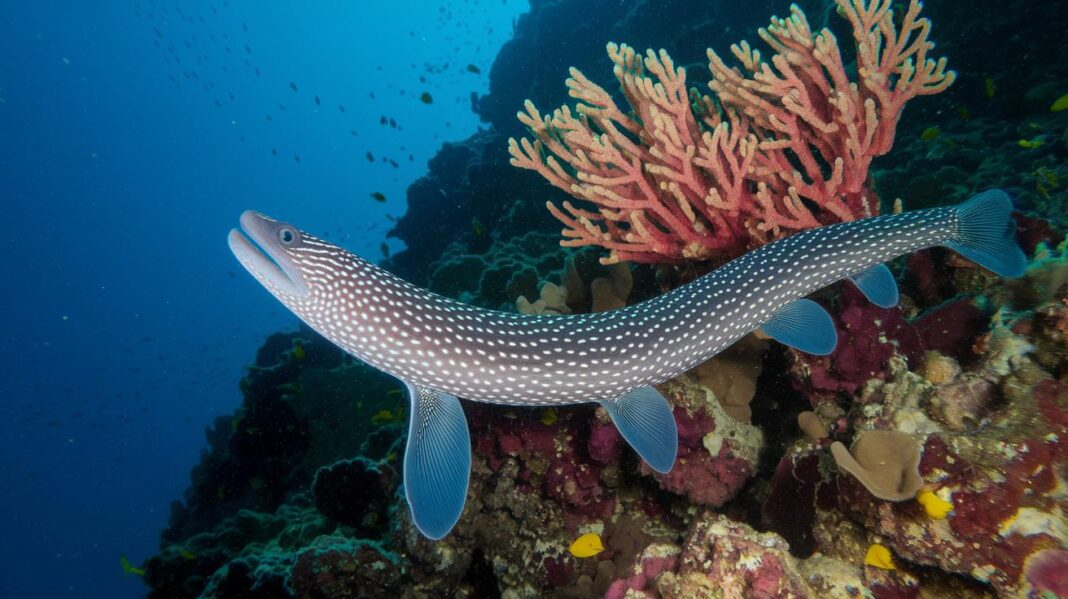

Ever seen an animal that looks strong but behaves in a surprisingly gentle way? Meet the deep sea wolf eel, an ocean wonder with a long, slender body and powerful teeth that belies its tender nature.
This creature calls the North Pacific home. Even though its name might make you think of an eel, it’s really part of the wolffish family, much like discovering that a bold exterior can hide a soft heart.
Today, let’s dive into some cool facts about its unique shape and calm way of moving through the water. Isn’t it amazing how the sea always has a gentle surprise waiting for you?
Deep Sea Wolf Eel Overview and Classification
The deep sea wolf eel, known by its scientific name Anarrhichthys ocellatus, is truly one of a kind. Even though its name might suggest it's an eel, it actually belongs to the wolffish family. Think of it as a quirky relative in the vast ocean who lives life a bit differently from the slender eels we usually picture.
With a long, smooth body, this fascinating creature can grow up to 1.8 m long and weigh as much as 18 kg. Its big, strong jaws come equipped with blunt, molar-like teeth that help it crush its food. At a glance, its impressive build might seem tough, but many divers describe a calm and gentle spirit hidden beneath that rugged exterior.
You can find these intriguing animals in the North Pacific, from the cool waters near Southeastern Alaska to central California. They prefer to snugly settle in rocky crevices, often living alone or in monogamous pairs. And isn't it amazing how encountering one of these so-called "old men" of the sea can turn an ordinary dive into a wonderfully memorable underwater adventure?
Deep Sea Wolf Eel Morphology and Dental Structure

This deep sea wolf eel is built like a sleek submarine, perfect for slipping into rocky hideaways. Its long, tubular shape and unbroken fin running along its back let it glide through tight underwater corridors with ease. And it's not just for looks, each design trick helps it hunt and thrive in the unpredictable deep.
- It has a long, tube-like body with one uninterrupted fin along its back.
- Its colors run from olive-brown to bluish-gray, with small orange spots scattered like twinkling sea treasures.
- A broad head paired with sturdy side fins gives it quick, precise moves in cramped rocky spaces.
- Up front, pointed teeth act like nature's tongs to firmly grip slippery prey.
- In the back, molar-like teeth deliver an amazing bite force, over 1,000 N, that easily cracks hard shells.
The eel’s teeth are a work of natural genius. Its front teeth lock onto prey securely, much like a pair of tongs, while the back teeth crush tough shells with power. This blend of gripping and crushing not only makes mealtime efficient but also shows off the clever evolution that turns this eel into a standout deep-sea predator. Encountering a wolf eel is truly a delightful treat for any diver, as its design perfectly marries form with function in the underwater world.
Habitat Distribution of the Deep Sea Wolf Eel
Deep sea wolf eels love hanging out around rocky reefs, from the tidal splash zone all the way down to 226 m deep. They find cozy spots in crevices, snug caves, and little holes carved into rocky structures. They enjoy cooler water temperatures between 5 °C and 12 °C, making their deep, dark world feel just right.
You'll find these eels along the coasts of Southeastern Alaska, British Columbia, and central California. Their ability to thrive across different underwater scenes shows just how versatile they are. By picking out well-hidden dens in rocky homes, they keep safe until night falls, when they set off on their evening hunts.
| Region | Depth Range | Habitat Type |
|---|---|---|
| Southeastern Alaska | Intertidal to 226 m | Rocky reefs with crevices, caves, and holes |
| British Columbia | Intertidal to 226 m | Rocky reefs with crevices, caves, and holes |
| Central California | Intertidal to 226 m | Rocky reefs with crevices, caves, and holes |
Feeding Dynamics of the Deep Sea Wolf Eel
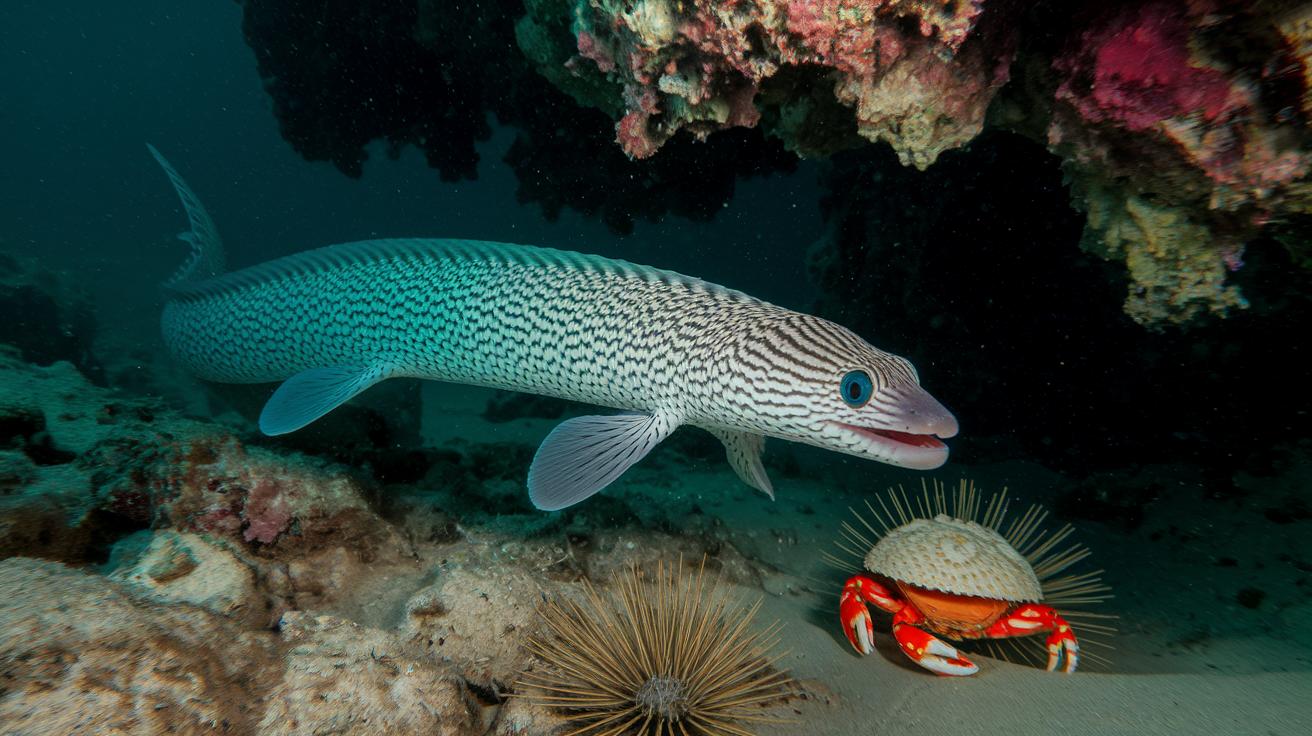
When darkness falls, wolf eels begin their nighttime hunt, gliding silently through the cool, shadowy water. They have a special way of feeding that mixes quick suction with powerful, crushing bites to catch and break down their dinner. Imagine a secretive hunter in a dim underwater world, watching every move before making its strike.
- Rock crabs
- Sea urchins
- Clams
- Snails
- Octopus
Each of these treats adds a burst of flavor to the wolf eel’s diet. As the ocean floor starts to stir at night, their strong jaws pull in hidden prey, especially those tiny critters scuttling among the rocks. Their bites can even break open the tough shells of crustaceans and mollusks, showing just how perfectly adapted they are for a nocturnal meal.
This unique feeding trick not only helps the wolf eel survive but also keeps the local sea life in check. By enjoying their nighttime feasts, they naturally help balance the number of smaller creatures, supporting a rich and varied underwater community.
Behavioral Adaptations of the Deep Sea Wolf Eel
When the sun goes down, these amazing eels slip into secret dens hidden among rocky crevices. At night, they glide out slowly, letting them surprise their prey near the small entrances of their rock homes. Think of it like a cat quietly edging towards its favorite window, so smooth are their moves that prey rarely sees them coming.
Their natural colors are clever too. The eel’s earthy tones blend with the rough, rocky background, making it almost invisible. Plus, these eels often pair up for the long haul, sharing the same den all year round. This snug base not only shields them during the quiet daytime but also serves as a familiar launch pad for their nightly underwater adventures.
Pressure Adaptation Mechanisms in the Deep Sea Wolf Eel
The deep sea wolf eel has smartly shrunk its gas-filled swim bladder to dodge the dangers of rapid pressure changes. By cutting down or even losing this air pocket, the eel avoids injury when the water squeezes it hard. This clever move keeps its body safe as it travels through the cold, pressurized depths.
Its cell membranes are a marvel too. Rich in unsaturated fatty acids, they stay soft and flexible even when deep underwater pressure tries to stiffen everything up. Imagine them as smooth stones in a flowing stream, they keep each cell working just right, no matter how heavy the water gets.
And then there are its muscles. Packed with extra myoglobin, a protein that binds oxygen, they act like a built-in oxygen reserve. This means the eel’s muscles get the fuel they need, even in low-oxygen conditions, so it can swim and hunt with ease in its dark, high-pressure home.
Life Cycle and Reproduction of the Deep Sea Wolf Eel
Deep sea wolf eels are truly fascinating. They form strong bonds, choosing to live as monogamous pairs that share and protect a snug den. This kind of commitment is like watching two close friends always having each other's back as they prepare to welcome new life.
When it’s time to reproduce, the female gently lays up to 10,000 bright orange eggs on the ceilings of hidden, rocky caves. Both parents watch over these precious eggs together for six to eight weeks, guarding them like treasures from curious predators and the harsh deep-sea world. It’s like setting up a small underwater nursery where every ripple matters.
After this careful nurturing phase, the eggs hatch and tiny larvae drift as plankton in the wide open water for several months. During this time, they gain the strength and skills they need, much like a fish learning to glide through gentle currents before finally settling onto the seafloor. This planktonic stage is a crucial period, building their survival instincts in the swirling, nutrient-rich currents.
The devoted parenting of these pairs helps the species live a long, steady life. In truth, deep sea wolf eels might reach up to 20 or even 30 years, showing how every step, from the egg to a fully grown eel, is carefully supported in their unique underwater world.
Ecological Role and Conservation of the Deep Sea Wolf Eel

Deep sea wolf eels are fascinating creatures that act like the caretakers of their underwater world. They hunt small invertebrates like sea urchins, keeping their numbers just right so that the rocky sea floor stays balanced and lively. Imagine a gentle nudge that keeps an entire reef singing in harmony, much like a steady current that calms the water.
The conservation status of these eels is a bit of a mystery. Researchers haven’t given them a clear rating, which makes them one of those hidden gems in the deep. Think of it like a secret foundation stone in an old building, quiet but essential for keeping everything steady, even if it doesn’t grab the spotlight.
Human actions are starting to make things tricky for these underwater guardians. Fishing practices such as rockfish trawls accidentally snatch them up, and the heavy gear used in bottom trawling damages the rocky homes they rely on. Protecting these unique eels means looking after the whole community of sea life, ensuring the underwater world stays healthy and balanced.
Research Methods and Encounter Risks with the Deep Sea Wolf Eel
Scientists have come up with lots of cool ways to explore the secret world of the deep sea wolf eel. They use small remote vehicles, manned mini-subs, and even ask divers to check out the underwater scene at depths around 200 meters. Sometimes, they set up baited video cameras to count the eels in one area. These clever methods let researchers watch the eels behave naturally, much like seeing fish glide through a calm stream, without disturbing their home.
But when divers get close to these slippery eels, they need to be extra careful. A quick bite, especially near the head, can happen if the eel feels threatened. To keep everyone safe and the underwater world undisturbed, strict rules are followed. These guidelines help protect both the eels and their secret hideouts.
- Always keep a safe distance from eel homes.
- Avoid getting too close to the eel’s head to lower bite risks.
- Stick to your planned path and try not to cause any extra ripples.
- Follow the set rules for deep sea research.
Final Words
In the action, we explored the wonder of the deep sea wolf eel through its unique classification, impressive morphology, and secretive behavior. We looked at its habitat preferences, nocturnal feeding, and special pressure adaptations that help it thrive in cool, deep waters.
Every section painted a picture of how this impressive creature fits into its underwater home. Keep your passion alive as you learn more about these fascinating aquatic friends.
FAQ
Are deep sea wolf eels dangerous to humans?
The deep sea wolf eel is not dangerous to humans. It usually shows gentle behavior, but may bite defensively if you disturb its den.
How big are deep sea wolf eels?
Deep sea wolf eels can grow up to 1.8 meters long and reach weights of around 18 kilograms, making them an impressive sight underwater.
What does the wolf eel eat?
The wolf eel diet consists mainly of rock crabs, sea urchins, clams, snails, and octopus, which it crushes with powerful jaws and blunt teeth.
How strong is the wolf eel’s bite and what role do its teeth play?
The wolf eel’s bite force exceeds 1,000 Newtons. Its sharp front teeth grip prey while its wide, molar-like back teeth crush hard-shelled organisms.
Where can wolf eels be found and what is their habitat?
Wolf eels live in rocky reefs along the North Pacific coast—from Southeastern Alaska to central California—often hiding in crevices, caves, and holes among the rocks.
Who are natural predators of wolf eels?
Adult wolf eels have few predators. In some areas, larger fish such as sharks, including Greenland sharks, may prey on them when opportunities arise.
Why are they called wolf eels?
They are named wolf eels due to their large, muscular jaws and tooth arrangement, which resemble a wolf’s fangs, despite belonging to the wolffish family instead of being true eels.
Do wolf eels eat starfish, sea cucumbers, or oysters?
Wolf eels favor hard-shelled prey like crabs and clams. They typically do not target softer invertebrates such as starfish, sea cucumbers, or oysters in their natural diet.