

Ever wonder if the deep sea holds a bit of magic? Deep ocean jellyfish glide through the dark waters like graceful dancers, their nearly clear bodies sparking wonder just like a mysterious ripple in still water.
Some of these enchanting creatures call the deep, more than 3,000 feet below the surface, their home, and they make us rethink what life under the waves might be. Their soft, flowing arms and gentle, quiet movements feel like a secret shared in a hushed underwater chat.
Today, we’re taking a closer look at how these jellyfish light up the world of science and invite us to imagine the ocean as a hidden garden of wonders.
Defining Deep Ocean Jellyfish: Biology, Habitat, and Diversity
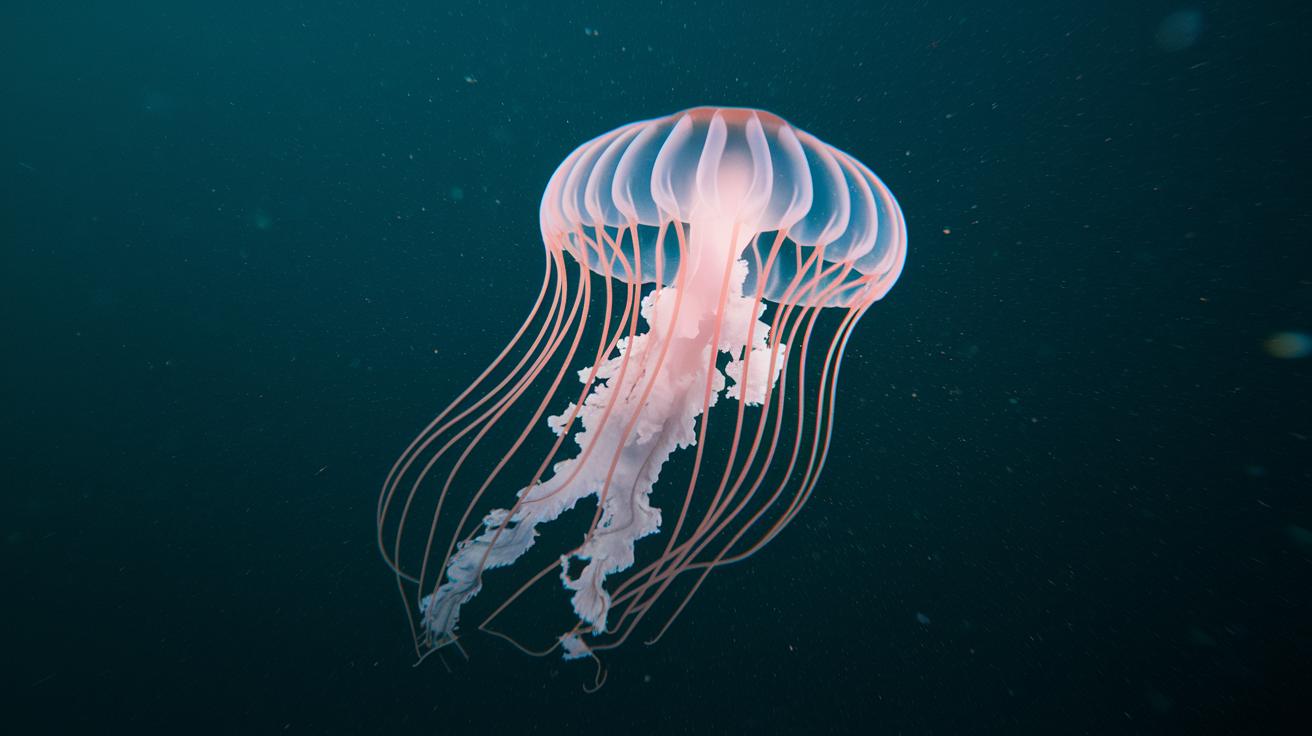
Deep ocean jellyfish are truly amazing creatures, with around 200 different kinds swimming in the deep. They are made up of about 90% water, which gives them a ghostly, see-through look that feels almost magical. Did you know the Stygiomedusa gigantea was first found way back in 1899 and only got its name as a separate species about 60 years later? It reminds me just how many secrets the ocean still holds.
These special jellyfish can be found in almost every ocean except the cold Arctic, where the water doesn’t work for them. Most of them live in deep, dark waters, often below 3,000 feet. One was even spotted at 3,200 feet in Monterey Bay off California! Imagine a world where sunlight barely reaches and the water feels like it's giving a big, crushing hug. Even in such a tough place, these jellyfish move closer to the surface at night, almost as if they're enjoying a quiet midnight swim, and slip back to the deep as soon as morning comes.
Their lifestyles are just as interesting as their homes. Marine scientists group them with other deep-sea medusae, which is just a fancy way of saying they have a jelly-like form that lets them drift along in the ocean. Their delicate, floating bodies are perfectly made to survive in a place with crushing pressures and very little light. It’s like they’re tiny acrobats gracefully dancing under water, and watching them reminds me how truly remarkable life can be, even in the ocean’s most mysterious corners.
Physical Characteristics and Size Variations of Deep Ocean Jellyfish
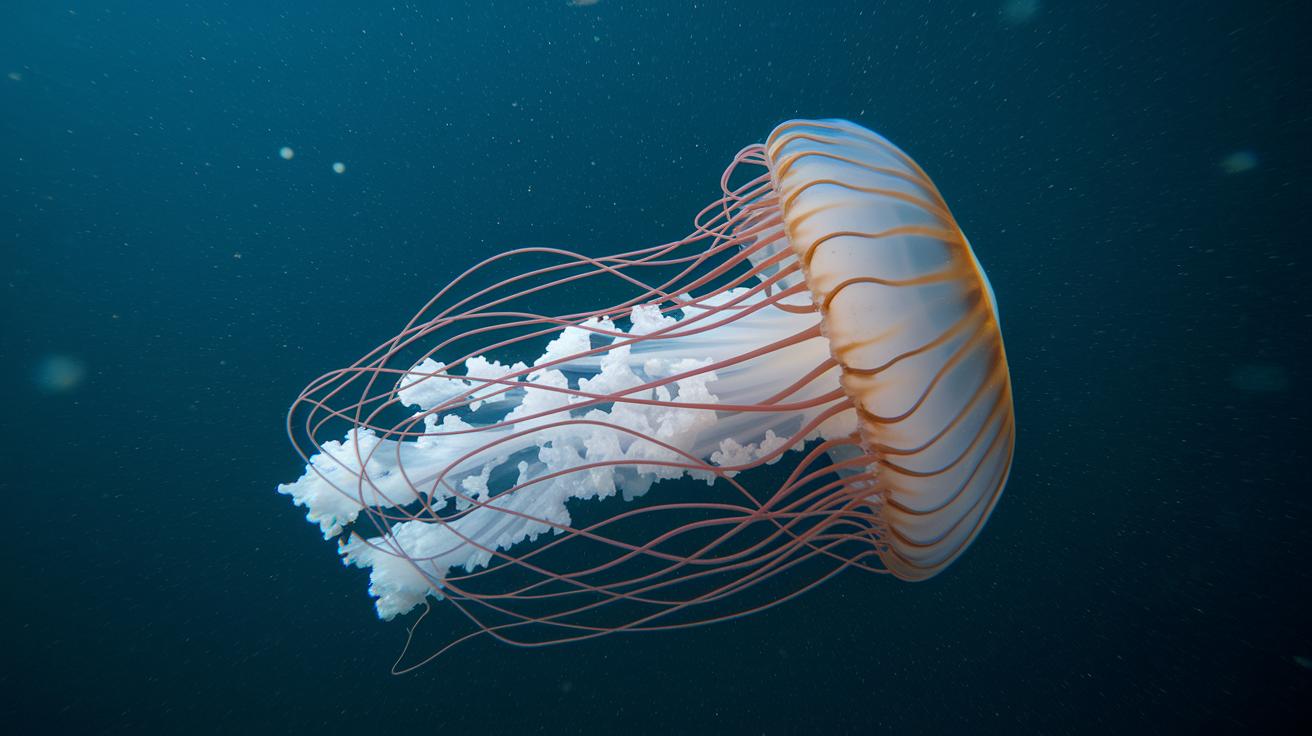
Deep ocean jellyfish are really cool and come in many shapes that show how they live in vast, deep waters. Take Stygiomedusa gigantea, for instance. Instead of using stinging tentacles, it has four wide, ribbon-like arms that gently wrap around its prey. Imagine a jellyfish that catches its food with soft, flowing arms.
The lion’s mane jellyfish is another showstopper. Its tentacles can stretch up to 60 feet, making it much larger than many other sea creatures. Its long, graceful tendrils really make you stop and stare.
Next, we have the deep sea helmet jellies (Periphylla sp.). These little jellies usually have a bell about 20 to 30 centimeters wide. They might seem small compared to giants like Stygiomedusa, but they're perfectly made for the deep blue world they live in. Picture a jellyfish that looks like a tiny bottle cap, delicate yet efficient.
Overall, these jellyfish show how nature adapts in amazing ways. Their sizes vary from just a few centimeters to several meters, all based on the pressure and buoyancy of deep waters. From ribbon-like arms to long, flowing tentacles, each jellyfish tells a story about the endless creativity of life beneath the waves.
Feeding Strategies and Predatory Interactions of Deep Ocean Jellyfish

Deep ocean jellyfish show us a feeding method that's as graceful as a gentle current. Instead of using stinging tentacles like many of their shallow-water relatives, Stygiomedusa gigantea sports four wide, ribbon-like arms that curl around and capture its prey.
These soft arms wrap around small fish and drifting plankton, giving the creature a unique way to dine without using venomous stings. Imagine how gentle it must be, like a tender underwater embrace, allowing these jellyfish to feed in peace.
Interestingly, Brotula fish often take shelter among these ribbon arms. While finding a safe spot away from predators, they also enjoy a natural cleaning service as the jellyfish helps remove pesky parasites. It's a beautiful example of nature working together.
Not all deep-sea jellyfish are without a sting, though. Some species still keep tiny stinging cells called nematocysts ready for action. Thankfully, because these medusae live far deeper than where most of us swim, human encounters are very rare.
- Deep ocean jellyfish change their feeding methods based on the amount of prey available.
- Their hunting moves are fine-tuned to a world without light and under heavy pressure.
- The friendly bond with Brotula fish shows how nature balances life even in the deepest waters.
Each feeding strategy fits perfectly with the variety of prey found throughout the water column, a neat trick that keeps the deep ocean ecosystem in balance.
Bioluminescence and Light Emission in Deep Ocean Jellyfish

Deep-sea jellyfish brighten their gloomy world with a glow that amazes scientists every time. On the NA153 expedition, researchers watched Periphylla helmet jellies send out bursts of light deep under the waves. These flashes come from special chemicals called photoproteins, which are simple molecules known as luciferins that quickly produce energy. Some species perform light shows so mesmerizing that scientists compare their flashes to underwater fireworks.
A lot of jellyfish in the deep sea use their glow in creative ways. Take the Atolla jellies, for example, they send out quick red pulses that act like SOS signals when they’re in danger. Recent lab tests and underwater robot (ROV) journeys have taken a close look at this red glow, trying to figure out why it stands out so clearly against the dark sea. It seems these red flashes help warn off predators or even confuse them when things get too close.
Their glow doesn’t just light up the dark; it also helps them communicate. When these jellyfish move upward at night, they mix with the faint light near the surface yet still send clear signals to their friends. Their light isn’t just a random spark, it’s precisely tuned to shine in the deep, dark ocean where every bit of brightness counts.
Scientists who study how invertebrates glow are very interested in these simple but clever light displays. These bioluminescent medusa remind us that even in the darkest parts of the ocean, nature finds a way to create beauty and meaning with light.
Ecological Roles of Deep Ocean Jellyfish in Abyssal Ecosystems

Deep ocean jellyfish are more than just mysterious drifters in the dark. They bring a quiet magic to the deep by helping to keep nature balanced. When these jellyfish pass on, they create what scientists call "jelly-falls", a slow, gentle shower of nutrients that feeds many creatures in the abyss. It's like nature sprinkling a little treat down into the deep water.
Take the Stygiomedusa, for example. With its long, ribbon-like arms, it acts like both a hunter and a caretaker. Brotula fish find shelter amid these flowing arms, which not only give them a safe spot but also help clean away tiny pests. This friendly interaction creates little safe spaces, offering a bit of comfort in an area filled with high pressure and near darkness.
- Deep ocean jellyfish help balance populations of plankton.
- Their daily swims move carbon from the surface down to the deep layers.
- They boost life around seamounts and vents, creating hotspots of biodiversity.
- When they decay, they add important nutrients to the seafloor.
Every jellyfish, or medusa, plays its part in nature’s cycle. They help recycle nutrients and build tiny habitats that keep the underwater world in harmony. It’s a gentle reminder that even the quietest creatures can have a big impact on the ecosystem.
Exploring Deep Ocean Jellyfish: Research Methods and Future Discoveries
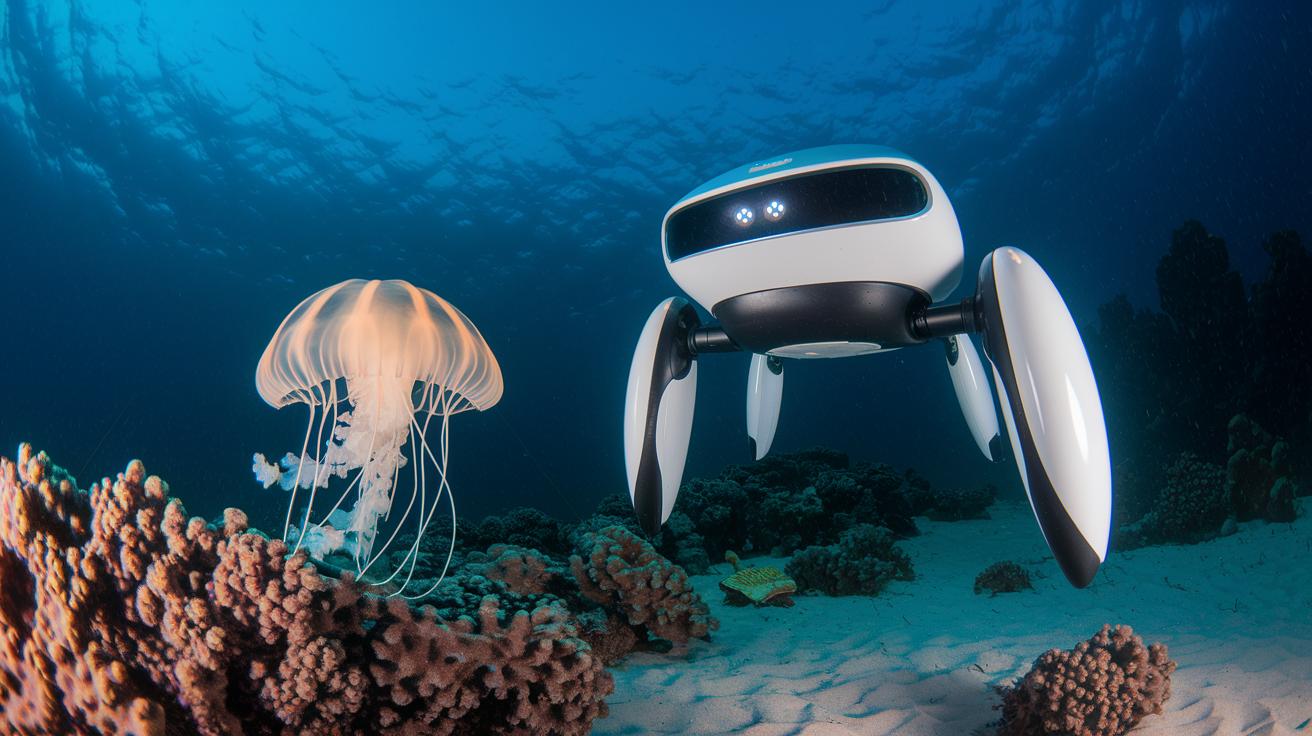
Modern underwater robots and small submersibles let scientists watch deep ocean jellyfish in their natural home without hurting them. On a recent dive, these cool machines captured the jellyfish exactly as they are, avoiding the damage trawl nets would cause. It’s amazing how technology now uncovers secrets hidden by deep pressure and dark waters.
During the H1993 NA153 dive near Johnston Atoll, researchers recorded a helmet jelly (Periphylla sp.) in its full, jellyy glory. This dive, which is set to be repeated from Honolulu in August 2023, shows that our underwater missions keep opening up new views of these mysterious creatures. One dive even caught a glowing jelly that looked like it was putting on an underwater light show, and that tiny moment shows why scientists are so fascinated.
Today, satellite-linked bio-loggers track how these drifting jellyfish move with the seasons. These handy devices let researchers follow every twist and turn in a jelly’s journey, helping them figure out migration patterns and even guess how long they might live.
- ROVs give us detailed underwater images of these rare drifters.
- New genetic tests and CT scans help unveil how these jellies handle extreme pressure.
- Deep-sea missions continue to uncover hidden behaviors that tell us more about jelly evolution.
With these innovative tools, scientists are not only learning more about deep ocean jellyfish but also setting the stage for many exciting discoveries in the vast, uncharted ocean.
Final Words
In the action, we explored the fascinating world of deep ocean jellyfish, covering their biology, sizes, feeding habits, light displays, and vital roles in underwater life. The article touched on how these creatures use simple body techniques to interact with their world and how modern tools help us learn more about them. We shared insights that can help you improve your aquarium environment while appreciating nature’s wonders. Keep a curious spirit as you care for your aquatic pets, and let the mystery of deep ocean jellyfish brighten your day.
FAQ
Q: What are deep-sea jellyfish with long tentacles and how do species like lion’s mane jellyfish fit in?
A: The deep-sea jellyfish with long tentacles include creatures like the lion’s mane jellyfish, whose nearly 60-foot trailing arms float gracefully in the deep, dark waters.
Q: What is known about the deep sea crown jellyfish or crown jellyfish?
A: The deep sea crown jellyfish features a unique bell shape that intrigues scientists. It adds a touch of mystery as researchers study its form amid shadowy ocean regions.
Q: How big are phantom jellyfish and other deep ocean jellyfish?
A: The phantom jellyfish size varies widely, from a few centimeters to several meters. Their impressive scale highlights an adaptation to deep-sea pressures and a graceful, subtle form.
Q: What are the stinging risks of deep ocean jellyfish, including phantom jellyfish stings?
A: The deep ocean jellyfish sting, including that from phantom jellyfish, is generally harmless to humans. Encounters occur in remote depths, reducing any risk of significant human injury.
Q: Can phantom or deep-sea jellyfish be deadly or poisonous?
A: The phantom and many deep-sea jellyfish species are not known to be deadly to humans. In fact, the most dangerous jellyfish are typically found in shallower waters rather than the deep ocean.
Q: What unique features do Atolla jellyfish exhibit?
A: The Atolla jellyfish stands out by producing rapid red flashes during distress. This quick light signal serves to startle predators and may aid communication among similar species.
Q: Which jellyfish live in the deep ocean and what depths do they occupy?
A: Deep ocean jellyfish, such as Stygiomedusa gigantea, live in environments below 3,000 ft. They thrive in dark, deep waters and often migrate vertically following light cycles.
Q: What makes the lion’s mane jellyfish notable?
A: The lion’s mane jellyfish is celebrated for its long, flowing tentacles, some reaching 60 ft. This majestic feature creates a striking display of nature’s artwork in cold, deep waters.
Q: What is the bigfin squid and how does it relate to deep ocean life?
A: The bigfin squid is a remarkable deep-sea cephalopod with oversized fins that allow it to glide effortlessly. Its movement highlights the special adaptations of creatures living under extreme ocean depths.
Q: What are sea pigs and what role do they play in the deep ocean ecosystem?
A: Sea pigs are scavenging creatures on the seafloor that help recycle nutrients, playing a quiet but important role in maintaining the balance of deep-sea ecosystems.
Q: What distinguishes comb jellies in the deep ocean?
A: Comb jellies are unique for their shimmering rows of cilia, which produce a gentle, colorful glow as they drift. This light display adds a subtle charm to the mysterious deep ocean environment.