

Ever thought about giving your betta a home that reflects its lively spirit? Picture a tank that feels like a little underwater paradise, with gentle colors and cozy spots that make your fish feel at ease.
In this guide, we'll walk you through every step, from picking the perfect tank (one that’s just the right size) to adding safe décor that creates a calm space. Every tip is designed to help your betta thrive while bringing a touch of tranquility to your everyday life.
Betta Tank Setup: Complete Step-By-Step Guide
First off, pick a 5-gallon tank that fits nicely in your space. Set it on a level spot away from bright sunlight and drafts, much like choosing the best rock for a calm swim. Rinse the tank with plain water only, think of it as gently cleaning your favorite coffee cup without any soap that might leave harmful traces.
Next, add about 2 to 3 inches of substrate like gravel or sand. This base not only gives your tank a pretty look but also helps keep the water at a steady, cozy temperature. Now, rinse and set out your decorations such as ornaments, fake or live plants, and smooth rocks. Soft décor without sharp edges is ideal for keeping your betta safe, and live plants like anubias or java fern offer a little underwater garden vibe.
Then, it's time for the equipment. Secure your tank’s lid so your betta can’t escape on an adventure. Install a gentle filter, like a sponge filter or a small hang-on-back type, that doesn’t create too strong a current since bettas prefer calmer water. Position your heater near the filter’s output so the warmth spreads evenly, aiming for a tropical temperature between 74°F and 82°F.
Finally, fill your tank with water that’s been treated with a dechlorinator, which removes any chemicals that might hurt your fish. Do a quick check of the temperature and make sure everything works just right. With clear water and plenty of open space along with some cozy corners for hiding, your betta will have a perfect home to settle into.
Betta Tank Equipment: Selecting Size, Heater, and Filter
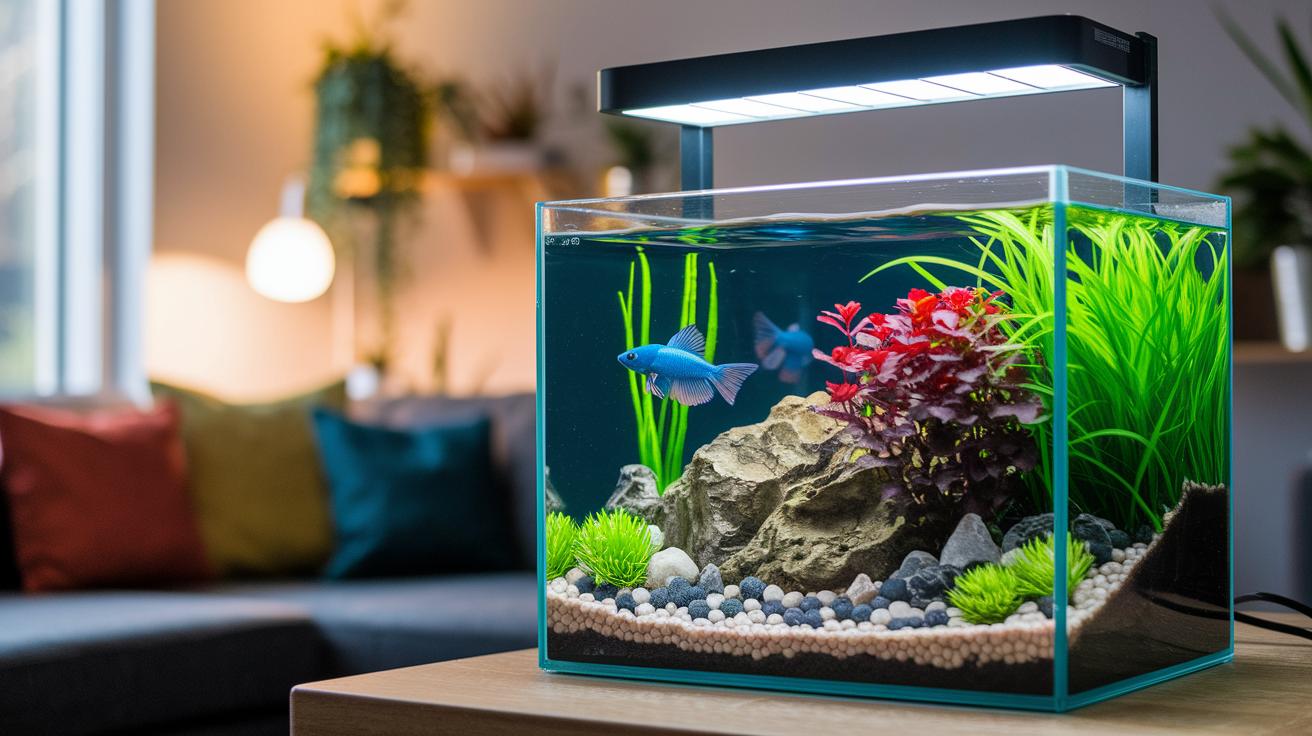
When starting out, think of a 5-gallon tank as a cozy home for your betta, it’s the simplest option for swimming space and keeping the water clean. If you want to give your fish a bit more wiggle room, a 10-gallon tank is like moving from a small studio into a comfy apartment. It lets your betta explore more and makes everyday cleaning a breeze.
Bettas love their warm water, ideally between 78°F and 82°F. You’ll need a heater that puts out about 3–5 watts of warmth per gallon. Whether you grab one with preset settings or one you can adjust, make sure to place it close to where your filter blows. This helps spread the gentle warmth throughout the tank, imagine a soft sunbeam warming each corner of your little underwater world.
Finally, pick a filter that refreshes all the water in the tank 3–5 times each hour. For a 5-gallon tank, that means a flow rate around 15–25 GPH. Sponge filters are a great choice because they create a gentle current that feels just right for bettas, and if you prefer something that’s easy to set up, a nano hang-on-back filter works similarly. Think of a sponge filter as nature’s way of keeping the water whisper-clean, much like a light breeze across a calm lake.
Betta Tank Water Preparation and Cycling
Dechlorination and Chemical Treatment
Start by mixing your tap water with a dechlorinator or water conditioner. It’s a bit like washing a new shirt to get rid of rough chemicals that can hurt your betta. This simple step clears out chlorine and chloramine so your tank becomes a safe home where friendly bacteria can thrive. Ever notice that a little care in the beginning makes all the difference?
Fishless Cycling Methods
Next, set up a calm space for your tank with fishless cycling. You add a small amount of ammonia, which acts as food for the good bacteria. Over about 4 to 6 weeks, these bacteria grow and settle on the filter parts or tank surfaces, much like nurturing soil before you plant your favorite bloom. This careful preparation keeps your betta from facing a sudden spike of harmful toxins.
Monitoring Water Parameters
Lastly, keep a gentle watch on your water's health with a test kit. Check key details such as ammonia, nitrite, nitrate, and pH levels. Aim for a pH between 6.5 and 7.5 with a water temperature around 74°F to 82°F. It’s similar to checking your home thermostat for comfort. A few small tests can catch any little ripple before it becomes a bigger worry.
Betta Tank Decor and Aquascaping Essentials

Start by picking a substrate that fits your style, like soft sand or smooth gravel. It gives your tank a natural look and helps hold your decor in place. Don’t forget to rinse all ornaments and fake plants well under running water to wash away any dust that might disturb your betta's little home.
Next, add live aquatic plants such as Anubias, Java Fern, or Marimo moss balls. These plants help keep the water clean and add a lovely, natural touch. Picture setting up a mini underwater garden where a bunch of Java Ferns nestle near a rock, creating a cozy hideout for your fish.
Also, steer clear of decor with sharp edges so your betta stays safe. Arrange everything so there are open areas for swimming and snug spots for resting. It’s like designing a gentle, little park where every corner invites exploration.
Betta Tank Inhabitants: Introducing and Maintaining Your Fish
When you bring your betta home, treat it like a special guest. Start by floating the sealed bag on the tank water for about 20 minutes. This lets the water and your fish get to know each other, kind of like enjoying a calm, first splash in a new pond.
After your betta settles in, it’s time to set up a feeding routine. Feed your fish 4 to 5 pellets each day and mix in a few freeze-dried or frozen bloodworms or even live blackworms now and then. It’s like changing up a daily snack to keep things interesting and fun.
Keeping your tank clean is essential for a happy betta. Here’s what you can do:
- Change 25% to 70% of the water once a week using a gravel vacuum. This helps remove extra waste and keeps the water fresh.
- Give your tank a quick look-over. Check the décor and equipment to make sure everything is running smoothly.
- Watch your betta closely and note any changes in behavior that might mean it’s stressed or not feeling well.
With the right care, your betta can grow up to 3 inches and live for about 3 years. For more tips and supplies to keep your aquatic friend thriving, you might want to check out aquarium supplies online. Enjoy every ripple and fin flicker in your aquatic world!
Final Words
In the action, the guide walked through each phase of setting up your betta tank. It broke down tank placement, cleaning, substrate selection, and equipment installation into simple steps. Next, it covered water treatment and cycling to build a stable environment for your fish. Then, it explored arranging decor for a beautiful and safe habitat, and finally, it shared tips on acclimating and caring for your betta. With clear tips and friendly advice, setting up betta tank can feel smooth and enjoyable. Enjoy watching your underwater world come to life!
FAQ
How do I set up a betta tank for beginners or for the first time?
The betta tank setup for beginners starts by choosing a 5-gallon tank, cleaning it well, treating your water with a dechlorinator, adding substrate and decor, and installing a heater.
How do I set up a betta tank without using a filter?
Setting up a betta tank without a filter means you’ll rely on more frequent water changes and gentle tank maintenance to remove waste, keeping the water clean and comfortable for your betta.
What does a betta tank setup kit include?
A betta tank setup kit typically includes a 5-gallon tank, heater, optional filter, substrate like gravel, decorations, and water treatment solutions, giving you all you need for a healthy betta home.
What are good tank mates for a betta fish?
The betta fish tank mates should be peaceful species that thrive in similar water conditions, such as certain snails or shrimp, while always monitoring for any signs of aggression.
How long should I wait before placing my betta in a new tank?
The wait time depends on the tank’s cycle stage; if using fishless cycling, cycle for 4–6 weeks, or if acclimating, allow at least 20 minutes with the sealed bag to reach proper temperature before release.
What should be placed at the bottom of a betta tank?
The bottom of a betta tank is best finished with a layer of substrate like gravel or sand, which gives a natural look, creates hiding spots, and supports beneficial bacteria growth.
How long do I cycle a tank before adding my betta?
The betta tank cycling process usually takes 4–6 weeks to build up enough beneficial bacteria that break down waste, ensuring a safe and balanced environment once a betta is added.