

Ever wonder if a small water refresh or a full change is best for your tank? This little guide breaks things down like a gentle current, explaining the pros and cons of both methods. A careful partial change can keep the good bacteria safe while a full change clears toxins quickly, but it can also stress your fish if the water suddenly shifts.
So, which method is best for your underwater home? Let’s chat about it with clear, easy steps to help your aquatic friends swim happily every day.
Comparing Partial vs Full Water Changes in Aquariums: An In-Depth Overview

Partial water changes mean swapping out about a quarter to half of the water in your tank. This gentle method lets all the good bacteria stay behind. These friendly microbes help break down waste and keep nitrate levels low, usually under 15 parts per million, which is really important for your fish. Ever notice how lively your fish look after a change? That’s often because the helpful bacteria are still doing their work while toxins slowly fade away.
Full water changes, however, remove every drop of water in your tank. While this can clear out a lot of toxins quickly, it may also flush out the good bacteria your fish need. Plus, a sudden change in water chemistry, like the pH shifting, can put your fish under stress. For most established tanks, full changes aren’t needed because losing those bacteria can upset the natural balance of your aquarium.
When setting up a new tank, especially during the 4- to 6-week cycling period, it's best to take extra care. Instead of using a gravel vacuum which might disturb the growing bacterial community, gently scoop out some water. Also, make sure the new water matches the tank’s temperature to keep your fish comfortable. Essential tools for this process include a gravel vacuum, a dechlorinator to remove chemicals from tap water, and an algae pad to give the tank walls and decorations a good cleaning.
Before mastering his aquarium hobby, Tom found that a small partial change every week kept his water crystal clear and his fish thriving. This simple, regular move makes a big difference over time, showing how a little care can keep your underwater world calm and healthy.
Advantages and Disadvantages of Partial vs Full Water Changes in Aquarium Maintenance

Partial water changes are like a gentle rinse for your tank. They refresh the water while keeping the good bacteria safe and the pH nice and steady. This slow, steady cleanup lowers nitrate levels, keeps algae in check, and helps your fish feel calm and secure. If your tank needs steady upkeep without major surprises, a partial water change is a friendly, ongoing tune-up.
- Partial Water Changes:
- Keeps helpful bacteria alive
- Maintains stable pH levels
- Slowly lowers nitrate build-up
- Controls algae growth gently
- Reduces stress for your fish
On the other hand, full water changes are a quick, thorough cleaning. They sweep away toxins fast, which can be crucial if your tank is facing an emergency like a disease outbreak or heavy contamination. However, this method resets your entire water system. That means while it can quickly clear out toxins, it might also disturb the beneficial bacteria and change the pH suddenly, which could stress your fish a bit. In moments when your tank seems like it needs a fresh start, a full water change may be the best option.
- Full Water Changes:
- Rapidly removes toxins from the tank
- Completely resets the water system
- Ideal for handling emergency situations
- May remove useful bacteria along with the bad
- Can lead to sudden pH shifts and stress for your fish
Key Differences Between Partial and Full Water Changes in Aquariums

Below you'll find a handy table that compares partial and full water changes for your aquarium. This chart breaks down important features like how much water you remove, how often you do it, the effect on good bacteria, what equipment you need, how steady your water's chemistry stays, and some tips for getting ready. For example, a partial water change works like a gentle tune-up, helping keep your tank’s natural balance just right, kind of like a soft breeze that helps wildflowers bloom.
| Parameter | Partial Water Change | Full Water Change |
|---|---|---|
| Volume Removed | 25–50% | 100% |
| Frequency | Weekly/Monthly | Rare/Seasonal |
| Impact on Bacteria | Keeps beneficial colonies | Removes beneficial colonies |
| Equipment Needed | Gravel vacuum | Buckets and siphon |
| Chemistry Stability | Gradual pH shifts | Abrupt pH changes |
| Recommended Prep | Temperature matching and proper conditioner dosage | Precise temperature matching and careful conditioner application |
Procedures for Partial and Full Water Changes in Aquariums
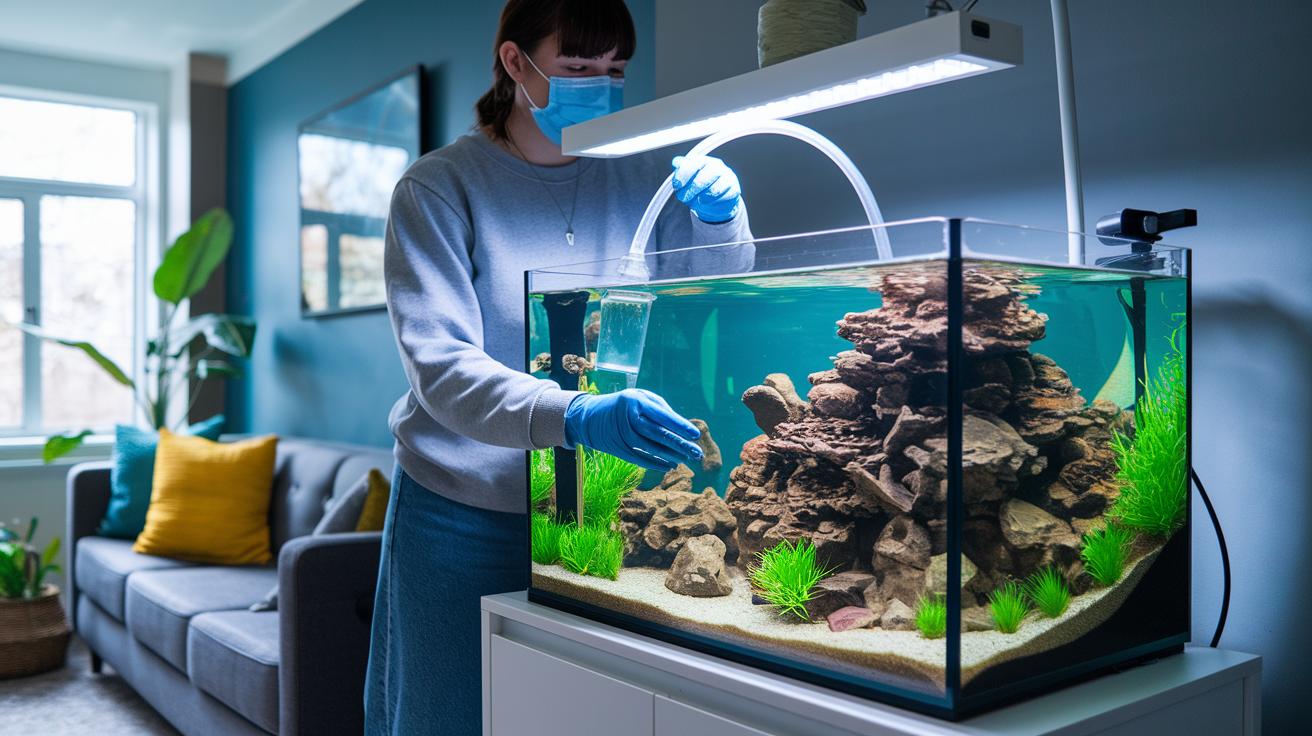
Begin by getting your replacement water ready. For both types of changes, treat your tap water with a dechlorinator so it’s free from harmful chemicals. Make sure the new water matches your tank’s temperature. If you have a saltwater setup, mix in the reef salt as needed. I remember checking the temperature like I would test if my favorite treat was just right.
Then, unplug all the equipment like your heaters, filters, and lights. This step is as simple as turning off a gadget before you fix it around the house, and it helps keep everything safe.
For a partial change, grab a gravel vacuum to clean the substrate and gently siphon water from about an inch deep so you can scoop up food bits and debris. For a full water change, you’d scoop or siphon out almost all the water instead. It’s like choosing between a little dusting and a complete clean-up of your room.
Once most of the water is gone, use an algae pad to wipe down the aquarium walls and decorations. This not only removes the algae but also preps the surfaces for fresh water, kind of like polishing a mirror until it gleams.
You can either dispose of the old water or use it for your houseplants since it still holds nutrients that might help them grow. When refilling, pour the new water slowly so it doesn’t disturb the substrate, much like gently stirring cream into your coffee for a smooth blend.
After filling up, add your water conditioners (like Seachem Prime, Stability, or Nutrafin Cycle) based on your tank’s size. Then, check the pH and salinity with test kits or a refractometer to ensure everything is just right for your fish.
Finally, plug your equipment back in and let the system run for about 30 minutes. This lets you see that all parts are working well while keeping the beneficial bacteria undisturbed.
Optimal Frequency Recommendations for Partial vs Full Water Changes in Aquariums

When caring for your aquarium, the fun part is tuning into what your tank needs. Factors like how many fish are swimming around, how often you feed them, the amount of lush plant life, and even the state of your filter all play a part. In tanks with only a few fish and light feeding, a weekly change of 10% to 25% of the water keeps nasty nitrate buildup low and maintains a calm, balanced chemistry. If you spot a little bit of debris settling in, try a partial water change. It’s like giving your tank a gentle refresh, kind of like saying, "I replaced 25% of my water today, and it felt as smooth as a quiet, sunlit stream."
In busier tanks that are home to more active fish and faster waste buildup, a bigger partial change of about 50% every two weeks is the way to go. This approach helps keep waste in check, and a quick weekly test of ammonia, nitrite, and nitrate levels will let you know if you need to adjust your routine. When setting up a brand-new tank, especially during the 4-6 week cycling phase, it’s best to stick with scooping out debris. This helps protect the helpful bacteria starting to grow, rather than disturbing them with a gravel vacuum.
- Stocking density, feeding habits, and plant cover all guide your water change routine.
- Save full water changes for when there’s a serious issue or during the tank’s cycling period, usually every 6 to 12 months.
Tailor your water change schedule to your tank’s needs so your underwater world stays healthy, balanced, and as inviting as a gentle tide on a quiet shore.
Impact of Partial vs Full Water Changes on Aquarium Water Quality and Aquatic Life

Partial water changes act like a gentle current in your tank. They help by adding fresh water gradually, which lets helpful bacteria keep the nitrogen cycle going (that’s the process where bacteria break down waste into safe compounds). This slow shift prevents sudden ammonia or nitrite spikes and eases stress on your fish. For example, swapping out 25-50% of your water feels like a calm stream rather than a jolt.
Full water changes, however, replace all the water at once. This big switch can upset the tank’s pH and temperature balance, wash away tiny but important trace elements, and weaken the natural benefits of your biological filter. Imagine your favorite hangout suddenly changing overnight, it can leave both you and your fish feeling off.
After any water change, it’s a good idea to test your water using kits for ammonia, nitrite, nitrate, pH, and salinity. This extra check is really helpful for sensitive species like South American or African Cichlids, Discus, and reef tank inhabitants, which need extra care. For reef tanks in particular, keeping the salinity just right is essential.
Ever notice how a reef tank’s delicate balance can shift in minutes without the right salinity check?
Final Words
In the action, we've explored ways to keep aquariums healthy. We've looked at step-by-step techniques for partial water changes and compared them with full water changes, noting key differences in maintaining beneficial bacteria and water chemistry. This detailed guide on partial vs full water changes in aquariums offers clear tips for safe, balanced upkeep. These insights help maintain both water quality and a stress-free environment for your fish. Keep experimenting with these methods and enjoy watching your aquatic world thrive.
FAQ
FAQ
How often should you change water in various fish tanks with or without a filter?
The frequency of water changes depends on your tank setup. In most freshwater aquariums, partial water changes of 10–25% weekly work well, whether you use a filter or not. Small tanks may need closer monitoring.
How do you perform a partial water change in a tropical fish tank?
Performing a partial water change in a tropical tank means removing about 25–50% of the water using a siphon or gravel vacuum, then refilling slowly with dechlorinated water of similar temperature to keep the fish comfortable.
Can aquarium water be changed every day?
Changing aquarium water every day can disrupt the natural balance and stress fish. Daily changes may remove vital bacteria, so sticking to a weekly schedule is a safer practice for maintaining stable water chemistry.
How can you change water in a fish tank without harming the fish?
Changing water safely involves gently siphoning out part of the water while keeping the temperature consistent, then replacing it with dechlorinated water. This method protects both fish and the beneficial bacteria they rely on.
Is it advisable to perform a 100% water change in an aquarium?
A complete 100% water change is rarely advised because it can eliminate beneficial bacteria and disrupt water balance. Partial water changes are preferred for gradually reducing toxins while preserving the biological system.
What is the purpose of performing a partial water change in an aquarium?
Partial water changes help remove excess toxins and nitrates while maintaining the beneficial bacteria essential for a stable nitrogen cycle, ensuring a healthy environment for your aquatic life.
What details are typically included in an aquarium water change chart?
An aquarium water change chart usually outlines recommended change frequencies, percentage volumes to replace, and adjustments based on tank size, stocking density, and overall water quality conditions.