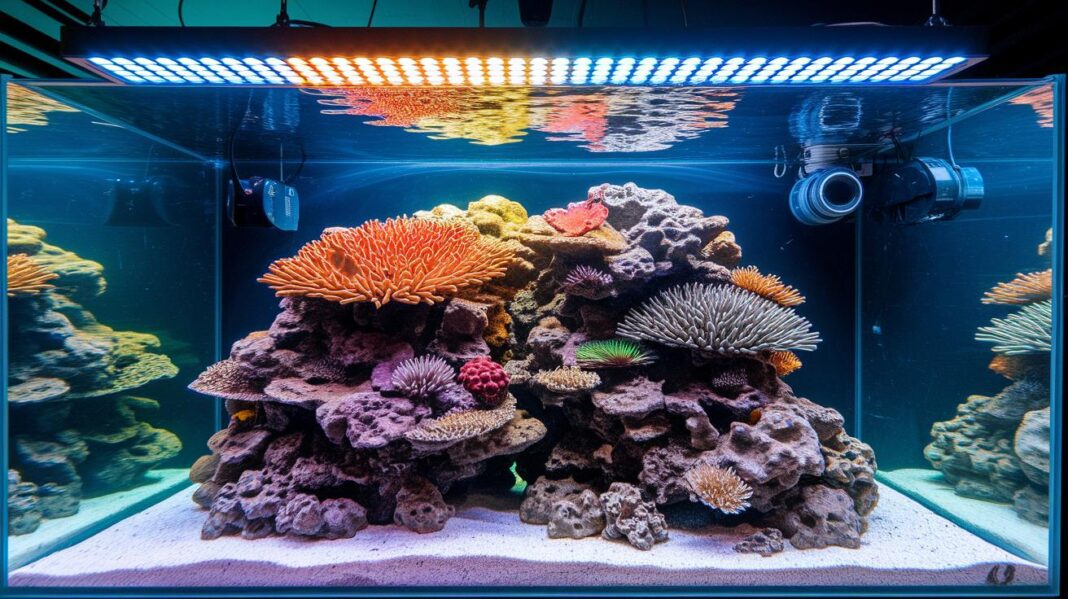

Have you ever thought about turning your aquarium into a mini underwater sunset? With programmable lighting, you can mix colors and set the perfect brightness using just your phone. It’s a bit like painting your tank with the gentle hues of a real sunset.
Imagine your fish swimming in a tank that glows in a natural, calming rhythm. This soothing light not only relaxes your aquatic buddies but also helps your plants flourish, making your underwater world a lively, natural habitat.
Today’s LED systems allow you to create custom light schedules with a mix of vibrant colors. They bring to mind the sparkle of sunlight bouncing over water, setting an inviting mood in your tank. Curious to see how smart lighting can transform your aquarium into a living work of art? Let’s dive in and explore!
Getting Started with Programmable Aquarium Lighting
LED lights are quickly taking over from those old fluorescent tubes, transforming the way we light our aquariums. Modern LED arrays pack 20 to 100 tiny 3-watt bulbs that let you design a vibrant underwater world. They come with different color channels, so you can mix and match to create stunning effects, almost like choreographing a light show for your fish.
We’ve also switched from old light measures like lumens and Kelvin to something called PAR output. PAR tells you exactly how much light is available to help your plants and corals grow strong, making it the go-to measure for a healthy tank.
- Custom light schedules
- Multi-color channel mixing
- Adjustable brightness levels
- Energy-efficient operation
- Remote/app control
With these features, programmable aquarium lighting brings a whole new level of control. You can tailor the light to mimic a natural day, easing your tank into a serene balance that your aquatic friends will love. And thanks to the remote or app control, managing your tank’s light becomes as easy as scrolling through your phone.
Choosing the Right Programmable LED System for Your Aquarium
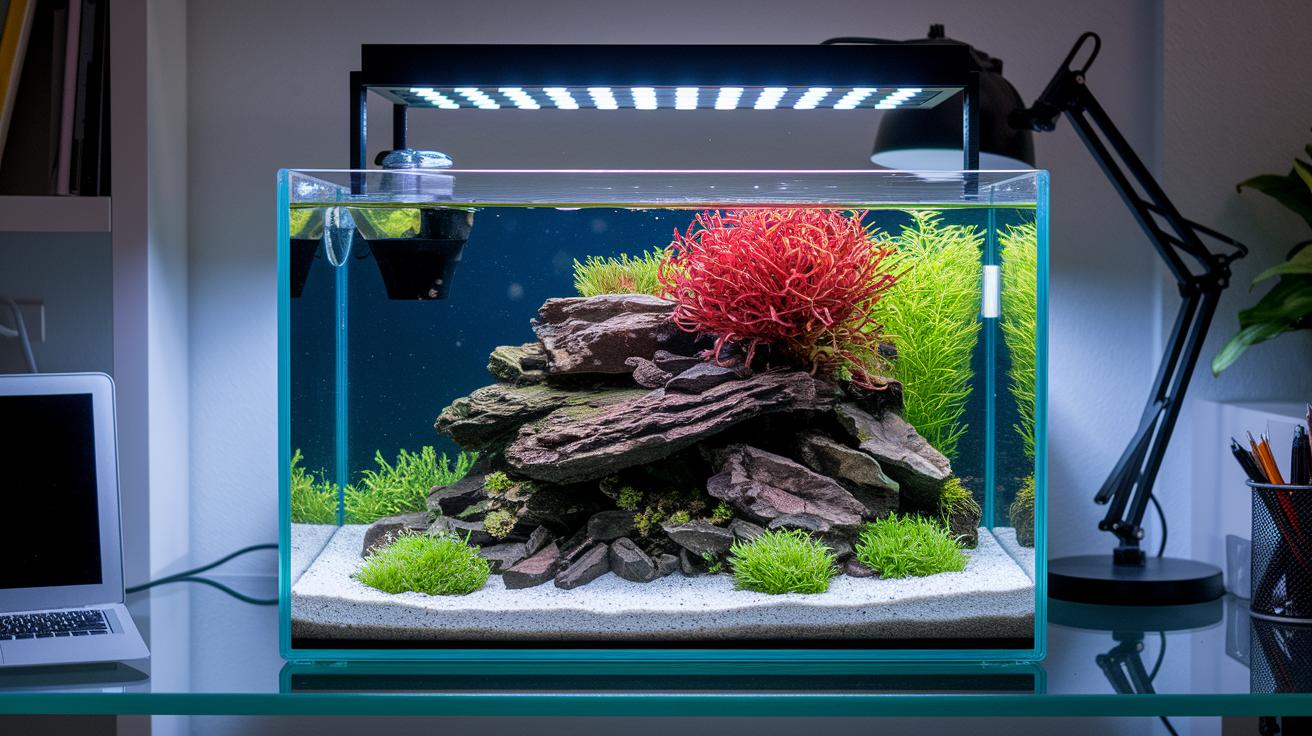
Picking the best LED light for your aquarium is key to keeping your underwater friends happy. Matching the light's PAR output, that magic measure of light that plants use, with your tank's needs is very important. For tanks that don't need super bright light, a medium output of about 80 is just right to help plants grow and keep the tank balanced. But if you have a setup that needs a bit more sparkle, a high output of around 110 will work better. When you check out a light, remember to look at its color channels and handy extras like moonlight effects or remote control.
| Model | PAR Output | Color Channels | Price Range |
|---|---|---|---|
| Finnex Planted+ 24-7 ALC | ≈80 | Full Spectrum | $100–$200 |
| Fluval Fresh & Planted 3.0 | ≈110 | White-based (lacks dedicated green) | $200+ |
| AI Prime 16HD | Varies | Full Spectrum + Moonlight | $200+ |
| Radion XR15 G6 Pro | Varies | Multiple (EcoTech Marine) | $200+ |
Finding a light that fits both your budget and your tank’s needs is a balancing act. If you have a smaller setup or simpler needs, entry-level options from $50 to $100 might be all you need. But if you're aiming for a more versatile and high-tech system that can mimic natural light conditions, spending a bit more on a mid-range or high-end light could really pay off. Matching the right price with the right PAR output helps ensure that your aquarium not only looks beautiful, but also gives your plants and fish the perfect environment to thrive.
Programming and Scheduling Light Cycles in Fish Tanks
First, set your photoperiod so your lights ramp up to full brightness in just 30 minutes. That fast change helps stop extra algae from growing and gives your tank a bright, energizing start.
Plan for an 8-hour cycle where the lights turn fully on at the beginning and off at the end. This quick shift helps your plants get the burst of light they need when their CO₂ and nutrients are just right, keeping your underwater world balanced and happy.
If you like a softer look, consider adding gentle color fades, like a simulated sunrise or sunset, to create a calm ambiance. Many planted tanks stick with a straightforward on/off pattern, but reef tanks might enjoy a smooth transition to adjust lighting without lengthening the day.
Don’t forget you can use remote scheduling to sync multiple lights at once. With this handy feature, you can set up or tweak your lighting routines right from your phone, ensuring every part of your tank shines in perfect harmony.
Installation and Setup for Smart Lighting Controllers
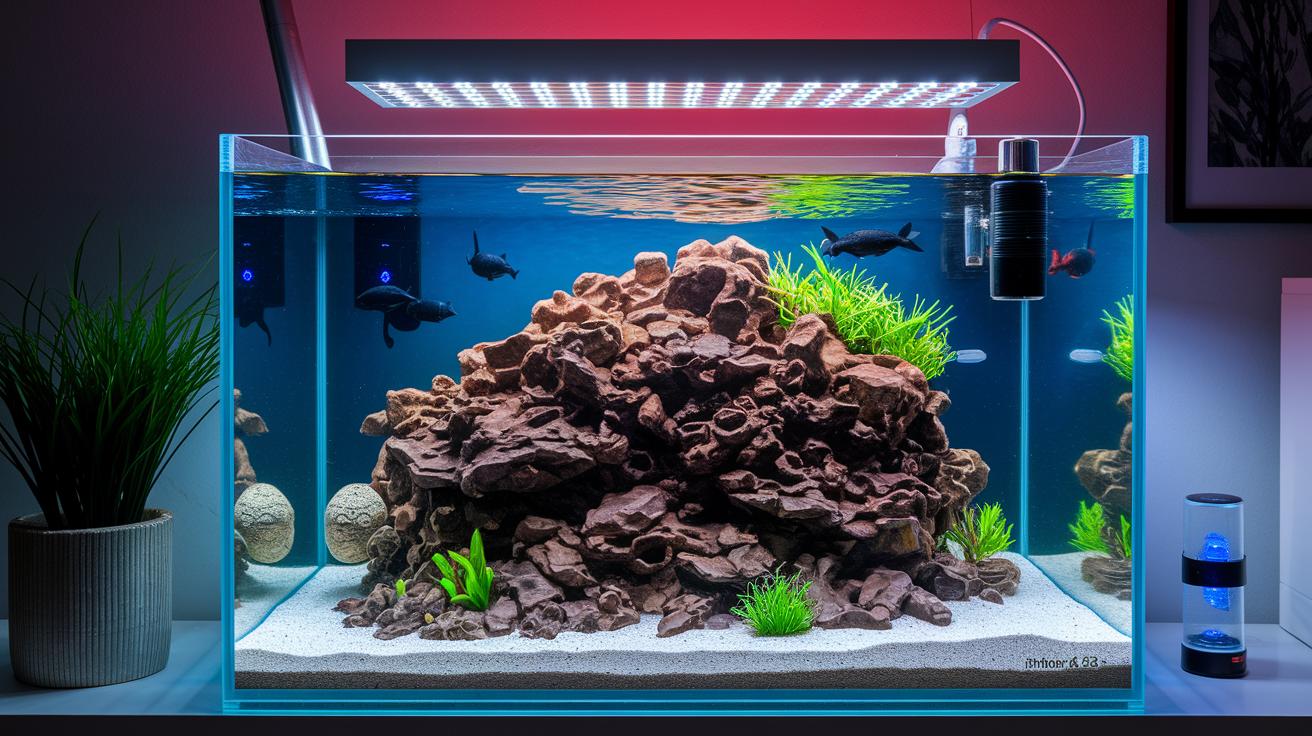
Before you dive in, make sure you have a screwdriver, a level, and a cleaning cloth nearby. These basic tools help you put together your lighting system neatly, much like smoothing the surface of your favorite aquarium.
Mounting LED Fixtures
Pick the right mount for your tank. You can choose between AI Prime Flex Arm mounts in 12" or 18" for both rimmed and rimless tanks, or go with a gooseneck option. Measure the tank carefully, just as you would measure for the perfect placement of a new fish toy. Then, attach the mount using the adjustable brackets that come with it. Tighten these brackets well so the mount stays snug during use. It’s a bit like finding the right spot for a favorite decoration in your tank, you want it just right to avoid any shifts later.
Connecting Controllers to Network
Now it’s time to wire up the system. Use the built-in Bluetooth on your Orbit Marine IC LOOP Bluetooth Controller to connect it to your lighting units. If you want extra network features, plug in the Kessil WiFi Dongle. Just follow the simple prompts on the device to connect each piece to your home network. A quick check on your router’s device list can confirm that everything is chatting together just fine.
Integrating with Mobile Apps
Lastly, download the matching app on your smartphone or tablet. Once it’s on board, connect your devices through the app’s easy setup steps. Set up your schedules and try out some commands to see if your system is reacting perfectly. This stage is like watching your fish dance in a well-lit tank, everything should move smoothly and respond well.
Before you finalize any programming, take a moment to test all the units to be sure they work and stay connected.
Optimizing Light Spectra for Plant and Coral Growth
Getting your tank lit just right can really help your underwater garden thrive. Whether you're after a sea of lush green plants or dazzling coral colors, adjusting your LED lights is like adding the perfect touch to your own little piece of the ocean.
For plant lovers, it all comes down to the right mix of red, green, and blue light. Simple studies show that plants grown with a mix of half green and half red end up a little shorter than those bathed in red alone, but still grow taller than if too much blue light is used. Blue light tends to hold back growth more than green, so swapping out a bit of green for blue can keep your plants’ fresh weight just right, even if green isn’t as efficient.
In reef tanks, lights that feature separate red, green, blue, and white channels let you fine-tune the glow to boost your coral’s health and natural beauty. Adjusting these settings brings out the deep reds and subtle blues in your corals, mimicking the gentle sparkle of sunlight on water. This careful balance not only nurtures delicate coral polyps but also makes your tank look like a vibrant underwater world.
Tinkering with each light channel is key to achieving the perfect brightness level for your setup. With a few thoughtful tweaks, you can turn your tank into a little underwater haven, a place where everything shines just the way you envisioned. Give it a try and watch your aquatic paradise come to life!
Maintaining and Troubleshooting Programmable Aquarium Lighting
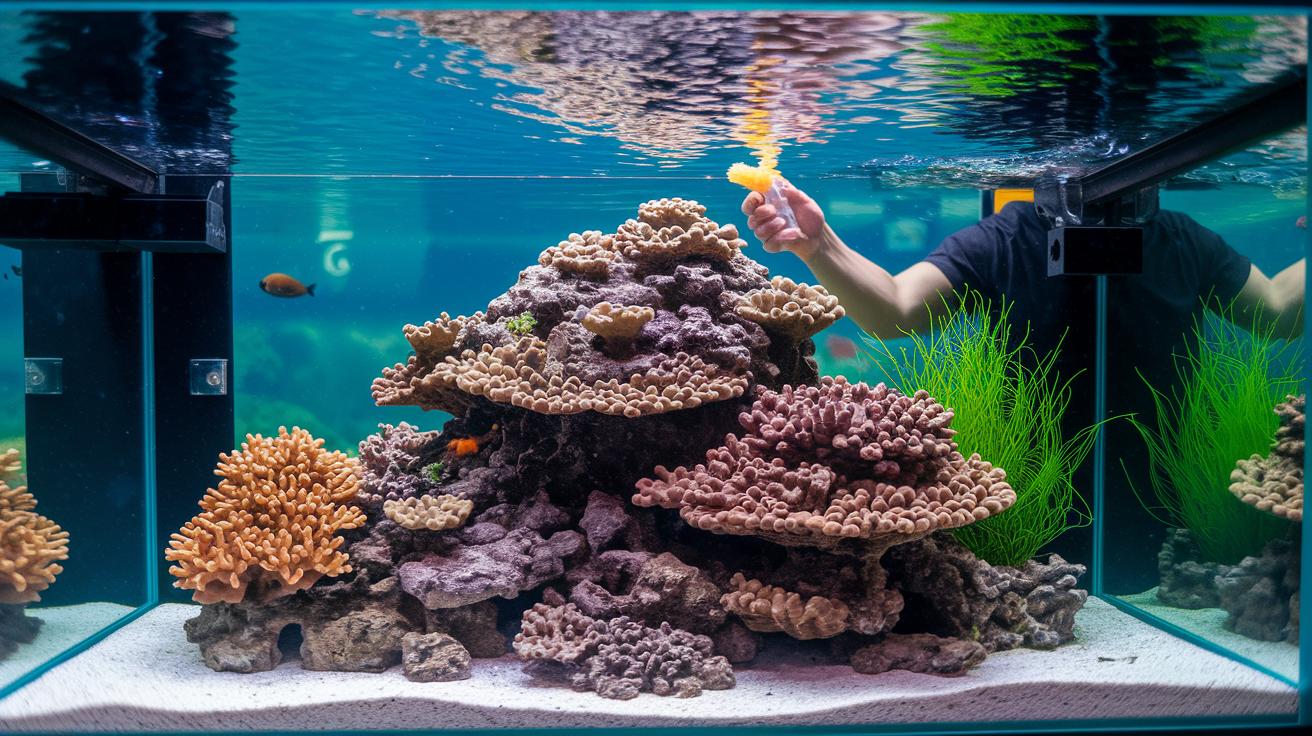
Keep your LED lights sparkling by cleaning the lenses and covers often. Remove any salt crystals or algae so they shine as bright as the ripple on a calm pond. Also, take a few minutes each month to check the mounts and fixtures, making sure everything is snug and secure.
Make sure your lighting system stays in tune by checking for firmware updates now and then. If things act a bit strange, try a factory reset. Don’t forget to update your mobile app too, and confirm that all your devices are connected properly. Sometimes, after a power outage, Bluetooth connections can slip away, but a simple reset can set things back on track. This regular care helps keep your smart aquatic LED system both efficient and ready to light up your underwater world.
If you run into hardware hitches, have a look at all the cables to ensure they fit tightly, and check the batteries in your remotes. Should you notice any flickering lights or lost connections, swapping out the batteries might just bring back the calm. And if troubles stick around, don’t hesitate to call support. They can offer replacement remotes and even a power supply (ranging from 19 V to 90 W) for models like those from Kessil.
User Reviews and Expert Recommendations for LED Controllers
Many aquarium fans have shared their thoughts about popular LED controller models. People love the AI Prime 16HD because its app makes setting up light cycles as easy as watching gentle ripples on a pond. Others admire the Orbit Marine NANO for its neat, compact build, even though it offers a bit less variety in color options. Overall, the community finds these controllers dependable but sometimes wishes for a little extra customization.
Experts in the field suggest that a good controller should have at least four color channels and strong scheduling options. Beginners will find comfort in multi-zone lighting systems that are simple to set up, much like arranging smooth pebbles along a stream. On the flip side, advanced users enjoy systems that include smart growth lights and allow for fine-tuned programming. For example, the Radion XR30 G6 gets high marks for its detailed channel control via EcoTech’s mobile app, enabling precise adjustments for that perfect underwater glow.
Entry-level models are great for newcomers because they offer ease of use and solid app integration, making the initial dive into LED controllers smooth and stress-free. Meanwhile, high-end systems are built for enthusiasts who want complete control over every detail of their underwater displays, ensuring that your aquatic home looks as vibrant as a coral reef.
Final Words
In the action, we've explored the shift from old fluorescent tubes to smart LED arrays, learning why PAR matters more than old metrics. We covered key features like custom light schedules, multi-color mixing, and energy-efficient performance that help create a vibrant underwater space.
We also walked through picking the best system, setting schedules, mounting hardware, and maintaining your setup. With programmable aquarium lighting, every tank can thrive, keeping both your plants and fish happy and healthy. Enjoy the glow of a perfectly lit aquatic home.
FAQ
Q: What are the best programmable aquarium lighting options, including Hygger models and those available online?
A: The best programmable aquarium lighting options offer energy-efficient LED setups with remote control and customizable schedules. Models like Hygger’s Bluetooth Aquarium Light combine multi-color channels, great connectivity, and are available for purchase online.
Q: What guidance do user manuals for programmable aquarium lighting, especially for Hygger models, offer?
A: User manuals for programmable aquarium lighting, including Hygger’s models, detail setup, installation, and programming steps. They help you achieve optimal light cycles and troubleshoot common issues to keep your aquarium thriving.
Q: What is the ideal light schedule for an aquarium and should the light be on a timer?
A: An ideal schedule ramps to full brightness within 30 minutes and runs for about 8 hours. Using a timer mimics natural cycles, helping maintain healthy routines for your fish, plants, and corals.
Q: Which is better for aquariums: T5 lighting or LED lighting?
A: LED lighting is now favored over T5 tubes because it offers improved efficiency, customizable light spectra, and flexible control. Modern LEDs support various aquatic needs and create a dynamic environment for your tank.