

Ever wondered if your dream aquarium could take care of itself? Imagine a peaceful underwater world where nature does most of the work for you.
This guide shows you easy steps to set up a tank that stays calm and clear with little effort. Let nature work its magic, just choose the right plants and friendly fish. Soon, you'll have a low-maintenance, beautiful aquatic space where you can relax and enjoy the gentle dance of water and life.
Step-by-Step Guide to Setting Up a Low Maintenance Aquarium Ecosystem: Pure Bliss
This guide will help you build a self-sustaining underwater world where nature does most of the work. Just like the gentle ripple of water, good bacteria turn harmful ammonia into nitrite and then into nitrate. A nutrient-rich base, about 1½–2 inches deep, along with spry stem and floating plants, soaks up extra nutrients. And when you run LED lights for 6–8 hours a day, they help your plants shine and keep algae at bay.
First, let your tank cycle naturally. Give the friendly bacteria time to settle in and clean your water before adding any fish. Once the water is steady, you can start with a small group of easy-going fish like danios, guppies, or Corydoras, and even invite a few shrimp along for fun. This way, you only need to top off water because of evaporation and do a little partial water change now and then.
Here’s your step-by-step plan:
- Choose the right tank size and a cozy, safe spot.
- Lay down a nutrient-rich substrate with some natural hardscape like rocks or driftwood.
- Set up a smart filter and energy-saving LED lights.
- Fill your tank with dechlorinated water and start the cycling process.
- Add fast-growing plants once the cycle begins.
- Check your water every week until ammonia and nitrite levels are zero.
- Introduce a small number of hardy fish or shrimp.
- Keep an eye on things with minimal top-offs and monthly water changes.
Follow these steps, and soon your aquarium will become a calm, balanced ecosystem that needs little daily upkeep. With nature handling most of the work, you can sit back, relax, and enjoy watching your little underwater haven come alive.
Selecting the Ideal Aquarium Ecosystem and Essential Equipment for Low Maintenance

Finding a tank that fits your space is the first step to a happy aquarium. Pick a tank size that suits your setup and choose a filter made for your water volume. Both hang-on-back and canister filters work great for keeping daily care smooth. I remember setting up my first 20-gallon tank with a well-matched hang-on-back filter, the system ran quietly and made maintenance a breeze.
LED lighting that you can adjust is key for creating a balanced setting for your fish and plants. Running your lights for 6–8 hours a day using an automatic timer gives your tank a natural rhythm. It’s like having a mini sunrise and sunset every day, bringing out the best colors and keeping things lively without stressing your fish.
A good base for your plants is also important. Use at least 1½ inches of nutrient-rich substrate and top it with some inert gravel. This combo not only helps plant roots thrive but also manages waste in the tank. And don’t forget a sealed tank lid, it helps reduce evaporation and keeps things neat. For dependable gear, check out aquarium supplies online.
Cycling Your Low Maintenance Aquarium Ecosystem: Water Chemistry and Bacteria
Cycling is a key step because it sets up a natural filter in your tank where helpful bacteria break down harmful chemicals. Think of it like arranging a calm underwater retreat that doesn’t need constant care.
Testing your water often is like giving your tank a quick health check. You’ll want to measure ammonia, nitrite, and nitrate every 3 to 4 days, almost like checking the weather for your little aquatic world. When ammonia and nitrite hit 0 and nitrate stays below 20 ppm, you know things are in balance. Keeping an eye on pH and temperature helps your tank stay steady, too.
Encouraging more good bacteria can speed up this process and boost your tank’s natural filter. For instance, adding a deep sand bed creates a snug spot for anaerobic bacteria, which quietly turn nitrates into harmless nitrogen gas. Aim for a pH between 6.5 and 7.5 and a temperature of 74–78°F to give these tiny helpers the best chance to thrive. Adjusting the water flow and avoiding sudden changes helps them settle in and work their magic for a healthy, self-sustaining environment.
| Parameter | Ideal Range |
|---|---|
| Ammonia | 0 ppm |
| Nitrite | 0 ppm |
| Nitrate | < 20 ppm |
| pH | 6.5 – 7.5 |
| Temperature | 74 – 78 °F |
Designing a Sustainable Aquascape in Your Low Maintenance Aquarium Ecosystem
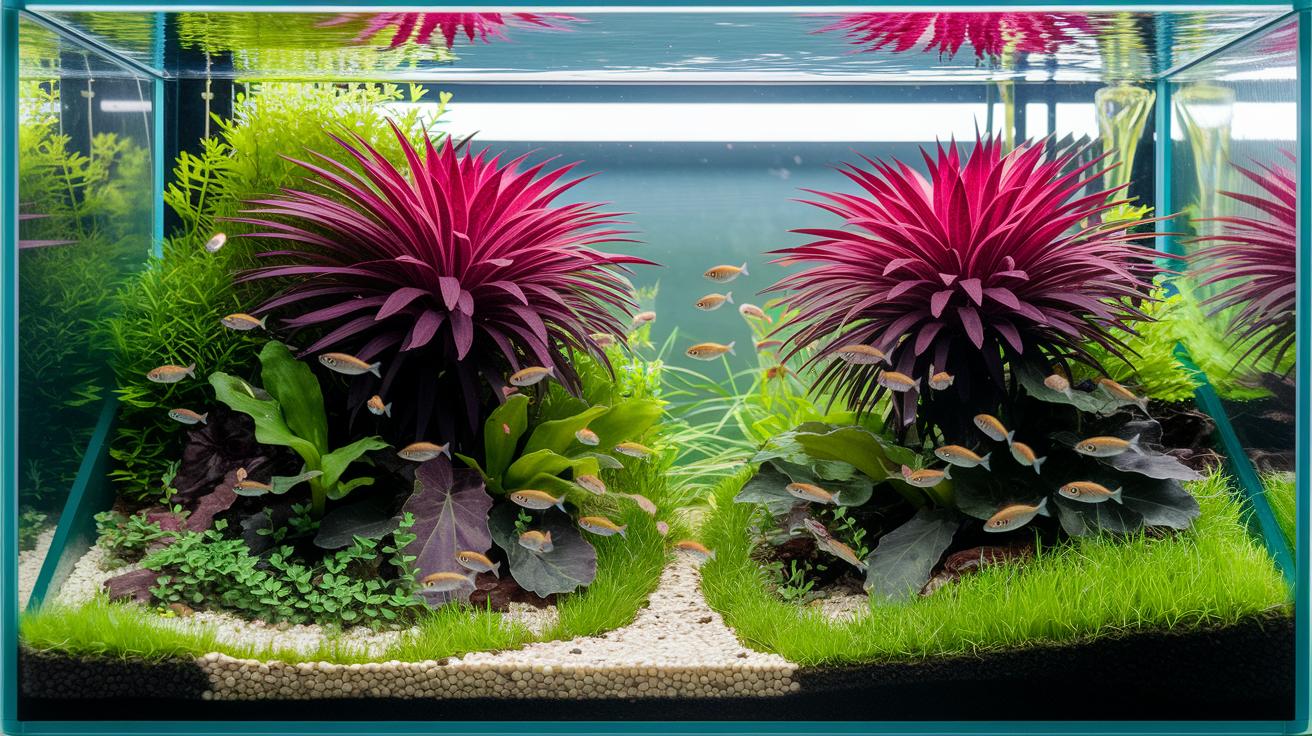
Making a beautiful underwater home starts with blending plants and decor that naturally complement each other. Quick-growing stem plants like Hygrophila and Ludwigia, along with floating helpers like duckweed, eagerly soak up extra nutrients and help keep unwanted waste in check. This smart approach works like nature’s own recycling system, keeping algae at bay while you enjoy simple upkeep. And by giving your tank about six hours of gentle light each day and skipping heavy fertilizer doses, you keep everything happy with minimal fuss.
Selecting Low-Maintenance Plant Species
Pick plants that brighten your aquascape and efficiently absorb extra nutrients. Look for species that grow fast and are easy to care for. For instance, Ludwigia thrives on little attention, filling your tank with a vibrant natural feel without requiring much extra work. With fewer plants needing constant trimming, you get more space to enjoy and less hassle overall.
Easy Aquascaping Layout Tips
Arrange driftwood and inert rocks to create natural focal points that follow the rule of thirds. Imagine an open swimming area for your fish, paired with structured elements that give your plants plenty of room. This creative decorating trick guides the eye gently through the tank while maintaining open zones. By mixing natural materials with carefully chosen plants, you end up with a self-sustaining underwater world that looks stunning and stays low maintenance.
Stocking Your Low Maintenance Aquarium Ecosystem with Hardy Aquatic Species
When choosing fish for an easy-care aquarium, think of them as your lively underwater friends. Zebra danios, guppies, and Corydoras catfish do great in water that stays around 74 to 80°F. These active, social fish enjoy a mix of quality flake and pellet food. Their robust nature and low waste means they help keep your aquarium calm and balanced.
Adding invertebrates like Cherry or Amano shrimp and small snails can bring an extra touch of nature to your tank. These little critters nibble on algae and clean up bits of extra food. They need very little care and produce almost no waste, making them wonderful partners for your fish. The combined efforts of both fish and invertebrates create a natural cleanup crew that keeps your aquatic world sparkling.
Keep an eye on stocking your tank by following the idea of one inch of fish per gallon in tanks without high-tech features. Tanks with CO₂ might handle a bit more, but a lighter stocking helps maintain clear water and minimize waste. Regular testing and a bit of gentle observation will help you tune in to your tank's unique rhythm. This careful balance lets your underwater family thrive with ease and peace.
Maintaining Your Low Maintenance Aquarium Ecosystem: Hassle-Free Routines

Once your self-sustaining aquarium is up and running, all you really need is a simple water top-off to make up for what evaporates. For the first few months, just add water as you see it disappearing. Then, around once a month, swap out about 10–20% of the water to keep nutrients from building up too much, kind of like giving your tank a gentle refresh without shaking up its peaceful balance.
Using a siphon vacuum feels almost like a mini underwater adventure. This little tool helps you clear out loose bits at the bottom of your tank without disturbing the friendly bacteria that keep everything in order. It’s an easy way to keep your tank looking neat without the hassle of emptying it completely.
Lighting plays a big part too. Keep your light on just long enough for your plants to soak up all the good stuff without giving algae a chance to throw a party. And while you’re at it, be careful not to overfeed your fish, as extra food can spark algae blooms. Think of it like setting the perfect scene where every element works together naturally, just like the ripple of water on a calm day.
Every couple of weeks, take a peek at your water’s key levels by doing a test. Adjust your light and feeding times if needed to keep everything balanced and healthy. It’s all about keeping things simple and stress-free, just enjoy watching your little aquatic world thrive.
Budget-Friendly and Eco-Friendly Tips for Your Low Maintenance Aquarium Ecosystem
When setting up or updating your tank, think about using energy-efficient gear that works for you. For instance, programmable LED lights let you set a daily schedule, meaning you save energy while keeping your fish happy. Instead of using lots of chemicals to keep the water clean, let your live plants and biofilters do the work, they’re nature’s way of keeping things balanced. It's like swapping heavy chemical treatments with nature's own solutions, giving your aquarium a natural, grateful vibe.
Another fun way to save money is by creating your own substrate mix. Using local clay and gravel mixes not only lowers your costs but also gives your tank a look that’s as natural as a pond. This DIY approach means you can buy materials in bulk and enjoy better savings and a more authentic underwater scene.
If you want to make your aquarium friendly for both your wallet and the environment, try keeping it lightly stocked. Fewer fish mean there's less waste and a lighter load on your filter and heater. This small tweak helps your tank use less energy and reduces overall stress on the mini ecosystem you’ve created at home. Think of it as streamlining your setup for a healthy, low-maintenance habitat that’s easy to care about for years to come.
Final Words
In the action, we covered steps to create an inviting aquatic home – from selecting the right equipment and setting up a nutrient-rich substrate to monitoring water chemistry and designing a livable aquascape.
Simple, yet smart planning makes setting up a low maintenance aquarium ecosystem a rewarding experience. Routine care and thoughtful design bring clarity and balance to your underwater world. Keep learning and growing with every tweak and test, and enjoy every ripple along the way.