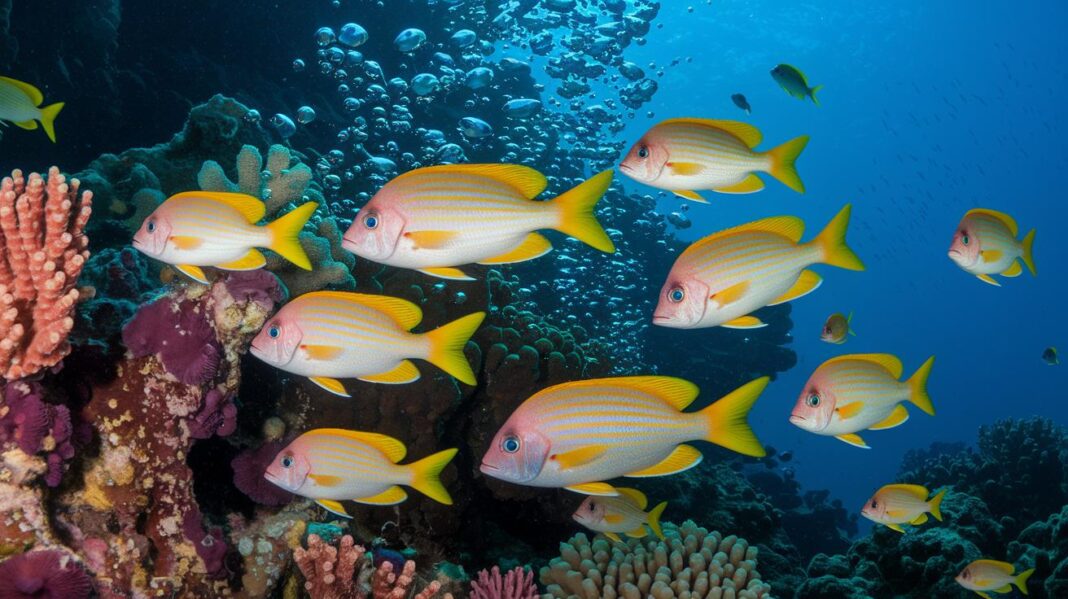

Have you ever wondered what we call a group of fish?
Imagine them gliding in the water, like a gentle dance that paints a picture of unity.
You might think all fish travel together in the same way, but each group has its own special name that tells a story.
In this article, we'll dive into those unique terms and explore what they reveal about fish behavior.
So, get ready to discover a whole new perspective on the underwater world, where every group of fish has its own rhythm and charm.
A group of fish is called what: Marvelous
Most folks call a group of fish a school. This tells us that the fish are swimming together as if they were part of a perfectly timed dance. Imagine watching them glide side by side in the clear water, it really feels like a delightful water ballet.
On the other hand, when fish gather without a strict formation, we say they form a shoal. A shoal is simply a group of fish hanging out in one spot, much like friends meeting up at a park. Sometimes, fishermen use words like catch or draught when they net these fish, and they even mention a run when fish move together during migrations.
Each term gives us a hint about the fish behavior. Schooling shows a close-knit, organized movement that helps keep them safe, while shoaling is all about being near each other without any set order. For example, a school of brightly colored fish in a coral reef looks like nature's own masterpiece, and a shoal of wandering fish paints a picture of a friendly, relaxed gathering.
This small difference in words helps us appreciate just how lively and clever fish can be in their underwater world.
School vs Shoal: Understanding Fish Grouping Terms
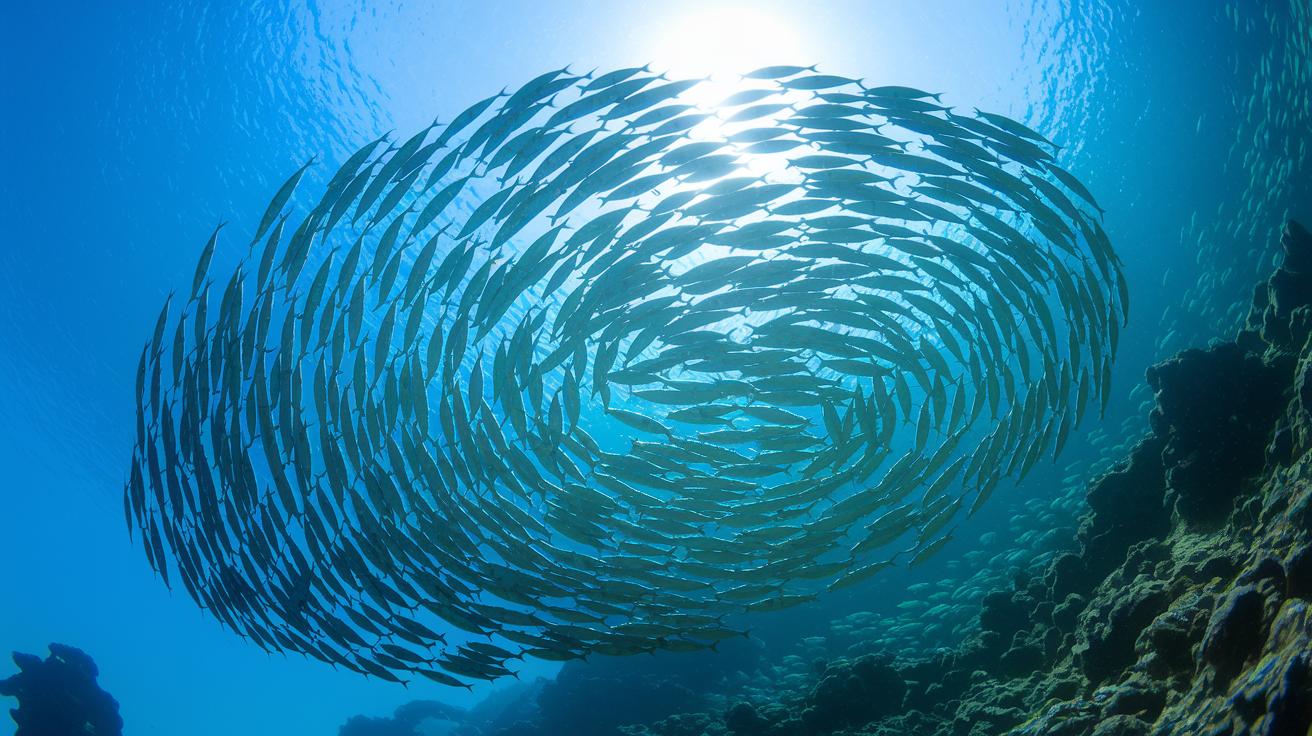
Did you know that some schools of fish can save energy by catching the slipstream of their neighbors, much like cyclists drafting behind one another during a race? It’s pretty amazing how nature works.
A shoal is like a relaxed get-together. Fish swim close by, just hanging out much like friends meeting at the park without any strict rules. It’s all about being together casually.
On the other hand, a school is a well-coordinated team. In a school, every fish moves in perfect sync, creating neat, parallel lines. This helps keep predators guessing and saves energy, similar to how cyclists benefit from riding close behind one another.
Every movement in a school is like a well-rehearsed dance. The fish shift positions in unison, forming an impressive, almost choreographed display. It’s not just beautiful to watch; this precise coordination plays a big role in their survival, making it easier to find food and move long distances.
Other Collective Terms for Fish: Catch, Run, Draught
Fishermen's talk is full of history and local charm. In coastal towns, "catch" means more than just numbers in a net, it carries a whole tradition. Many locals remember saying, "My first catch changed my life," a line that hints at a deep, heartwarming connection with the sea passed down through the years.
In the cooler northern waters, "draught" was once used to describe a big haul, a moment when almost everything was pulled in one go. Imagine a fisher saying, "We landed a mighty draught today," celebrating a time when every pull of the net felt like a festival of the sea.
"Run" is another term rich with history. It refers to the massive movement of fish during seasonal migrations, a natural show that early river fishers watched with wide-eyed wonder. Think of standing by a river, watching it burst into a lively run, a vivid reminder of nature’s timeless dance.
| The deep history behind these words adds extra meaning to everyday fishing talk. |
| Local expressions highlight traditions that are unique to different coastal communities. |
Fish Schooling Examples: Group Sizes and Species
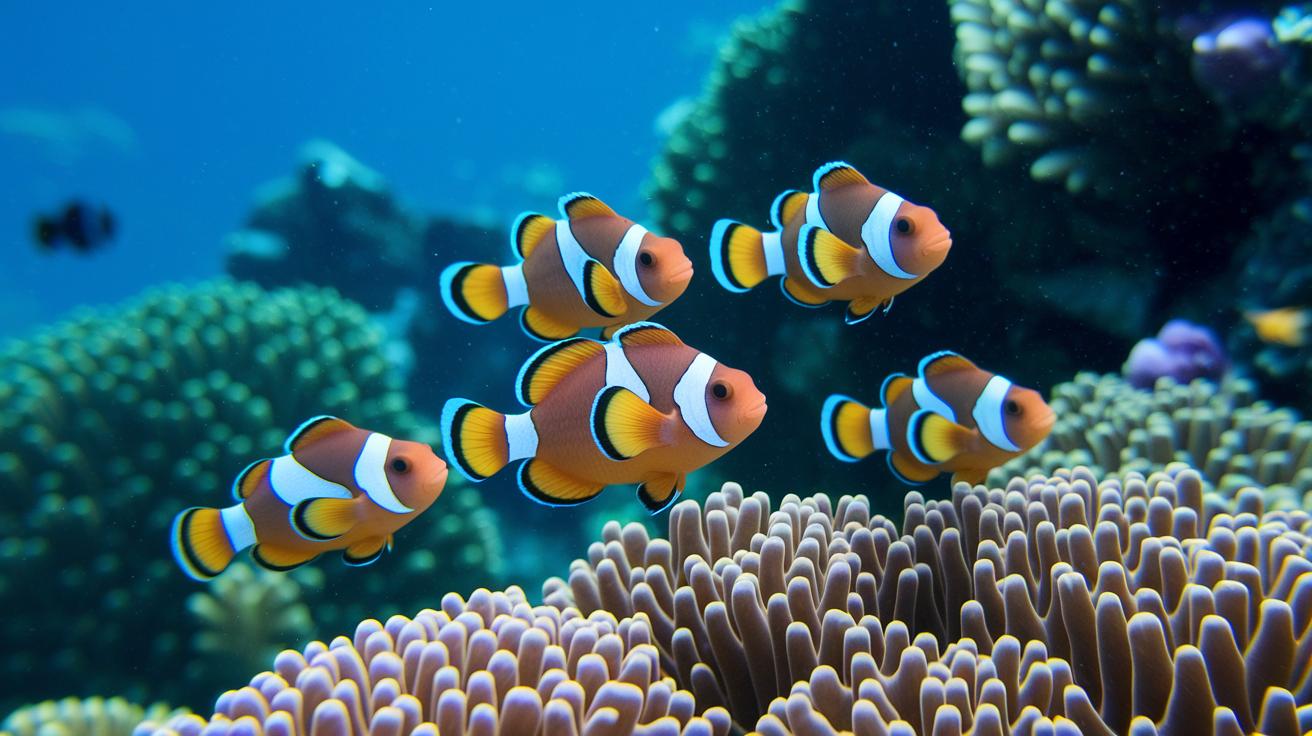
Have you ever noticed how fish swim in groups that perfectly match their lifestyle? Clownfish, for example, tend to form small, friendly gatherings of up to five. Imagine them as a tiny, joyful parade where every clownfish plays its special part, much like a group of friends sharing a fun secret.
Sailfish, on the other hand, hunt in much larger teams. They can work together in groups of up to seventy, moving as if they were one smooth, well-rehearsed dance troupe. It’s like watching a live performance under the sea where every gliding sailfish knows its cue.
Then there are juvenile pufferfish, who prefer smaller clusters of three to four. Their little groups create a warm, close-knit scene, reminiscent of a tight band exploring a colorful coral reef.
| Species | Typical Group Size |
|---|---|
| Clownfish | Up to 5 |
| Sailfish | Up to 70 |
| Juvenile Pufferfish | 3–4 |
Benefits of Fish Schooling in Marine Life
Fish schooling is a beautiful team effort that shows how nature works together. When fish swim side by side, they move like a perfectly choreographed dance, which makes it tough for predators to pick out a single fish. This synchronized movement helps confuse attackers and gives each fish a better chance to dodge danger.
Swimming together also helps fish find food faster. Imagine going on a treasure hunt with your friends, you share clues and spot treats quicker than you would alone. In a school, fish can discover food sources more easily and share their findings, which means everyone gets fed more efficiently.
Another cool benefit is that swimming in groups can make long trips easier on the body. Just like cyclists riding close together to reduce wind resistance, fish in a tight group face less drag as they swim. This helps them save energy when they migrate or travel long distances.
Finally, schooling brings fish closer for more than just safety or food. It helps them connect during mating and courtship, making reproduction smoother. These close bonds also boost their social life, showing us that working together in the water adds up to a smarter, stronger community.
Final Words
In the action, the post explained what a group of fish is called what, focusing on the term "school" and contrasting it with "shoal." It took us through different labels like catch, run, and draught, giving real examples from clownfish to sailfish. Each section painted clear pictures of fish behavior and the benefits of grouping, such as safer swimming and more efficient feeding. These insights help us appreciate and care for our aquatic friends, leaving us feeling optimistic about creating a balanced underwater home.
FAQ
What are groups of fish called?
The phrase “group of fish” starts with school. A school refers to fish moving in tight, synchronized patterns, while a loosely formed group is known as a shoal.
Is a group of fish called a swarm?
The idea of a fish swarm is unusual. Instead, we use school for closely coordinated fish and shoal for a looser bunch, highlighting the different ways fish group together.