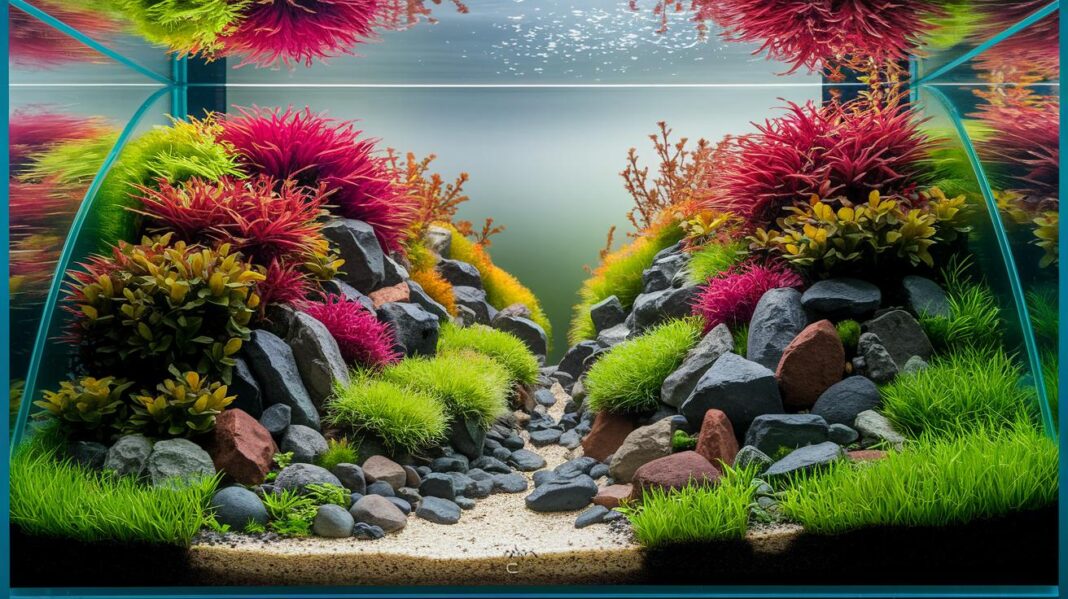

Ever wonder if your aquarium could be as stunning as a work of art? Every stone, plant, and bit of driftwood fits together like a natural mosaic. Picture a tank where creative design meets the gentle flow of water, a space that feels both lively and peaceful. Today, we share some ideas to spark your imagination, whether you’re just starting out or have been enjoying aquascaping for years. Give your tank a new look and let it be your very own, ever-changing display of nature’s art.
Aquascaping Layout Inspiration: Bold Creative Vistas
Bold creative views in aquascaping spark ideas for both first-timers and experienced fish keepers. Imagine a scene where every rock, plant, and stray piece of driftwood fits together like a beautiful painting in a living, breathing space. Think about the Nature Style "Tree scapes" by Herry Rasio, where plants and stones work in perfect harmony to create a look that mimics a tree. Picture a tank where diagonal lines draw your eye, much like Rasio’s designs, adding a gentle flow to an otherwise calm display.
Then there are amazing rock textures by Fernando Ferreira that feel as wild as a secret forest. Every stone seems to tell its own quiet story, inviting you to step into a tiny natural world. And when you see the fine wood dioramas by Chonlatee Jaturonrusmee, it’s like discovering a timeless space where old wood elements add both charm and warmth.
Some layouts focus on structure with big Iwagumi stones by Takayuki Fukada that form clear, strong focal points. Meanwhile, Cory Hopkins gives off a mysterious vibe, hinting at enchanted underwater groves that feel magical. Dou Mok’s idea of an underwater rocky stream brings in a lively touch, letting water trickle softly over rugged surfaces, much like a small, bubbling brook.
Inspiration also flows from live diorama setups shown at CIPs 2017 by Fernando Ferreira, where natural light and gentle water motion create a peaceful scene. Then there are depth-focused designs by Josh Sim that draw your eye into a space that feels both vast and carefully put together.
- Nature Style “Tree scapes” by Herry Rasio
- Diorama designs with diagonal lines by Herry Rasio
These ideas showcase creative tank styling and planted tank designs, inviting you to dream up your own underwater masterpiece.
Nature Aquarium Style Layout Inspiration
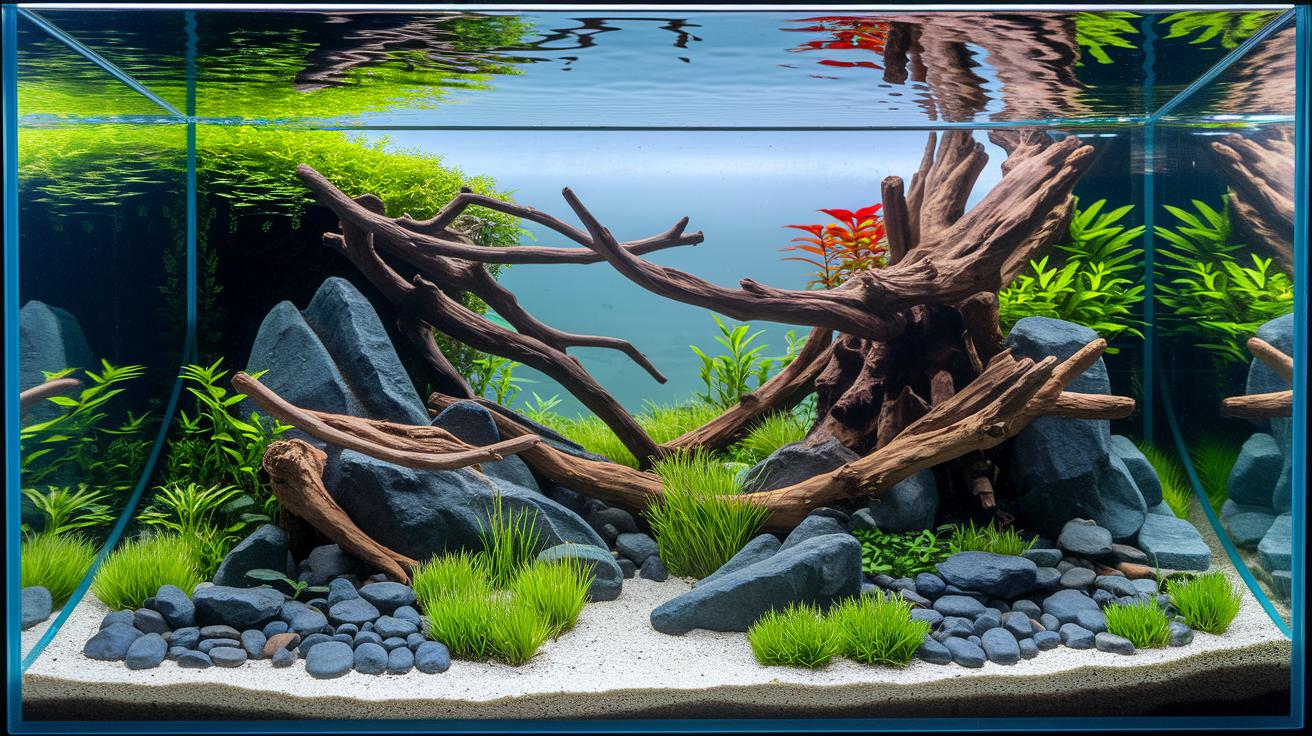
Nature Aquarium style lets you bring a piece of the great outdoors right into your tank, turning it into a living, breathing scene. It became popular back in the 1990s by using a mix of rock, driftwood, and plants to mimic landscapes like mountains, rainforests, valleys, or even beaches. Aquascapers lay out their tanks with care, focusing on creating depth, clear focal points, and neat, layered 3D effects with soft, natural shadows. Every detail works together, much like the harmonious flow of a lively stream. Picture your setup as a tiny mountain range, where each stone and branch adds its own bit of drama.
Managing space well and blending every element together is the real secret here. Imagine clusters of Anubias, Bucephalandra, and Cryptocoryne forming a thick rainforest canopy, while driftwood and rocks are arranged to shape natural valleys and hills. In one admired aquarium, every rock was set at just the right angle to mimic the rugged flow of a highland stream. When choosing your substrate to anchor this aquatic garden, consider checking out tips by selecting the best aquarium substrate equipment for your tank. This little step can really boost plant growth and keep everything balanced.
Design themes like Hillsides & Valleys or Island layouts invite you to mix different textures and natural contrasts. The gentle dance of light and shadow in these designs deepens the scene, transforming your tank into a living canvas that celebrates nature’s endless beauty.
Iwagumi Aquascaping Layout Inspiration
Iwagumi style is all about keeping things simple while giving you a nudge to be creative. In this layout, you work with an odd number of stones, usually one big, commanding rock flanked by two smaller ones, to create a natural point of interest that feels both balanced and eye-catching. The idea is to stick with just one to three types of plants, keeping the scene clean and letting the hardscape shine.
This style carries a pure, Japanese vibe that relies on thoughtful stone placement and careful proportions. Each rock is placed with intention, echoing the gentle patterns you might see in a quiet underwater world. But don’t be fooled by its simplicity; slow-growing plants may allow algae to sneak in if you’re not careful, making upkeep a rewarding challenge for devoted fish lovers.
Many aquarists turn to the Dry Start Method when setting up an Iwagumi layout. This approach lets your plants settle in before filling the tank with water. With nutrient-rich aquasoil and quality lighting on your side, you build a strong plant base that’s ready to thrive. If you wonder how to make your setup even smoother, check out how to install a CO2 system for planted aquariums as part of the process.
In truth, Iwagumi turns your aquarium into an artful underwater masterpiece that feels both carefully planned and naturally beautiful.
Dutch Aquarium Layout Inspiration
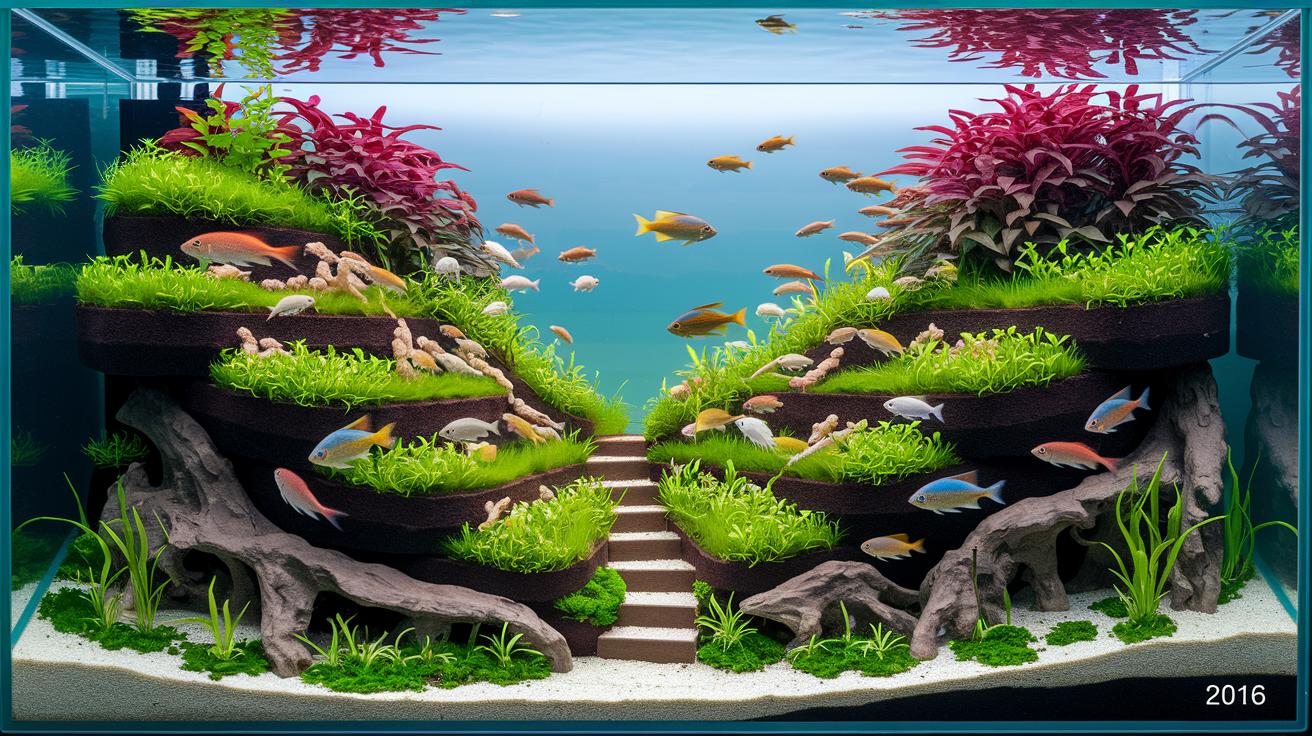
Back in the 1930s, folks discovered a whole new way to show off underwater beauty. They ditched rocks and driftwood and focused on plants alone. Imagine an underwater garden where each layer of greenery feels like a gentle cascading waterfall, creating an inviting scene that draws you in.
They use terracing to break the tank into separate zones, and each little level acts as its own mini canvas for color and texture. Fast-growing stem plants are arranged in groups, about three species per foot, to bring in lively color contrasts that catch your eye. And then, graceful fish drift through the scene like soft brush strokes, adding just the right touch of movement.
Competitions like the AGA International Aquascaping Contest even show off these ideas with designs that are often concave or triangular, highlighting the clean lines and careful order of the Dutch style.
| Key Ideas |
|---|
| Using terraced layers to create a sense of depth |
| Choosing fast-growing stem plants to add vivid color contrasts |
| Having fish gently highlight each distinct zone |
This plant-focused setup lets every layer of vegetation play its part in forming a harmonious underwater scene. It invites you to experiment with different planting densities and color placements, turning your tank into a living canvas that's as enchanting as a peaceful tide on a summer day.
Composition and Color Scheme Tips for Aquascaping Layout Inspiration
Start with soft carpeting plants in the front to create a welcoming, green carpet that feels like a gentle underwater meadow for your fish. Imagine a smooth, vibrant layer of green that sets the stage for other design elements, much like a serene seabed.
Then, mix in a splash of color by using red stem plants like Rotala. Think of it as adding a hint of sunset to your tank, where the rich red contrasts beautifully against fresh green moss. Adding a blend of Tissue Culture and Wabi Kusa plants gives your aquascape different textures, almost like layering brush strokes on a watery canvas.
Next, use tall stem plants in the background to frame your favorite spots in the tank. These plants work like natural pillars, directing your eyes to areas that stand out. And since your fish add their own bursts of color and movement, it's like watching a lively dance in an underwater art gallery.
Instead of lining everything up perfectly, try grouping plants in an asymmetric way. This approach makes your layout feel natural and full of life, guiding your gaze from one colorful cluster to the next. Think of it as scattering little treasures around your tank, each with its own charm.
Each section of your tank is like a mini canvas where well-thought-out plant groupings and clear focal points come together. Every pop of color, every plant cluster, and every graceful movement of your fish helps create a vibrant and harmonious display, a living work of art that invites you to relax and admire its beauty.
Tools and Materials for Implementing Aquascaping Layout Inspiration
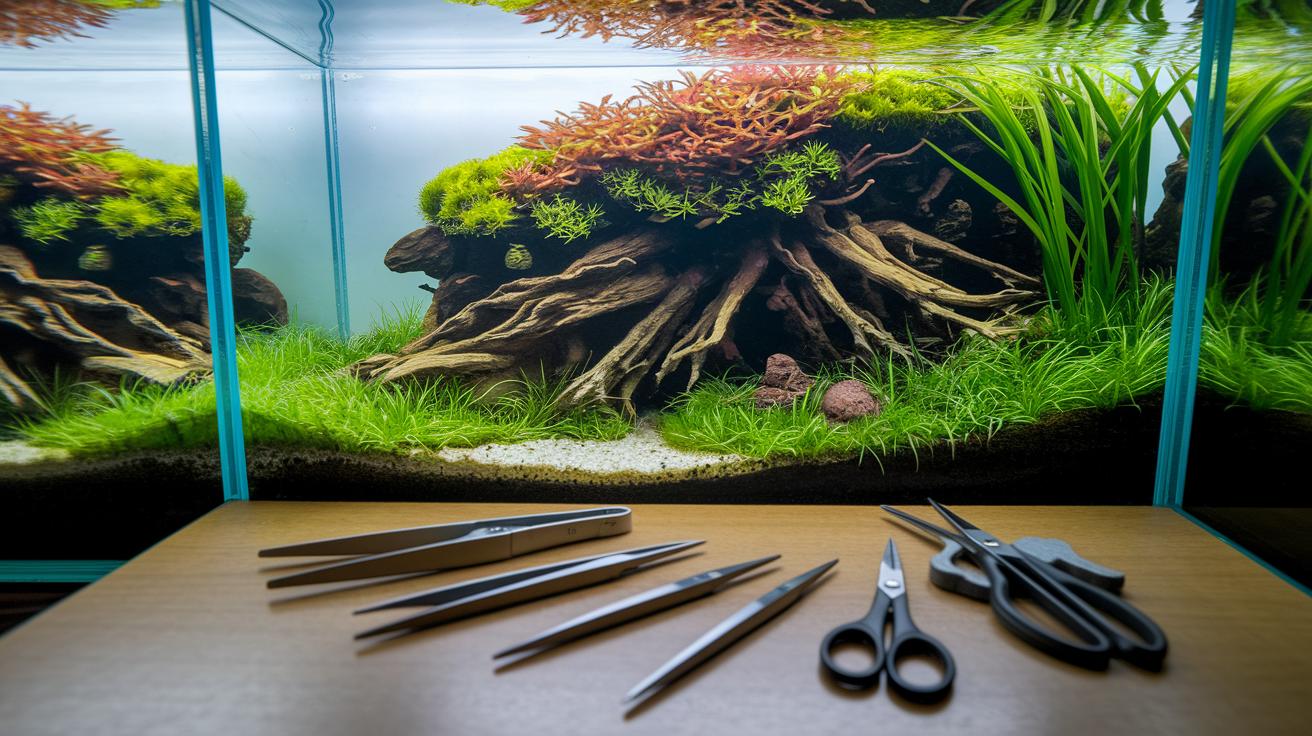
Every amazing aquascape starts with having the right gear in your collection. Think of your tools like your favorite brushes that help you paint a vibrant underwater scene. Simple instruments like tweezers and scissors let you gently trim and arrange your delicate plants, much like snipping a few strands from a beautiful garden bouquet. And don’t worry if you run into words like "filtration" – it’s just the process of keeping your water clean and sparkling!
It’s important to have devices that keep the water at just the right temperature, while CO2 regulators help create that perfect setting for your aquatic greens to flourish. Quality lighting not only brightens your tank, it also makes the colors of your plants and fish pop like a sunny day at the beach. Meanwhile, natural hardscape items like rocks, stones, and driftwood serve as the sturdy foundation of your design, much like the rocks along a gentle stream.
A nutrient-packed aquasoil substrate, similar to what’s used in a high-tech setup, gives your underwater garden a solid base so your plants can thrive. New products, like Rice Fish, show how adding little critters can bring extra life and movement to your themed display.
Some key materials for your aquascaping kit include:
- Aquascaping tools (tweezers, scissors)
- Temperature control devices
- CO2 regulators
- Quality lighting systems
- Hardscape items (rocks, stones, driftwood)
- Aquasoil substrate
Each of these items plays its part in helping you create a lively and balanced underwater scene. Make sure you choose gear that is both durable and trusted by others, so you can experiment with ease and confidence. Setting up your tank becomes a creative journey, where every detail adds to a colorful, refreshing, and natural display.
Step-by-Step Guide to Creating Your Own Aquascaping Layout Inspiration
Start by thinking about the vibe you want in your tank. Picture a calm underwater garden or maybe an exciting rocky stream. Grab a pen and paper, jot down your ideas, and sketch a rough blueprint to guide you along the way.
Then, get your tank ready by picking the perfect substrate. This is like laying the first brushstrokes on your canvas. A nutrient-rich aquasoil is a great base for your plants to thrive and for the whole scene to feel grounded.
Now, it’s time to arrange your main hardscape elements. Imagine placing carefully chosen rocks, driftwood, and stones to add depth and interest. Here’s a little checklist:
| Step | What to Do |
|---|---|
| 1 | Pick one or two standout rocks as your focal point. |
| 2 | Arrange other elements to create a natural flow. |
| 3 | Play with angles to mimic nature’s own design. |
After your hardscape is set, choose your plants and position them in layers. Place soft carpeting plants at the front for a lush, gentle base and add taller plants in the back to give your layout some height. It’s like setting up a stage where every character gets their moment in the spotlight.
Next up, fill your tank with water carefully. Pour slowly so you don’t disturb the work you’ve done with the substrate and hardscape. Think of it as adding the gentle ripple of water to complete your underwater scene.
You might want to use a method like the Dry Start Method for setups such as Iwagumi. This approach lets your plants get cozy and establish themselves before they’re fully underwater.
Finally, keep an eye on your new aquascape. Watch as your plants grow and check for any algae that might sneak in. Regular trimming and water testing are key to keeping everything healthy and looking its best. Each step in this process is like a part of your underwater story, a living artwork that grows and changes with time.
Final Words
In the action, this article takes you through key aquascaping layout ideas that spark creativity. It covers natural, Japanese, and plant-focused style choices while sharing tips on mixing composition and color. The steps guide you from planning your hardscape to choosing the perfect tools. Each technique adds its own charm to your aquatic space.
Exploring aquascaping layout inspiration can make setting up your tank feel adventurous and fun. Happy creating!
FAQ
What are good aquascape ideas for beginners and small tanks?
Aquascape ideas for beginners and small tanks introduce simple design plans that include basic plant groupings and hardscape choices. These tips help create a balanced layout that’s both manageable and visually appealing.
How can I get aquascaping layout inspiration from Reddit and DIY sources?
Aquascaping layout inspiration found on Reddit and DIY sites offers creative advice and practical guides. You get fresh ideas from community examples that spark unique layouts for your aquarium.
What aquascape ideas use driftwood effectively?
Aquascape ideas with driftwood emphasize the use of natural wood elements to shape a striking underwater scene. Driftwood can serve as a focal point and add texture that enhances the overall tank design.
How do aquarium layout planners assist with aquarium layout ideas?
Aquarium layout planners combine clear strategies and creative concepts to help you arrange plants, hardscape, and decor. They make the process of organizing your tank straightforward and focused on balance.
How does an Iwagumi aquascape work?
The Iwagumi aquascape style features an odd number of stones—often three—with one dominant rock and two smaller ones. This method highlights careful stone placement paired with minimal plant use for a refined setup.