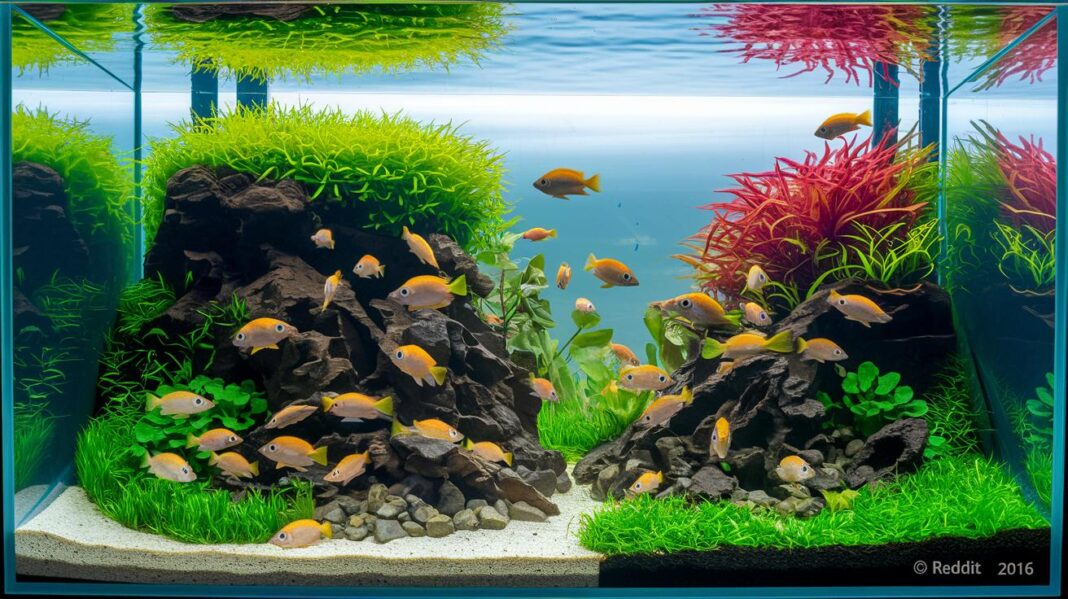

Ever thought your tank could be a living work of art? Aquascaping is like giving your aquarium a nature-inspired makeover, blending water, stone, and plants into a scene that feels both creative and natural.
It’s a cool mix of science and art that turns a simple tank into a vibrant display, almost like watching a mini ecosystem come to life. In this post, I’ll walk you through five popular styles, from the neat simplicity of Iwagumi to the lush, green vibe of the Dutch look, each adding its own special touch to your underwater world.
So, get ready to see how your aquarium can shine with a burst of creative energy and the natural beauty found in every ripple of water.
Understanding Aquascaping Style: Core Design Approaches
Aquascaping is like painting with water and stone. It brings together science and creative design to turn a tank into a mini underwater world. There are five main styles: Biotope, Iwagumi, Dutch, Pond, and Nature Aquarium.
Biotope style tries to mimic a real place. Sometimes it even copies special river conditions, with soft, flowing water that feels like a natural stream. Iwagumi, on the other hand, uses a few well-placed stones in a simple layout. It usually uses an odd number of rocks to create a natural, eye-catching focal point.
The Dutch style is all about lush, colorful plant life. It uses groups of stem plants arranged in neat rows or terraces to bring a burst of life to your tank. The Pond style draws its look from Japanese rice-fish ponds. This design brings in elements like tall grasses, water lilies, and mossy driftwood to create a calm and serene scene.
The Nature Aquarium style mixes rocks, driftwood, and various plants to build a scene that can resemble rainforests, mountains, or even sandy beaches. It's like crafting a tiny landscape that reflects the beauty of nature itself.
Over time, hobbyists have swapped their favorites. In the 1970s, many favored the Dutch style. Come the 1990s, biotope setups became popular. Today, Nature Aquarium and Iwagumi designs are in the spotlight for their perfect blend of art and natural simplicity. Imagine setting up your tank as if you were arranging a sculpture; it’s a process full of surprises and personal touches.
Each style has its own charm and techniques that let you create a tank bursting with character. By learning about these different approaches, you can mix and match elements to show off both the wonder of nature and your own creative flair.
Nature Aquarium Style: Emulating Natural Landscapes

Nature Aquarium style first made waves in the 1990s by turning ordinary tanks into tiny natural worlds. It uses rocks, driftwood, colored sand, and special water plants to recreate a scene that feels like a slice of nature. I remember when I first set up my nature aquarium; every rock and piece of driftwood felt as if it were playing its own part in a gentle, colorful melody. The idea is to carefully arrange each hard element on a good substrate that not only holds plant roots but also sets a clear, natural scene, like preparing a stage where every stone has a role.
The beauty of this style lies in its thoughtful design. By using ideas like depth, focal points, layering, shadow, space, integration, unity, and a bit of contrast, you can build an underwater scene that pulls you into its many layers of charm. When you mix the plants and hardscape just right, it feels like watching a well-rehearsed performance where every part supports the next. Here are four popular themes that help create that natural look:
- Mountain Range: A setup rich in stones that mimics rugged, elevated landscapes.
- Rainforest: Combines driftwood with moss and plants such as Anubias, Bucephalandra, and Cryptocoryne to create a lush, green vibe.
- Hillsides & Valleys: Uses rocks of different heights to form a natural rise and fall in the tank.
- Island: Arranges rocks and wood into rounded or triangular clusters to form a striking, central feature.
Iwagumi Aquascaping Style: Japanese Minimalist Layouts
Iwagumi is all about keeping things simple. In this style, you arrange 3 to 7 stones in odd numbers to catch the eye and add a touch of calm to your tank. The idea is that a clean, uncluttered look can clear the mind, just like gently swaying seaweed in a quiet pond. You only use one to three types of slow-growing carpeting plants, like Micranthemum Monte Carlo, dwarf hairgrass, or Hemianthus callitrichoides, to nicely frame the stones without taking over. Even the fish play a small, graceful part, swimming through the setup like soft ripples on the water.
A neat trick in Iwagumi is the Dry Start Method. This means you give your carpeting plants a strong start on dry land. First, you lay down a rich, nutrient-packed layer at the bottom of your tank. Then, you make sure the area stays moist and the lighting is bright. This helps the plants grow deep roots and spread into a lush green blanket before you fill the tank with water. It’s a gentle process that takes about 2 to 4 weeks, letting every rock and sprout settle into a peaceful, balanced scene.
Dry Start Method
- Prepare a nutrient-dense substrate and spread it evenly.
- Keep the substrate moist with controlled humidity.
- Use strong lighting for 2 to 4 weeks to help the plants grow before adding water.
Plant Choices for Iwagumi
- Choose slow-growing, carpeting plants like Micranthemum Monte Carlo, dwarf hairgrass, or Hemianthus callitrichoides.
- Place the plants around the stone formations to boost the clean, minimalist look.
Dutch Aquarium Style: Vibrant Plant Groupings
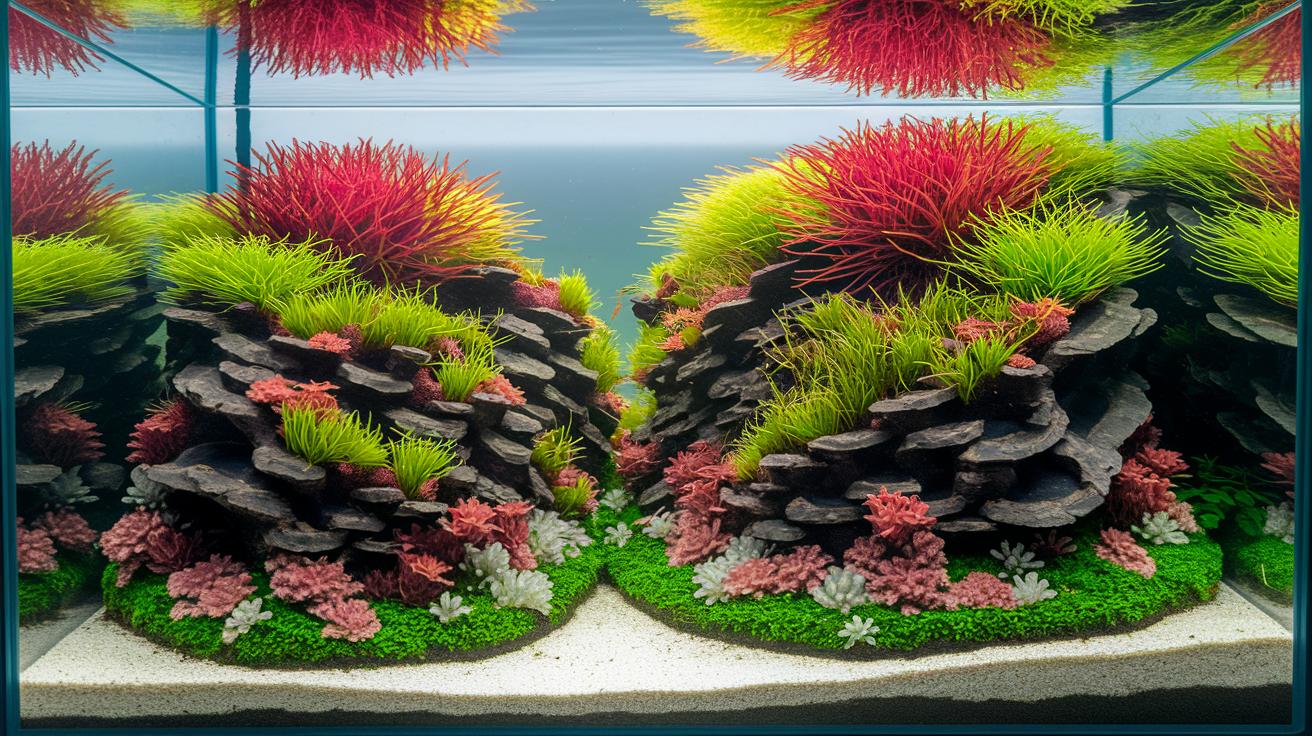
Dutch aquascaping started back in the 1930s and is all about grouping colorful stem plants into a living art piece. Think of it like designing a flower bed under water. Each collection of plants makes a neat layer, much like the smooth steps on a set of stairs. You usually plant about three different types per foot so that different heights give a natural look, almost like watching a gentle waterfall of green and red.
The beauty of a Dutch aquascape often comes from how well the shapes flow together. Curves that dip and groups that form triangles guide your eye across the tank. Pruning fast-growing plants is key too, it keeps the design fresh and balanced as you trim to make room for new growth. In the end, you get a vibrant, clean display that makes nature and design work perfectly together.
| Plant Name | Growth Rate | Placement |
|---|---|---|
| Rotala | Fast | Midground |
| Ludwigia | Fast/Moderate | Background |
| Hygrophila | Moderate | Foreground |
| Alternanthera | Moderate | Midground |
Biotope & Pond Styles: Ecosystem-Driven Aquascaping
Biotope aquascaping is all about bringing a little piece of nature into your tank. It means using plants and animals that naturally live in a specific area, almost like taking a mini vacation to that spot every time you look at your tank. Some folks even go for blackwater setups, where the water looks like the rich, tea-colored streams you might see in a rainforest. Imagine strolling along a riverbank and noticing the local plants, that’s the vibe a true biotope tank creates.
On the flip side, pond aquascaping is inspired by Japanese rice-fish ponds. This style mixes soft, floating plants like water lilies, gentle grasses, and even mossy driftwood that gives off a calm, garden-like feel. It’s like watching a quiet pond with little ripples and scattered lily pads that make everything seem peaceful and natural.
Both styles need the right water conditions to feel just right. You want the plants arranged like they would be in the wild and the water to match what they’re used to. Here are some key tips for setting up your biotope or pond aquascape:
- Pick plants that naturally grow in your chosen habitat to keep things authentic.
- Adjust the water’s pH, hardness, and temperature to match the environment.
- Arrange the plants in a way that looks natural, like how they’d wander in the wild.
- Add elements such as driftwood and rocks to echo the look of the natural setting.
Getting the balance right not only makes your tank look stunning but also helps create a healthy and enduring little ecosystem for your aquatic friends.
Substrate & Hardscape Selection for Top Aquascaping Styles
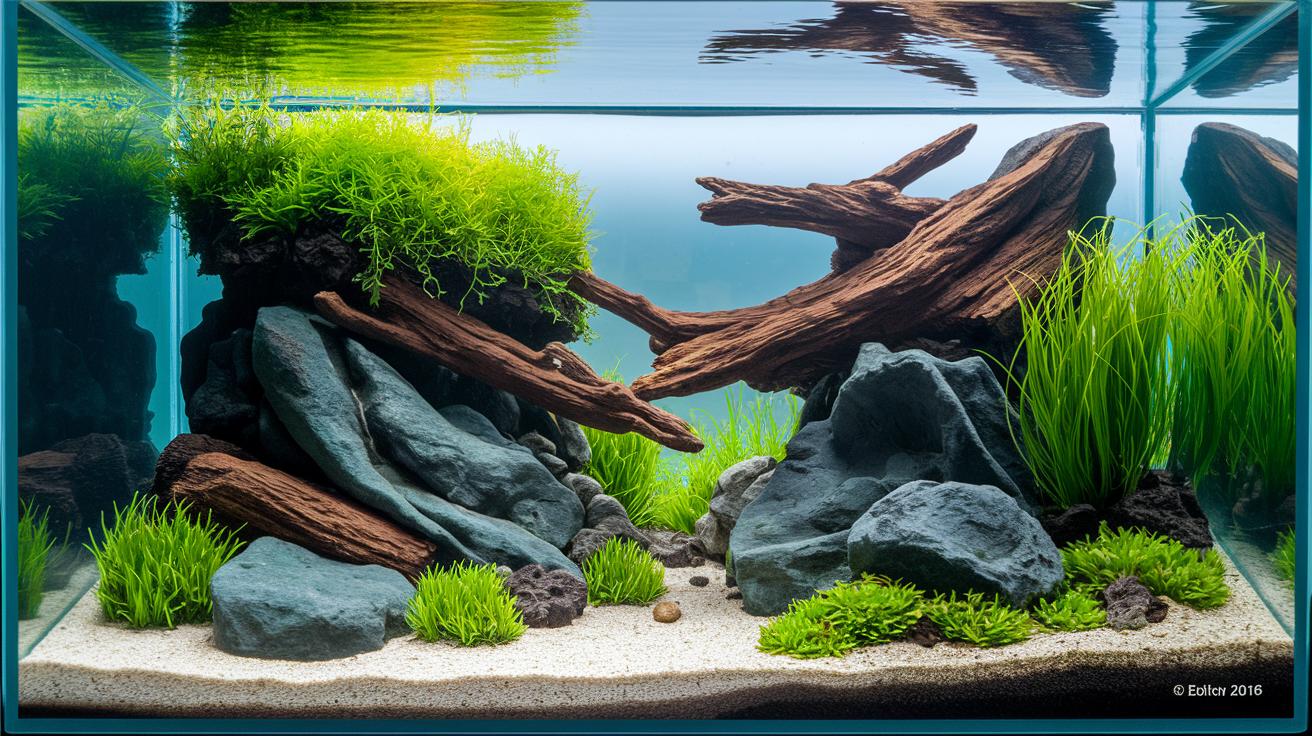
Picking the right foundation for your tank is super important. Start with a nutrient-packed base and top it off with a fine mineral layer. This setup helps your plants’ roots grow strong and spreads out the nutrients, much like laying a smooth canvas before you paint a beautiful picture.
When you choose rocks, the style really counts. For an Iwagumi layout, smooth, rounded stones set a calm, clean centerpiece. But if you’re into the Nature Aquarium vibe, rougher, jagged rocks add energy with their cool shapes and shadows. It’s like finding a special art piece that brings your underwater world to life.
Driftwood also plays a big role in your aquascape. Types like Mopani or Malaysian driftwood not only draw the eye but also become a home for beneficial organisms called epiphytes. Placing them thoughtfully boosts your tank’s natural beauty and helps your plants thrive long-term. It's all part of crafting a vibrant, living underwater canvas.
Maintenance Practices Across Aquascaping Styles
Your aquascape blooms when you stick to a steady routine of care. In Nature Aquarium setups, it's a good idea to trim your plants often so the fast-growers don’t crowd out the slower ones. I’ve found that pruning off extra foliage helps keep the gentle layers of plants balanced, kind of like adjusting the focus on your camera.
For Iwagumi designs, take a moment regularly to check your stones for any algae buildup and tweak your nutrient levels if needed. This little tune-up gives both the stones and the neat, low-growing clusters plenty of breathing room.
If you prefer the Dutch style, which many offbeat aquarists love for its low-tech charm, you'll need to follow a more precise cutting schedule. A few careful snips will keep your planted terraces looking crisp and well-defined.
And if you're working on a Biotope or Pond setup, it really pays to keep your water chemistry in check and tend to your emergent plants. This helps you recreate the natural vibe you’re aiming for.
No matter which style you choose, a few universal tips will help maintain the balance in your tank. Regular water changes wash away unwanted buildup, while a steady lighting schedule supports strong plant growth. Plus, a measured dose of fertilizer keeps everything healthy without causing imbalances.
- Check and trim fast-growing plants in Nature Aquarium setups.
- Look for algae on Iwagumi stones and adjust nutrients as needed.
- Stick to a careful pruning schedule for Dutch aquascapes.
- Prioritize water chemistry and emergent plant care in Biotope and Pond setups.
Final Words
In the action, we took a deep swim into the vibrant world of aquascaping style. We explored design picks like Nature Aquarium, Iwagumi, Dutch, Biotope, and Pond styles and shared tips on substrate, hardscape, and maintenance to help your aquascape flourish. Each section provided clear steps to create a pleasing underwater scene while caring for your environment. The advice here keeps your aquarium healthy and lively. Enjoy bringing your aquatic paradise to life and let your tank reflect your unique passion.