

Have you ever wondered if the water flow in your tank might be doing more harm than good? When water stays still, it can create hidden spots where oxygen is low, leaving your fish and tiny helpers struggling.
Imagine a gentle current meandering through your tank, clearing away waste while mixing important nutrients to keep your water fresh and clear.
In this chat, we'll explore how a simple increase in water movement can turn your aquarium into a perfectly balanced, lively home for every small creature inside. Ready to give your tank the refreshing boost it deserves?
Why Water Circulation Is Crucial for Your Aquarium Ecosystem
Good water movement makes sure that oxygen reaches every cozy spot in your tank. When water flows smoothly, fish and the little bacteria friends get the air they need to thrive. This gentle flow sweeps away waste like tiny leaves carried by a current, easing the job of your filter and helping natural cleaning along. Imagine soft currents whisking away debris before it has a chance to settle, leaving your water clear and inviting.
A steady circulation also mixes up nutrients so that plants and helpful microbes can sip them evenly, kind of like a light, refreshing stream nourishing a riverbank. It helps keep the temperature even throughout your tank, so there are no warm pockets where algae might start to grow. It’s like giving your aquarium a constant, gentle rinse that reaches every corner.
- Oxygen reaches all tank levels
- Waste is stirred up and carried away
- Nutrients are shared with plants and bacteria
- Temperature stays even
- Dead zones are kept at bay
- Bio-filtration works more efficiently
In the end, a well-circulated aquarium creates a balanced little world where every part supports the next. This setup keeps fish lively and healthy while letting beneficial bacteria break down waste more smoothly. With consistent flow, your tank enjoys cleaner water, stable temperatures, and evenly spread nutrients, everything your aquatic pets need. Picture your tank as a lively micro-world where every ripple dances in harmony, making the home both beautiful and biologically vibrant.
Analyzing Current Circulation and Measuring Flow Rates in Your Aquarium
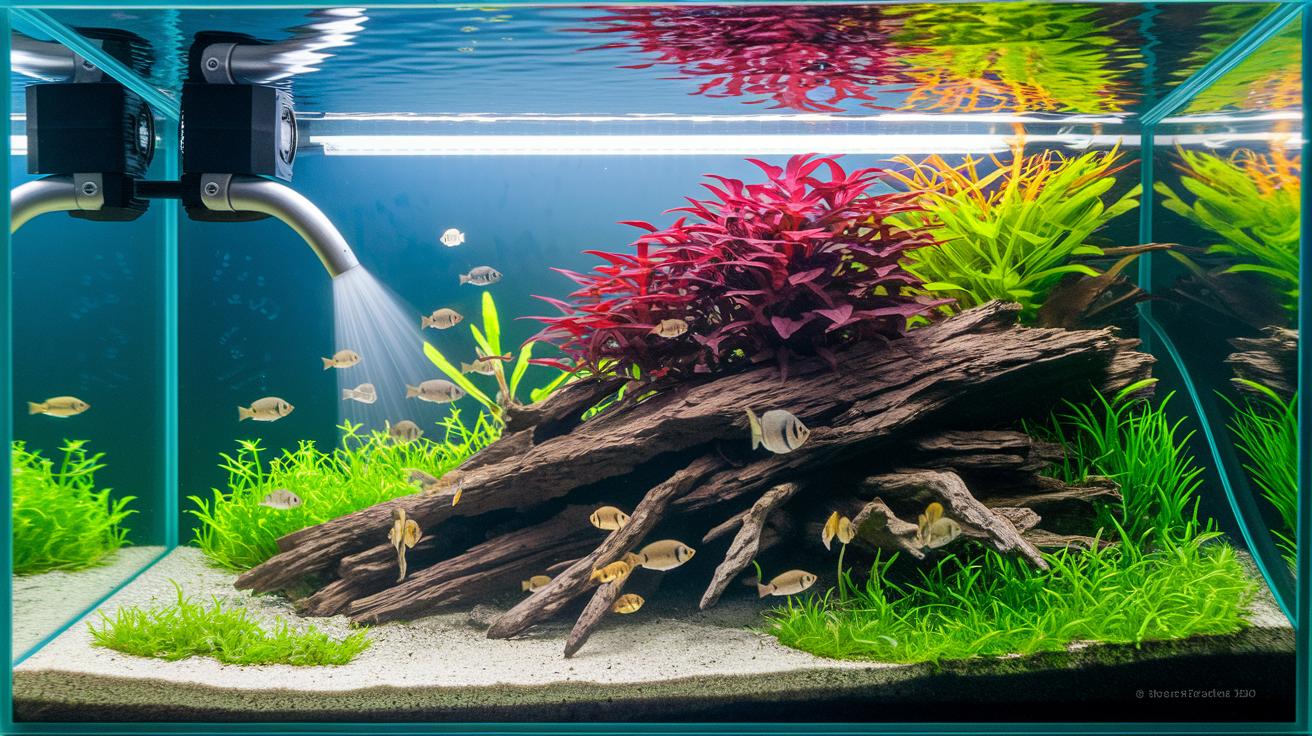
Take a slow stroll around your tank and really look at your aquarium. Notice if there are any spots where dirt or algae seem to gather. These quiet areas can signal that the water isn’t moving as it should. Don’t forget to peek at your filter too. A clogged filter can choke the flow, and a smooth-running one should cycle your tank’s water about 4 to 6 times every hour, keeping everything lively and healthy.
Here’s a friendly checklist to gauge your tank’s water movement:
- Check every corner and behind decorations for stubborn algae or debris.
- Make sure your filter is in good shape by inspecting its parts and clearing away any buildup.
- Try little experiments like dropping a bit of dye or watching a floating object to see how the water moves.
- If you have one, a flow meter can offer extra detail, but these simple tests work for most tanks.
- See if the water circulation matches the suggested flow rate, and mark areas around plants or ornaments where the flow seems low.
- Write down your findings to form a baseline, which will help guide any tweaks or upgrades later.
Following these steps will let you fine-tune your aquarium’s flow, making it a balanced and flourishing underwater haven.
Techniques to Boost Water Circulation in Your Aquarium Ecosystem
A calm yet lively water flow brings your tank to life like a hidden stream in a tranquil forest. It creates a balanced and cheerful underwater world for your fish to explore and enjoy. Let's dive into a few simple ways to add some refreshing movement to your aquarium.
Powerheads are like friendly currents that push water around with extra strength. These little devices work best in larger tanks, and they come with a rating in gallons per hour (GPH) to help you choose the right one. So if your tank is around 50 gallons, consider a powerhead that boosts your water turnover by 50 to 100 percent. Imagine a burst of a lively stream whisking tiny particles away, much like leaves dancing in a swift brook.
Wavemakers add a gentle flow that feels just like a natural stream. Place them where they can let water glide softly across open spaces in your aquarium. You can even adjust the strength until the flow feels just right for your aquatic buddies. It’s a bit like turning a water tap until the current becomes perfectly cozy for your favorite fish.
Air stones, paired with air pumps, create playful bubbles that rise and stir the water. As these bubbles float upward, they stir the surface, much like tossing a handful of pebbles in a quiet pond. This fun movement is especially helpful for smaller tanks, as it improves gas exchange and gives every corner a little splash of life.
| Equipment | Recommended Flow Increase |
|---|---|
| Powerhead | +50–100% base turnover |
| Wavemaker | +30–60% directional flow |
| Air Stone | +10–20% surface agitation |
Pump Optimization and Strategic Placement for Aquarium Flow
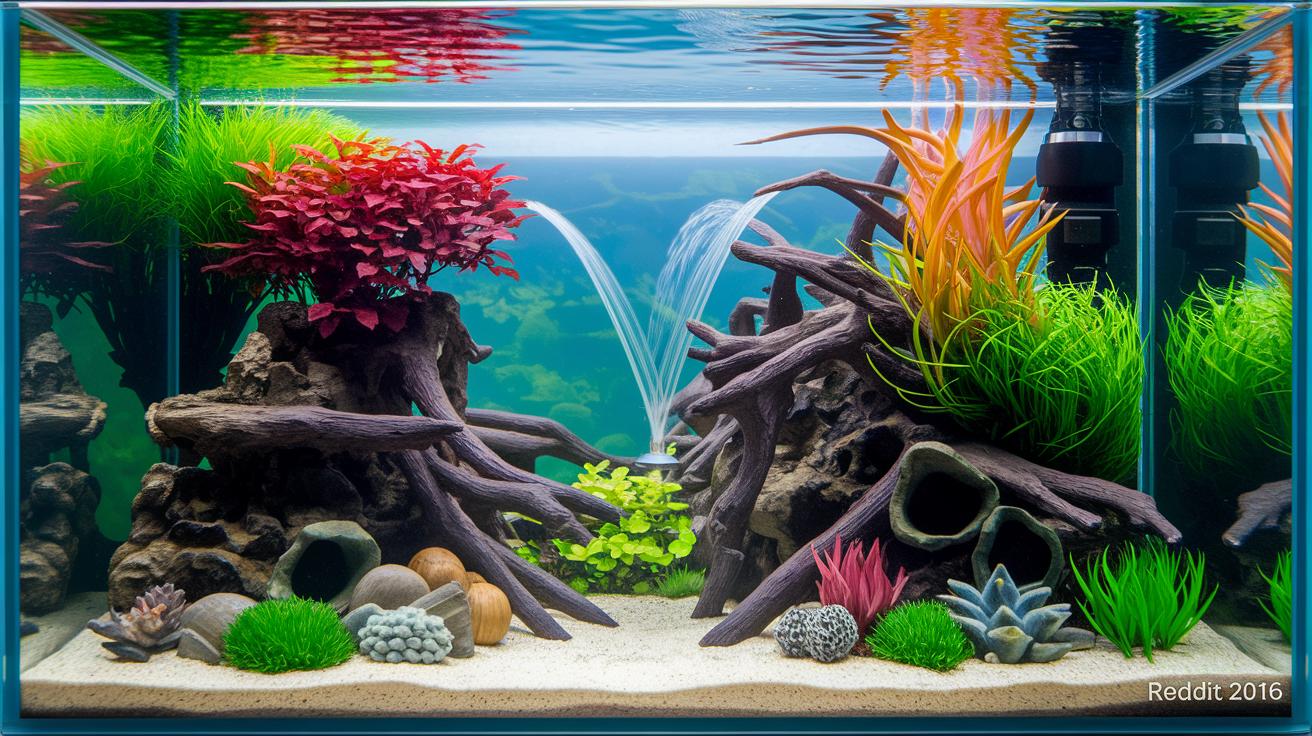
Start by taking a look around your tank to spot any nooks where dirt or algae gathers, often behind decorations or thick clusters of plants. These are low-flow zones that need a bit of extra care. Powerheads, those handy submersible pumps that create tight streams of water, perform best when set just right. Rather than pointing them straight ahead, tilt the pump so its gentle flow can wander like a soft stream across the entire tank.
Here are a few friendly tips to help you get your pump just right:
- Look closely for areas with extra debris or algae buildup.
- Secure the pump at a slight angle so that the water spreads out over more of the tank.
- Direct the nozzle toward open, clear spaces to avoid giving your fish a harsh jet of water.
- Consider using flow attachments like valve nozzles or spray bars to help the water travel evenly.
Once your pump is in place, fine-tune the nozzle so every corner of your tank enjoys a smooth current. If you spot a little patch of still water, adjust the angle a bit, just like tweaking a garden sprinkler to kiss every flower. Testing and tweaking the flow will help you get rid of those stagnant spots, ensuring your aquarium vibes with a natural, balanced current that keeps all your aquatic friends calm and happy.
Integrating Biological Filtration with Circulation in Your Aquarium Ecosystem
When you set up your aquarium, the filter isn’t just about clearing out waste, it gently stirs up debris so the media can catch it, and it stops that slick film from taking over the water’s surface. For instance, filters like sponge, hang-on-back, or canister ones push water smoothly along. This creates a pleasant, constant current that works great for smaller or medium-sized tanks. By placing the outlet near the water’s top, you give the flow a refreshing lift, much like a tiny, sparkling fountain that gathers your fish around it.
You can boost this effect even more by adding a spray bar or diffuser. This little addition spreads the water out and helps clear away the quiet spots around your plants and decorations. And then, when the filter’s flow meets a nearby pump’s intake, they work together like a team, creating a seamless network throughout the tank. Imagine a canister filter teamed up with a spray bar next to a softly humming pump, it produces even water movement that distributes nutrients all around. This combined method makes sure every corner of your tank enjoys a fresh, steady flow, nurturing a vibrant underwater world.
Installation and Upgrade Guidelines for Aquarium Circulation Systems

Imagine you’re setting up your little underwater world. Begin by figuring out the size of your equipment based on your tank’s water volume and how quickly you want the water to move. For example, if your tank holds 50 gallons, pick a pump that circulates water at a rate just right for that space.
Secure your device with the manufacturer's brackets or suction cups, placing it above or below the waterline so it stays put without disturbing your aquatic friends. Before you hit the power switch, take a moment to seal all connectors carefully and check the O-rings for any wear. This simple step helps keep leaks at bay and makes sure everything runs as smoothly as a gentle stream.
Now, take a closer look at different systems by comparing costs and efficiency. Check the initial price and the energy each option uses, whether it’s a hang-on-back, canister, or sump pump. Think of it like choosing the perfect fin, it should be the right match for your tank and style of swimming. Balance the energy use with perks like clearer water and better circulation.
If you value a little extra control, look for models with variable-speed settings or a quiet mode, so your tank remains a calm haven. These easy steps will help you upgrade your aquarium’s circulation system beautifully, keeping your aquatic paradise both effective and cost-friendly.
Maintenance and Troubleshooting for Sustained Aquarium Circulation
Keeping your aquarium flowing smoothly takes a little regular care, much like tending to a tranquil underwater garden. Every month, it’s a good idea to gently clean your impellers, tubing, and air stones to clear out any biofilm or debris that might begin to stick around. Taking a few moments to check these parts often means you can spot any worn pieces before they cause trouble, like a pump getting too much strain if the water level dips. And when you remove leftover food and other bits by hand, you help keep everything clear and flowing as it should.
Below is a simple checklist to help you keep your aquarium in top condition:
| Task | Description |
|---|---|
| Monthly Clean-up | Clean impellers, tubing, and air stones to remove buildup. |
| Inspection | Check impellers for wear and replace if strange sounds or low flow occur. |
| Water Level | Keep the water level steady to reduce pump stress. |
| Debris Removal | Manually clear out leftover bits that can clog tubing or filter inlets. |
| Motor Check | Monitor the motor temperature and listen for grinding sounds. |
| Power and Seals | Ensure power output is steady and examine seals for leaks or wear. |
| Maintenance Log | Keep a record of cleaning dates and any changes in performance. |
Taking these steps will help you catch problems early, so your aquarium always stays full of life and clear water. Regular cleaning and a bit of troubleshooting can be as refreshing as a cool splash on a hot day, ensuring that both your fish and your setup are happy and healthy.
Final Words
In the action, our overview explored how fluid movement benefits oxygen levels, waste removal, and overall health of your aquatic habitat. We talked about assessing flow rates, boosting currents with powerheads, wavemakers, and air pumps, as well as placing devices to keep a balanced water movement.
Small changes in device placement can brighten your setup. Enjoy the calm as you focus on improving water circulation in your aquarium ecosystem, making every ripple count for a thriving underwater world.