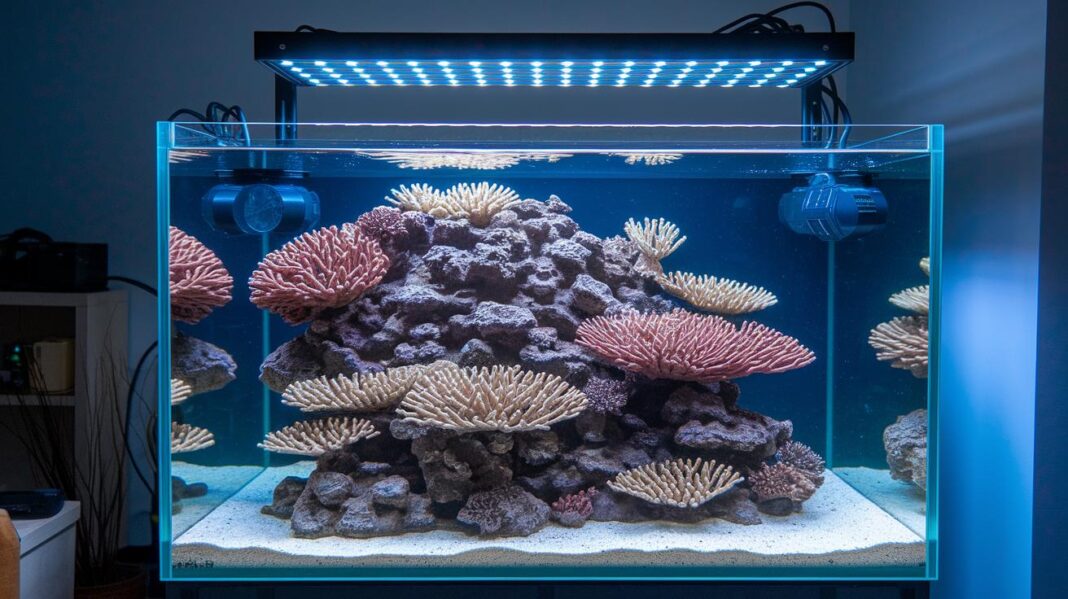

Have you ever thought about making your saltwater tank glow with a natural charm? LED lights could be the simple trick to turning your aquarium into a lively underwater wonder.
Picture this: you adjust your lights just like you change your phone’s brightness, revealing brilliant blue hues and warm white tones that make your corals pop.
In this note, we chat about how the right LED lights not only enhance your reef’s beauty but also create a cozy home for your aquatic pals.
Get ready to brighten your underwater world and enjoy the gentle dance of light through the water.
Choosing the Right LED Lighting for Marine Aquariums
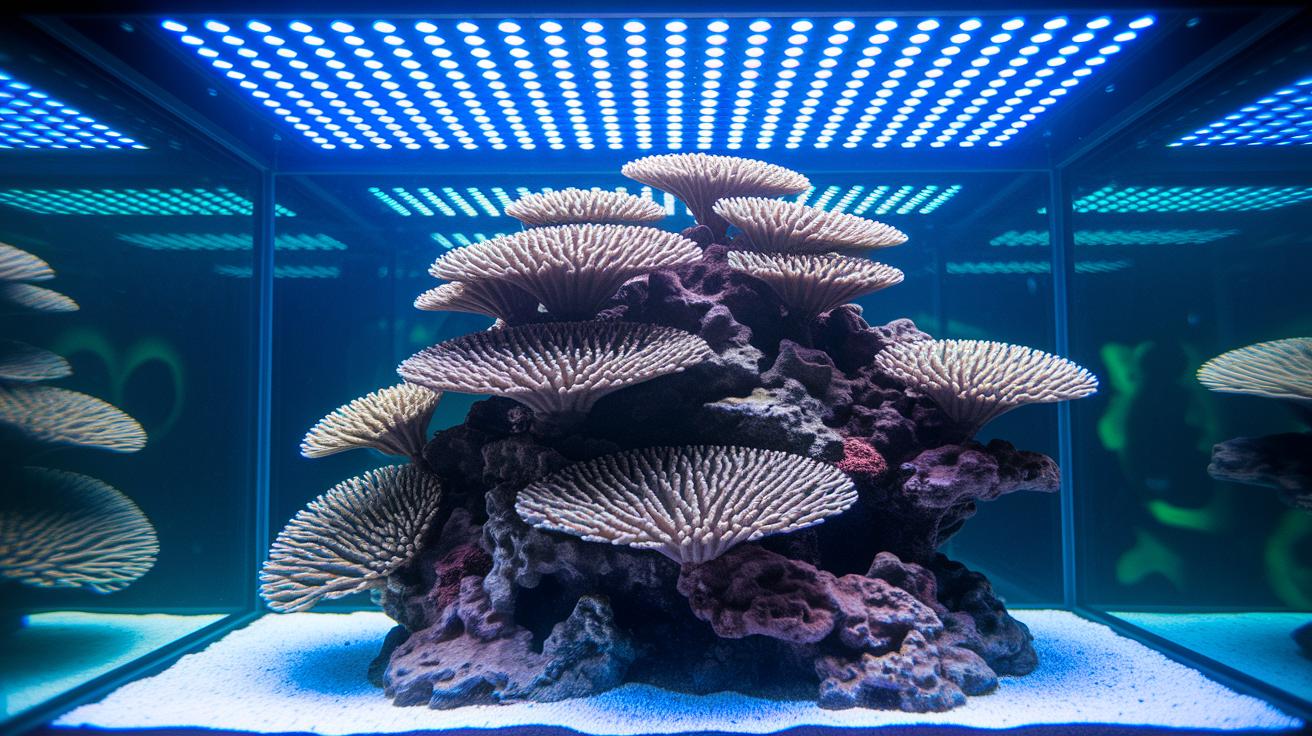
LED lighting in your marine tank is all about finding the perfect match for its unique needs. If you keep corals, they really enjoy blue light, around 450 to 470 nm, to help them make food. Think of it like tuning your guitar; that exact blue hue can bring out the best in your coral.
When choosing LED lights, brightness is a big deal. Hardier corals, like stony or SPS types, flourish under strong light, about 60 lumens, while soft corals are happy with a gentler glow of roughly 30 lumens. It also matters how big your tank is because the water's depth and length change how the light spreads. I once heard about a reef setup where a little tweak in the angle and brightness made soft corals grow in a whole new pattern. It’s amazing how small changes can make such a big splash!
LEDs are a top pick for reef lighting thanks to their energy efficiency. They sip just 1 to 1.5 watts per liter, compared to the 3 to 5 watts that old metal halide lights need. This means less waste heat and a cooler, calmer environment for your aquatic friends. Plus, digital controls let you easily adjust the light colors so you can mimic everything from a sunlit shallow reef to a deeper, tranquil blue habitat. By matching the light’s spectrum, brightness, energy use, and keeping in mind your tank’s size, you set up a cozy, happy home for your marine life.
led lighting for marine aquarium Brightens Underwater Beauty
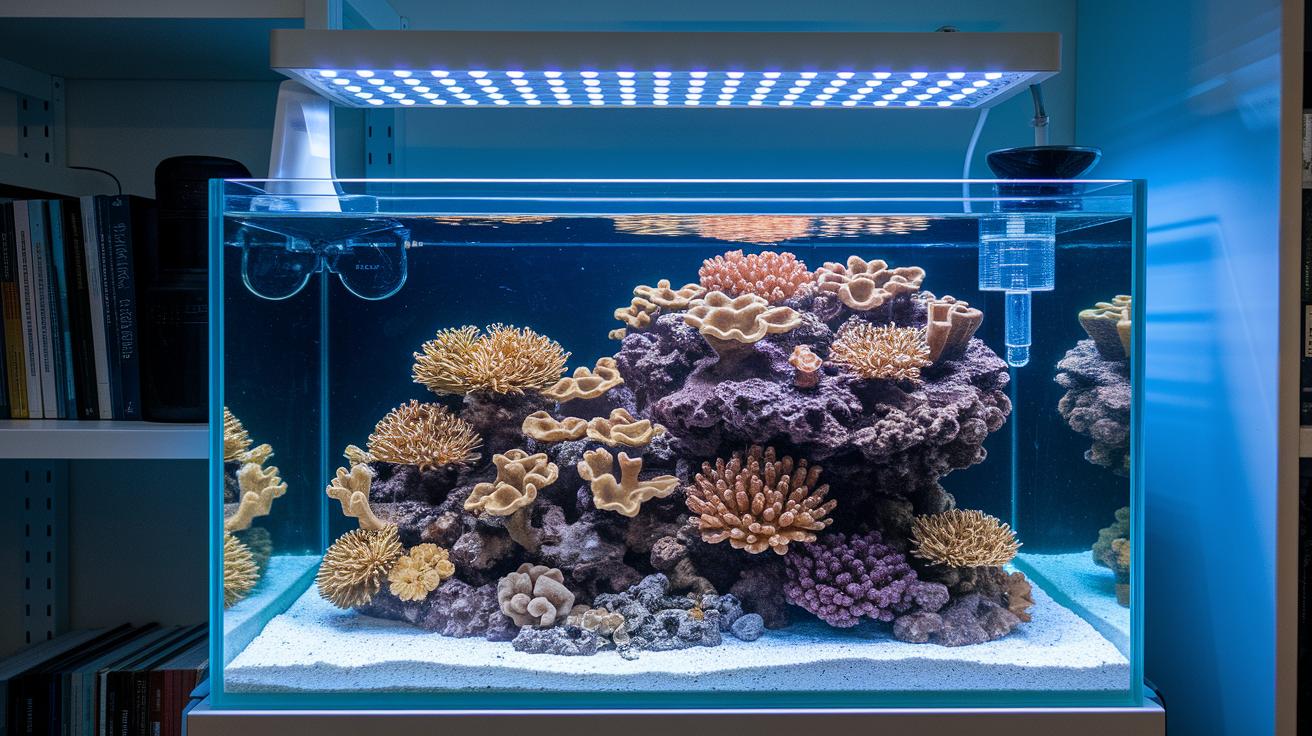
If you're looking to brighten your reef, LED lighting is like giving your underwater home a burst of natural sunshine. Checking out different LED fixtures can help you find the perfect glow for your marine friends. Imagine it as adjusting your phone’s brightness, simple, clear, and just right for your saltwater setup.
Coralife LED Lights let you mix white and blue lights so you can set the mood perfectly, kind of like watching how morning light slowly colors the sea. Meanwhile, Coralife Seascape Smart LED brings a bit more magic with multiple modes. It can light up your tank with a strong white glow during the day, a soft blue shine when night falls, or even a full spectrum of colors you can control with an app. It’s a bit like painting with light, letting you experiment with different tones that change like the ebb of the tide.
For those with deeper tanks, the Orphek Reef Habitat LED uses strong COB diodes that work well even in tanks up to 24 inches deep. Its spectrum is extra bright, making sure every corner of your underwater space gets its share of light. And if you're keeping an eye on your budget, the NICREW ClassicLED Pro is a solid choice. It comes with basic two-channel white and blue settings along with timed cycles to keep the lighting steady without costing too much.
| LED Model | Key Features |
|---|---|
| Coralife LED Lights | Adjustable white and blue channels |
| Coralife Seascape Smart LED | Multiple modes, app control |
| Orphek Reef Habitat LED | High-output COB diodes for deep tanks |
| NICREW ClassicLED Pro | Budget-friendly with programmed timed cycles |
Technical Specifications: Spectrum and Intensity for Marine Reef LED Lights
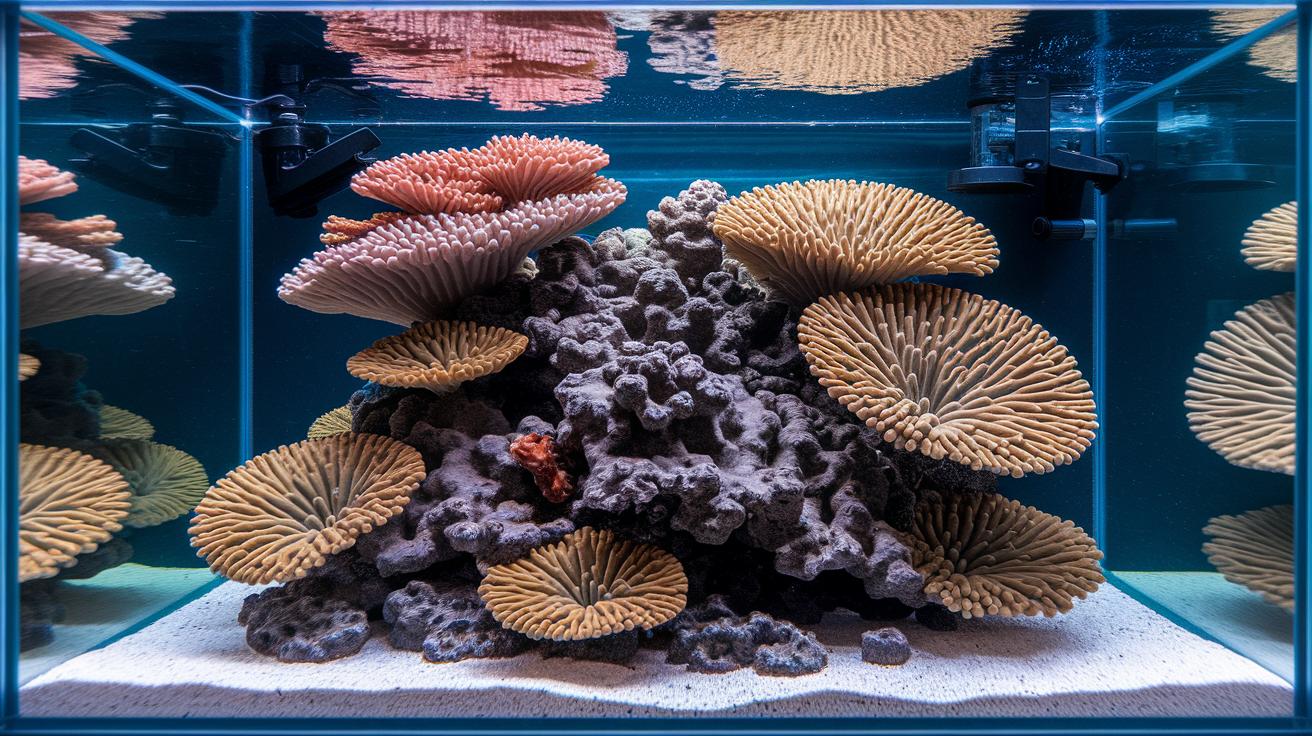
When it comes to lighting your aquarium, it’s all about finding the perfect match for your corals. Think of it like choosing the right spot in a sunlit pond. For instance, SPS corals do best under bright light with wavelengths between 450 and 470 nm and about 60 lumens. LPS corals enjoy a spectrum shifted a little higher, between 460 and 480 nm with around 45 lumens. And soft corals? They shine under a gentler glow of 420 to 450 nm at nearly 30 lumens.
These numbers are a lot like picking the right spices for your favorite meal. When you adjust the LED settings, you can recreate the feeling of shallow, sunlit waters or the mysterious charm of deeper seas. It’s a neat trick that helps your corals get just the right kind of light to keep their colors bright and their health in check. If your corals seem a bit dull, it might be time to double-check your light’s settings.
LED diodes typically perform best at what we call color temperatures between 10,000 to 20,000 K. In simple terms, this means your reef tank light gives off a cool, crisp glow that makes coral colors pop and helps tiny coral polyps to grow strong. And just like nature, having a regular schedule, 12 hours of light followed by an equal period of darkness, gives your underwater friends a sense of routine. This natural day and night cycle is key to keeping your aquarium a happy, healthy place.
Imagine setting your clock to nature’s own rhythm. With the right adjustments, your LED lights do more than just brighten up the tank, they also support the natural processes that make your underwater world thrive.
Installation and Setup Tips for Marine LED Aquarium Lights
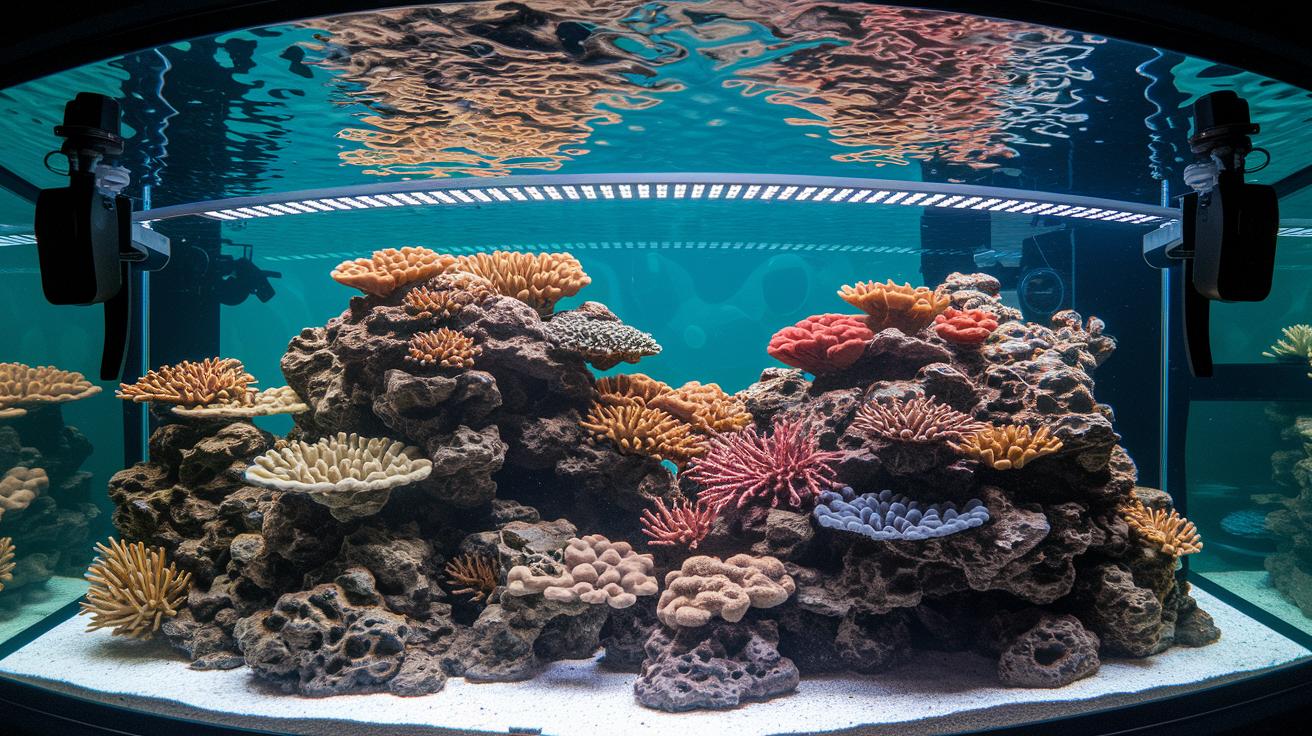
When setting up your marine LED lights, think of it as preparing a cozy underwater home. This five-step guide makes it easy to light up your tank while keeping your equipment safe in a salty environment.
-
Measuring: Begin by taking careful measurements of your tank. Grab your ruler and measure the space above the water. Aim for an 8 to 12 inch gap so the light can spread evenly, avoiding harsh glare or deep shadows.
-
Mounting: Next, secure your lights by using sturdy stainless-steel or anodized aluminum brackets. These materials stand up well to salt, just like a well-anchored boat in choppy waters.
-
Wiring: When it’s time to connect the wires, use GFCI-protected outlets and waterproof connectors. It’s a bit like checking your rope before tying your boat to the dock – you want everything safe and sound.
-
Positioning: Adjust the light angle to smooth out any overly bright spots. Just like setting a sail just right, position the light to create a gentle, natural glow all around your tank.
-
Programming: Finally, set up your LED lights with a schedule that mimics natural daylight. This way, your aquatic friends enjoy a balanced, friendly environment that feels as natural as a sunlit reef.
Energy Efficiency and Maintenance Strategies for Marine LED Reef Systems
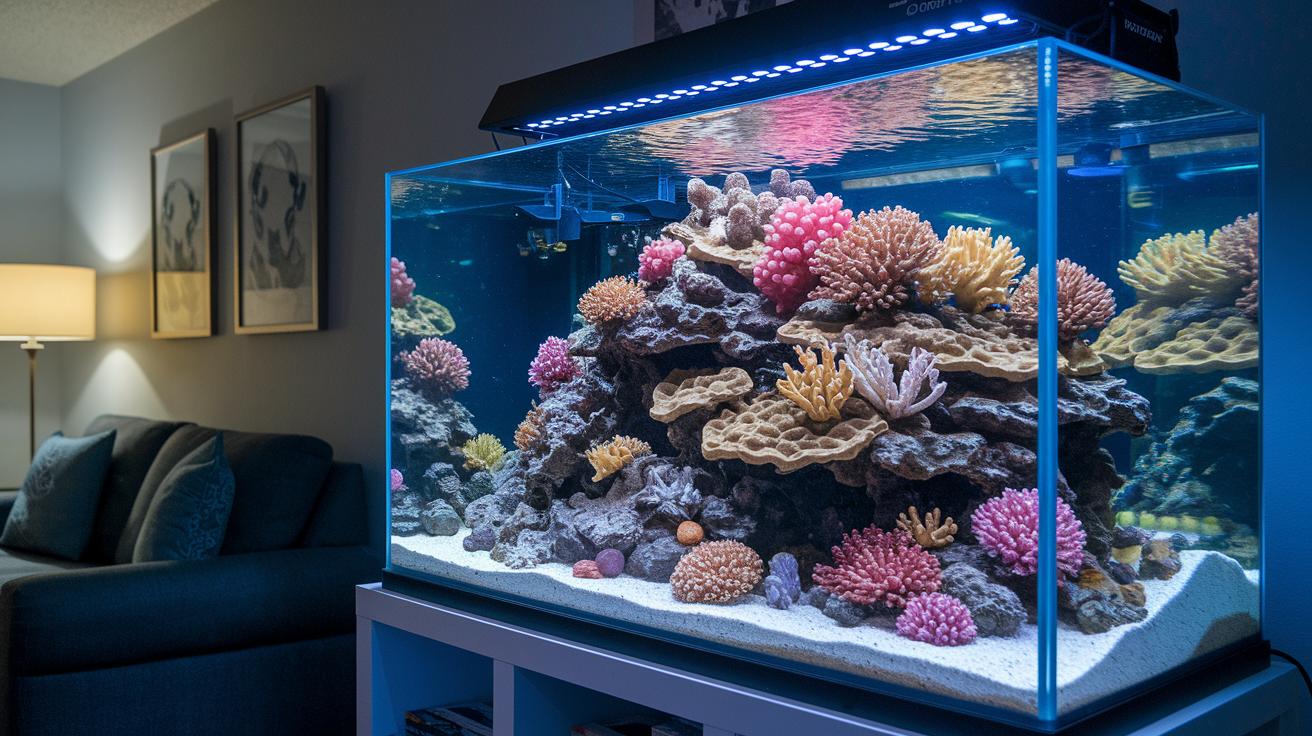
LED lights in your reef tank work like a smooth current, using much less energy than older lighting systems. They use about 1 to 1.5 watts per liter, while metal halides can draw 3 to 5 watts per liter. It’s a bit like choosing a speedy little boat over a bulky, fuel-hungry ship, you get the same brightness with a much smaller energy bill.
Regular maintenance is key to keeping those ocean colors vibrant. Every month, a simple cleaning of the lens and the acrylic cover can stop a drop in brightness by as much as 20%. Picture it like wiping away mist from a window to enjoy a clear, shimmering view of the sea.
Then, every three months, take a few minutes to check the fans and dust off the heat sinks. This small care routine is like giving your reef system a quick check-up to keep things cool and running smoothly, much like ensuring a boat’s engine is in top shape.
Also, keep in mind that LED diodes will slowly dim, reaching around 70 to 80% of their full brightness after two years. Planning for this gradual change is like knowing that even the clearest waters might turn a little murky over time, so you’re never caught off guard.
By watching your energy use and sticking to a regular cleaning schedule, you can enjoy both a beautiful and efficient marine tank for years to come.
Customization and Smart Control for Marine Aquarium LED Systems
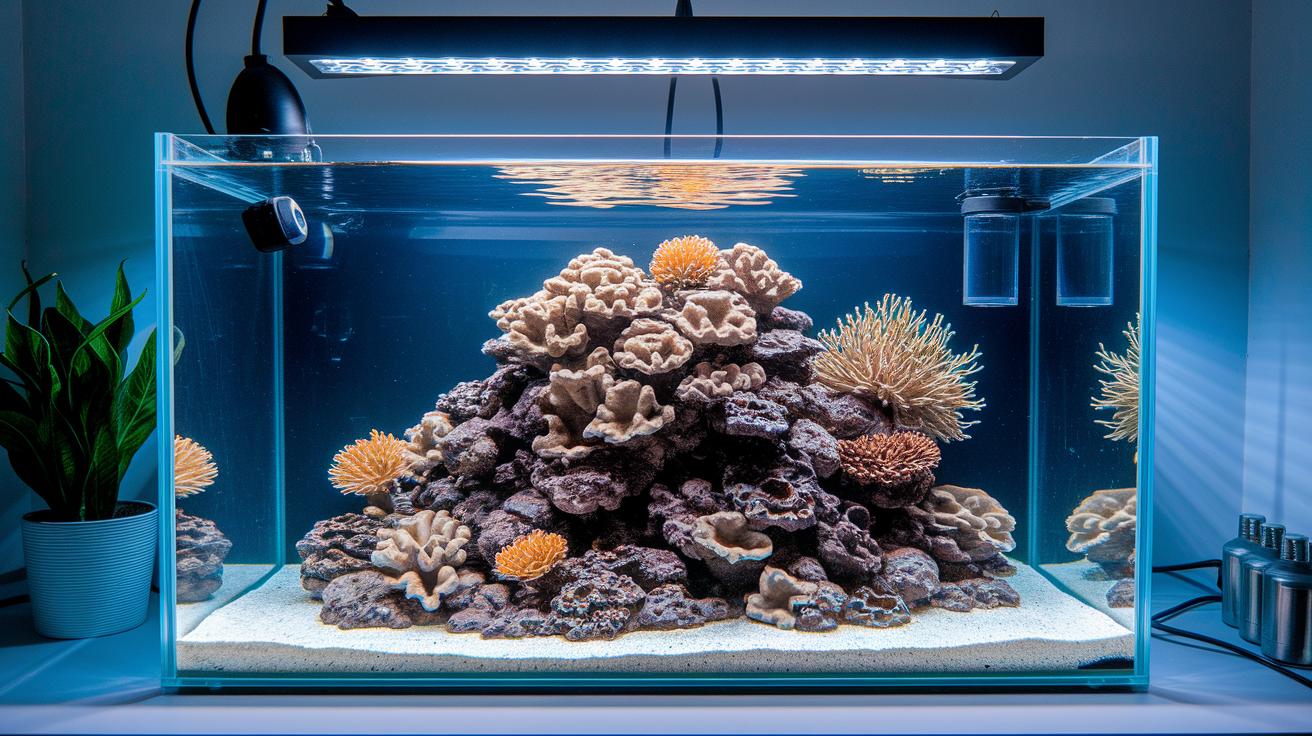
Imagine setting your aquarium lighting to mimic the gentle glow of a sunrise or the soft shimmer of a full moon. With smart LED systems, your tank comes alive, creating a natural reef feel. Take Coralife Seascape Smart, for example. This neat system lets you play with white, blue, and RGB lights through an easy-to-use app that has preset programs. It’s kind of like setting an alarm for your tank so it greets the day with a warm, welcoming light.
Then there’s the Aqueon BlueIQ App, which takes things a step further by syncing your lights with your pump and heater settings. Picture your LED lights smoothly switching their colors as your reef’s routine changes, much like a digital conductor guiding a symphony of colors. And if you like to experiment, third-party controllers, like NICREW options, let you choose from sunrise and sunset effects to even simulate lunar cycles, all tailored to your unique taste.
All in all, these smart control features help you create a natural rhythm in your marine tank. They offer precise timing strategies that are easy to set up and adjust, making your underwater world feel as dynamic and ever-changing as the open ocean.
Final Words
In the action, the article walked through choosing the right fixtures by matching light spectrums to coral needs and reviewing top models with user-friendly features. It covered setting up mounts, wiring safely, and fine-tuning energy use for long-lasting performance.
Every tip was shared to help you create a balanced underwater home where aquatic life thrives. A well-planned setup with led lighting for marine aquarium systems promises a sparkling, healthy environment for your fish and corals.
FAQ
What is the best LED lighting for a marine aquarium?
The best LED lighting for marine aquariums provides full-spectrum output with adjustable white and blue channels to support coral growth and vibrant fish. This lighting balances intensity, efficiency, and fits your tank’s size.
Do corals prefer white or blue light?
Corals thrive with blue wavelengths—around 450–470 nm—for photosynthesis, yet a mix that includes white light helps mimic natural sunlight for optimal coral health and an appealing display.
Are LED lights good for reef tanks?
LED lights are beneficial in reef tanks because they offer adjustable spectrums, produce less heat, and use lower energy. They help maintain stable conditions, ensuring healthy corals and fish.
How many watts of LED lighting do I need for a reef tank?
LED wattage varies with tank size and coral needs. Reef systems typically require between 30W and 200W per unit, roughly 1–1.5W per liter, to provide the right intensity without wasting energy.
What are some top marine aquarium LED options like reef LED strips or 48-inch fixtures?
Top marine LED options include reef LED strips, 48-inch panels, and systems from brands like Coralife and Orphek. These fixtures offer customizable spectrums and outputs to match different tank sizes and coral types.
Where can I find LED lighting for marine aquariums on Amazon?
Amazon features a range of LED lighting for marine aquariums, from cost-effective models with basic controls to high-output systems with full-spectrum features, ensuring options for every reefkeeper’s needs.