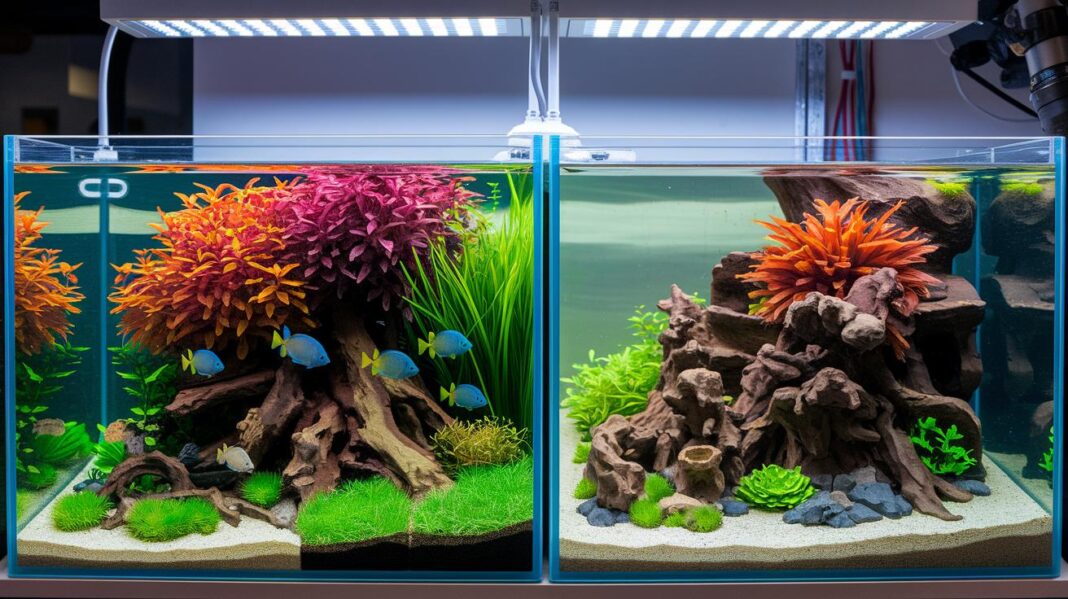

Have you ever caught yourself wondering if your tank should feel like a lively slice of nature or a calm, steady retreat? Some aquariums burst with bright, living plants and cozy rock nooks, almost like a hidden garden under the sea. Others stick to a simple design that offers a predictable, uniform look, giving your fish a safe and familiar space.
Each style has its own special perks. One setup might help refresh your water with extra oxygen, while another provides steady shelters for your finned friends. In this post, we take a closer look at how natural and man-made designs change your tank’s water and overall vibe.
Stick with us as we swim through these choices together. By the end, you might just find the perfect setup that suits your aquatic pals best.
Natural vs Artificial Aquarium Ecosystems: Sparkling Choices
Natural aquariums bring a slice of Mother Nature right into your home. You can use driftwood, smooth rocks, real aquatic plants, soft sand, and even a little bit of leaf litter to create a truly lifelike setting. Live plants do amazing work, they sip up carbon dioxide, help keep nitrite and nitrate levels low, and even hold back algae. Ever notice how watching live plants sway in your tank makes your fish seem more content? On the flip side, many aquarists pick décor made from resin, plastic, or silk that stays safe for the water and keeps its look without breaking down. This is a real treat if you like a set-up that doesn’t change your water chemistry and needs little upkeep.
Each ecosystem has its own special perks. Natural décor boosts oxygen in the water and gives your fish cozy hideaways, essential for species that love to nestle among leafy spots. And yet, artificial décor stays consistent and stands up well even if your finned friends tend to nibble or push things around. In fact, a lot of tank keepers mix both styles to create a space that feels rich in texture, while still being practical for everyday care.
| Aspect | Natural Aquarium | Artificial Aquarium |
|---|---|---|
| Décor Materials | Driftwood, rocks, real aquatic plants, sand, leaf litter | Resin, plastic, silk décor |
| Water Chemistry Effects | Boosts pH and hardness in a natural way | Does not change water chemistry |
| Maintenance Level | Needs regular care, trimming, and water testing | Simple cleaning and occasional rearranging |
| Fish Behavior Impact | Offers natural hiding spots and breeding zones | Provides steady shelters; great if fish like to bump décor |
| Visual Longevity | Changes over time as plants grow | Keeps a steady look over the years |
Mixing natural and artificial décor lets you enjoy the best of both worlds, a beautiful, lively tank that’s also smart and easy to maintain.
Design Principles for Natural Aquarium Ecosystems
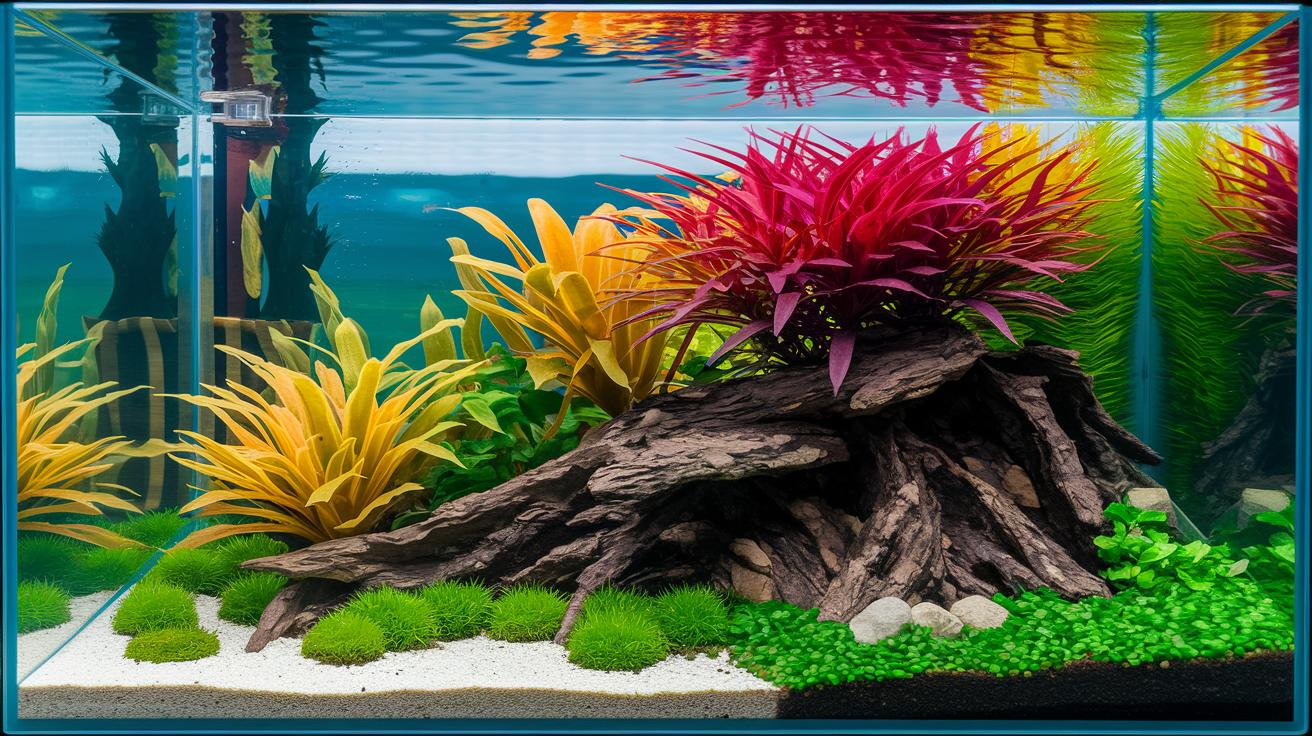
Start by choosing plants that naturally belong in water, like Amazon swords and Anubias. These easy-going greens give your tank a genuine wild look while filling the water with fresh oxygen and soaking up extra nutrients. And here's a fun tidbit, before Marie Curie became famous, she even carried test tubes in her pockets, not knowing the risk! Kind of like that unexpected story, these native plants bring a surprising boost to your tank.
Next, build a friendly base for your aquatic plants. Use a mix of sand, gravel, and clay to help roots grow strong and give a comfy home to helpful bacteria. Then, add driftwood and bits of leaf litter to echo the gentle flow of a riverbank or a peaceful forest floor. This clever setup not only looks natural but also gives little hideaways for your fish and other critters.
Keep your lights on for about 8 to 10 hours a day, and consider adding CO₂ and a little extra fertilizer now and then to boost your plant friends. It’s a bit like feeding them a special treat so they can thrive. Also, test your water once a week to check the pH (aim for 6.0 to 6.8), GH, and KH levels. Adjust as needed to match your chosen natural scene and keep everything in perfect balance.
By following these friendly tips, you create an aquarium that takes care of itself over time. Every little choice, from the right plant to checking your water regularly, helps build a balanced, lively underwater world that feels as natural as a quiet pond.
Engineering Tips for Artificial Aquarium Ecosystems
When you're designing an artificial aquatic scene, go for decorations made from aquarium-safe resin, plastic, or ceramic. These safe materials help keep your water balanced and free from chemicals that might upset your fish.
Bright, colorful gravel and plastic plants can really bring your tank to life with little upkeep. Imagine a vibrant plastic fern that lights up the tank without the hassle of trimming like real plants. It's a perfect way to add sparkle without extra work.
Always choose décor with smooth edges and well-sealed paint. This extra care stops any sharp corners from harming your fish and keeps every element safe for your underwater friends. Take a moment to check that every piece is thoughtfully designed for a worry-free tank.
Cleaning these items is super simple too. A quick rinse or soak is usually enough to remove algae buildup. This easy routine can save you time and keep your display looking fresh without the stress of more complicated maintenance.
Finally, arrange lightweight decorations in spots where they’re easy to shift around. Moving a plastic cave or a little resin rock can refresh your tank’s look instantly. This lets you mix things up whenever you want while keeping the filter steady and your fish relaxed.
Comparing Maintenance Requirements in Natural vs Artificial Aquariums

Natural tanks are like a lively coral reef that needs your attentive care. You’ll spend about one to two hours a week trimming plants, vacuuming the gravel (that’s the gravel at the bottom), and adding a little fertilizer or CO₂ to give your plants a boost. It’s also important to test your water’s pH, GH, and KH levels to keep the water soft and balanced. Picture yourself carefully snipping through lush Amazon swords and Anubias, all while making sure the water stays in tip-top shape for your aquatic pals.
Artificial setups, on the other hand, make life a bit easier with routines that focus on simple cleaning tasks. Instead of daily plant care, these aquariums need a good rinse or scrub of décor about once a month to clear away algae and dust. Regular gravel vacuuming, a weekly water change (about 30% of the water), and a short 30-minute filter check help keep everything clear and fresh. Think of it like giving your tank a quick refresh, so your man-made décor keeps its sparkle without using up too much of your time.
For both types of tanks, having the right tools is a game-changer. A trusty aquarium vacuum, reliable water testing kits, and the right brushes can help maintain water quality and make your décor look its best. Keeping up with filter checks and scheduled cleanings means your aquarium, whether natural or artificial, stays vibrant and offers a stable, joyful home for your fishy friends.
Species Compatibility in Natural vs Artificial Aquarium Ecosystems
Natural aquariums bring a warm, inviting home for fish that love real, lush vegetation. Tetras, discus, and killifish especially enjoy tanks filled with live plants and fallen leaves, which offer cozy spots for laying eggs and everyday snacking. Picture gentle leaves drifting by and soft, rooted plants giving little fish a safe hideout from curious onlookers. Meanwhile, bottom dwellers like Corydoras and loaches thrive when there’s driftwood and snug caves around, creating perfect nooks for resting and foraging.
On the other hand, man-made setups have their own charm for species that might accidentally disturb live plants. Goldfish, African cichlids, and other active diggers find comfort in sturdy plastic décor because it stays in place no matter how much they toss around. The solid, synthetic greens serve as safe hiding spots, so even sensitive bettas and shrimp can retreat when they feel a bit uneasy.
Many aquarists say mixing both real and artificial elements gives the best of both worlds in a community tank. One area can be a lush, grazing space with natural plants, while another part offers solid, reliable shelter with fake décor. This balanced approach helps create a vibrant tank where different kinds of fish can feel right at home.
- Real, leafy settings work great for tetras, discus, and killifish
- Bottom-dwelling fish love natural driftwood and hidden caves
- Busy, digging fish prefer the sturdiness of synthetic decorations
- Bettas and shrimp enjoy the secure spaces that artificial greenery offers
With this blend, you end up with an aquarium that supports a lively mix of aquatic life, offering both the nurturing feel of nature and the dependable refuge of well-made decor.
Best Practices for Blending Natural and Artificial Elements in Aquarium Ecosystems

Designing a tank that feels perfectly balanced is like watching the gentle ripples of water interact with smooth stones. When you mix the natural charm of live plants with the ease of fake décor, every piece plays its part to create a little underwater wonderland.
Imagine a setup where soft greens from real plants blend beautifully with the bright pops of color from plastic ornaments, working together like water dancing over pebbles.
Here are seven friendly tips to help you build an aquarium that feels both natural and inviting:
-
Match the colors of your fake pieces with the tones of your live plants. Think about a plastic fern that nods to the deep green of your real flora.
-
Let live plants take center stage in the main areas, while sprinkling in artificial décor in sections that see a lot of fish traffic. This way, you keep upkeep simple and fun.
-
Combine driftwood replicas with natural branches to keep the vibe even, they work together like different notes in a gentle melody.
-
Change up your artificial elements from time to time. A seasonal swap can refresh your tank’s look and keep everything feeling new and interesting.
-
Make sure every piece you add is safe for aquariums. This avoids any unwanted surprises like harmful chemicals or sharp edges that could bother your fish.
-
Cover any open paint on ceramic items with an aquarium-safe sealant. It’s like giving your décor a little polish while keeping your fish safe.
-
Arrange both live and artificial items so that your fish have plenty of clear paths to swim and explore. It creates natural sightlines that help your fish feel comfortable and at home.
Final Words
In the action, we compared live decor and aquarium-safe synthetic options, looking at their roles in water chemistry, upkeep, and fish behavior. We walked through setting up a natural environment with live plants and creating a low-maintenance artificial scene. Mixing both styles can offer diverse visuals while keeping care simple and enjoyable. By weighing natural vs artificial aquarium ecosystems, you can create a balanced underwater space that delights the eye and nurtures your aquatic friends.
FAQ
What do discussions on Reddit say about natural versus artificial aquarium ecosystems?
The Reddit discussions show that natural aquariums use real elements like live plants and driftwood, while artificial setups rely on resin or plastic décor. This affects water chemistry, upkeep, and fish behavior.
What is a self-sustaining fish tank ecosystem and how is it featured in aquarium projects?
The answer describes a self-sustaining fish tank ecosystem as one where live plants balance oxygen and nutrients. Aquarium projects based on this idea aim for low maintenance and natural water quality.
What does an aquarium ecosystem diagram include and what are its key components?
The diagram outlines elements such as lighting, substrate, fish-safe décor, filtration, and live plants. These parts work together to maintain a balanced and healthy aquatic environment.
What are some natural fish tank ideas and the purpose of natural aquarium stones?
The answer highlights ideas like using natural driftwood, rocks, and aquarium stones. These elements add authenticity, support beneficial bacteria, and help create an environment that mimics real aquatic habitats.
Is it better to have live or fake plants in a fish tank?
The answer explains that live plants improve oxygen levels and nutrient uptake, while fake plants offer durability and simpler upkeep. The right choice depends on your maintenance goals and aquarium style.
Are aquariums considered artificial ecosystems or can they be natural?
The answer shows that aquariums blend artificial creation with natural simulation. Though man-made, these systems aim to reproduce genuine aquatic conditions using either live or safe artificial components.