

Have you ever noticed how some aquascapes shimmer with life while others seem a bit too plain? Nature aquascaping lets you turn a basic tank into a lively, underwater retreat. Imagine your tank where every plant and stone echoes the gentle flow of a calm stream.
With smart layouts and thoughtful design, you can capture nature's simple beauty on a tiny scale. In this post, we're here to share easy tips to add natural charm to your tank and help you create a living display that feels just as magical as watching water dance in sunlight.
Nature Aquascaping Fundamentals: Crafting Organic Underwater Landscapes
Nature aquascaping began in the 1990s, thanks to a well-known Japanese aquarist who embraced the simple beauty of Wabi Sabi. This style is all about setting up small underwater scenes that feel as natural as a gentle stream flowing over smooth stones. Imagine a tank transformed into a living piece of art by placing each plant and rock with care. It shows that every aquascape is a mix of art and nature.
At its heart, nature aquascaping uses plants and handpicked hardscape elements to mirror the great outdoors. The idea is to create balance and harmony using three key layout methods. One method uses a concave design to form a warm, open space in the center. Another method, called the convex "island" layout, builds up a small mound-like structure. The third way, known as the triangle scape, arranges elements in a sloping line from high to low, much like a gentle hill. Each style invites you to notice how structure and softness dance together.
These ideas can turn a plain tank into a calming little underwater garden. When designing your aquatic space, think about every detail – from placing a lone stone to grouping delicate water plants – to capture the essence of nature alive. By mixing different layouts and arranging elements with care, aquascapers create cozy, intimate spaces that celebrate nature in miniature.
Selecting Hardscape Elements for Nature Aquascaping
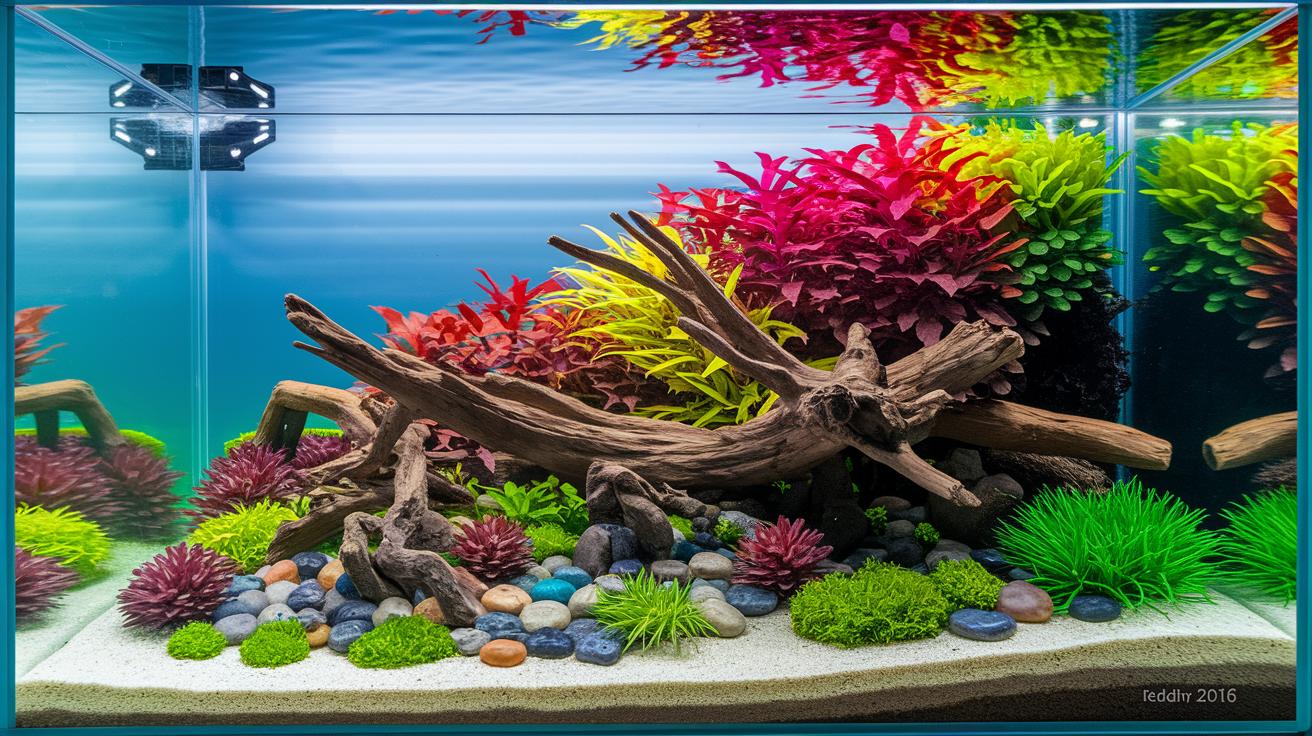
When you pick the right materials, you set up a beautiful underwater world. In nature aquascaping, using good aquasoil or gravel is key because these substrates feed plants that need plenty of space for their roots and help hold hardscape elements in place. Using branched driftwood and carefully selected stones creates a solid base where plants love to grow. Placing these pieces in just the right spots adds depth and makes your tank look naturally stunning.
There are three main layout ideas that can guide you:
- Concave layout: This forms an open, gently curved bowl shape in the center.
- Convex "island" layout: This builds a little raised area that feels like a tiny island.
- Triangle scape: This arranges rocks and driftwood to create a smooth slope from higher to lower ground.
Getting the placement right is all about creating a balanced look. When you put textured rocks and driftwood near the front, it draws the eye deeper into the scene. Position them using one of these methods, and you add a natural flow to your aquascape. Your substrate should hold enough nutrients to feed the plant roots, much like a well-planned foundation supports a house. Every grain of substrate helps nourish the plants, keeping your aquatic garden lively and true to nature.
Plant Selection and Arrangement in Nature Aquascaping
When planning your aquatic garden, start by mixing different plant types that make your underwater world feel alive. Think of using soft carpeting plants like Glossostigma elatinoides as a green blanket, mid-height stem plants such as Rotala rotundifolia for structure, and even some carefully grown tissue-culture plants to keep things steady. You might also add a unique touch with Wabi Kusa moss balls that bring an artistic flair. Picture your tank as a tiny park where every plant plays its own special role.
Next, set up your plants to mimic nature by varying height, texture, and color. Place the low-growing carpet plants in the front like a lush lawn, while the mid-height clusters create a smooth transition. Then, let the taller background stems add depth to your scene. Imagine that soft edge of Glossostigma elatinoides gently framing your tank, much like nature’s own green border. It’s a fun and natural way to arrange your aquatic garden.
In the midground, try grouping carefully chosen species to create lively clusters. Mixing different textures and colors is like capturing the dance of light and shadow in a natural setting. If you need a little inspiration, check out Best Aquarium Plants and let your creativity flow. Grouping plants thoughtfully turns your aquascape into a dynamic and balanced space where every detail tells a story.
Finally, remember that nutrient-rich aquasoil forms the heart of your garden. This soil is like a hearty meal for your plants, offering the nutrients they need to thrive and grow strong. It not only feeds the roots but also anchors your design, turning your tank into a living, breathing piece of art that feels naturally complete.
Lighting and Water Quality for Nature Aquascaping

Lighting is absolutely vital for nature aquascaping. When you use full-spectrum LEDs at a PAR of 30–50 µmol/m²/s, a soft warm glow reveals the real beauty of your aquatic plants. Picture a tank where every leaf and petal shines like it’s in the spotlight. Before the lights were set up, the plants looked a bit dull, but once they were on, their natural colors exploded into view.
Adding a touch of CO2 at around 20–30 ppm and giving your tank 8–10 hours of light helps moderate-growth plants thrive while keeping algae under control. Imagine a calm underwater garden where light and CO2 work together to create a lively, balanced scene.
Water quality is just as important. Changing about 25% of the water each week helps wash away extra nutrients and waste, keeping the tank clear and fresh. It’s like giving your underwater home a regular clean-up.
Good filtration is also key to keeping everything in balance. Think of it like tending a garden, regular checks and quick fixes prevent surprises and help your aquatic ecosystem flourish, letting every natural hue shine through.
Establishing a Balanced Ecosystem in Nature Aquascaping
Keeping a natural balance in your tank is all about minding how water flows, how much CO2 is around, and the right mix of nutrients. A smooth water current, made possible by a filter that moves 4 to 6 times your tank’s water every hour, keeps everything fresh without startling your plants. At the same time, getting your nutrient and gas levels just right helps your plants grow and the water look clear and sparkling. It’s like creating a tiny water cycle where every part has a role.
Take a peek at this handy table for the key water numbers to watch:
| Parameter | Recommended Range |
|---|---|
| pH | 6.5-7.2 |
| CO2 (ppm) | 20-30 |
| Nitrate (ppm) | ≤10 |
| Filter Turnover | 4-6×/hour |
By tweaking these numbers, you can shape your underwater garden just the way you like it. Keep a close eye on things like pH and nitrate levels, as they make a big difference in how your plants thrive and how clear the water stays. If your pH slips outside the 6.5 to 7.2 range, think about using a buffer solution to bring it back. And if nitrates get too high, you might want to change the water more often or check how you’re using liquid nutrients. Regularly checking these details along with a steady CO2 supply will help your tank stay in a perfect balance, making it a healthy and peaceful home for all your aquatic friends.
Maintenance Workflow for Nature Aquascaping

Every day, spend a few minutes checking on your setup to ensure your underwater masterpiece stays lively. Start your morning with a quick look at your gear, make sure the filters are gently humming, and that the lights and CO2 systems are working as they should. It’s a bit like taking a short, refreshing stroll along a quiet stream, with every little check adding comfort and care.
Each week, give some extra attention to your plants and water. Trim the plants so they grow nicely without getting too wild, and change about 25% of the water to bring in fresh nutrients while washing away unwanted waste. You can think of it like stirring a calm pond to keep it clear and inviting. Also, follow the EI method by adding liquid macronutrients twice and micros once during the week, with an iron boost each month, to nurture your aquatic garden in a balanced way.
Every month, set aside a little extra time to dive deeper into your aquarium’s health. Over a 4-6 week cycle, carefully check the water’s pH, nitrate levels, and other values, and refill your CO2 cylinder if needed. This careful review is like pausing to listen closely to the gentle murmur of water, ensuring that every ripple stays just right. Keeping up with these checks makes sure your plants flourish and your layout remains as naturally beautiful as a peaceful underwater scene.
Advanced Nature Aquascaping Designs
High-Tech CO2 and Soil Configurations
Modern aquariums like the UNS 60U let you craft a layered aquasoil garden that feels smart and natural. Using tools such as solenoid valves and digital drop checkers, you get a simple way of keeping CO2 levels just right and delivering nutrients steadily. Imagine knowing each drop is perfectly measured so your plants always get what they need.
Biotope and Themed Layouts
Designing a biotope means choosing plants and animals that belong together, just like in nature. Picture setting up a mini riverbed or a calm wetland right in your tank. With carefully chosen rocks, wood, and soil, every piece tells a story of the wild, creating a water garden that is true to nature and wonderfully unique.
Wabi Kusa and Miniature Designs
Wabi Kusa styles add a creative touch with small floating moss-ball planters. This simple, low-tech approach mixes art and nature on a tiny scale. By crafting moss balls on nutrient-rich bases, you can build charming little water gardens that are fun to create and easy to keep up.
Advanced designs like these give seasoned aquarists the spark they need to push boundaries and create vibrant, personal aquatic spaces.
Final Words
In the action, we explored the art of blending plants, driftwood, and rocks to mimic natural water settings. We shared tips on layout styles, balanced water treatment, and ongoing care routines that keep an aquarium thriving. Each section talked about combining creativity with care to create a peaceful underwater retreat. With practical advice on hardscape selection, plant arrangement, lighting, and maintenance, nature aquascaping becomes a fun way to enrich your tank. Enjoy crafting your organic underwater space and watch your aquatic world flourish.
FAQ
What are some aquascape ideas for beginners and fish tank aquascape ideas?
The aquascape ideas for beginners and fish tanks focus on simple layouts using natural plants and stones, creating a balanced, easy-to-maintain underwater garden that mirrors a peaceful, real-life landscape.
What does an Iwagumi aquascape involve?
The Iwagumi aquascape involves using carefully chosen stones arranged to form a balanced, rock-centered layout that supports subtle plant placements and a serene underwater view.
What is a Nature Aquarium style setup?
The Nature Aquarium style setup uses natural plant arrangements and hardscape elements inspired by Japanese design, crafting an organic underwater scene that feels both balanced and authentic.
How can I achieve a jungle style aquascape?
The jungle style aquascape creates a lush underwater scene by combining varied plant heights and textures, forming a dense, layered look that evokes wild, untamed nature.
What aquascaping ideas work well in small tanks?
The aquascaping ideas for small tanks emphasize compact plants and a minimal selection of stones or driftwood, crafting a clean, open layout that avoids crowding in limited space.
How can driftwood be used in aquascaping?
The aquascape ideas with driftwood use natural wood pieces as anchors for plants, adding rustic charm and a dynamic structure that enhances the overall natural underwater design.
What is the Nature Aquarium game about?
The Nature Aquarium game brings virtual aquascaping to life by letting players design underwater landscapes with realistic plant and hardscape placements for a fun and creative simulation.