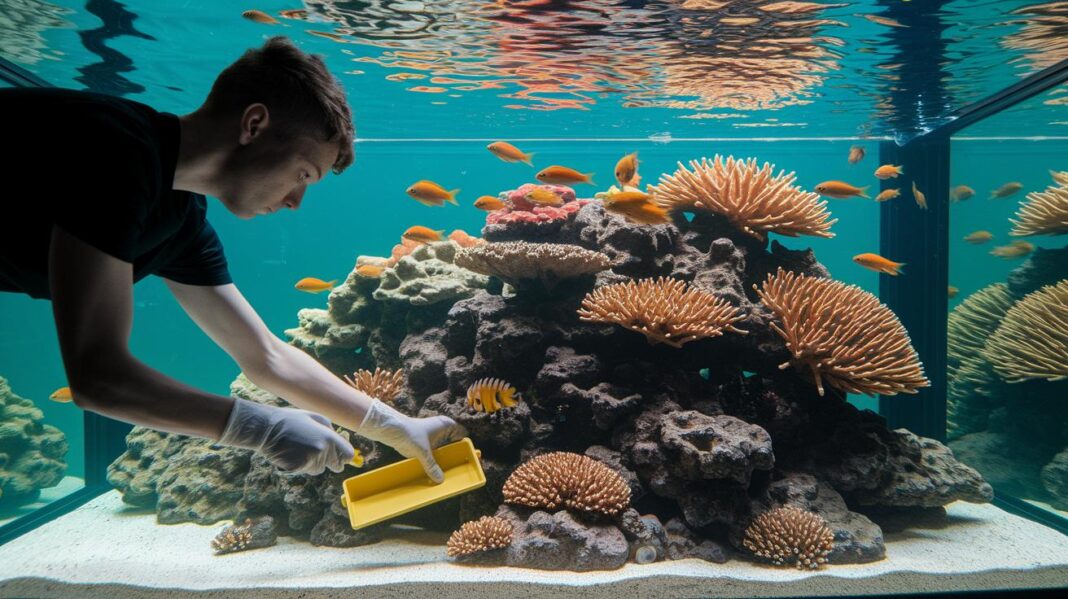

Have you ever wondered if your reef tank cleaning routine might be harming your little marine pals? Reef tanks need more than just a quick scrub to thrive, and skipping some important steps can stress out your fish.
In this guide, we're sharing a simple, clear method to keep your underwater world shining bright. We'll go over each step, from checking your equipment (think of it as making sure your filtering system, which cleans the water, is working well) to giving the glass a gentle wipe. It’s like enjoying a leisurely swim with your favorite fish friends, where every move is calm and thoughtful.
Stick with us, and soon cleaning your tank will feel like a soothing ritual, one that turns a routine chore into a moment of care and clarity for your aquatic haven.
Step-by-Step Proper Cleaning Techniques for Reef Fish Tanks
Keeping your reef tank sparkling and healthy is all about having a clear, step-by-step routine. Think of it like a gentle swim through calm waters with your favorite fish friends.
-
Inspect Equipment and Check Temperature
Before you dive in, make sure all your tools are in tip-top shape. Check that the tank’s temperature is between 73°F and 84°F, much like making sure your wetsuit fits right before a refreshing swim. -
Vacuum the Substrate with a Siphon
Next, perform a water change of about 10–25% using a siphon. Gently vacuum the gravel to remove debris like fish waste and leftover food, keeping the substrate clean without disturbing your little underwater community. -
Scrub the Glass
Grab a magnetic scrubber and softly clean the inside of your tank’s glass. This helps clear away algae build-up without scratching the surface. It’s like wiping a foggy window to reveal a bright, clear view of your aquatic world. -
Check and Clean Filter Media and Pumps
Take a moment to examine the filter media and pump units. Removing any trapped debris helps maintain a strong water flow and prevents any build-up of unwanted toxins in your tank. -
Top Off with Freshwater
Replace the water lost to evaporation with only reverse osmosis freshwater. Since evaporation leaves the salt behind, adding pure water keeps your tank’s salinity balanced, just as nature intends. -
Adjust Water Chemistry
If needed, boost the alkalinity by gently mixing in 2 tablespoons of sodium bicarbonate per gallon. Keeping an eye on the pH and overall water chemistry will help maintain a happy environment for your fish. -
Introduce Replacement Saltwater
Now, slowly add new saltwater that matches your tank’s temperature and specific gravity. This gradual approach helps avoid any sudden changes, ensuring your fish feel safe and calm. -
Log Observations Daily
Finally, jot down what you see each day. Noting fish behavior, water clarity, and other readings will help you keep a watchful eye on your tank’s overall health, just like checking in with an old friend.
Enjoy caring for your underwater world like a gentle ripple on a calm day, and soon you’ll notice the difference in the clarity and vibrance of your reef tank!
Essential Tools and Products for Proper Cleaning Techniques in Reef Fish Tanks
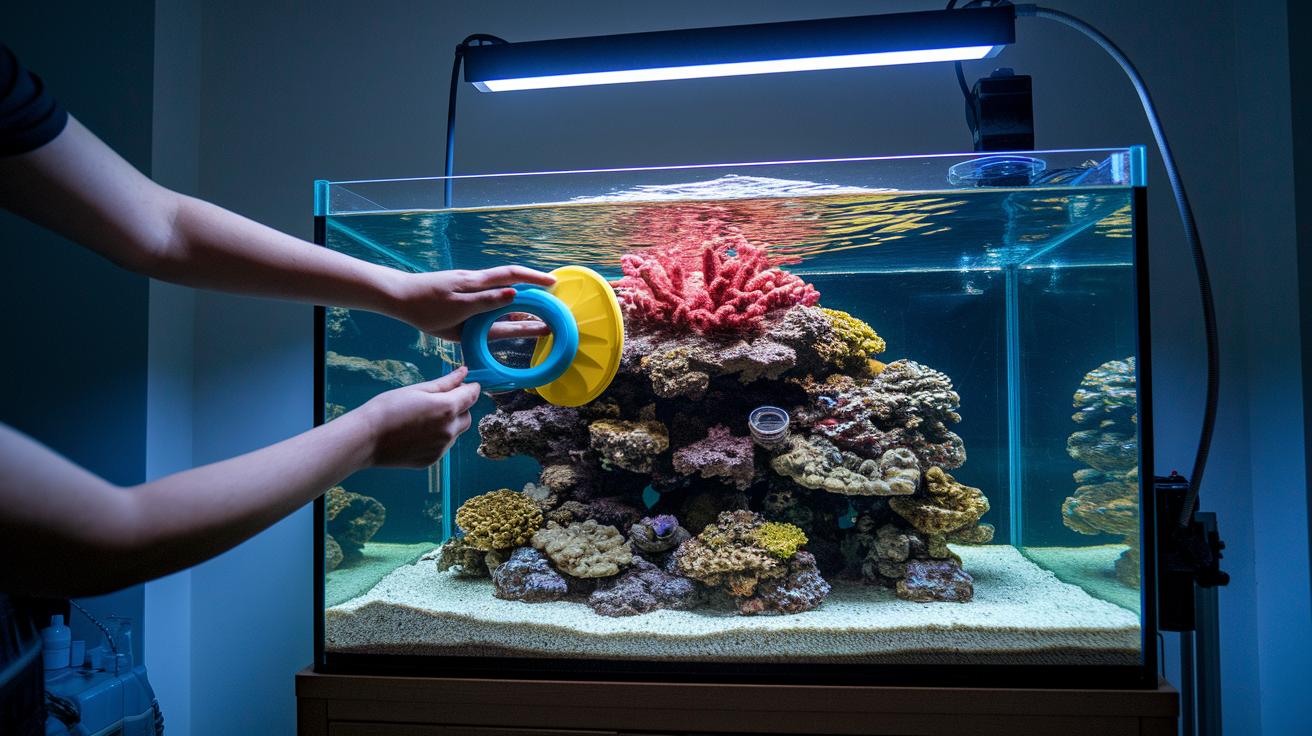
Imagine starting your cleaning routine with a magnetic glass scrubber that works like a little magic wand, gently clearing algae without harming your tank’s glass or acrylic walls. I remember the first time I used one – it felt like uncovering a secret window to an underwater wonderland. Next up is the gravel vacuum siphon, a tool that quietly lifts settled debris from your tank’s substrate while letting your precious corals rest undisturbed.
When you face those tricky spots, try soft-bristle brushes combined with enzyme-based tube cleaners. They tackle biofilm and slime in tight corners, much like clearing stubborn smudges off a cherished window. And don’t forget your protein skimmer cup cleaning kit; it helps keep residue from building up and messing with your foam production so your skimmer keeps humming along nicely.
It’s also a good idea to keep pump impeller brushes and O-ring replacement sets on hand. These little helpers make sure your water flows smoothly and your filter stays efficient. Finally, a reverse osmosis filtration system gives you pure water for top-offs, all without messing up the delicate mineral balance your tank treasures.
| Tool | What It Does |
|---|---|
| Magnetic Glass Scrubber | Clears algae without scratching surfaces |
| Gravel Vacuum Siphon | Gently extracts debris from the substrate |
| Soft-Bristle Brushes & Enzyme-Based Tube Cleaners | Remove biofilm in tight spots |
| Protein Skimmer Cup Cleaning Kit | Prevents residue buildup that hinders foam production |
| Pump Impeller Brushes & O-Ring Sets | Maintain smooth water flow and filter efficiency |
| Reverse Osmosis Filtration System | Provides pure water for top-offs while protecting mineral balance |
Safety and Coral-Safe Cleaning Methods for Proper Cleaning Techniques in Reef Fish Tanks
Keeping your reef tank happy is like caring for a small underwater world. Start by rinsing your cleaning tools in the tank water to wash off any leftover chlorine or detergent. This helps your fish and corals avoid any unwanted chemical shocks, it’s a simple tip that keeps everything safe.
Next, use reverse osmosis water for your top-offs. This pure water keeps the salt levels just right, much like a gentle current that keeps the balance in a calm pond. When cleaning near live corals, choose a soft-bristle brush so you don’t harm their delicate tissues.
When replacing saltwater, go slow. Match the water's temperature and salt level to your tank, which helps avoid sudden changes that might stress your aquatic friends. And remember to check your pH and alkalinity during and after cleaning. These quick checks let you catch any shifts early, keeping your tank a peaceful and balanced home.
Preventative Maintenance Schedule for Proper Cleaning Techniques in Reef Fish Tanks
Keeping your reef tank running smoothly is a bit like enjoying the gentle flow of a stream. It all comes down to doing daily checks and planned cleanings so your underwater world stays happy and vibrant.
Every day, take a close look at your fish. Notice if any tiny signs of stress or unusual behavior appear. Also, check that all your equipment, like heaters and pumps, is humming along nicely. And, don’t forget to confirm that your water temperature is steady between 73°F and 84°F; this helps to keep the tank calm and balanced.
Each week, give your tank a quick water check. Test for important things like salinity, specific gravity, pH, alkalinity, ammonia, nitrite, and nitrate. If you spot any small changes in these numbers, try changing 10% to 25% of the water. This little tweak can keep your water just right without startling your marine buddies.
Every month, spend a bit of time cleaning the cover glass, lighting fixtures, and acrylic shields. Over time, calcium and salt can build up on these surfaces, making them look cloudy and even affecting how your equipment works. Keeping everything clear means that your tank can shine as brightly as a coral reef.
Taking care of your reef tank with this easy routine is like keeping a little piece of the ocean right at home. Enjoy the process, and remember, even small checks can make a big splash in keeping your aquatic world thriving!
Advanced Equipment Cleaning Procedures for Proper Cleaning Techniques in Reef Fish Tanks
Start by taking care of your protein skimmer cups. Every week, take them apart and let them soak in warm, fresh water. This little routine helps keep the foam flowing steadily. I remember when I began this habit, and soon enough, the bubbly action improved noticeably.
Next, turn your attention to the sump basin. Once a month, drain it, rinse it well, and swap out about 5–10% of the water. This simple trick clears away the built-up debris and leaves your tank water looking as clear as a mountain stream.
Then, check on your ultraviolet sterilizer. Make sure you clean the UV sterilizer sleeve each month so it keeps casting a steady glow. A clean sleeve means it can do its job of zapping harmful germs, much like a tiny underwater guardian lighting the way.
Also, give your impeller assemblies some love. Remove them carefully, brush off any debris, and don't forget to clean and lube the O-rings before putting everything back together. This careful attention helps keep the water moving smoothly, just like a gentle current in a quiet pond.
Finally, inspect all your reactor and skimmer lines. Using enzyme cleaners or a soft brush is a good way to wipe away any stubborn film. Taking these steps not only protects your equipment but also helps maintain the beautiful water quality that keeps your reef tank thriving.
Troubleshooting Common Issues in Proper Cleaning Techniques for Reef Fish Tanks
When you notice a sudden algae bloom in your tank, it may be a sign that it’s receiving too many nutrients or too much light. Try reducing the daily light hours and wiping the glass more often. It’s a bit like trimming a tree, when your tank starts looking green like a painting, a little cutback in light can make all the difference.
If your water appears cloudy for a long time, it might mean that a filter or pump is not keeping the water flowing properly. Check your flow rates and perform a partial water change to clear out any debris. Imagine your aquarium as a clear stream; when the flow slows down, it can seem like a stream clogged with fallen leaves that needs a gentle clearing.
When nitrate levels climb above 40 ppm, extra care is needed to keep your tank healthy. Do an additional 10–15% water change and consider adding some macroalgae or a carbon-based media to help freshen things up, like giving your tank a quick fresh breath of clean water.
If you find that circulation is sluggish, it might be time to clean or replace your filter pads or impellers. And when phosphate levels get high, adding phosphate-removal media during your regular filter maintenance can help keep your water balanced and clear.
Final Words
In the action, you learned a clear, step-by-step guide on proper cleaning techniques for reef fish tanks. We explored water change routines, glass scrubbing, substrate care, and proper upkeep for filter media. A regular cleaning schedule, along with gentle, coral-safe methods, was also covered to keep your tank environment balanced. Each step builds toward a visually appealing and healthy aquatic home. Enjoy the calm that comes with a pristine and thriving underwater space.
FAQ
Proper cleaning techniques for reef fish tanks YouTube
YouTube tutorials on reef fish tank cleaning techniques demonstrate weekly water changes, gentle glass scrubbing, and equipment maintenance in clear visuals. They break the process into simple, easy-to-follow steps.
How to clean a saltwater tank for freshwater use
Cleaning a saltwater tank for freshwater use means thoroughly removing salt residue. Rinse all surfaces and gear with reverse osmosis water and mild vinegar solutions to avoid leaving harmful salt behind.
Cleaning saltwater tanks with vinegar; What does vinegar do in a reef tank?
Using vinegar in a reef tank helps dissolve calcium deposits and stubborn algae on glass surfaces. It should be applied carefully and rinsed off promptly to protect marine life and maintain stable water chemistry.
How to clean a used saltwater tank
Cleaning a used saltwater tank involves scrubbing all surfaces and equipment carefully, rinsing with tank water to avoid chemical remnants, and performing a water change to eliminate any lingering salt and debris.
How to clean saltwater fish tank glass
Cleaning saltwater fish tank glass means using a magnetic scrubber or a soft, non-abrasive tool to gently remove algae without scratching the surface. Regular scrubbing keeps the view clear and bright.
How to clean live rock without killing it
Cleaning live rock should be done gently by rinsing it in tank water instead of using harsh chemicals. This method removes excess algae and debris while keeping the beneficial organisms safe.
How to clean saltwater aquarium equipment
Cleaning saltwater aquarium equipment involves disassembling parts like protein skimmer cups and tubing, soaking them in tank water, and using soft brushes to remove buildup without using harmful chemicals.
Saltwater tank care for beginners
Saltwater tank care for beginners means starting with daily inspections, weekly water changes, gentle glass cleaning, and monitoring water parameters. Easy, small steps make maintenance manageable and effective.
What not to do when cleaning a fish tank?
Not doing harsh chemical scrubs, using abrasive tools, or making sudden water changes is key. These practices can upset the tank’s balance and stress your aquatic inhabitants.
How to make a reef tank crystal clear
Making a reef tank crystal clear involves regular water changes, proper equipment cleaning, and careful monitoring of water chemistry. These steps reduce algae and debris, resulting in a sparkling underwater view.