

Have you ever caught your fish trying to breathe right at the surface? It might be a sign that your tank isn't getting enough oxygen. When you have lots of fish swimming around or your tank sits up high, keeping that balance can be a bit of a challenge.
A few simple tweaks can help your underwater buddies breathe easier. Adjusting the temperature or giving the tank a gentle clean might just be the trick. Next time you're watching your aquarium, notice how every little change can create a peaceful ripple, making your fish's home just that much healthier.
Essential techniques for improving oxygenation in aquarium ecosystems
Every tank is unique when it comes to giving your fish enough oxygen. Up high, water naturally holds less oxygen, so tanks at higher elevations might need a bit more attention. You know the signs, a fish gasping near the surface or moving its gills quickly means it might be running low on what it needs.
Sometimes, the problem is simply too many fish in one tank. A good rule is to have one inch of fish for every one to two gallons of water. This helps keep the oxygen levels in a happy range of 80% to 110% and ideally between 6 and 8 mg/L (roughly 7 to 8 ppm). If you see your fish resting at the bottom unexpectedly, it might be their way of saying the oxygen is low.
Temperature also plays a part. Warmer water holds less oxygen, so a cooler tank can really help your fish breathe easier. When my tank starts to warm up a bit, I do a gentle water change with water around 65 to 70°F. It’s amazing how quickly my fish perk up!
Other tricks include boosting water circulation to speed up gas exchange and keeping the tank clean to prevent extra waste from sucking up oxygen. Each of these simple steps works together to keep your underwater world balanced and thriving.
Mechanical aeration methods for boosting dissolved gas levels in aquariums

Air pumps hooked up with airline tubing and a check valve create an easy way to boost oxygen levels in your tank. This simple setup can raise dissolved oxygen by 1–2 mg/L in less than an hour. Imagine it like a mini windstorm in your aquarium, with tiny bubbles teaming up to refresh your fish’s world.
Air stones are another favorite for aerating the tank. They break air into tiny microbubbles, which increases the area for gas exchange. Ceramic or glass diffusers make the smallest bubbles, acting like little oxygen messengers that deliver life-giving air right where it’s needed.
Tests with a dissolved oxygen meter show that running air pumps at full power speeds up oxygen saturation by as much as 20%. Even a small change in your equipment setup can make a big difference in your tank’s atmosphere. Picture your tank surfaces sparkling as bubbles create gentle mini-waterfalls throughout the water.
For a long-term solution, consider using a quiet brushless air pump that keeps your tank peaceful while working hard. Adjust the air stones to spread the bubbles evenly, making sure every corner of your aquarium gets extra oxygen. This method of mechanical air injection through smart equipment placement is a quick and reliable way to keep your aquatic friends happy and healthy.
Enhanced water circulation strategies for optimized oxygen distribution
Keeping your aquarium water moving well is the secret to avoiding still spots where oxygen can drop. Running your filter at its proper speed creates a smooth, gentle current that blows away areas crowded with CO₂. Think of your filter like a mini ocean tide that keeps all the water active and fresh.
Using hang-on-back filters or canister-filter spray bars gives your tank an extra boost. The spray bars stir up the water’s surface, helping oxygen mix in easier. Picture a soft stream of tiny bubbles dancing across the water, reaching every little corner.
Adding a powerhead or a wavemaker ramps up the water flow even more by directing currents where you need them. When you position one across from the filter’s intake and outlet, your tank’s water gets completely mixed every 5 or 10 minutes. This clever trick not only wipes out dead spots but also keeps carbon dioxide levels low. Imagine a gentle current flowing just like a soft river meandering through a quiet forest clearing.
For those looking to go a step further, high-performance mixing units can be a wise choice. These devices mix the water perfectly so that every part of your tank stays full of oxygen, helping your fish stay healthy and happy.
Quick oxygenation techniques for emergency situations in aquarium ecosystems

When your aquarium seems a bit low on energy and your fish look stressed, try these straightforward tips to boost oxygen quickly. First, gently pour water from your tank from about 12 to 18 inches above the surface. This falling water mixes with air, adding much-needed oxygen.
Next, consider doing a partial water change of 30 to 50 percent using fresh water that’s cool, around 65 to 70°F. This not only refreshes the tank but also helps calm your fish by bringing in oxygen-rich water.
Another helpful step is stirring the water by hand with a clean, food-grade net or cup for one or two minutes. This manual mixing breaks up any still patches, letting oxygen reach all corners of the tank.
For a clever twist, add a few ice cubes inside a sealed zip-lock bag. This cools the water slightly, making it easier for the water to hold oxygen without disturbing the balance of your aquarium’s chemistry.
And if a power outage hits, a battery-powered air pump can keep a steady stream of bubbles flowing, protecting your fish until everything is back to normal.
These quick, hands-on techniques can be real lifesavers if you notice signs like rapid gill movement or fish gasping near the surface. Isn't it amazing how a few simple steps can help keep your underwater friends safe and happy?
Optimizing aquatic plant management to stabilize oxygen levels
Aquatic plants in your tank are like little oxygen factories for your fish. When they soak up light, they work hard to release oxygen into the water, making it a healthier swim for everyone. Try giving them 10 to 12 hours of soft, steady light each day so plants like Vallisneria or Hornwort have plenty of time to create that fresh oxygen. These fast-growing greens can boost oxygen levels by about 20%, keeping algae in check and the tank lively. I remember when my Hornwort first blossomed, its leaves shimmered with every touch of light, as if the whole tank was glowing with life.
It’s also a good idea to trim away any dying leaves each week. Those decaying bits can attract bacteria that use up the oxygen your plants so lovingly produce. Keeping an eye on nutrient levels is just as important. For instance, try to maintain a KH between 4 and 8 and keep nitrates below 20 ppm; this ensures your plants have the right balance to thrive. In truth, a little regular care goes a long way in making sure your aquatic world stays vibrant, stable, and full of the gentle, bubbling energy that both you and your fish will love.
Monitoring and maintaining dissolved oxygen for healthy aquarium ecosystems
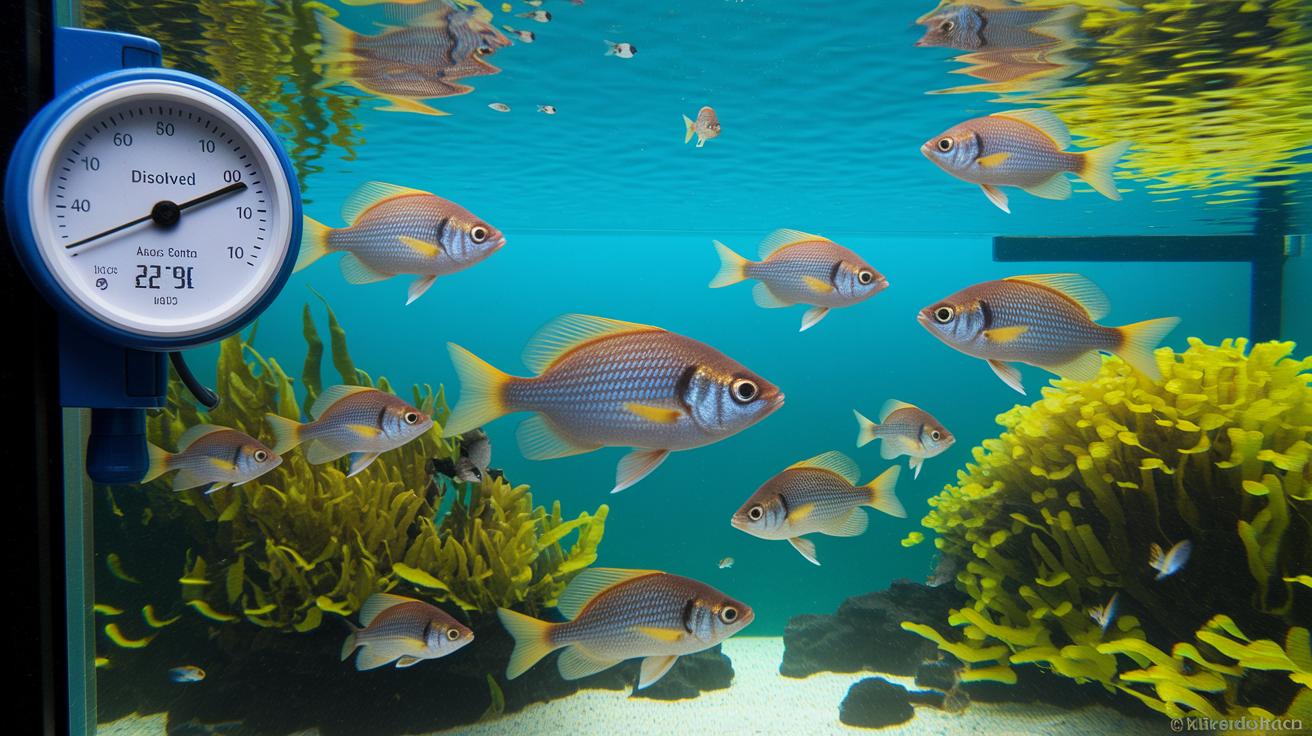
One good way to keep your tank happy is to use a well-calibrated dissolved oxygen meter or optical sensor. These handy tools check that your water has about 6 to 8 mg/L of oxygen, like taking the pulse of your underwater world. I even set mine to recalibrate every 4 to 6 weeks, and ever since, my fish seem so lively and full of energy.
Keep an eye on your fish, too. If you notice them resting at the bottom, eating less, or their gills fluttering a bit too fast, it could mean your tank isn't getting enough oxygen. Then you can adjust your air stone, pump, or powerhead, kind of like rearranging furniture, to help move fresh water around and reach all the nooks and crannies.
It also helps to record your oxygen readings every day. Jot down the water temperature, plant light timings, and how many fish you have. This simple habit lets you spot any changes over time, ensuring your pump and other tools always keep your aquatic home just right.
Final Words
In the action, we've explored key steps for better oxygen levels, from mechanical aeration and water circulation moves to quick fixes in emergencies. Each method plays a part in maintaining a calm, healthy environment for your aquatic friends.
We've seen how regulating water gas mixtures and fine-tuning techniques for improving oxygenation in aquarium ecosystems can create a balanced habitat. Enjoy watching your aquarium thrive, and keep experimenting with these simple tips, you’re on the right track!
FAQ
Frequently Asked Questions
How do I quickly increase oxygen levels in my fish tank, naturally or without a pump?
Increasing oxygen in your tank can be done by gently pouring water from above, manually stirring the water, or performing a partial water change—all methods that promote natural air mixing.
What are effective techniques for improving oxygenation in aquarium ecosystems?
Improving oxygenation involves using mechanical aeration like air stones and pumps, enhancing water circulation with powerheads, and managing live plants that naturally release oxygen during photosynthesis.
What are the signs of low or too high oxygen levels in a fish tank?
Low oxygen is often evident when fish gasp at the surface or display rapid gill movements, while excess oxygen can lead to too many bubbles and unusual fish behavior, though over-oxygenation is rare.
What typically causes low oxygen levels in a fish tank?
Low oxygen levels usually result from overcrowding and inadequate water circulation, both of which hinder proper gas exchange at the water’s surface and stress the fish.
What tools or methods are used to increase dissolved oxygen levels in aquariums?
Tools such as air pumps with diffusers, powerheads for better water flow, and proper plant management help boost dissolved oxygen levels by enhancing natural gas exchange in the tank.
How can I improve air quality in my fish tank?
Improving air quality means boosting water movement using filters and circulation devices, which increases the air–water interface and naturally promotes a healthier oxygen balance for your fish.