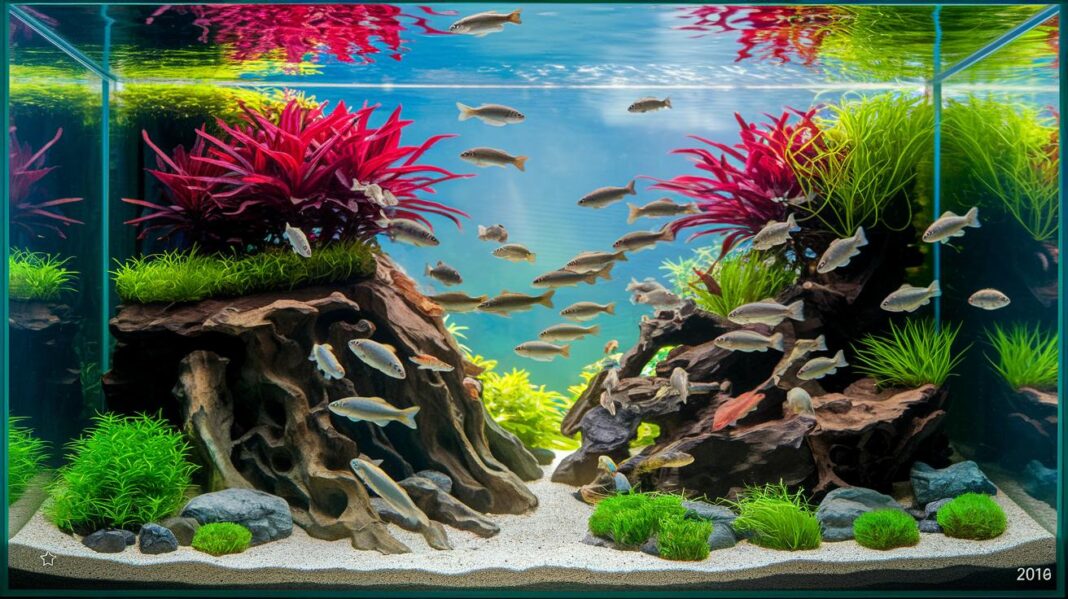

Ever thought about how a new setup might brighten your fish's day? Adding natural decor transforms your tank into a little wild world, much like a cozy underwater forest.
Driftwood, rocks, and live plants all work together to keep your water clean. They give friendly bacteria a home and help keep algae under control, so your fish can relax.
This simple change not only makes your tank look beautiful but also creates a balanced and healthy space for your fish. Embrace a touch of nature, and let your tank feel like home.
How Natural Decor Supports Balanced Aquarium Ecosystems
Natural decor, like driftwood, rocks, and live plants, brings a touch of the wild into your tank while keeping the water clean. These elements provide a home for friendly bacteria that help maintain a healthy balance. For example, plants such as Java Fern, Anubias, and Amazon Sword help oxygenate the water through photosynthesis and limit algae by competing for nutrients. Did you know that in one study, tanks dressed with natural decor had 40% less algae than those featuring fake decorations?
Thoughtful additions like driftwood and aquarium-safe rocks, whether it's lava rock or dragon stone, create cozy hideouts that help fish feel at ease. Picture a small school of fish snuggling up behind a carefully arranged cluster of rocks, just like a little natural riverbed. These spots allow your fish to carve out their own territory while mingling naturally. Try placing a piece of driftwood near some rocks to form a tunnel-like area, a perfect spot for both hiding and socializing, much like a secret cave in the wild.
Arranging these features into distinct zones means every fish can enjoy its own space for feeding, resting, or playful exploring. This thoughtful set-up lowers stress and keeps your tank’s ecosystem in harmony. With oxygen-rich water from live plants and beneficial bacteria flourishing on natural surfaces, the whole tank stays balanced and inviting, a place where every fish feels truly at home.
Selecting Live Plants for Natural Decor
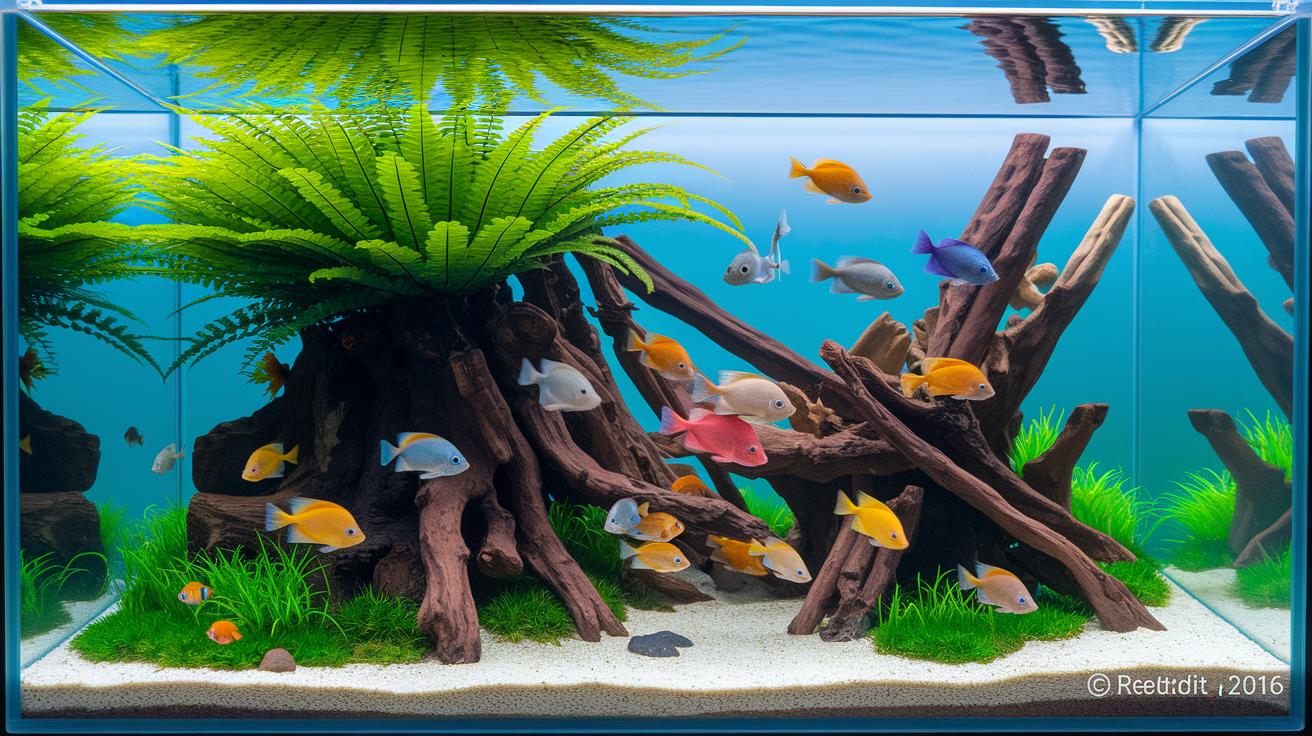
When setting up your own little watery world, live plants are a must. Think of them as the lively green friends that help give your tank a natural look. Popular choices like Java Fern, Anubias, Amazon Sword, Vallisneria, and Hornwort all thrive under different lights and tank floors. This makes them perfect for newbies and seasoned fish keepers alike.
These plants do more than just look pretty, they help your fish breathe by producing oxygen with a process called photosynthesis (it’s nature’s way of cooking up oxygen using light). They also keep the water balanced by stabilizing pH levels and using their roots to out-compete algae. This means your water stays clear and your aquatic buddies remain happy.
Good lighting is key. A full spectrum light, around 6500 K, lets your plants work their magic during photosynthesis, kind of like giving them the sun's gentle hug. And don’t forget about the substrate, the nutrient-rich base where your plants anchor their roots. For a thriving setup, try getting your plants and substrate from trusted sources like aquarium plant supplies.
With thoughtful choices in plants and care, you can create an underwater landscape where every green leaf adds to a balanced, healthy, and naturally beautiful ecosystem.
Incorporating Driftwood and Natural Rocks in Aquarium Ecosystems
Ever notice how driftwood and natural rocks give your tank a warm, natural vibe? They don’t just look pretty, they also help good bacteria grow, keeping your water balanced and healthy. When it comes to driftwood like Malaysian or Mopani, a little extra care goes a long way. Start by soaking the wood for one to two weeks, then gently brush off any biofilm. After that, boil it for about 30 minutes to wash away unwanted tannins and toxins. For example, try soaking your Malaysian driftwood for 14 days, cleaning with a soft brush, and then boiling it to make sure your tank water stays safe.
Natural rocks, such as lava rock or dragon stone, are awesome choices too. Their porous surfaces offer plenty of space for helpful bacteria to grow, naturally filtering your water. Plus, their unique textures can form exciting rock formations, tunnels and breaklines, that give shy or territorial fish a cozy hideout. Just steer clear of limestone or other calcareous stones, as they might push your tank’s pH and hardness to levels your fish won’t enjoy.
| Driftwood Treatment Steps | Rock Selection Tips |
|---|---|
| Soak for 1–2 weeks | Choose porous stones like lava rock or dragon stone |
| Gently brush off biofilm | Create natural tunnels and breaklines for hiding spots |
| Boil to remove tannins | Avoid limestone to maintain balanced water conditions |
Taking these steps helps you build an aquarium that feels like a piece of the natural world. Your fish get safe hideaways and naturally filtered water, making every swim feel as peaceful as a calm stream.
Choosing Natural Substrates for Ecosystem Health
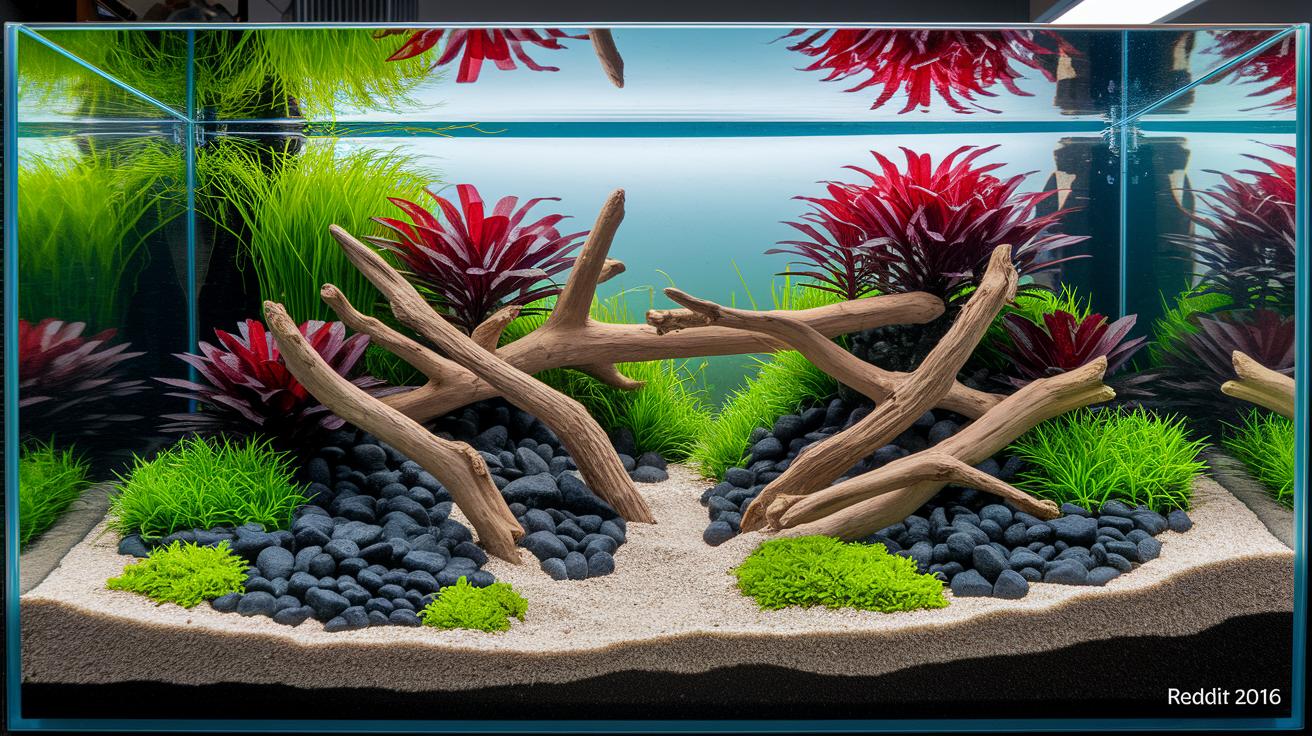
Setting up your aquarium is a lot like building a delightful underwater cake, layer by layer. First, start with a base of nutrient-rich aquarium soil that slowly treats your plants to little bites of iron, potassium, and other minerals over several months. It’s like giving your underwater garden gentle snacks to help it grow strong.
Next, add a mid-layer of fine-grain clay or laterite. This layer works like a soft glue, evenly distributing those precious nutrients while keeping everything steady for your plants.
Finally, cover it all with a top layer of inert sand or gravel. This final touch keeps the nutrient-rich soil from clouding the water and provides a smooth surface for fish that like to rest at the bottom.
| Layer | Description |
|---|---|
| Base | Nutrient-rich aquarium soil that slowly nourishes plant roots |
| Middle | Fine-grain clay or laterite that binds and stabilizes the nutrients |
| Top | Inert sand or gravel that keeps the water clear and supports bottom-dwelling fish |
Aquascaping Techniques for Natural Underwater Landscapes
Imagine your tank as a living painting. Start by placing driftwood and rock clusters using the simple rule of thirds. Think of setting a piece of driftwood at the one-third mark to create a balanced look that naturally draws the eye. This neat trick not only adds harmony to your tank but also gently directs your fish along their watery path.
Layer your live plants to add both depth and charm to your underwater scene. Place Dwarf Hairgrass in the front to create a soft, lush carpet. Then, set an Anubias on a rock in the middle area to act like a natural stepping stone, and use Vallisneria in the back to frame the scene. This simple stacking of plants makes each species shine while creating cozy hiding spots for your fish to explore.
Try designing your substrate with a gentle slope by keeping the back higher than the front. Aim for a 3:1 ratio, where the rear is three times higher than the front, to mimic the soft slopes of nature. You can also arrange driftwood to hint at a gentle water flow. Consider matching your setup to a natural theme, a tank inspired by the Amazon might feature broadleaf wood and softly tinted water, while an African Rift style might use rocky elements and a sandy base. This friendly mix of art and nature creates a beautiful, natural tank where both you and your fish can enjoy the calm of nature.
Using natural decor to support aquarium ecosystems: Harmony
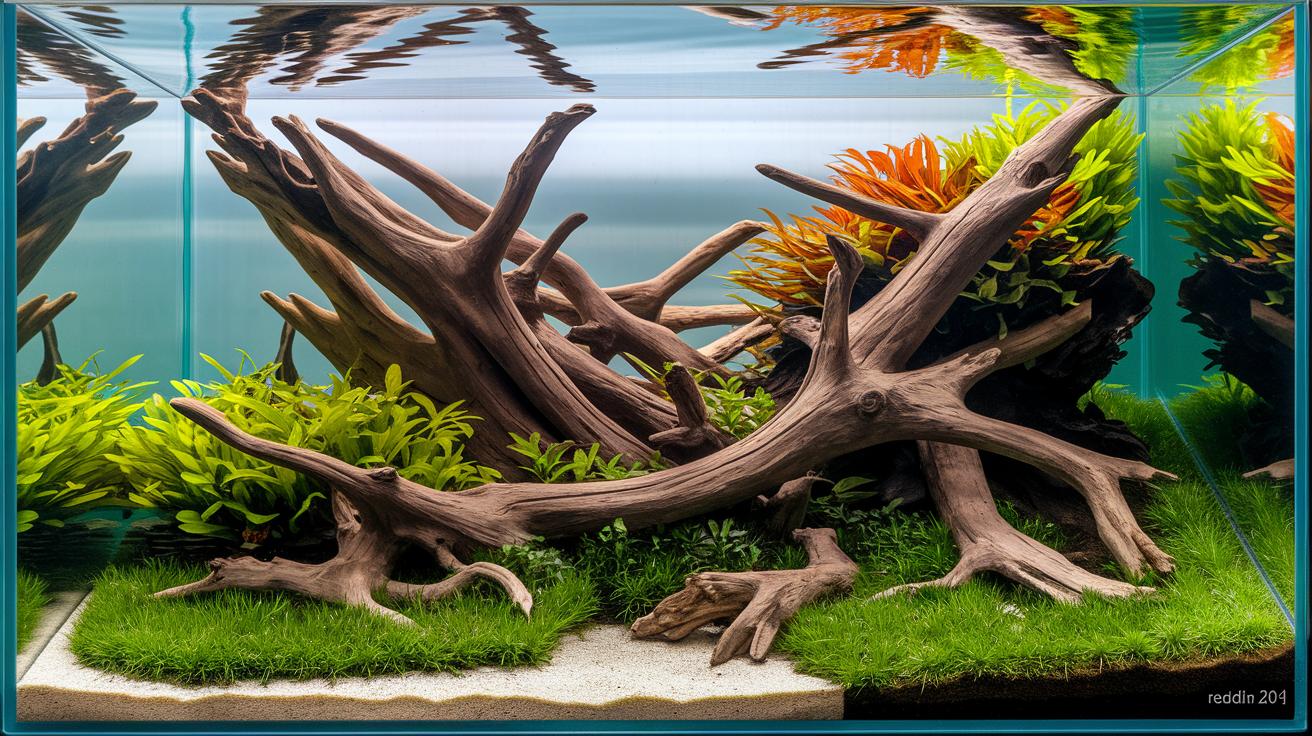
Keeping your tank in top shape is like caring for a little underwater garden. Give your driftwood and rocks a gentle brush each month to clear off any buildup so that helpful bacteria can flourish. And if you’re adding new wood, pre-soak it for a week to ease your water into its new home.
Taking care of live plants is just as important. Trim off dead leaves weekly so fresh, new growth can shine through, and treat them with a little root fertilizer containing iron and potassium every four to six weeks. It’s like giving your plants a nutritious snack. Plus, a 25% water change every week keeps the tank clean and balanced, helping both plants and fish thrive.
If algae start to take over, consider inviting algae-eaters like Otocinclus or Amano shrimp into your tank. Their small, busy work reminds you that a healthy aquarium is a team effort between your decor and your fishy friends.
Regularly checking your water is key too. Aim for a pH between 6.5 and 7.5, a hardness (KH) of 3 to 8, and a general hardness (GH) of 5 to 12. Keep ammonia and nitrites at 0, and make sure nitrates stay below 20. These steps help create a stable, happy home for all your aquatic life.
For more tips and the best supplies to keep your tank naturally healthy, check out the recommended aquarium cleaning tools and plant fertilizers at aquarium cleaning supplies.
Designing Biotope Aquariums with Natural Decor
Think of your tank as a tiny world that echoes nature’s beauty. Start by creating an Amazon-style scene with broadleaf wood and laterite to tint your water with a warm, gentle hue, much like a natural waterfall’s soft glow. If an African Rift vibe is more your style, choose lacustrine rocks and a sandy base that make your fish feel cozy and at home. Keep the water conditions just right, aim for a pH between 5.5 and 6.5 for that Amazon feel, and 8.0 to 8.5 if you’re going for the Rift look. And don't forget to mimic nature’s current by setting your water flow to about half to one full tank volume per hour.
Every element in a true biotope tank has its purpose. Fill your aquarium with fish, little creatures, and plants that naturally belong together, like members of a close-knit aquatic family. You can even add Indian Almond leaf packs to slowly drip tannins into the water, giving it that unique blackwater effect. Imagine a few leaf packs drifting gently, as your water transforms into a warm, amber glow, much like a lazy Amazon stream winding through the forest.
Remember, arranging your decor to mirror nature not only makes your tank look beautiful but also supports a healthy, diverse ecosystem. Experiment with layouts that highlight plants and natural water flow so that every fish, plant, and rock feels like it belongs in the same vibrant community. Enjoy creating your own little slice of nature at home!
Final Words
In the action of creating vibrant underwater habitats, natural decor plays a key role. Driftwood, live plants, and organic substrates not only offer beauty but also help form zones where fish feel secure and water stays clean.
Using natural decor to support aquarium ecosystems, the tips here guide smart arrangements that lower stress and boost plant growth. Every careful step brings your tank closer to that natural, balanced setting we all love.
FAQ
How can an aquarium be made into a self-sustaining unit like a natural ecosystem?
Making an aquarium self-sustaining means using live plants, driftwood, rocks, and proper substrates. These elements support good bacteria growth and provide natural hiding spots, while routine water changes keep the ecosystem balanced.
What can I use as fish tank decor and do fish like aquarium decorations?
Using decor like driftwood, rocks, and live plants gives your tank a natural look that fish appreciate. These elements mimic the wild, offering safe spaces and reducing stress, which helps fish feel secure.
What plants are good for self-sustaining aquariums?
Good choices include Java Fern, Anubias, and Amazon Sword. These plants oxygenate the water and compete with algae for nutrients, creating a healthy, balanced environment for your aquatic life.