

Ever notice how some aquariums sparkle with clarity while others seem a bit murky? It all comes down to how often you refresh the water in your tank.
Imagine giving your fish a quick room tidy-up, a water change is just like that. When you swap out a bit of old water for fresh, clean water, it helps wash away any buildup that might cloud their home.
In smaller tanks, waste can gather faster, just like a tiny bowl filling up with crumbs, meaning you might need to change the water a bit more often. Bigger tanks, on the other hand, have more room to breathe and may need a refresh less frequently.
This guide offers easy tips to match your water change routine with the size of your aquarium, making it simple to keep your underwater world bright and inviting. Isn’t it amazing how a little care can keep your aquatic space as clear as a calm lagoon?
Water Change Frequency by Aquarium Size

Regular water changes help keep your tank clear and your fish happy by lowering nitrates and making the water feel fresh, like a gentle stream flowing through smooth pebbles. When you set up your tank routine, think of it as a way to refresh your fish's home, much like giving your own room a good tidy every week.
Below is a handy table that shows suggested water change amounts and how often to do them based on your tank size. These guidelines typically recommend swapping out 10-30% of the water every week or two, just enough to mimic the natural flow of a stream. However, if your tank is bustling with fish or you feed them heartily, you might need to change a bit more water. On the other hand, if your aquarium is more like a quiet garden with lots of plants, you might get away with a smaller change.
| Tank Size | Volume Range | % Change | Frequency |
|---|---|---|---|
| Small | <10 gal | 20-30% | Weekly |
| Medium | 10-50 gal | 20-30% | Weekly |
| Large | >50 gal | 10-20% | Every 2 Weeks |
Overall, adjusting your water change routine based on how many fish swim in your tank or how much you feed them can create a serene underwater world that’s both healthy and stress-free for your finned friends. Enjoy the calming ritual of maintaining your aquatic paradise, your fish will thank you for it.
Factors Influencing Water Change Frequency

Your tank’s size is a big deal when it comes to keeping the water clean and clear. Smaller tanks tend to collect waste quickly, so you might need to refresh their water more often to keep toxins from building up.
The number and size of your fish really matters too. When there are more fish or larger ones, they produce extra waste that can cloud your water. That means if you've got a busy aquarium crew, you might have to change the water more frequently to keep that clarity.
How often you feed your fish also makes a difference. If you’re giving them more food or feeding them frequently, you'll see more organic waste and higher nitrate levels in the water. So, you may need to swap out the water more often to keep things balanced.
A strong filtration system can be a great helper. A good filter breaks down waste efficiently, sometimes letting you get away with fewer water changes. But if your filter isn’t as powerful, you might need to do extra swaps to keep the water sparkling.
Live plants are important water purifiers, too. They use up nutrients and minerals, so refreshing the water ensures they get what they need to thrive. It’s a bit like giving your green friends a fresh start, just like adding a burst of spring to your tank.
For tanks with CO2 injection, keeping a steady water condition is key. Regular, moderate water changes help keep the pH stable, making sure both your plants and fish are comfy and happy.
Step-by-Step Aquarium Water Change Procedure

First, decide how much water to change and how often. For example, you might swap out 20% of your tank water every week to keep nitrate levels low.
Next, gather all your tools, hoses, buckets, and any other supplies, and set them up within reach. This simple step helps make the process as smooth as a quiet stream on a sunny day.
Then, get your new water ready by matching its temperature to your tank. Add the right amount of dechlorinator, much like brewing a comforting cup of tea that’s just the right warmth.
After that, it’s time to remove the old water. Use a siphon and a vacuum to clean the gravel, clearing away any bits of debris like leaves drifting on a gentle current.
Finally, refill your aquarium with the treated water and restart your filter so the fresh flow returns.
Be sure not to change too much water at once, use water that’s too cold or too warm, or skip the dechlorinator, any of these can stress your fish. For a handy checklist, see the maintenance checklist for aquarium water quality.
Essential Tools for Aquarium Water Changes
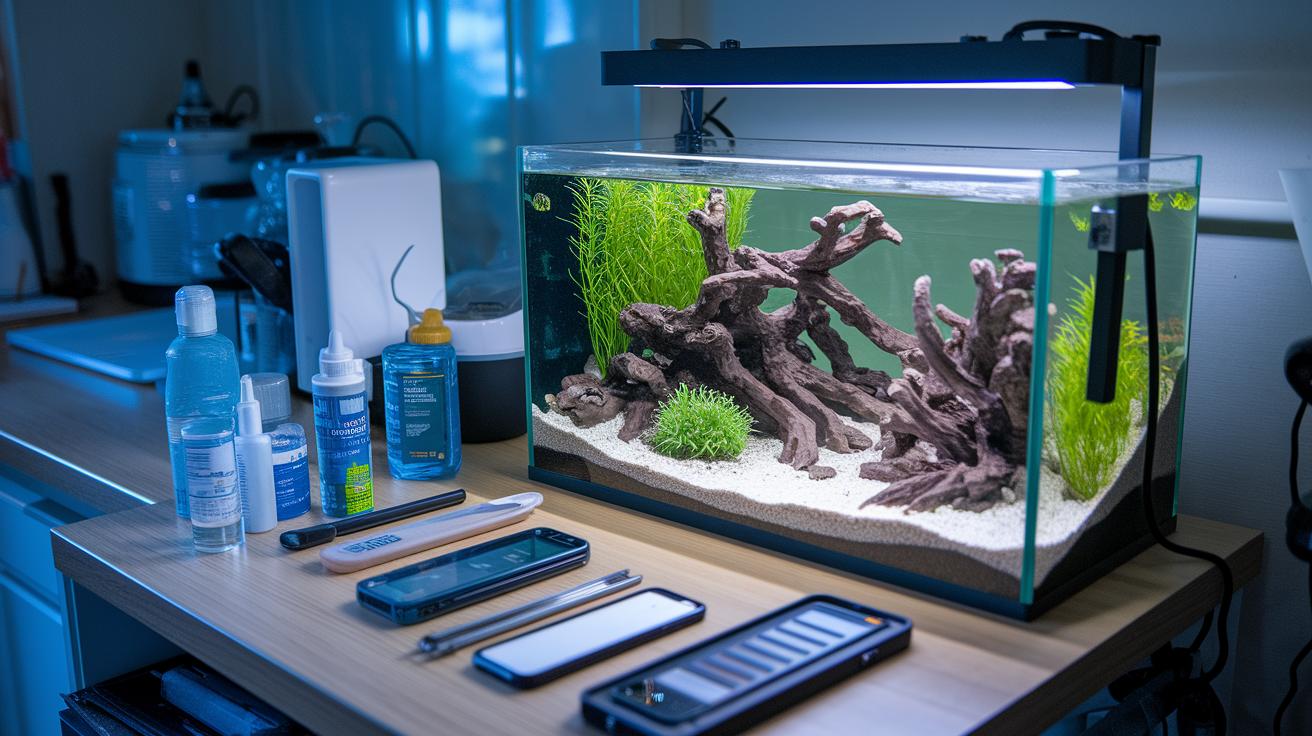
Having the right gear makes your water change flow as smoothly as a gentle current over smooth stones. It’s like assembling a friendly school of fish where each tool plays its part to keep your watery home safe and inviting.
Here are some handy supplies you might want to have on hand:
- Gravel vacuum or siphon – This tool smoothly lifts dirt and debris from the gravel, like a soft stream carrying away loose bits. Choose one that’s gentle on your fish.
- Dedicated buckets – Use buckets meant only for your aquarium water. Clear and sturdy buckets let you watch the water level easily and keep unwanted stuff away.
- Dechlorinator – Think of this as a little shield that neutralizes chlorine in tap water, protecting your fish much like a cozy barrier.
- Multi-parameter water test kit – This kit checks the water’s pH, nitrates, KH, and GH, kind of like a quick health checkup. The simple instructions make it easy to use even on busy days.
- Thermometer – Keeping your water at the right temperature is key. This tool helps match your tank’s water to avoid sudden, unsettling changes.
- Hose adapters – Securely connecting your hoses is important, and these adapters help make the whole water change process as efficient as a well-practiced swim.
Ever notice how taking care of your aquarium makes you feel like you’re sharing a little piece of underwater magic? For more tips on picking quality equipment, dive into our guide on essential aquarium maintenance tools.
Scheduling & Tracking Water Change Frequency

Keeping a water change log makes caring for your aquarium much easier. Think of it like mapping out a journey for your fish. You can create a calendar that fits your tank size, how active your fish are, and what your plants need. Every time you change the water, jot down the date, the percentage of water you replaced, and the results of your water test, like checking for nitrates. Many aquarium lovers pick Monday as their day to refresh the water, making it a steady part of their routine.
Setting a reminder on your phone or calendar can help you stay on track. It’s a bit like having a gentle nudge from a friend, reminding you to care for your underwater world. Keep an eye on things like nitrate levels, and if tests show numbers above 20 parts per million or if your fish start behaving oddly, it might be time to tweak your schedule. Over time, these careful notes can help you fine-tune your water change routine so your tank stays happy and healthy.
It can be really helpful to check your log regularly, almost like watching the gentle ripple of water to see how the current shifts. When patterns emerge, you’ll know exactly when the tank needs extra attention. Whether you use a simple spreadsheet or a cozy old journal, every detail helps ensure your fish feel right at home.
Monitoring & Adjusting Water Change Frequency

If you love keeping a close eye on your tank, try tracking your water quality over several weeks. We usually test once a week, but if you notice small changes, consider checking twice a week. For instance, if your nitrate levels slowly climb toward 20 ppm for two straight weeks, it might be time to boost your water changes until things settle back to normal.
Don't forget to write down not just the numbers, but also any small shifts you see. You might note, for example, "After a calm spell, the pH dipped a bit on Tuesday but was back to normal by Saturday." Over time, these little details will help you decide when to adjust how often or how much water you change. It’s like finding that perfect balance for your underwater world.
| Parameter | Ideal Range | When to Adjust |
|---|---|---|
| Nitrates | Below 20 ppm | If levels trend toward 20 ppm over two weeks |
| pH | Stable for your species | If there’s a steady drop or big shift |
| KH/GH | Matches your tank setup | If recorded values noticeably decline |
If everything seems steady, stick to weekly checks. But if you’re making changes or notice sudden shifts, testing twice a week is a smart move.
Make sure to update your log regularly. By keeping track of these little trends, you’ll know just when to dial up your water changes and keep your aquarium happy and healthy.
Final Words
In the action, we explored how water change frequency guidelines for different aquarium sizes can shape a healthy setup. We covered tips on calculating the right percentages for small, medium, and large tanks, and discussed how fish numbers and feeding shed light on the adjustments you might need.
We also highlighted steps for a smooth water change, the tools to keep on hand, and strategies to track your routine. Keep enjoying your time with your aquatic pals and let your tank thrive with care and consistency.
FAQ
Q: How often should I change water in a freshwater aquarium with or without a filter?
A: Regular water changes help keep the water healthy. With a filter, swap 10–30% every week, while tanks without filters may need a slightly more frequent change to manage buildup.
Q: How do I perform a partial water change in my fish tank?
A: Partial water changes mean removing a portion of the water and replacing it with fresh, treated water. This method gently reduces waste and maintains stable water chemistry in your aquarium.
Q: What guidelines does an aquarium water change chart offer?
A: An aquarium water change chart outlines recommended percentages and frequencies based on tank size. Generally, small tanks need 20–30% weekly, medium tanks similar, and large tanks about 10–20% every two weeks.
Q: How often should I change water in a goldfish tank, fish bowl, or small aquarium?
A: For goldfish tanks, small tanks, or bowls, a weekly water change of about 20–30% is suggested to manage waste and keep the water quality steady for your aquatic pets.
Q: Is a 30% water change too much and what about a 20-gallon tank?
A: A 30% water change isn’t too high for many tanks; it works well to refresh a 20-gallon setup when done weekly. Adjust if your tank is heavily stocked or your fish’ needs change.
Q: How often should I change the water during the cycling phase?
A: During cycling, water changes may need to be more frequent to curb nitrate spikes. Regular, small changes help protect young fish and support a healthy environment until the cycle stabilizes.