
Ever wonder how one tiny cell can carry the secret to a future fish? I was thinking about it the other day, and it struck me how nature works much like a calm stream turning lead into life.
Think about it: with just one split, that little cell starts an amazing journey, like a hidden relay race in your favorite aquarium. Every step, whether it’s the soft signal of a water change or the quick nudge of a tiny hormone (that’s a chemical messenger helping things along), plays its part in building a new life.
Each moment feels like a gentle ripple spreading across a pond, setting the stage for young fish to thrive in their cool, watery world. It’s nature’s way of turning possibility into a vibrant dance of life.
Comprehensive Overview of Fish Embryonic Development from Fertilization to Hatching
Fish embryos are the very beginning of a fish's life, a tiny bundle of cells packed with possibilities. They kick off their journey right after fertilization, and every moment counts. Even a small change in water temperature can signal to a little embryo that it's almost time to hatch, much like feeling the gentle warmth of water on a cool day.
Inside the embryo, a special hormone called Thyrotropin-Releasing Hormone (TRH) gets to work as a helpful messenger. When the embryo is fully ready, TRH rushes to a nearby gland and tells it to break down the egg's protective wall. It’s a bit like a relay race, where TRH passes the baton so the young fish can exit safely and start life in a welcoming environment.
This well-timed hatching gives the newborn fish the best start possible by making sure they enter the world under just the right conditions. With all the right cues in place, the fry can swim into life fully developed and prepared to face new challenges.
Key Early Developmental Stages in Fish Embryos
Imagine watching a tiny spark create ripples in a quiet pond. A fish starts as a single cell called a zygote, a meeting point when sperm greets egg. This little cell holds all the instructions needed to build a fish, much like a secret recipe passed down through generations. As time flows, the embryo begins to divide and organize itself, slowly forming the elegant shape of a future fish.
Here’s a friendly swim through the main stages:
• Cleavage: The zygote splits quickly into many smaller cells, almost like droplets spreading out in a gentle splash.
• Blastula: These cells form a soft, hollow ball, setting the stage for the fish’s next big transformation.
• Gastrula: Next, cells rearrange into distinct layers, think of it as setting down different colored pebbles in a streambed, each layer with its own role.
• Neurula: A special group of cells gathers to form a neural tube, which will later become the brain and spinal cord, acting like the fish’s very own navigation system.
• Segmentation: Cells start segmenting into parts, defining the body’s structure bit by bit, like the careful placement of stones to shape a flowing river.
• Pharyngula: In this final embryonic phase, early signs of organs emerge, giving the embryo a more familiar fish-like shape.
When the embryo turns into a larva, it wraps up embryogenesis. This marks the end of its early stages and the beginning of life in the watery world, a true debut in an environment full of wonder and rippling beauty.
Cellular Structure and Mitosis During Fish Embryogenesis
When a fish embryo first starts to form, the yolk is like a built-in pantry, offering energy and nutrients to the growing cells. It stays separate from the new cells, almost like a special reserve. Around it, the cytoplasm flows like a gentle stream, mixing and carrying important bits all around. At its heart, the nucleus sits like a tiny command center, holding all the genetic directions needed for each cell to grow.
As the embryo moves into mitosis, you can spot a clear groove forming on the cell, hinting where one cell will become two. At the same time, spindle poles, imagine them as the organizers of a grand fish dance, appear at each end of the cell. These organizers help move chromosomes into place, ensuring that every daughter cell gets the correct set of instructions. It’s a careful and essential process that sets the pattern for all the cells that will follow.
Soon, as new cell borders appear, they begin to sketch the blueprint of the future fish. These fresh edges gather groups of cells that will later transform into key parts like fins and sensory organs. They also help decide which way the fish’s body will point, much like drawing a map for a treasure hunt. In this way, the careful formation of cells not only keeps things running smoothly in the moment but also lays out the detailed plan for the fish’s future shape.
Zebrafish Model: Anatomy and Developmental Timeline of Embryos
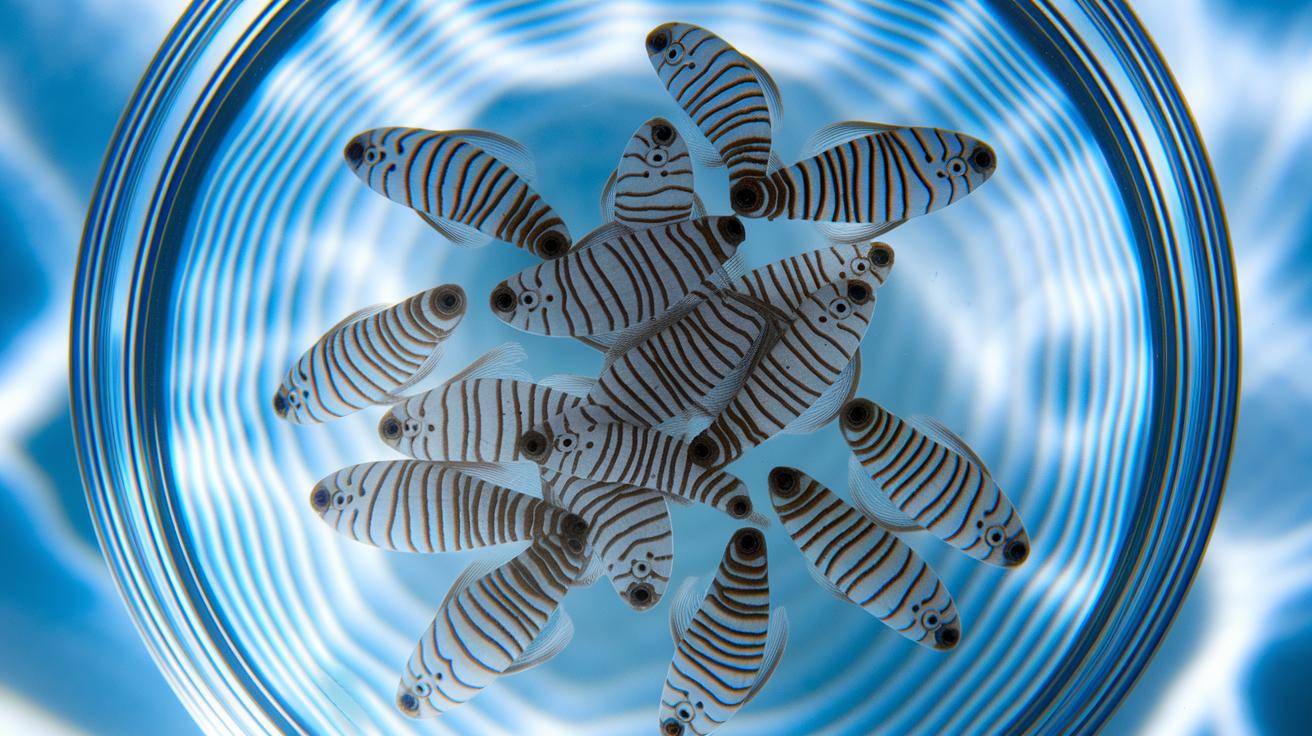
Zebrafish embryos are a favorite in research because you can see right through them and they grow fast. Their clear bodies let scientists watch every cell and organ form, making the study of vertebrate growth as captivating as watching ripples in a clear pond.
In the first 10 hours after fertilization, the embryo goes through quick cell divisions, a process called cleavage. The cells split swiftly and line up into layers, much like the gentle ripple of water spreading across a calm lake.
By 24 hours, you can spot clear segments forming in the embryo. These segments, called somites, start to build the fish’s body piece by piece, much like a mosaic where each little tile adds to the beautiful picture of its anatomy.
At 48 hours, the embryo reaches what we call the pharyngula stage. Now, you can see the start of a head, trunk, and tail, and it even begins to move on its own. At this stage, parts of the brain and sensory organs are beginning to form, signaling the start of an active life.
Each phase reveals new anatomical details, from early cell alignment to distinct body segments and the emergence of vital neural regions.
Comparative Embryology: Insights from Vertebrate Fish Embryos
In fish, amphibians, and birds, the early cell movements during gastrulation really surprise you with their similarity. Think of it like a well-choreographed swim where cells move into place to form simple layers that later turn into muscles, nerves, and other important tissues. It’s amazing how these patterns suggest a shared blueprint for life, much like a group of fish following the same current.
Next comes organogenesis, where the big job of forming organs like the heart, brain, and limbs starts. Picture a gentle cascade of cells coming together, following a familiar script in all these creatures. This similarity hints that many vertebrates got their basic instructions from a common ancestor, making it almost like a family recipe passed down through generations.
A very clear example is when the neural tube forms. In fish, amphibians, and birds alike, a core set of genes wakes up to guide this process, showing us that nature uses the same building blocks to create life, as reliably as the tide rolls in.
Environmental Factors and Toxicity Testing in Fish Embryo Development
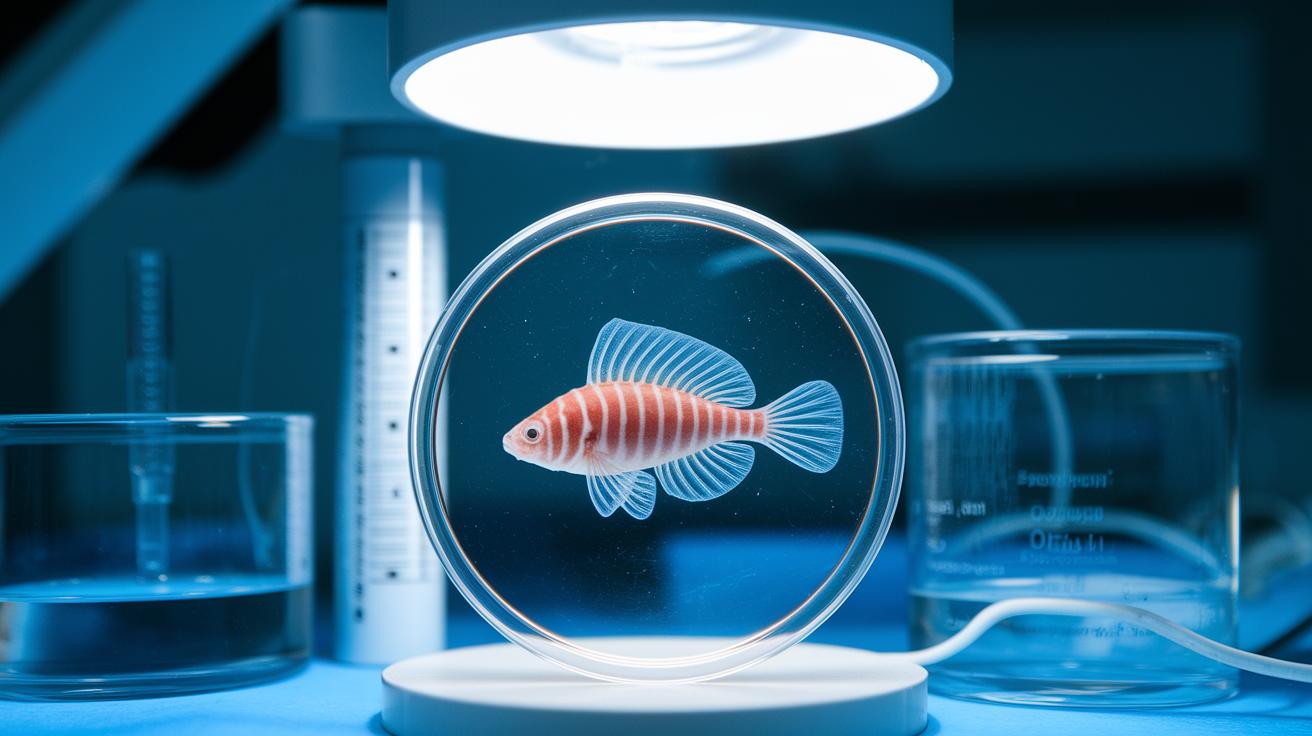
Fish embryos are super sensitive little creatures. Even minor shifts in water quality can stress them out, making them great for spotting harmful chemicals. You might be surprised to learn that even low levels of pollutants can cause clear stress, which is why agencies depend on these tests to set rules that protect our underwater friends. It’s a bit like checking your aquarium to catch even a small hiccup before it becomes a problem.
In these studies, scientists keep a close eye on signs like death, misshapen parts, and the speed at which the embryos hatch. The idea is that if even a tiny bit of a substance can slow or stop normal development, it could be harmful in the long run. Many early studies shocked researchers by showing that even the tiniest traces of contaminants could halt embryo growth. Wow.
| Test Name | Endpoint | Duration |
|---|---|---|
| Fish Embryo Toxicity (FET) | Mortality, malformation | 96 hours |
| Zebrafish Teratogenicity Assay | Developmental defects | 120 hours |
| Medaka Early Development Test | Hatching rate, growth | 7 days |
Interpreting these results is like piecing together a puzzle. Researchers look at both deadly outcomes and more subtle changes, like small delays in development or slight deformities. These tiny details help predict big impacts over time for the whole fish population. By comparing different tests, scientists build a well-rounded profile that helps them make smarter decisions to protect our watery world.
Applications of Fish Embryo Research in Aquaculture and Biotechnology
Fish embryo research has opened up exciting new ways to improve fish farming. Scientists now use it for things like selective breeding, egg cryopreservation (a fancy way of saying they freeze eggs to save their genetic traits), and checking fish fertility. It’s a bit like preserving a treasure chest of eggs for the future. This method helps keep a healthy mix of fish traits and makes breeding programs more reliable, leading to stronger, more resilient fish populations.
Many researchers are also growing fish embryo cells in lab setups that mimic natural conditions. In these controlled spaces, they use tools like CRISPR, a simple gene-editing method that works like a smart scissors to cut and past genes, to boost traits such as faster growth and better disease resistance. This careful, lab-based tweaking turns advanced science into practical upgrades for fish reproduction, making the process safer and more effective.
A new and promising path in this field is the development of synthetic embryo techniques. These lab-grown embryonic models are designed to copy how fish normally develop, giving scientists a realistic setup to study fish diseases and try out treatments. This innovative work marries science and aquaculture to bring about better fish stocks and smarter disease management, much like watching the gentle ripple of water inspire creative solutions in a quiet pond.
Final Words
In the action, we examined fish embryo development from fertilization to hatch, exploring mechanisms like TRH signaling that help set the stage for perfect timing. We also looked at early cell divisions, gowning up the story of how embryos morph through distinct developmental stages.
We took note of environmental impacts, toxicity testing, and practical applications in aquaculture and biotechnology. The insights help transform fish embryo research into better care practices for aquatic pets, leaving a bright and hopeful outlook for future innovations.
FAQ
What is an embryo in fish?
The fish embryo is the earliest life stage after fertilization where cells divide and start forming the body, laying out the basic plan for organs and tissues.
How do fish embryos compare to human embryos?
The fish embryo shares basic processes like cell division and organization with the human embryo, though fish development is adapted to aquatic conditions and timed with external cues.
What are the cell boundaries, components, and functions in fish embryo cells?
Fish embryo cells have clear boundaries that separate the nucleus, cytoplasm, and yolk. Each component plays a role in cell structure, nutrient storage, and signaling during early development.
What are the stages of fish development?
Fish development follows distinct stages: cleavage, blastula, gastrula, neurula, segmentation, and pharyngula. These stages show the progression from a single cell to a complex larva.
Do zebrafish embryos feel pain?
Zebrafish embryos likely do not experience pain since their nervous systems are still developing. Their focus at early stages is on rapid cell division and forming essential body structures.
Do fish eggs have embryos?
Yes, fish eggs contain developing embryos that rely on the egg for protection and nutrients while they progress through the initial stages of growth.
Where can I find visuals like fish embryo drawings or development timelines in PDF?
You can find drawings and PDF guides on fish embryo development through educational websites and specialized aquatic research publications that detail each stage and cell feature.