

Ever wonder if your aquarium light could shine a bit brighter? LED lights are stepping up to challenge the old, dependable fluorescent tubes. Imagine switching from a steady, plain glow to a sleek shine that makes your fish's colors pop and might even lower your energy bills. Fluorescent bulbs have kept tanks lit for years, but LEDs send focused beams that brighten every corner of your aquatic home. In this post, we compare both options so you can choose the light that best fits your tank and helps you save money over time.
LED vs fluorescent aquarium lighting: comparison overview
For a long time, many aquarium fans have leaned toward fluorescent lighting. T5 tubes, with their small 5/8-inch design, bring a strong, steady glow that beats older T8 and T12 models. But sometimes the wide spread of light can be a bit uneven in deeper tanks if the reflector isn’t just right.
On the flip side, LED lighting sports a modern, sleek look and can shine just as bright. These lights use focused beams that dig deep into your tank, which is a real win when you want balanced plant growth and fish that pop with color. Imagine a burst of light that picks out every fin and leaf like a gentle spotlight.
In the end, both types come with their own mix of pros and cons. LEDs tend to save you money on power and cut down on the need for frequent bulb swaps, while fluorescents might give you that strong, immediate intensity sometimes needed. So, think it over like picking out the perfect aquarium decor. It’s all about what suits your tank’s needs best.
LED vs fluorescent aquarium lighting: energy consumption and efficiency

Fluorescent lights like T8 and T5 have long lit up our tanks with bright beams. These older lights give a strong glow but use more power. T8 bulbs can use anywhere from 18 watts on a short tube to 38 watts on a longer one, while T5 bulbs, despite being about 40% smaller, run between 24 and 80 watts. Think of it this way: swapping out an old fluorescent light for an LED panel can really lower your energy use.
LED panels are a smart, energy-saving option that keeps your aquarium cool. They shine a focused beam so every watt counts, which helps cut down on your electricity bill. With less heat being produced, you don’t have to worry about your tank getting too warm on hot days. In truth, this modern tech combines good lighting with energy savings that add up over time, making it a practical choice for any fish lover.
LED vs fluorescent aquarium lighting: lifespan and maintenance
Fluorescent tubes in your tank usually need a change every 9 to 12 months because over time the light gets dim and the colors shift. You might notice that a tube that once made your tank sparkle now seems a bit tired, letting you know it’s time to swap it out. On the other hand, LED modules can keep shining bright for 25,000 to 50,000 hours before they start to lose their glow. This means they can work for many years with just a little dusting now and then.
Here are some tips for keeping your setup in shape:
| Lighting Type | Care Requirements |
|---|---|
| Fluorescent | Need monthly checks, prone to corrosion and worn ballasts, and require regular replacements |
| LED | Works longer, resists wear, and only needs occasional dusting |
Keeping up with regular maintenance is like checking the heartbeat of your underwater world. When you make sure your light is bright and steady, you help your aquatic plants and fish stay happy and healthy. A small bit of effort here and there goes a long way in keeping your tank vibrant and full of life.
LED vs fluorescent aquarium lighting: spectrum quality and aquatic effects
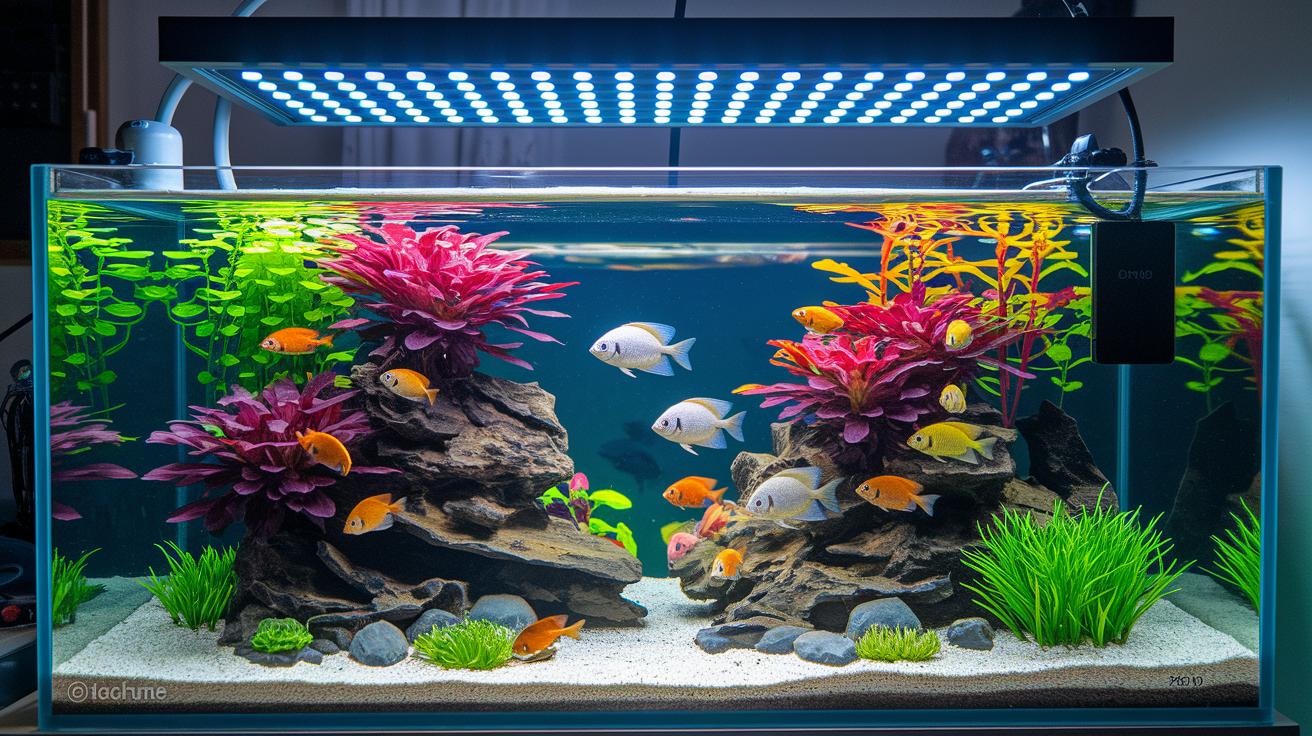
Aquarium lights come in different color temperatures, which are measured in Kelvin. You know how a warm 2,700 K light feels snug and cozy, while a cooler 10,000 K light mimics the bright sparkle of daytime? LEDs let you tweak these settings to suit your tank perfectly. For instance, you can switch on special red and blue lights that help your plants do their little photosynthesis dance or make your fish and corals pop with color. It’s like setting the stage for your underwater friends with just the right beam of light.
On the other hand, fluorescent tubes spread out a broad mix of colors. This broad light can sometimes be a bit uneven so that some spots in your aquarium get more light than others. Imagine taking a closer look at your tank and noticing that some leaves look a bit washed out while others shine bright, it’s a common outcome when the lighting isn’t exactly balanced.
Taking a closer look at the light spectrum is really important for letting your plants, fish, and corals shine. With LEDs, you’re in charge of the lighting, adjusting it just like you would dim the lights for a special moment in your favorite movie. It’s an easy, smart way to help create a lively, healthy underwater world that you and your aquatic pals can enjoy every day.
LED vs fluorescent aquarium lighting: cost analysis
LED lights might cost a bit more when you first buy them, around 20% to 50% higher than fluorescent options. At first, this price jump can seem like a deep dive into uncharted waters. But just like a clear, sparkling pond, these fixtures eventually pay off. They sip on power, last longer, and save you from frequent replacements, making your monthly bills feel like a gentle ripple instead of a stormy wave.
Fluorescent bulbs, meanwhile, come with a friendlier price tag initially, usually between $5 and $15 per bulb. However, think of it this way: every six months, you’ll need a new one, and sometimes even the ballast system needs a little TLC every 2 to 3 years. Those extra costs can pile up, much like pebbles on a riverbed, turning what seemed like an affordable option into a bit of a recurring challenge.
Consider this quick cost snapshot:
| Lighting Type | Upfront Cost | Maintenance |
|---|---|---|
| LED | Higher (20–50% more) | Minimal, long lifespan |
| Fluorescent | Lower | Frequent bulb and ballast replacements |
In many cases, that extra splash of money on LED lights swims its way back within 12 to 18 months thanks to the energy and upkeep savings. It’s like choosing a steady current over turbulent waves, sooner or later, the benefits shine through.
LED vs fluorescent aquarium lighting: choosing for freshwater, planted, and reef tanks

To get your tank lighting right, first know what your plants or corals need. In a freshwater setup with gentle plants like anubias, cryptocoryne, and ferns, a soft glow works best. These plants thrive with about 1–2 watts per gallon from fluorescent lights or roughly 0.5–1 watt per gallon using LEDs. LEDs also save energy and let you adjust the light just right.
In tanks with medium-light plants needing about 2–3 watts per gallon, LEDs truly shine. They let you pick the exact light colors that boost photosynthesis and keep foliage lush and vibrant. While fluorescent lights are dependable, they can sometimes leave parts of your tank looking a bit dim.
When it comes to reef tanks, the needs are a bit more demanding. Reef corals need strong blue and red light, much like the sunlight filtering through clear ocean water. LEDs excel here with deep light penetration and easy adjustments. In contrast, fluorescent tubes often fail to provide the concentrated beam that healthy corals require. If you're planning a reef setup, check out what reef aquarium supplies has to offer.
Matching your tank’s lighting to your plants' and corals' needs can transform your aquarium into a lively underwater world, full of vibrant growth and healthy life.
Installing and upgrading LED vs fluorescent aquarium lighting systems
When setting up your aquarium lights, start by checking the tank's width and the bulb's size. This simple step helps you choose the right tube length or LED strip size. It’s a bit like measuring your fishing rod to get the perfect catch, the right measure makes all the difference.
For LED lights, place your lamp about 1 to 2 inches above the water. This spot lets the light spread out widely across your tank, glowing evenly like a soft sunrise. LED systems are friendly to work with since they usually come with mounting rails already in place. Always turn off your system before making any changes. Once your new LED is set up, secure the rail well and give it about 15 minutes to cool down so you can check that everything is steady.
Fluorescent fixtures require a few extra touches. You might need to adjust small parts like ballasts and reflectors, the ballast is just a device that helps control the power. When updating a fluorescent setup, gently remove the old tubes, inspect the wiring carefully, and swap out any worn-out ballasts. Make sure every connection feels tight before you plug the system back in.
Before you start any installation, take a moment to review the setup and secure all fittings. This step-by-step approach helps create a safe and well-lit aquarium, so your underwater world shines steadily, just like the gentle ripple of water on a calm day.
LED vs fluorescent aquarium lighting: environmental impact and energy savings

LED lighting is a cool companion for your aquarium, giving off very little heat to help keep your tank temperature just right, like a soft current gently flowing over smooth stones. This steady glow means your fish and plants stay cozy, and your cooling system doesn’t have to work too hard, which in turn lowers your energy use and cuts down on your bills.
Fluorescent bulbs, on the other hand, spill out more heat. That extra warmth can nudge up the temperature in your tank and even warm the room around it, making your air conditioner run more often. This extra energy use can stress out your aquatic pals and hike up your carbon footprint.
When you consider everything, the lower energy draw and reduced heat from LED lighting make it a friendlier choice for both your aquarium and our environment.
Final Words
In the action, this piece offered a neat look at energy use, upkeep, and spectrum tweaks between LED and fluorescent systems. We compared power draw and long-term costs while ensuring your tank gets the right light for either freshwater, planted, or reef displays.
Every factor, from installation ease to environmental benefits, plays a role when weighing LED vs fluorescent aquarium lighting: what you need to know. Keep experimenting and enjoy the process of brightening your underwater haven.