

Ever think about turning your small tank into a delightful underwater garden? Freshwater aquascaping is a fun way to mix plants, driftwood, and stones into a lively scene right in your home. It’s like creating your own little oasis where every element plays its part.
This guide walks you through simple design tips and daily care ideas. Think of it as setting up a mini ecosystem, easy steps that bring life and color beneath the water’s surface. I love how a few green leaves and a bit of driftwood can make your tank feel as calm and refreshing as a quiet stream.
So why not dive into aquascaping and transform your aquarium into a gentle, humming underwater haven? Enjoy the journey as you watch your little world come alive with every ripple and glow.
Mastering Freshwater Aquascaping: Designs and Maintenance Fundamentals
Aquascaping is like underwater gardening. You create a living work of art with plants, stones, driftwood, and rocks, arranged to form a mini natural scene beneath the water’s surface. Imagine setting driftwood and smooth stones to mimic the flowing curve of a riverbed, it’s a bit like painting a tiny landscape in your own tank.
A great design starts with simple ideas like the rule of thirds. This helps your eyes explore every part of your aquascape so nothing feels left out. Then there’s the golden ratio, which evenly divides your space to keep things balanced. And don’t forget to choose a cool focal point, a special feature that catches your attention amid the soft ripple of water and lively plant whispers.
Keeping your underwater garden in tip-top shape needs regular care. Just as you would trim a garden on dry land, your tank plants need pruning and fresh water on schedule. Cleaning the filter helps avoid buildup so your fish and invertebrates can explore safely. Balancing light, CO₂, and nutrients is like caring for a living system, each part needs just the right amount of attention.
Lighting is the heart of your aquascape. The right light makes your plants and stones sparkle like the gentle shimmer of water on smooth pebbles. Without proper lighting, your underwater garden can seem a bit dull, like a night with no stars twinkling above. For more on how to brighten your tank, you might want to check out Aquarium Lighting for Plants at Sweetfysh.com.
When artful design meets everyday care, your aquascape becomes a thriving underwater world. Regular water tests and scheduled changes keep the environment balanced so both plant life and aquatic friends can flourish, turning your tank into a vibrant, living masterpiece.
Essential Equipment and Materials for Freshwater Aquascaping

LED lighting is the heartbeat of your underwater oasis. Picture it as a gentle pulse that brings each leafy detail to life while giving your aquascape a warm, inviting glow. Great lights not only help your plants grow strong but also set a calming mood throughout your tank.
Next, you’ll want to choose a solid filter and CO₂ system. A reliable filter works quietly in the background, keeping your water clean and clear, much like a soft whisper in a peaceful stream. Meanwhile, a steady CO₂ regulator helps your plants soak up the nutrients they need to flourish. Even though saving a few bucks with older equipment might be tempting, investing in quality pieces makes your tank a quiet, stress-free haven.
Then, think about your substrate, the foundation of your aquascape. Nutrient-rich substrates are like fresh, nourishing soil that feeds your plants, supporting their roots and encouraging growth. In contrast, inert sand or gravel only offer basic support, missing out on those extra benefits that help your aquatic garden thrive.
Finally, remember that regular maintenance is key. Every part of your tank, lighting, filtering, and CO₂, is essential and works together like members of a small underwater orchestra. Keeping everything in tip-top shape helps prevent issues and makes caring for your aquatic world easier over time.
- LED lighting
- Reliable filtration
- CO₂ regulators
- Nutrient-rich substrate
Regular care of your equipment brings out the best in your aquascape.
Plant Selection and Layout Strategies in Freshwater Aquascaping
Choosing the right mix of aquatic plants is a bit like picking out colors for a beautiful painting. Picture soft carpeting plants like Hemianthus callitrichoides or dwarf hairgrass gently blanketing the tank floor, creating a lush, green base. Then, add in some stem plants, tissue culture varieties, or even rare jungle species to bring texture and life to your underwater garden. Ever notice how a small splash of an exotic jungle plant can completely change the vibe of your tank?
Layering your plants is key to making your aquascape pop. Start by placing the low-growing carpets in the front, letting them spread naturally like a soft, green tide. Next, scatter mid-sized stem plants in the middle to give a sense of movement and flow. Finally, tuck in a few taller or uniquely shaped plants at the back to add that extra depth, much like distant hills in a landscape.
Before you dive into planting, it’s smart to check each species’ water needs, things like pH, GH/KH and light. Think of it like putting together a sports team: each plant has its own role but needs similar conditions to flourish.
| Step | Description |
|---|---|
| Research | Learn each plant’s water and light requirements. |
| Foreground | Place carpeting plants in the front for a gentle base. |
| Midground | Add stem plants to create a flowing middle layer. |
| Background | Use taller species to add depth to the back. |
As you arrange your plants, don’t be afraid to experiment with different groupings and spacing. Sometimes a small shift can reveal new textures or create a fresh perspective, each tweak a step toward your very own living art. Enjoy the process as your tank evolves into a peaceful underwater retreat you can truly call your own.
Design Principles in Freshwater Aquascaping

Rather than just reusing old rules, try out fresh ideas to let natural elements shine in your aquarium. Picture placing textured wood or a soft cork backdrop behind carefully set stones, driftwood, and clusters of plants. For instance, you might set an off-center piece of driftwood in the midground, with draping plants in the front and a gently textured background to create a smooth, flowing scene.
This layering not only adds depth but also makes your tank feel alive. Think about mixing different plant heights with clever stone arrangements to naturally guide the eye. One idea is to lay a low patch of moss on a sloping rock and then let taller plants rise at the back, forming clear zones that capture attention.
| Technique | Description | Example |
|---|---|---|
| Layered Hardscape | Place background panels, midground driftwood, and front elements in clear tiers. | “Set cork in the back with a driftwood centerpiece and lush front plants.” |
| Varied Plant Heights | Mix plants of different sizes to form natural focal points and zones. | “Put short moss at the front and taller plants towards the back.” |
Freshwater aquascaping: Captivating Aquarium Art Ideas
In Dutch-style aquascapes, plants are carefully arranged into neat terraces that feel as crisp as a quiet morning ripple. Picture rows of trimmed green stems, like a mini garden you could almost walk through. It’s like watching a soft green carpet laid out in gentle steps, inviting your eyes to wander along its deliberate paths.
Jungle tanks, on the other hand, burst with thick, lush greenery that reminds you of a wild underwater forest. Imagine overlapping leaves and clusters of tropical plants creating a secret hideaway in your tank. It offers a sense of adventure, as if every twist and turn might hide another burst of natural life.
Iwagumi setups keep things simple yet striking by using three main stones. The biggest stone, lovingly nicknamed the big Buddha, takes center stage and is flanked by two smaller rocks. This trio is arranged with a natural balance that calms the senses, much like a peaceful rock garden where even a single stone speaks volumes.
Nature aquascapes combine plants with elements like rocks and driftwood to recreate a slice of the great outdoors. Visualize a tiny landscape where a few carefully placed stones and clusters of greenery come together like nature’s own design. It feels as if the environment is alive, sculpted gently by the hand of nature itself.
Nano aquascapes are ideal for smaller tanks where every tiny detail counts. With choices like moss or dwarf hairgrass, these mini setups pack a big artistic punch. They transform small spaces into charming underwater gardens that are as full of personality as they are compact.
| Style | Description |
|---|---|
| Dutch Terracing | Neat, organized layers that offer a clean, green look. |
| Jungle Tanks | Lush, wild growth evoking a secret, tropical forest. |
| Iwagumi | A minimalist three-stone layout that exudes calm. |
| Nature Aquascapes | Balanced mixes of plants and hardscape to mimic landscapes. |
| Nano Aquascapes | Compact designs that burst with detail and charm. |
Each style offers its own special charm, providing fresh ideas to bring your aquarium to life and turning your tank into a living work of art.
Crafting a Stable Freshwater Aquascape Ecosystem

Keeping your tank happy starts with a bit of regular water testing. Checking the pH, GH, KH, and TDS is like giving your aquarium a quick check-up, just as you might check the briskness of a cool morning. These simple tests guide you in tweaking your tank’s setup so both the lively plants and playful fish can thrive.
Next, think about how the water moves. A gentle ripple on your tank’s surface helps mix in fresh air and boost oxygen, much like a soft breath that keeps everything lively. Picture that calm flow as if the water were dancing over smooth stones, keeping unwanted buildup away and giving your little ecosystem a fresh kick.
When it comes to picking fish, go for those that love to stick together, like tetras or rainbow fish. These schooling fish swim in groups, ensuring they don’t disturb the tender plants below. Their graceful movement creates a soothing display, much like watching a school of tiny dancers move in harmony.
And don’t forget about the nutrients! Feeding your plants the right fertilizers is key to keeping them lush and green. Use a careful dosing schedule, a bit like following a simple recipe, to give your plants just what they need without inviting unwanted algae. For extra help, you might want to click on Fertilize Aquarium Plants for some friendly advice on nutrient schedules.
- Regularly test water parameters
- Maintain gentle surface movement
- Choose fish that play well with your planted setup
Each of these steps helps build a balanced, vibrant underwater world where both plants and fish live in harmony. Enjoy watching your little aquatic community flourish every day.
Step-by-Step Freshwater Aquascaping Setup Guide
-
Plan style & layout
Start by drawing out your idea. Think of your tank like a tiny garden where each piece has its own part to play. You might picture a bold stone or a neat cluster of plants as the main feature. -
Choose tank & nutrient substrate
Pick a tank size that fits your space and how you live. Then choose a nutrient-packed substrate that feeds your plants, just like rich soil helps a garden grow strong. -
Position rocks/driftwood
Arrange your rocks and driftwood to create natural looking features. Place them so they look like gentle hills and valleys. Experiment with different spots until everything feels just right. -
Fill slowly with dechlorinated water
When you fill your tank, do it slowly so you don’t upset your careful setup. Use water that’s been stripped of chlorine to give your plants a clean, healthy start. -
Plant from foreground to background
Begin by planting the smaller, low-growing species in the front. Then add medium and taller plants behind them. Imagine layering a garden by rows of green, which adds a nice sense of depth. -
Install filter, CO₂, and lighting
Set up your filter, CO₂, and lights with care. The filter quietly cleans the water, and the CO₂ along with proper lighting supports strong plant growth. Think of these tools as the team that keeps your underwater garden lively. -
Cycle tank over 4–6 weeks
Let your tank settle over 4 to 6 weeks. This gives nature time to balance itself, ensuring a healthy future for your plants and fish. A little patience now will lead to great results later. -
Introduce livestock gradually
Add your fish or shrimp slowly, giving them time to get used to their new home. It’s like inviting friends over for a calm dinner where everyone feels welcome and at ease.
Free shipping on orders over $49 keeps your setup budget-friendly, and investing in quality gear now means less hassle in the long run.
Maintaining and Troubleshooting Your Freshwater Aquascape
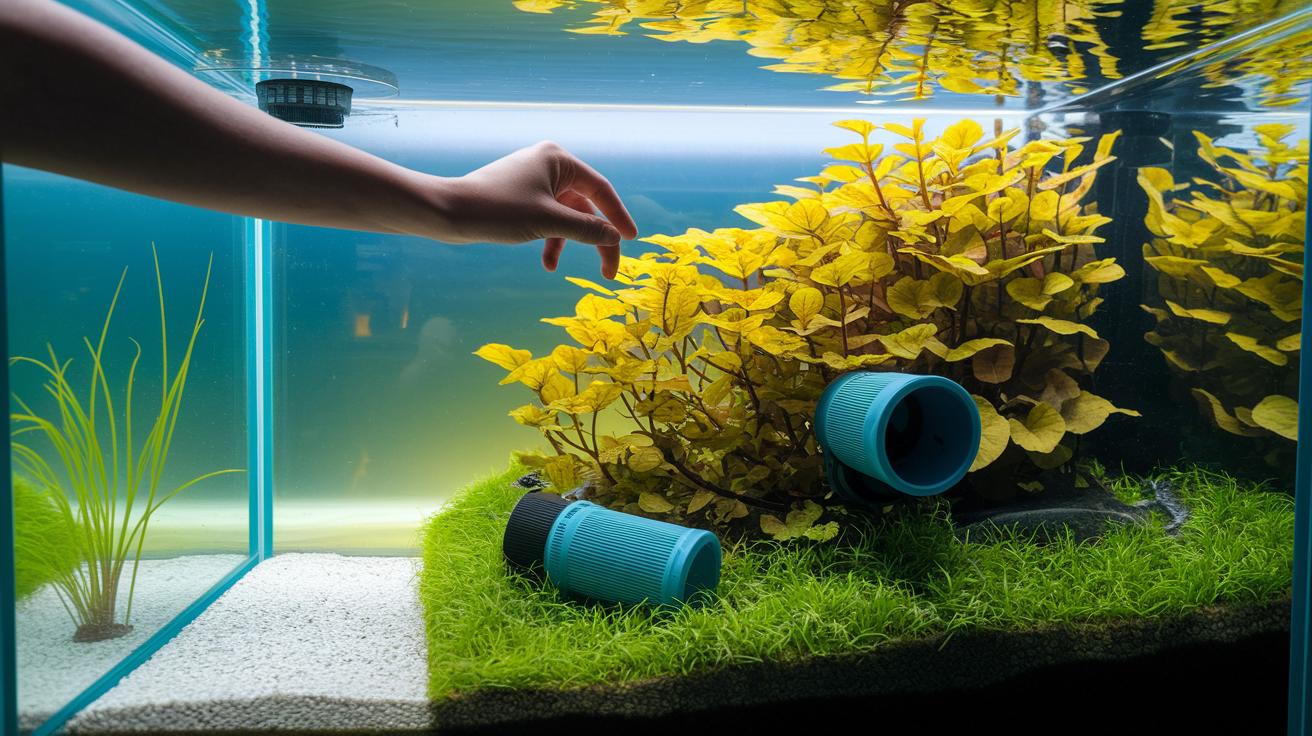
While routine tasks like pruning, water changes, and filter cleaning are detailed in the ecosystem section, here we dive into advanced checks to fine-tune your tank. Think of it as giving your aquatic home a little extra love when small ripples become waves.
Keep an eye out for clues such as a burst of algae, leaves turning yellow, or plants not growing as expected. These signs often mean the nutrients in your tank are a bit off or that your light or CO₂ settings might need a tweak. It’s like noticing the first ripple in a quiet pond, an early hint that something’s amiss.
Try these steps for a closer inspection:
- Turn off your equipment and take a gentle look at your filter parts for any hidden wear or debris.
- Check that your CO₂ regulators and all electrical fittings are secure.
- Examine your plant leaves for odd color changes that could show you’ve used too much fertilizer.
| Observation | Possible Meaning |
|---|---|
| Algae buildup | Nutrient imbalance |
| Yellowing leaves | Need to adjust nutrients, light, or CO₂ |
| Stunted plant growth | Possible fertilizer overuse or nutrient issues |
By taking these extra steps, you help keep your underwater haven balanced and thriving. Remember, a small check now and then can save you from bigger problems later on.
Final Words
In the action of setting up your aquatic space, we covered everything from design tips to maintenance routines. We explored how to combine plants, stones, and the right equipment while following clear guidelines for stability and aesthetics. The guide showed a step-by-step approach that makes freshwater aquascaping both fun and rewarding. Taking care of your tank is like tending to an underwater garden, and every small effort counts. Enjoy the process and watch your underwater world thrive!
FAQ
Q: What are some creative freshwater aquascaping ideas for my fish tank?
A: Freshwater aquascaping ideas blend lively plants, smooth stones, and driftwood into balanced underwater landscapes using design principles like the rule of thirds and golden ratio for a naturally captivating fish tank.
Q: Where can I find a freshwater aquascaping kit, supplies, or designs near me?
A: Freshwater aquascaping kits typically include LED lights, quality filters, and nutrient-rich substrates. Local aquatic stores and online retailers offer complete kits and supplies that help you create an eye-catching underwater garden.
Q: What are some good aquascaping ideas and tips for beginners?
A: Aquascaping for beginners centers on simple, step-by-step layouts and carefully chosen plants. This approach builds confidence and guides you in setting up a balanced underwater garden that looks stunning and is easy to manage.
Q: What is the iwagumi aquascape theory?
A: The iwagumi aquascape theory uses a three-stone layout guided by balanced proportions and the golden ratio, creating a natural, minimalist underwater scene that commands attention in your aquarium.
Q: What is the most hardy freshwater aquarium plant?
A: The Java fern is known for its hardiness in freshwater aquariums. It adapts well to various water conditions and low light, making it a reliable and popular choice for aquascapers at any level.
Q: What is the golden ratio for aquascape design?
A: The golden ratio in aquascaping means arranging elements in balanced divisions so that the display flows naturally. This principle helps create a pleasing scene that guides the viewer’s eye smoothly through the tank.
Q: Do freshwater aquariums need CO₂?
A: Freshwater aquariums with live plants often benefit from CO₂ injections, which stimulate robust plant growth. While high-tech setups use extra CO₂, low-tech tanks typically thrive with the naturally available levels.