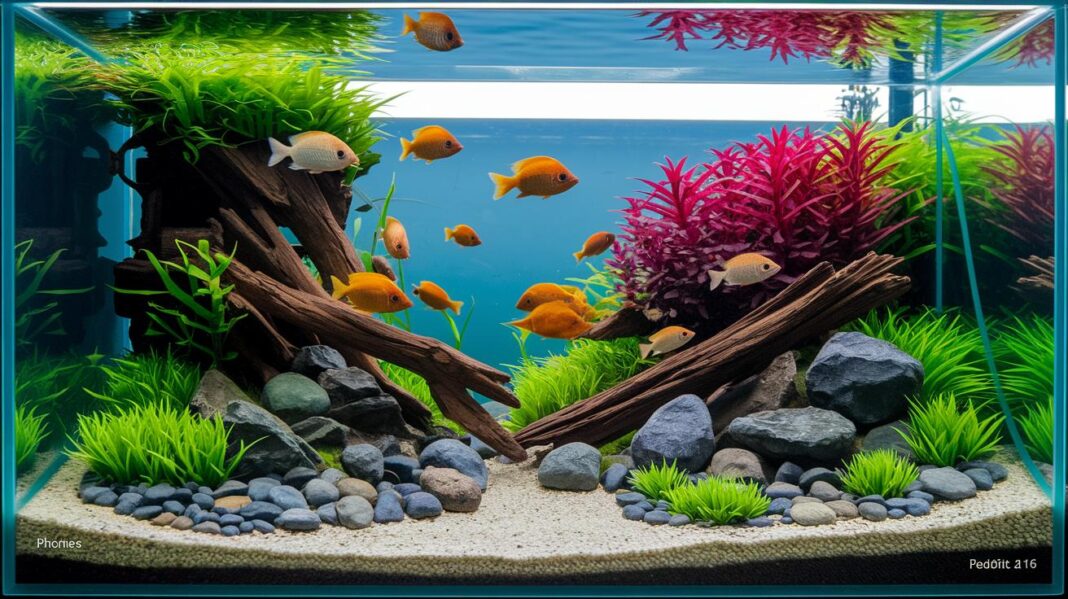

Ever thought your tank could become a peaceful underwater forest? Imagine soft light dancing on vibrant greens and smooth stones, turning your aquarium into a calming, living scene. In this post, I’m sharing how to build your very own textured aquatic escape. We start by carefully choosing the right plants and natural decor that bring out each space’s special charm. Get ready to design an aquascape that feels as refreshing as a cool dip on a sunny day.
Foundations for a Thriving Forest Aquascape
Before you jump in, take some time to chart out your vision. Think of planning your aquascape like arranging a beautiful underwater garden where every plant and rock tells a story. Start by mapping out your tank’s layout and choosing plants that suit both your fish’s needs and the deep look you want to create. Consider the shape of your tank, like how a cube tank such as the Dennerle Shrimp King (15.5"x12.5"x11") can give a neat sense of depth, while a 10-gallon horizontal tank (20"x10"x12") might not achieve the same effect. If you have a larger space, like a 40-gallon breeder (36"x18"x16"), you get the freedom to layer and design with plenty of room to explore.
Next, choose fast-growing, lush tropical plants that bring a vibrant, forest-like vibe into your aquarium. Mix and match different sizes, colors, and textures: place taller greens at the back and let the smaller ones gently cascade in the front, much like a natural woodland scene. This arrangement helps create a cool sense of distance, making your tank look more alive and layered.
Now, think about adding hardscape elements early on. Natural pieces like driftwood and stones build the backbone of your design and give your plants a place to root, much like the sturdy trunks and branches in a forest. A good plan is like a sketch before a painting, every piece has its role, and that care in planning turns your aquascape into a peaceful, nature-inspired haven perfect for both beginners and seasoned aquarists.
Selecting the Ideal Aquarium and Equipment for Forest Aquaria

When setting up your aquascape, think of it like designing a little forest underwater. A cube tank like the Dennerle Shrimp King (15.5"x12.5"x11") creates a nice depth by letting plants fade away softly. In contrast, a 10-gallon horizontal tank (20"x10"x12") might spread out more and won’t give you that layered effect. For a more spacious look where you can layer plants and rocks, a 40-gallon breeder tank (36"x18"x16") brings that forest vibe to life.
| Tank Type | Dimensions | Design Impact |
|---|---|---|
| Dennerle Shrimp King | 15.5″x12.5″x11″ | Creates a soft, fading depth |
| 10 Gal Horizontal | 20″x10″x12″ | Spreads out with less vertical feel |
| 40 Gal Breeder | 36″x18″x16″ | Plenty of room for layers and hardscape |
To keep your underwater forest thriving, equip your tank with gear that helps your plants and water both shine. A trustworthy Aquatech Mini CO₂ regulator with a 24 oz paintball tank and an aquarium diffuser makes managing CO₂ simple (a key element for plant health). Add low-profile LED lights that cast a gentle glow over the canopy, and use a sturdy canister or hang-on-back filter to keep the water crystal clear, even when the green gets busy. Starting with quality equipment means you’ll enjoy a healthy, vibrant aquatic haven that feels as magical as a woodland glade.
Crafting Hardscape: Wood and Rock Structures in a Forest Aquascape
Hardscaping sets the stage for a forest look in your tank. Driftwood works like fallen trees that have found a home underwater, giving your aquarium a natural, lived-in feel. Pieces like spider wood, with its delicate branches, and bog wood, which looks like tangled old roots, add an extra touch of nature. Try placing your driftwood so it fades gently into the background, creating a scene that feels like a secret woodland clearing.
Rocks such as lava, seiryu, and dragon stones help shape a rugged landscape and provide sturdy bases for your plants. Lay them out carefully, forming little hills and valleys that add depth to your design. And remember, it's important to secure the heavy pieces early on so they stay in place, much like anchoring a tiny bridge over a calm stream.
When every element is chosen and placed with care, you build an underwater forest that feels both lively and lasting. With driftwood retreating into the background and rocks arranged to mimic gentle slopes, your tank blossoms into a peaceful, vibrant haven that echoes the quiet beauty of a real forest.
Plant Selection and Layout for Live Woodland Flora
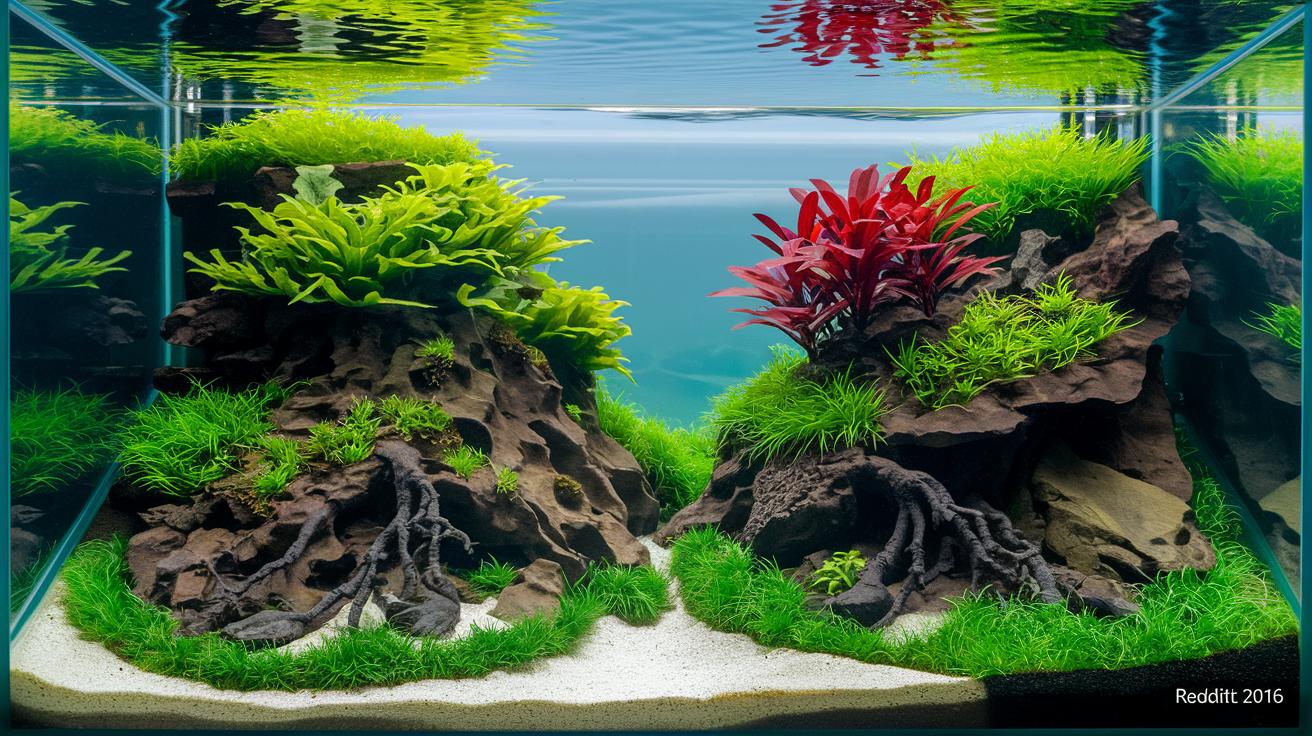
Choosing the right plants for your tank is a lot like painting a sunny picture of an underwater woodland. Start with fast-growing, tropical greens that add an instant burst of life. You can try plants like Java fern, Anubias barteri var. nana, Cryptocoryne wendtii, Hygrophila pinnatifida, and Bolbitis heudelotii to create depth and a lively feel.
Place tall plants such as Hygrophila at the back to form a high, leafy backdrop. Then, add plants like Cryptocoryne in the middle for a splash of texture and color. Up front, use carpet plants like Eleocharis to tie the whole scene together with gentle, sweeping layers.
Don't forget little accents like Java moss, which clings beautifully to driftwood, giving your tank a wild and natural vibe. Mix different leaf shapes and sizes to mimic the real layers of a forest, with some leaves broad and flat while others are slender and delicate.
Check out more tips on underwater plants for aquariums at https://sweetfysh.com?p=1765. Let your creativity lead you as you arrange each plant like building blocks in a mini forest. With thoughtful placement and grouping plants that share similar water needs, you can create a balanced, natural look that feels as refreshing as a walk in a real woodland.
Creating Depth and Perspective in Your Aquatic Forest Design
When planning your tank, try centering your design around a striking focal point. A simple trick is to use the rule of thirds by placing an eye-catching rock or a cluster of plants right where your imagined grid lines meet, kind of like a lone tree standing in a quiet forest clearing.
Next, bring in the charm of the golden ratio. Arrange your tank elements so your eyes follow a gentle, curving path, much like wandering along a secret trail. Picture a soft spiral of driftwood and vibrant blooms guiding you through the water.
Finally, blend these ideas together with smooth transitions between different design elements. This careful yet relaxed approach helps your aquatic scene feel both thoughtfully planned and naturally inviting.
Balancing Light, CO₂, and Filtration in Forest Aquascaping
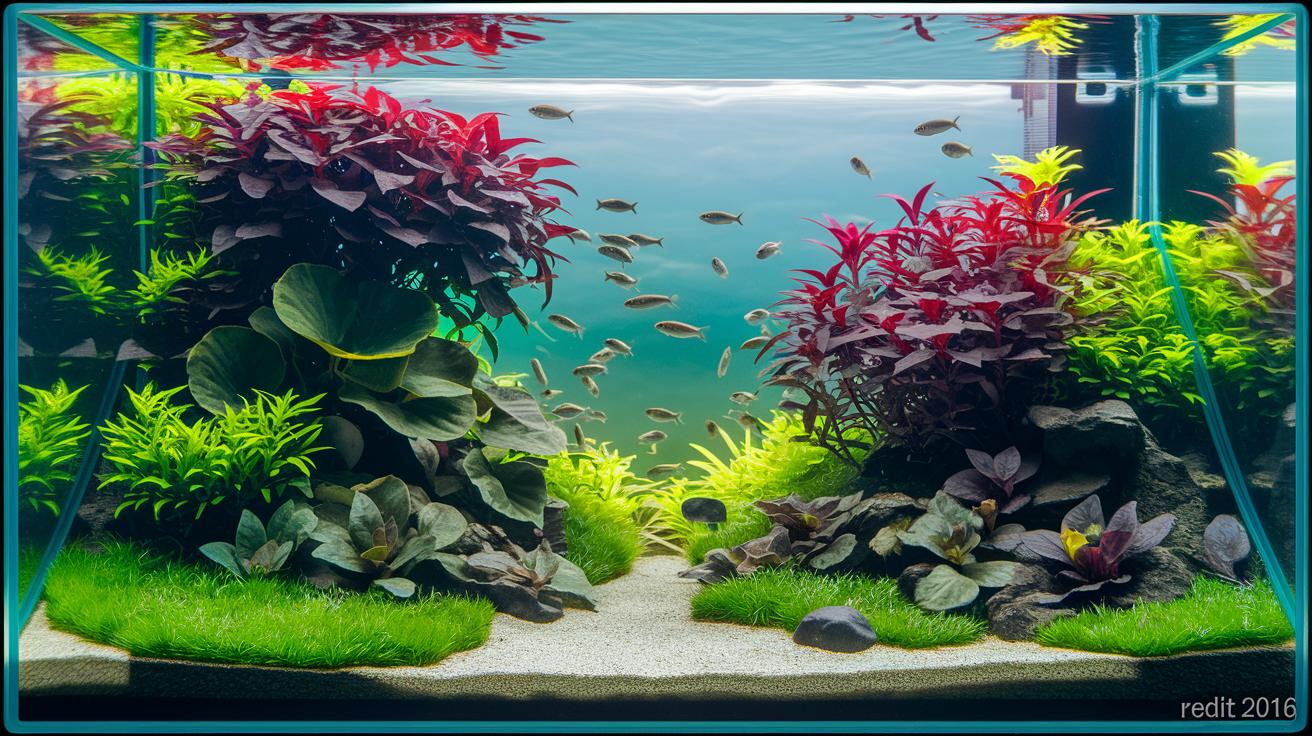
Getting your tank just right feels a bit like setting up a perfect underwater picnic. For your mid-ground and background plants, try to keep the light (PAR) at a gentle 40–50 µmol/m²/s. This gives them enough brightness to thrive without inviting pesky algae to the party. Fun fact: many aquarists have learned the hard way that too much light can transform a peaceful aquatic forest into an accidental algae maze.
Next up, don’t forget about CO₂. Dosing your tank with CO₂, ideally around 20–30 mg/L each day, is like letting your plants take a fresh, soothing breath. Using something like an Aquatech Mini regulator with an in-tank diffuser helps maintain that steady flow, ensuring your aquatic friends get all the carbon they need to grow strong and healthy.
And then there’s the filtration. A trusty canister filter that circulates water four to six times an hour works wonders. It spreads CO₂ and nutrients evenly, like a gentle underwater current caressing every plant, without creating strong flows that could disturb delicate roots. With these adjustments, your aquatic forest will be a calm, vibrant world where every plant finds its perfect spot under the soft dance of light and oxygen.
Maintaining a Healthy Forest Ecosystem in Your Aquarium
Taking care of your aquarium's forest is like giving your little underwater world a weekly check-up. Start by setting aside time each week to tend to key tasks that keep your aquatic oasis lively. For instance, do a water change of about 20–30% every week. This is kind of like sweeping fallen leaves off a forest floor, it clears out extra nutrients and keeps the water clean.
Next, use a substrate vacuum to clear out debris that can cloud the water and slow plant growth. It’s similar to tidying up the forest floor so that every plant gets the light it needs. And while you’re at it, trim your plant stems every now and then. Pruning lets light gently reach all corners of your tank, much like a careful gardener shaping a bush to help it grow fuller and stronger.
Friendly helpers in your tank, like algae-eating fish such as Otocinclus or Amano shrimp, can keep the glass and leaves neat. Little Corydoras do a great job patrolling the substrate, picking up stray particles as if they were nature’s own cleaners.
Remember to keep an eye on your nutrient levels. Check that your nitrate (NO₃) stays between 10 and 20 mg/L and that your phosphate (PO₄) is around 0.5 to 1 mg/L. If the numbers drift, adjust your fertilization to keep your plants lush. When you add CO₂, keep it gentle, aim for about 1 to 1.5 bubbles per second over an eight-hour light period. These small adjustments help build a balanced, thriving ecosystem where every part plays its role.
Regular care makes your aquascape look pristine, and each little effort supports the natural rhythm of life underwater. Isn’t it amazing how every small tweak brings your tank to life?
Final Words
In the action, we explored how planning, depth illusion, and hardscape elements come together for a charming display. We looked at selecting gear, choosing lush plants, and arranging wood and rock to mimic nature. Maintenance tips round out the process to keep your setup thriving. Every step helps you create an aquatic haven that feels alive. Embrace your passion for aquascaping forest and enjoy watching your underwater landscape flourish with life and wonder.
FAQ
How do you set up a forest aquarium?
The forest aquarium setup means planning your layout, choosing the right tank and equipment, and selecting live tropical plants and natural hardscape elements like driftwood and rocks to create a woodland feel.
What defines an Iwagumi aquascape?
The Iwagumi aquascape means arranging a few key stones to form a balanced design. It focuses on minimalism and harmony, letting the natural shapes of rocks stand out against sparse plant accents.
How is a nature style aquascape created?
The nature style aquascape means replicating an organic underwater scene using varied plant species, natural wood, and rock placements. It aims to capture the gentle, spontaneous look of a wild aquatic forest.