

Have you ever noticed how the deep ocean can hide little sparks of magic? Down there, creatures like glowing squid, color-changing cuttlefish, and vibrant mandarin fish light up the dark waters just like secret jewels.
Imagine watching a squid shimmer in the deep night or a cuttlefish effortlessly shift its hues, it’s like seeing a living light show. These enchanting sea friends remind us that nature always has surprises hidden in its quiet corners.
Next time you gaze into an aquarium or stroll along the shore, think about the magic that glows beneath the surface. It’s a gentle reminder that beauty can be found even in the darkest depths.
Stunning Showcase of Beautiful Deep Sea Creatures
Every spring, Japanese firefly squid head to shallow waters off Japan. As they gather to lay their eggs, they light up the surface in a soft, blue glow, much like stars twinkling on a dark sea. I heard about one spring when thousands of these little squid turned the ocean into a glowing blue canvas, a truly magical sight.
Next, flamboyant cuttlefish offer a burst of underwater color. They’re not only bright and bold but also "walk" along the seafloor using their fins, a quirky behavior that's as surprising as it is beautiful. They change color like magic, blending in with the vibrant marine life or flashing brilliant hues to talk with one another. Imagine a cuttlefish slowly drifting over soft, sandy bottoms while its skin shifts like a painter's palette.
Then there are the mandarin fish, a real visual treat with patterns of blue, orange, and green. These small marvels stand out against the deep blue ocean, making them a favorite for underwater photographers everywhere.
And don't miss the Glaucus Atlanticus, often called the blue dragon sea slug. Floating upside down near the surface, its bright blue belly camouflages it from above. It's a master of disguise in its own little enchanted world under the sea.
Rare Abyssal Species with Extraordinary Adaptations

Deep beneath the ocean’s dark surface, some amazing creatures thrive in places where sunlight never touches. Their unusual bodies and clever ways of surviving are like nature’s secret art, showing us how life can flourish even when it’s incredibly tough.
Take Enypniastes eximia, for example. Known as the "headless chicken monster," this creature was discovered way back in the 1880s and even filmed in 2017. It may sound strange, but it doesn’t have a typical brain! Instead, it filters tiny bits of sediment to find food as it glides slowly over the seabed with its soft, jelly-like body, a true testament to nature’s creativity.
Then there’s the vampire squid, a gentle being that lives in oxygen-poor zones as deep as 3,000 feet. Its small, flower-like form and playful light shows add a magical touch to the deep sea. And nearby, scotoplanes, better known as sea pigs, move steadily along the ocean floor on their little tube feet, always on the lookout for organic scraps. They remind you that even the simplest life forms have their own kind of strength.
Imagine a creature that isn’t one single animal, but a colony of tiny, connected units working as one. That’s the siphonophore. With about 175 different species, some colonies can grow over 40 meters long! One such species, Marrus orthocanna, has a bright orange head and a gas-filled float, looking like a string of glowing beads drifting through the water.
These deepwater marvels teach us that life always finds a way, even in the most extreme conditions. Their unique adaptations, from filtering nutrients without a traditional brain to forming intricate colonies, are a gentle reminder of nature’s boundless ingenuity. It’s pretty inspiring to think about, isn’t it?
Bioluminescence in Luminous Ocean Wonders
Bioluminescence is a fascinating natural trick where sea creatures create light from a simple chemical mix. When a substance called luciferin meets an enzyme like luciferase, a soft glow appears, lighting up dark ocean waters as if sharing a secret message.
This gentle flash can serve many purposes. Sometimes it helps attract a mate, other times it lures in prey, or even confuses a predator in a split second. Take sea sapphires, for example, they put on a unique show by flickering their light in rhythmic patterns, quickly turning it off to muddle any nearby threats.
Down deep in the ocean, this light not only creates a dazzling visual but also gently shifts how creatures interact with one another. Every burst of glow reminds us of the quiet wonders hidden beneath the waves.
Colorful Marine Spectacles: Vivid Submerged Portraits

Nudibranchs are like underwater artists, with over 3,000 different species painting the ocean floor. These shell-less wonders flash bright colors and detailed patterns, a clever trick to scare off predators while captivating our eyes. Ever seen one that shifts its hues as if experimenting with a palette? It’s nature’s way of saying, "I’m toxic, so keep your distance!"
Mandarin fish steal the show with neon blue, orange, and green stripes that light up the sea. They’re favorites among underwater photographers who love to capture the magic of the marine world. Meanwhile, lionfish may flutter gently with their soft fins, but don’t be fooled, their venomous spines can cause real trouble if handled carelessly. This blend of beauty and caution is just another reminder of the surprises found beneath the waves.
Ribbon eels glide smoothly through coral channels, their blue and yellow bodies rippling like satin ribbons in the current. Watching them is like admiring a living work of art. Over in Australia’s coastal waters, leafy sea dragons drift like pieces of seaweed thanks to their frilly appendages, perfectly blending into their surroundings. And then there are Christmas tree worms, with their twin, colorful crowns that spiral out from coral. These little creatures not only add an extra splash of beauty but also help keep the water clear by filter-feeding.
Anatomy and Behavior of Exotic Underwater Organisms
Exotic underwater creatures are like nature’s own little marvels, each with a story as colorful as coral. Take the mantis shrimp, for instance. Imagine a tiny warrior with a rainbow-like shell and eyes so clever they see more colors than we can even dream of. Its claws can swipe at an incredible speed, leaving one amazed by the blend of beauty and power.
Then there's the coconut octopus. This smart critter finds a home in discarded shells, much like using an old bottle as a cozy cave. When danger nears, it shows off a pattern that looks a bit like snakeskin to scare off threats. It’s a clever reminder that sometimes everyday items can become lifesavers.
The hairy frogfish, for example, has little thread-like bits that make it look like a drifting clump of seaweed. It even "walks" along the bottom of the ocean on fins that have been tweaked by nature. With a talent for blending in, this fish is an expert at hiding from predators while it roams its watery world.
And check out the flying gurnard. This curious fish spreads out its large, wing-like fins decorated with eye-like spots. These fins not only dazzle onlookers but also help keep potential attackers at bay, almost like secret signals in the deep blue.
Each of these remarkable traits shows how perfectly these creatures fit into their underwater homes. Whether it’s the mantis shrimp’s lightning-fast strike or the coconut octopus turning trash into treasure, every creature teaches us something unique about survival beneath the waves. Isn't it amazing how the sea holds so many secrets just waiting to be discovered?
Capturing Exquisite Ocean Life: Advanced Imaging and Research
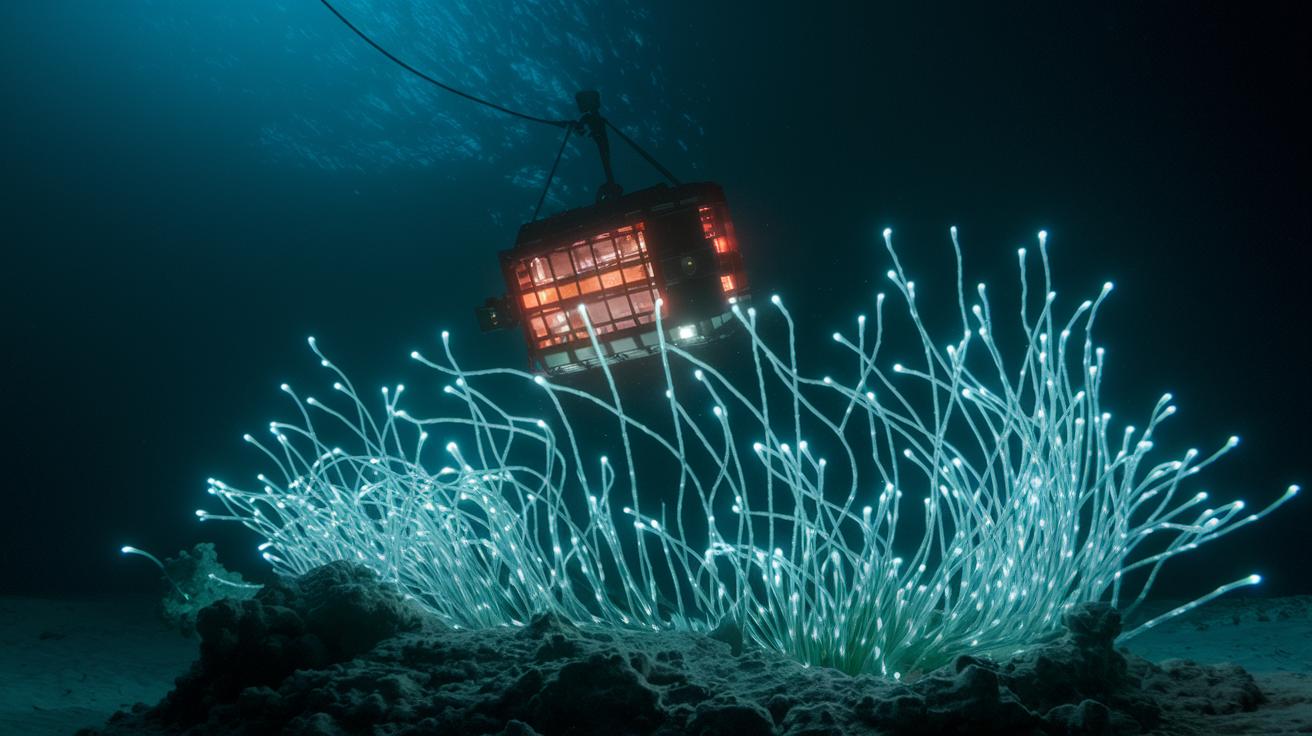
Modern research tools act like a bridge between the stunning art of underwater life and solid science. With deep-sea ROVs, low-light submersibles, and specialized nets working together, we now uncover secrets hidden in the deep. Ever wonder what it feels like when a dark ocean is lit by a single burst of bioluminescence? Picture it: a lone glow captured by a sensitive camera, turning darkness into a lively canvas.
These clever tools do more than just snap rare moments. They reveal how light and life mix in a way that feels both artistic and scientific. Instead of listing well-known species, they invite us to see the underwater world with brand-new eyes.
| Tool | Description |
|---|---|
| Deep-sea ROVs | Use high-resolution cameras to capture the elegant dance of marine life. |
| Low-light Submersibles | Spot secret behaviors in twilight zones, where every glow is a hidden gem. |
| Specialized Nets | Employ red-light filters to gently gather bioluminescent wonders without disturbance. |
When these tools join forces, they form a vibrant portrait of the ocean's hidden world. Each gadget turns technical precision into breathtaking research, deepening our appreciation for the natural beauty and mystery of life beneath the waves.
Final Words
In the action of exploring glowing squid, vibrant lionfish, and radiant nudibranchs, our dive through deepwater wonders brought us closer to the magic hidden under the waves. We shared facts on rare abyss dwellers, bioluminescence that lights up the dark, and unique animal behaviors that make the underwater world so appealing. Everything ties together to celebrate the art of nature and the striking presence of beautiful deep sea creatures. Feel the zest for life that every ripple tells in your own aquatic adventures.
FAQ
What are some of the most beautiful deep sea creatures?
The most beautiful deep sea creatures include species like the flamboyant cuttlefish, mandarin fish, and leafy sea dragons, celebrated for striking colors and memorable patterns.
What are the biggest deep-sea creatures?
The biggest deep-sea creatures include enormous siphonophore colonies that can extend over 40 meters, along with certain large deepwater cephalopods.
How can deep sea creatures be both beautiful and scary?
Deep sea creatures can appear both beautiful and scary by mixing stunning bioluminescence and vivid patterns with odd features like venomous spines and unusual body shapes.
What is considered the prettiest sea creature?
The prettiest sea creature is often seen as the mandarin fish, which is adored for its vibrant blue, orange, and green patterns that captivate onlookers.
What deep sea creature is seen as the most interesting?
The most interesting deep sea creature can be the Japanese firefly squid, known for its collective blue glow during spring spawning and its unique life cycle.
What is the rarest underwater animal?
The rarest underwater animal might be the vampire squid or the headless chicken monster, which both display unique adaptations to thrive in extreme ocean conditions.
Which ocean creature lives the deepest?
The deepest ocean creatures include species like the vampire squid, which make their home in abyssal zones with low-oxygen levels and unusual survival skills.