

Have you ever wondered how deep sea sharks manage to thrive in places where few dare to go? Down in the ocean's dark depths, where the sun barely touches the water, these sharks face crushing pressure and icy chills every day.
They have evolved clever ways to hunt for food and keep safe in their mysterious underwater world. Today, let's dive into the tales of three special deep sea sharks that show off nature's brilliant designs. Their unique features remind us that even in the darkest, coldest corners, life always finds a way.
Deep Sea Sharks Explained: Habitat, Behavior, and Adaptations
Deep sea sharks are true marvels living in the deep, mysterious parts of our oceans. They call waters that start at around 1,000 feet below the surface their home. For example, the frilled shark, spotted off Japan at 390 feet, shows us just how adaptable these creatures are. And then there's the goblin shark, which can dive down to about 4,265 feet, sporting unique features that help it deal with crushing pressure and icy water. Picture a deep sea shark gliding quietly through near-total darkness, perfectly suited to an environment where sunlight barely exists.
Their behavior also tells an amazing story about how they've adapted to life in the deep. One cool example is the ghost shark, a pointy-nosed blue chimaera, caught on film at 6,700 feet, proving that even in extreme depths, these hunters stay quick and sharp. Meanwhile, Greenland sharks roam at depths of about 7,200 feet at a gentle pace of one mile per hour. They take life slow, which might be why some of them live for over 500 years. It's like watching a wise, ancient friend make careful moves in a world few of us ever see.
Every deep sea shark has developed clever tricks to handle a world of high pressure, near darkness, and freezing temperatures. They have special traits that let them find food and stay safe in a place that might feel like an alien planet to most. Nature really knows how to craft survivors in the most unexpected corners of our ocean.
Morphological Adaptations of Deep Sea Sharks
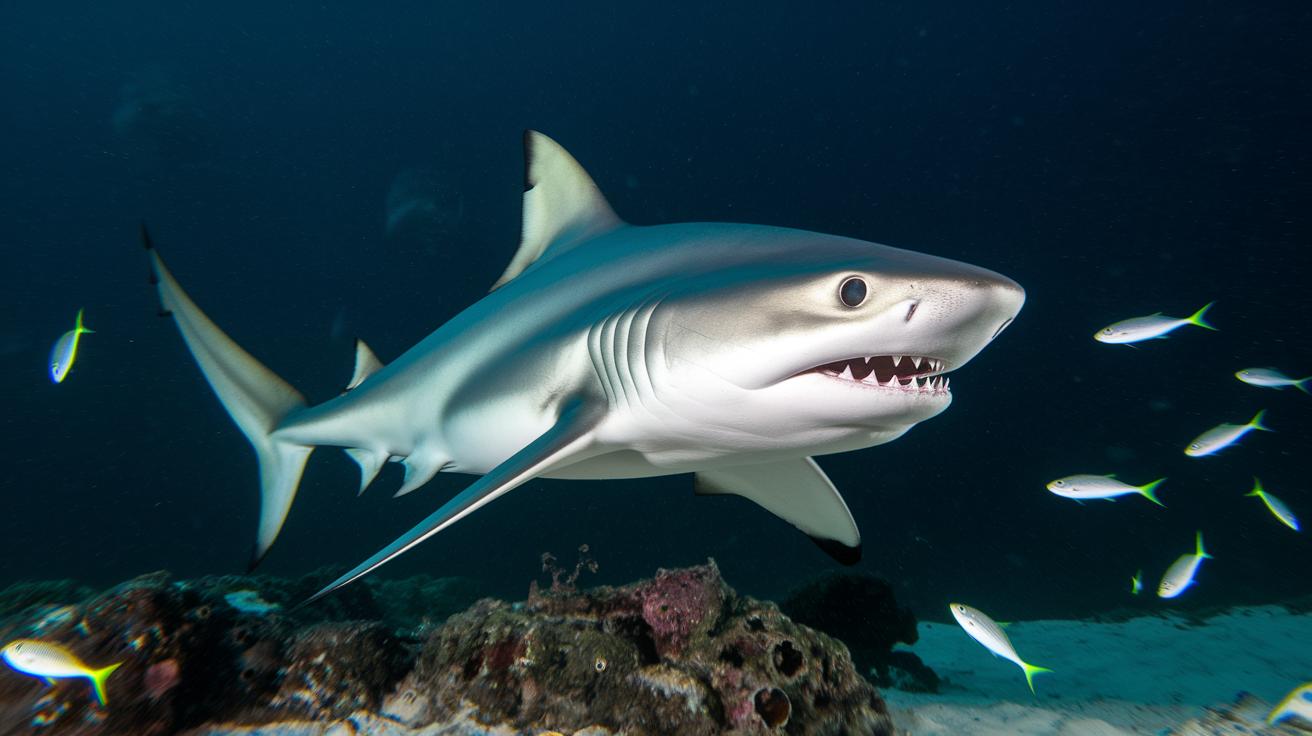
Deep sea sharks show off some truly clever traits that help them live in a world that is cold, dark, and full of pressure. Their bodies have changed over time to help them find food when nothing is easy to catch. Every little change, from extra-sensitive senses to special ways of eating, plays a big role. These traits let them hunt with ease and keep them safe from dangers, thanks to nature’s smart design over time.
Imagine a shark whose jaws can stretch out like a spring, snatching a meal in just a blink. Wow. That’s one of the many fascinating tricks from the deep!
| Shark Species | Unique Adaptation |
|---|---|
| Goblin sharks | Stretchable jaws and needle-like teeth help catch quick prey. |
| Frilled sharks | An eel-like body with 300 teeth in 25 rows grabs slippery sea creatures. |
| Swell sharks | They change blue light into green glow for talking and hiding. |
| Bluntnose sixgills | Six gill slits and clear eyelids boost oxygen capture in low-oxygen water. |
| Cookiecutter sharks | Suction-cup lips and glowing spots help them find and secure food in the dark. |
I love thinking about these fascinating creatures. Ever notice how nature always finds a way to surprise us?
Species Spotlight: Iconic Deep Sea Shark Giants
Imagine diving into a secret underwater world where some of nature’s coolest predators quietly roam. Deep sea sharks come in all sizes with unique traits that make them absolute wonders of the ocean. Take the Greenland shark, for example. This gentle giant cruises at just one mile per hour around 7,200 feet deep and can live for over 500 years. Ever think about what a quiet, enduring creature would feel like in the deep dark? It’s pretty amazing.
Then there’s the goblin shark. Picture a shark with a jaw that sticks out like a secret weapon while it lurks around 4,265 feet beneath the waves. Its odd, extendable jaw helps it sneak up on its dinner, much like a clever little trick in a vast blue world.
Next up is the frilled shark, a real-life relic that grows to about 6.6 feet long. With 300 triangular teeth neatly arranged in 25 rows, it’s like nature’s way of showing that sometimes ancient designs still work perfectly, even deep under the sea.
Not to be overlooked is the cookiecutter shark. Although small, it’s full of surprises. It tends to attach itself to larger animals while cruising at around 3,200 feet by day, and it can venture even deeper, up to 12,100 feet, before rising at night to hunt for food. Imagine a tiny fish nibbling away in the darkness while the rest of the ocean sleeps.
And then we have the megamouth shark. Discovered in 1976 and measuring up to 18 feet long, this rare creature has been seen less than 100 times. Its filter-feeding style is quite different from the others, like a hidden gem that few have witnessed.
Last but not least, the bluntnose sixgill shark grows up to 20 feet long and moves gracefully between depths of 300 and 6,500 feet. Its six gill slits and massive size make it a master of low light and high pressure, a living marvel adapted to an extreme environment.
| Species | Depth Range | Unique Feature |
|---|---|---|
| Greenland Shark | ~7,200 ft | Long lifespan and slow, steady pace |
| Goblin Shark | ~4,265 ft | Extendable, protruding jaw |
| Frilled Shark | Up to 5,150 ft | 300 triangular teeth in 25 rows |
| Cookiecutter Shark | Day: 3,200 ft, Night: up to 12,100 ft | Suction-cup lips for precise bites |
| Megamouth Shark | Rare encounters | Filter-feeding mechanism |
| Bluntnose Sixgill Shark | 300–6,500 ft | Six gill slits and impressive size |
Feeding and Predatory Behavior of Deep Sea Sharks
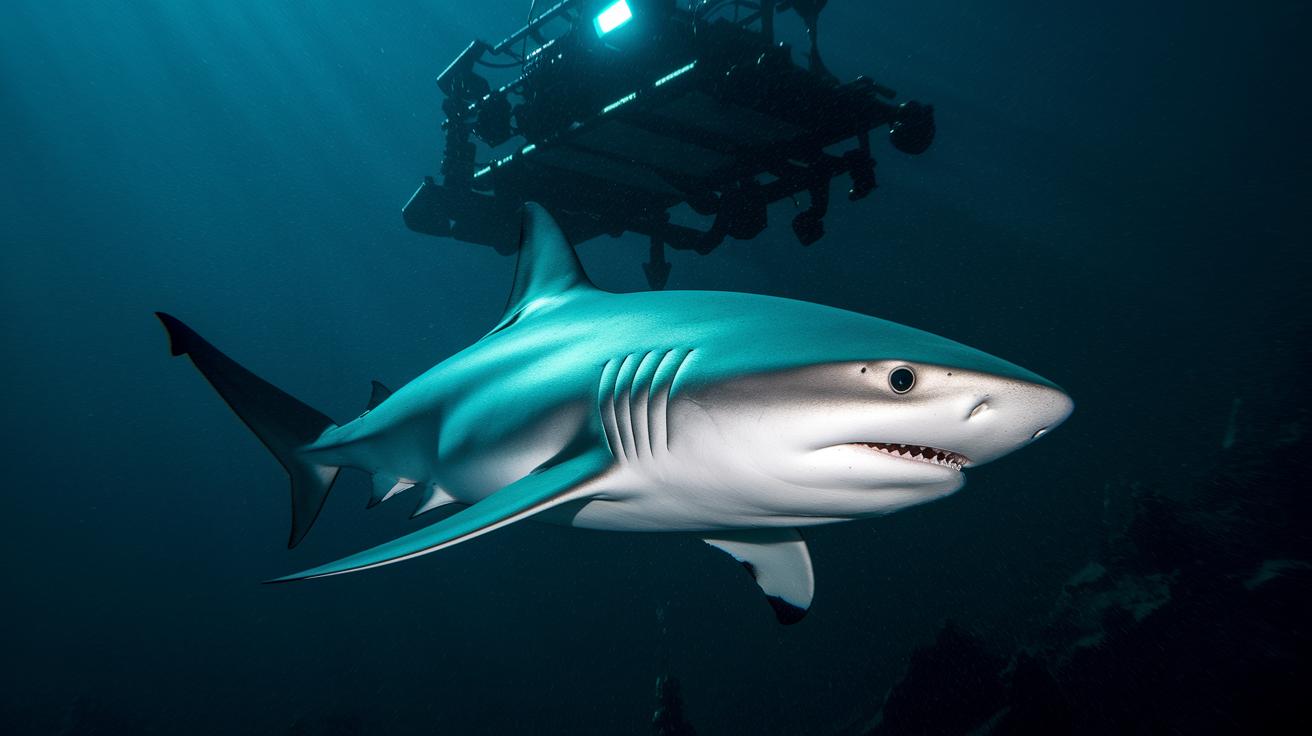
Deep sea sharks have to make every bite count since food is so rare down there. Take the goblin shark, for instance, it sits quietly on the dark ocean floor until a squid or fish passes by, then its extendable jaw snaps out in a flash to catch its meal. Frilled sharks work in a similar way, using rows of sharp teeth to quickly trap fast-moving cephalopods. It’s pretty cool to see how nature has tuned these methods over countless years.
Some sharks have even more unusual ways to feed. The cookiecutter shark, for example, clings to larger creatures and takes a neat, round plug of flesh. This smart trick lets it get nourishment without a long chase, which is perfect for the energy-starved depths where every bite matters.
Not all deep sea sharks rely on quick strikes. Greenland sharks, for instance, take a slow and steady approach by scavenging from carcasses, matching their low metabolism to the scarce prey available. Meanwhile, the megamouth shark filters tiny plankton during its nightly swim, making the most of the abundant micro-life. And then there’s the demon catshark, which hunts squid and crustaceans at around 7,000 feet deep. Each of these feeding tricks shows just how adaptable and resourceful these sharks really are.
Deep Ocean Research, Exploration, and Documentaries on Sharks
In recent years, daring ocean expeditions have ventured into mysterious depths, revealing surprising secrets about deep-sea sharks. Imagine an ROV diving down 304 meters, uncovering traits that seem almost otherworldly. One exciting highlight was the first live video of a ghost shark, captured at 6,700 feet in the Gulf of California, a rare peek into the life of this elusive creature.
Thanks to new deep-sea submersibles and high-resolution cameras, scientists are now able to see and record details of shark behavior like never before. These tools are like a window into a hidden underwater world, capturing movements, feeding habits, and even social interactions. Documentaries now feature stunning clips of the rare megamouth shark, an animal spotted fewer than 100 times since 1976, each sighting adding a valuable piece to the deep-sea puzzle.
Recent breakthroughs in underwater research are shaking up what we thought we knew about shark ecology. This growing exploration series is winning the hearts of scientists and fans alike, reminding us how every deep dive brings us closer to understanding life in one of Earth's most extreme and beautiful environments.
Reproductive Strategies and Lifecycle of Deep Sea Sharks
Deep sea sharks take their time when it comes to reproducing, matching the slow, steady pace of life deep below the surface. For example, Greenland sharks don’t hit their prime until about 150 years old and can swim through life for over 500 years. It’s like watching a grand, timeless ocean dance.
Then there are frilled sharks, whose roots can be traced back 80 million years, it’s almost as if deep water keeps life’s secrets locked away. And goblin sharks, often called living fossils, date back even further at 125 million years, giving us a rare glimpse at evolution’s persistence.
Most of these deep sea sharks are ovoviviparous. That means their eggs develop and hatch inside the mother’s body, a neat trick that comes with only a few babies at a time and a long wait before those little ones arrive. This slow, careful approach is how they make sure each new life has the best shot at surviving in a world where food and energy are always hard to come by.
Every birth in the deep is a rare, meaningful event, perfectly suited to the ocean’s quiet, enduring rhythm.
Conservation Status and Human Impact on Deep Sea Sharks
Deep sea sharks are facing tough challenges that put their future at risk. Since 1976, scientists have seen fewer than 100 megamouth sharks, mostly caught by surprise during fishing trips or from rare accidental scoops. This makes it really hard to learn about them and care for their kind.
Our own activities, like deep-sea fishing and underwater mining, shake up their quiet world. When we disturb the ocean floor or accidentally trap a shark, even small changes can have a big, lasting impact on their fragile life.
Here are some of the main issues deep sea sharks are up against:
- Loss of home due to deep-sea mining.
- Unintentional capture from unregulated fishing.
- Limited sightings that leave us with little data.
- Confusing shark types that mix up population counts.
- Increased disruptions from human work in the deep.
More focused research is really needed to understand these ancient creatures better. By filling in the blanks about their lives, we can come up with plans to protect their deep, dark world. Ever notice how even subtle shifts in our actions can ripple out like gentle waves in the ocean?
Final Words
In the action, we've explored deep sea shark life from habitat quirks to unique body traits and clever feeding habits. We looked at how these creatures adapt to darkness and deep pressure, marveled at their slow yet steady lifecycles, and considered the care needed to protect them. This guide shared snippets of research and wonder that light up an otherwise hidden underwater world. It leaves us with a warm reminder to always appreciate and safeguard our aquatic neighbors, including every mysterious deep sea shark that sways in the ocean's silent depths.
FAQ
What does a deep sea shark film show?
A deep sea shark film shows rare footage of these mysterious creatures in their dark, high-pressure underwater world, revealing their unusual behaviors and adaptations for survival.
What are some deep sea shark species?
Deep sea sharks include species like the Greenland, Goblin, Frilled, Megamouth, and Bluntnose sixgill sharks—each uniquely adapted to life in the deep, shadowy ocean.
What is the largest deep sea shark?
The largest deep sea sharks are often the Greenland and Bluntnose sixgill sharks, recognized for their impressive size and ability to thrive under extreme deepwater conditions.
Do deep sea sharks attack humans?
Deep sea sharks almost never attack humans because they live in remote, dark depths far removed from typical human activity, keeping any dangerous encounters extremely rare.
Where are deep sea sharks found?
Deep sea sharks are found in the darker parts of the ocean, typically below 1,000 feet, where high pressure and low light force unique adaptations for survival.
Which deep sea shark has noticeably big eyes?
Some deep sea sharks have larger, light-sensitive eyes that help them see in near darkness, vital for locating prey in the dim and mysterious depths.
Are there any deep sea sharks in existence?
Yes, many deep sea sharks exist and are specially built to survive the challenging conditions of deep water, with adaptations that let them hunt and live in complete darkness.
What is the deepest shark ever found?
The Greenland shark is among the deepest-dwelling species, with reports placing its habitat at depths around 7,200 feet in some of the ocean’s most extreme environments.
Can any sharks live for hundreds of years?
The Greenland shark is famous for its longevity—studies suggest it can live over 400 years, making it one of the longest-living vertebrates on the planet.
What is the Megamouth shark?
The Megamouth shark is a rarely seen filter-feeding deep sea species discovered in 1976, known for its wide mouth and very limited number of recorded encounters.
What makes the Goblin shark unique?
The Goblin shark stands out with its extendable jaw and needle-like teeth, allowing it to snatch prey quickly in the deep, murky waters where it dwells.
What are the traits of the Frilled shark?
The Frilled shark has an eel-like body and multiple rows of thin teeth, features that give it an ancient look and help it succeed in the low-light depths of the ocean.
Is the Megalodon related to deep sea sharks?
The Megalodon was a massive prehistoric predator and is not a deep sea shark—it lived millions of years ago and is often mentioned in discussions about shark size and evolution.