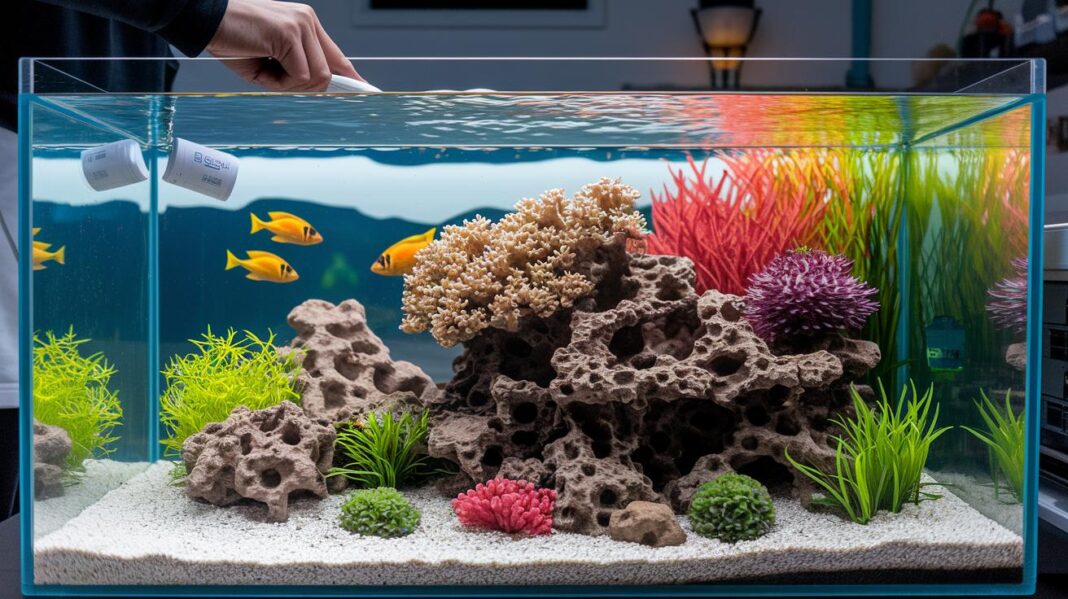

Have you ever noticed your fish looking uneasy right after you do a water change? Even a small jump in pH levels can upset your little aquatic pals more than you might think. Keeping your tank’s pH steady is like creating a calm, gentle current that soothes all your fish. Everyday activities, like fish breathing, food slowly breaking down, or natural tannins leaching out, can gently shift the water's pH over time. In this post, we'll share some simple, practical tips to help you maintain balanced water and keep your underwater friends happy and relaxed.
Key Principles for Maintaining pH Balance During Water Changes

Keeping your aquarium calm starts with steady pH levels. Various factors like your fish breathing, leftover food breaking down, and even driftwood releasing natural tannins can stir up the pH, causing little surprises each day. When these shifts happen too quickly, your fish and invertebrates might feel uneasy, so it's best to ease into any changes slowly.
Doing partial water changes of about 10 to 30% can help clear out extra CO₂ and boost oxygen levels in the water. This is a great way to see the pH of your new water right away. For instance, tap water usually sits near a balanced level, whereas RO/DI water often measures around 6.5 and might miss some of the minerals your tank loves.
Mix the new water in gradually with your tank water to give your aquatic friends time to adjust. It’s always smart to test the pH of both your tank and the new water before you start changing things up. This careful approach keeps the pH steady and stops sudden surprises in your miniature ocean. For more helpful tips on keeping the pH just right, check out this link: maintaining proper pH in fish tanks. Take your time to let the water settle in so your fish can keep swimming happily.
Keeping a close eye on the process and making smooth changes means your underwater world stays peaceful and thriving.
Effective pH Monitoring Methods for Aquarium Water Changes

Keeping an eye on your tank's pH is like listening to the gentle hum of life underwater. Digital pH meters are a top pick when you use buffer solutions at 4.0, 7.0, and 10.0. This extra care makes sure your readings are spot on to 0.01 precision. Just picture tuning your meter as if you're finding the perfect beat for a slow, graceful underwater dance.
Sometimes, a colorimetric test kit can be an easy pick. These kits give you a quick reading, usually within about plus or minus 0.2 pH, making them great for a fast check before, during, or right after you swap out some water.
It’s a good idea to test the water at three key times. Do a check on your tank water before adding any new water. Then, take another reading halfway through your water change, and finally, check again when you’re done. Keeping these notes helps you spot if the pH is drifting and lets you know if there’s a need for a quick fix. For a step-by-step on how to do this, check out this guide: how to balance fish tank chemistry during maintenance.
Sticking with a regular testing routine will keep your fish swimming happily and help avoid sudden changes that can leave you surprised.
Preparing Replacement Water to Match Aquarium pH Levels
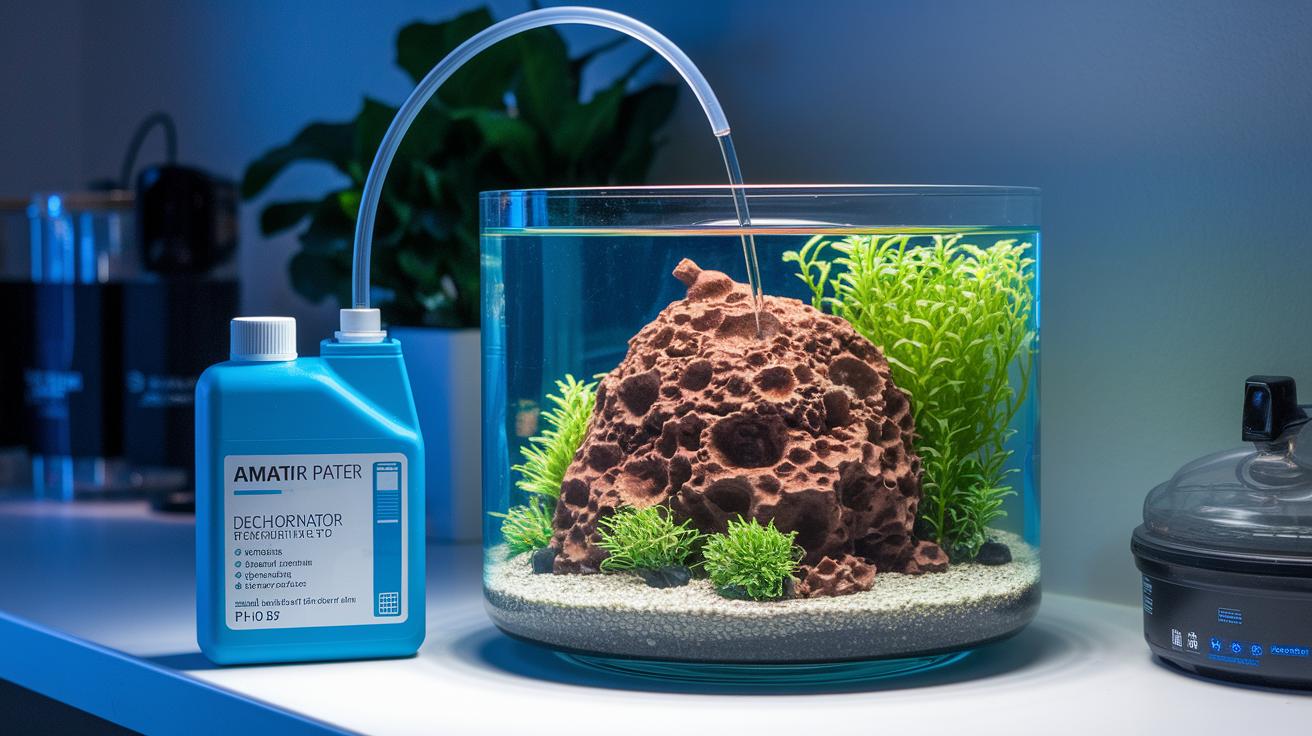
Start with a cup of tap water or RO/DI water as your base. Tap water usually sits around pH 7.0, while RO/DI water comes in a bit lower, near pH 6.5. In either case, pour the water into a clean container and mix in a dechlorinator to clear out any unwanted chemicals. If you're using RO/DI water, add a balanced remineralizer so you hit a carbonate hardness (KH) between 3 and 5 dKH. This helps make sure your new water feels like it truly belongs in your tank.
Next, check your water's pH with a trusted test kit. Adjust the mix gently until it nearly matches the pH of the water already in your tank. Think of it like making your favorite beverage, every ingredient has to be just right. A fellow hobbyist might compare it to adding a squeeze of lemon to sweet tea until it tastes perfect.
Once the pH feels spot on, take your time to slowly introduce this new water to your tank. Use a drip method, setting the flow at about 2 to 5 drops per second over 30 minutes. This gradual change prevents any sudden shifts and lets your aquatic friends adjust smoothly to their refreshed home.
Buffering Agents and Additives for pH Regulation During Aquarium Water Changes

Buffering agents are like helpful little swimmers that keep your aquarium's water balanced during water changes. For instance, adding a small spoonful of sodium bicarbonate to your 5 gallons of fresh water will nudge the pH upward by about 0.2 units, kind of like how a pinch of salt can lift the flavor of your favorite soup. It’s a neat trick that shows how even a small change can have a noticeable effect.
Commercial KH buffers are also great for maintaining the right carbonate hardness, keeping it between 3 and 6 dKH. They work to steady the pH, even when acid is introduced, making your aquarium a more stable home for your aquatic friends. Imagine a hobbyist watching the pH readings slowly settle into a steady rhythm, just like the gentle ripple on a quiet stream.
Natural options are worth a try too. For example, Seiryu stone releases calcium carbonate, which boosts both general and carbonate hardness for long-lasting balance. And then there’s peat moss, about 100 grams per 10 gallons, that can gently lower the pH by 0.3 to 0.5 units, similar to how a soft breeze cools you on a warm day. Pre-boiled driftwood, boiled for 1 or 2 hours to reduce extra tannins, gives a subtle pH drop while adding a rustic, natural touch to your tank.
Mixing these agents with care and testing your water along the way is the key to keeping your aquatic world happy and balanced. Enjoy the journey and have fun creating a thriving underwater scene!
maintaining pH balance during aquarium water changes: Happy

Pre-Change Checklist
Before you begin, make sure your testing kit is working right and double-check that the new water's pH and temperature match what’s needed. Keep your dechlorinator and any buffering agents nearby so everything mixes nicely.
During-Change Procedures
First, switch off your heater and filter so your tank stays calm during the change. Then, slowly take out about 10–30% of the water, adding in fresh water at a pace of roughly 5% of your tank’s volume every 10 minutes. If you're unsure, check the pH again after about a quarter of the water has been exchanged, it’s like giving your fish a quick temperature check in cool water.
Post-Change Monitoring
Once you’re done, turn the heater and filter back on and let your tank settle for about one hour. Give it one last pH reading; if the pH has shifted by more than 0.2 units, make a few gentle tweaks until it’s back on track. Enjoy the smooth flow of your beautiful, balanced aquarium!
Troubleshooting pH Imbalances During Aquarium Water Changes

When you notice your water's pH acting up after a change, the issue might be low KH levels. If your tank's KH drops below 2 dKH, expect the pH to bounce around quickly. Try boosting the alkalinity to between 3 and 6 dKH to keep things steady.
Sometimes, too many tannins or extra bursts of CO₂ can pull the pH down. If you see a sudden drop, check if there's any untreated wood in your setup or if you're adding too much CO₂ too fast. A quick fix is to remove wood that hasn't been boiled first, or dial back the CO₂ a bit. You can also stir things up more by using an air stone or moving your filter output to mix in more oxygen, which helps keep the pH from drifting.
At times, hard water can cause the pH to spike unexpectedly. In these moments, mixing your tap water with RO water or adding a bit of peat moss can help balance the pH into a friendlier range.
If you find that after a water change your pH is off by more than 0.3 units from what you expected, try changing just 5 to 10% of the tank water and test it again. Keeping a regular check and taking it slow with your water changes will help you avoid unwanted pH surprises and keep your aquatic buddies feeling happy and healthy.
Final Words
In the action, this guide showed how to keep your aquarium water calm and steady. You learned about checking pH with test kits and digital pH meters, balancing replacement water, and handling sudden pH changes gently. Small steps like careful drip acclimation and choosing the right buffering agents go a long way toward maintaining pH balance during aquarium water changes.
With each small action, you’re making your underwater world healthier and happier. Keep your tank thriving and your aquatic pals smiling.
FAQ
How can I maintain proper pH balance during aquarium water changes?
Maintaining proper pH balance during aquarium water changes means monitoring the pH of both tank and replacement water, adding buffering agents if needed, and acclimating new water slowly to avoid stressing your fish.
What are common symptoms of low or high pH in a fish tank?
When the pH is low, you might see signs like lethargy or gasping. When the pH is high, fish can display unusual swimming or irritability. Regular testing helps you catch these signs early.
How can I naturally lower the pH in my aquarium quickly?
Naturally lowering pH quickly can involve adding a small dose of peat moss or pre-boiled driftwood to release mild tannins. Always test the water after changes to keep the shift gradual and safe.
How can I naturally raise the pH in my fish tank?
Naturally raising the pH involves using minerals like Seiryu stone or a balanced remineralizer to gently increase alkalinity, ensuring the water chemistry stays stable for your aquatic pets.
Can I safely add baking soda to my fish tank with fish present?
Adding baking soda can raise pH gradually, but it must be measured carefully. A small, precise dose is key, and its effect should be monitored closely to keep your fish comfortable.
Does aeration influence the pH level in an aquarium?
Aeration helps by increasing oxygen exchange and lowering CO₂ levels, which can gradually raise the pH. This process supports overall water quality while gently adjusting the pH balance.
Will live plants lower the pH in my aquarium?
Live plants slowly release organic acids during growth, which can lower pH modestly over time. They add a natural touch to water chemistry stabilization when combined with regular monitoring.