

Ever thought about making your aquarium plants sparkle like little underwater stars? LED lights give your tank a warm, colorful glow that feels a bit like a mini sunrise and sunset. They offer a gentle, low-heat light that helps strong plants like Java Fern and Anubias grow big and healthy. This smart setup not only boosts plant life but also creates a cool, energy-saving home for your fish.
How LED Aquarium Lighting for Plants Transforms Aquatic Gardening
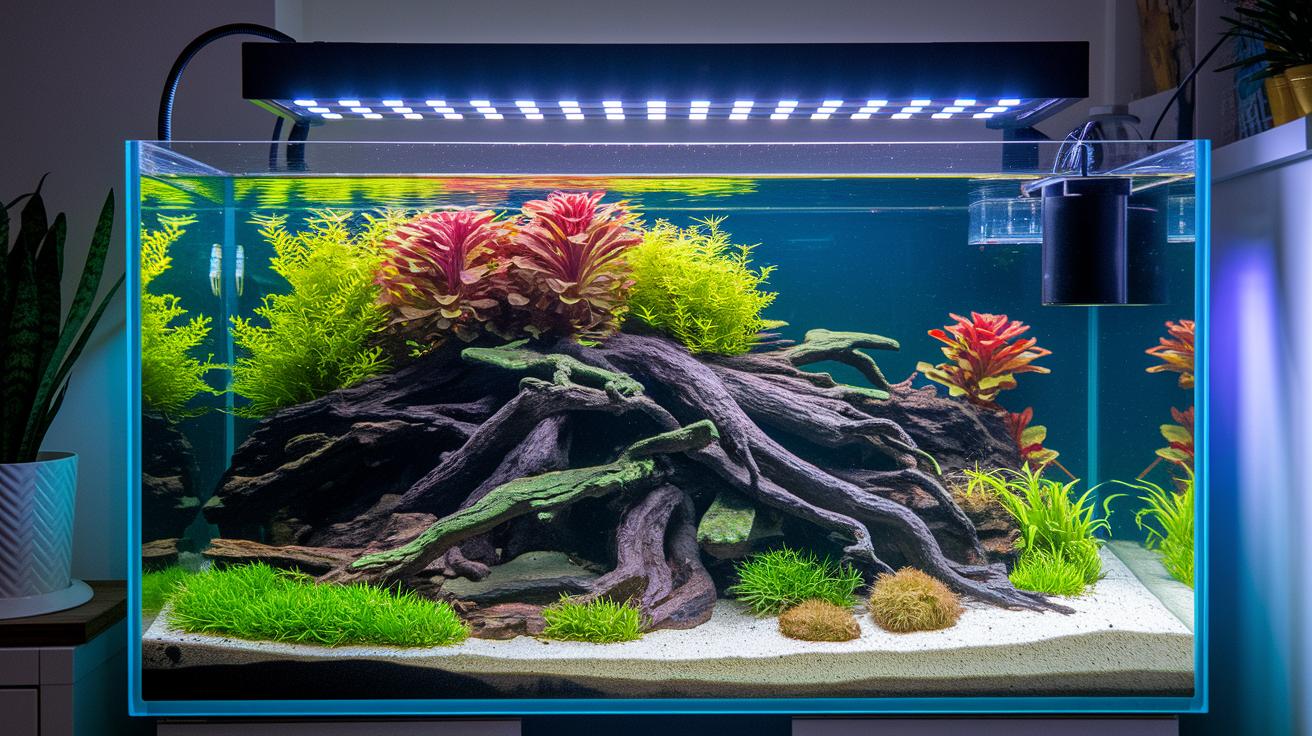
LED lighting in aquariums offers the perfect setting for your aquatic plants to truly thrive. Imagine gentle rays carefully tuned to the exact colors your plants need, much like the soft shimmer of sunlight on water. Models such as Week Aqua p900, Chihiros Vivid2, Chihiros WRGBII, and the VIVID Series are designed to boost photosynthesis in favorites like Java Fern and Anubias. These lights even mimic natural day and night cycles with programmable settings and built-in timers, almost like welcoming a little sunrise and sunset into your tank every day.
By targeting specific wavelengths, these LEDs help water exchange oxygen more efficiently, which makes your plants grow strong and encourages fish to swim happily. Their energy-efficient design produces less heat, offering a cooler, steadier environment compared to older T5 or metal halide lights. This means your underwater world remains comfortable for all its residents, while you enjoy lower energy costs too.
Generic LED floodlights might give a bit of light for plants, but they often miss out on the vivid color and precise control we all love. If you’re aiming for a more dynamic and healthy aquarium, consider LEDs that let you adjust both light intensity and spectrum.
- Low heat production keeps your tank’s ecosystem balanced.
- Programmable features let you simulate the natural flow of sunlight.
- Precise spectrum control brings out the vivid colors in both plants and fish.
These smart lighting solutions not only spark lush plant growth but also create a vibrant, energy-saving display in your aquarium. It’s like setting the stage for your aquatic garden to shine, making every glance into the tank a refreshing, peaceful moment.
Technical Specifications of LED Aquarium Lighting for Plants

LED panels for planted aquariums use specific light colors, red, green, and blue, each coming from its own diode. This way, you get the best light at around 660 nm for red and 450 nm for blue, which is just right for the chlorophyll in your plants. Some high-end fixtures even add a bit of UV light at about 385 nm to boost pigment and help your plants handle stress. High-quality LED units can pinpoint specific light wavelengths that truly maximize plant growth, much like a chef adding just the right spice to a favorite recipe.
When you’re choosing a setup, one key measure is the photosynthetically active radiation (PAR). This is simply the light your plants actually use for growth. Beginner lights usually offer around 150–200 µmol/m²/s, which works well for gentle species like Java Fern or Anubias. Step it up a bit, and intermediate lights deliver about 250–350 µmol/m²/s, perfect for plants such as Rotala or Dwarf Hairgrass. For those lush, high-demand aquascapes, top-tier panels can even reach beyond 500 µmol/m²/s at the water’s surface, making sure every light-loving species gets enough energy.
Wattage matters too. For tanks that prefer low light, aim for 1–2 watts per gallon. Medium-light setups typically need 2–3 watts per gallon, while busy, planted tanks might require over 3 watts per gallon. In other words, this rule helps match the LED power to what your plants need, keeping energy use smart and efficient.
Don’t forget about the Color Rendering Index, or CRI. In top-notch LED panels, a CRI above 90 makes sure the colors of both your plants and fish look natural and vibrant. I remember tweaking my own setup and seeing firsthand how a CRI over 90 brought out the true colors in my little underwater world.
Best LED Aquarium Lighting Fixtures for Planted Tanks in 2025
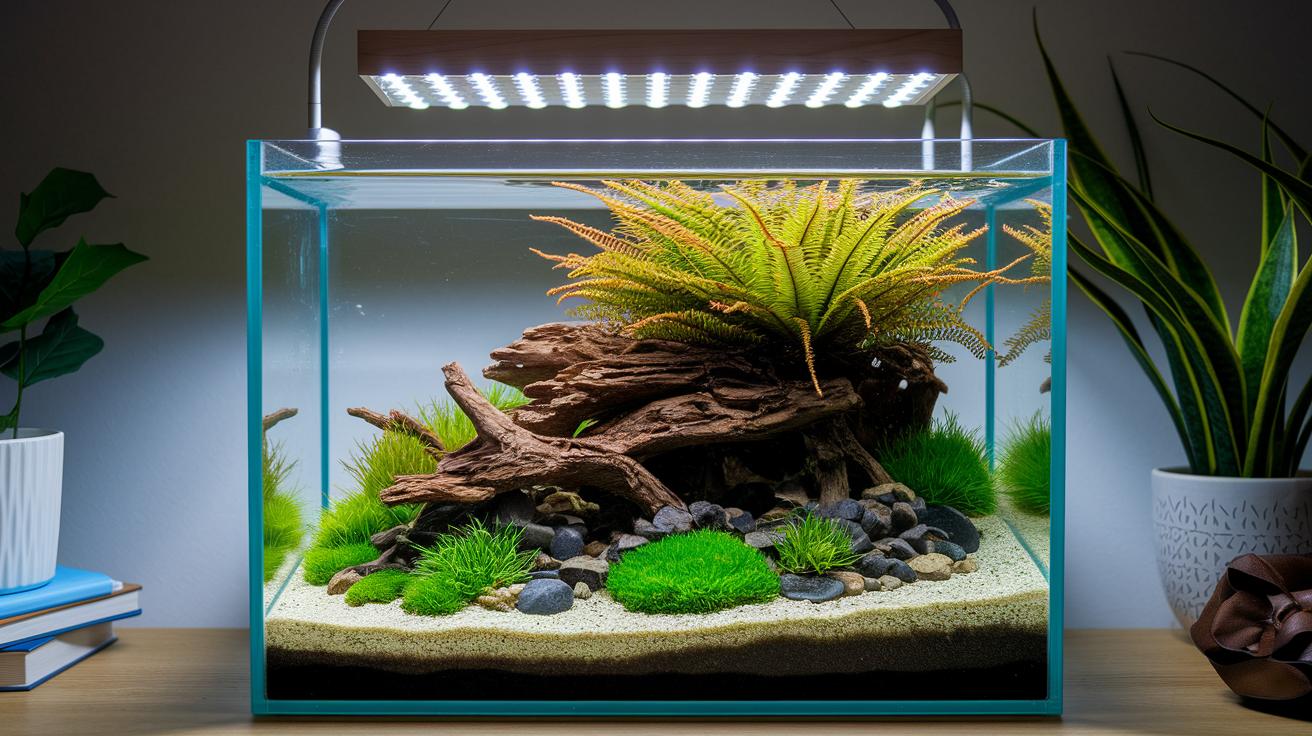
When you're thinking about upgrading the lights for your planted aquarium, there are choices to suit every budget and tank size. If your setup is cozy and under 15 gallons, you might want to try an entry-level light like the Aqua Worx SOL LED, now available for $48.44 instead of $56.99. Or, for a super affordable option, check out the Lifegard clip-on USB LED at only $11.99 rather than $14.99.
These budget-friendly fixtures still shine enough light to help plants like Java Fern and moss thrive. I once told a friend how switching to the Aqua Worx SOL LED completely turned my small tank into a vibrant mini garden.
Ready to dive a bit deeper? Consider intermediate options like the AquaIllumination Blade Smart LED Strip. Starting around $138.59, this light lets you easily adjust brightness and colors, making it perfect for species like Rotala and Dwarf Hairgrass. Then there’s the Prime 16 Freshwater Light, now offered at $238.49 (down from $264.99), which brings extra brightness and flexibility, a hit with aquarists working with tanks up to 75 gallons.
If you’re on the hunt for top-tier performance, advanced systems are the way to go. The EcoTech Marine Radion XR30 G5, priced at $899.99 (originally $999.99), gives you app control, programmable color spectrums, and preset schedules that mirror natural sunlight. And if you need even more control, models such as the Chihiros Vivid series and Week Aqua p900 let you customize every bit of light with built-in timers and Bluetooth features.
There are also plenty of other bright options like LEDstar, Maxlite, ONF Flat One, and Twinstar S. These lights deliver a natural look with just the right color pop. With all these choices, you can easily match the perfect lighting to your tank’s size, your plant needs, and your budget, ensuring your underwater garden grows beautifully and looks stunning.
Installation and Setup Techniques for LED Aquarium Lighting for Plants
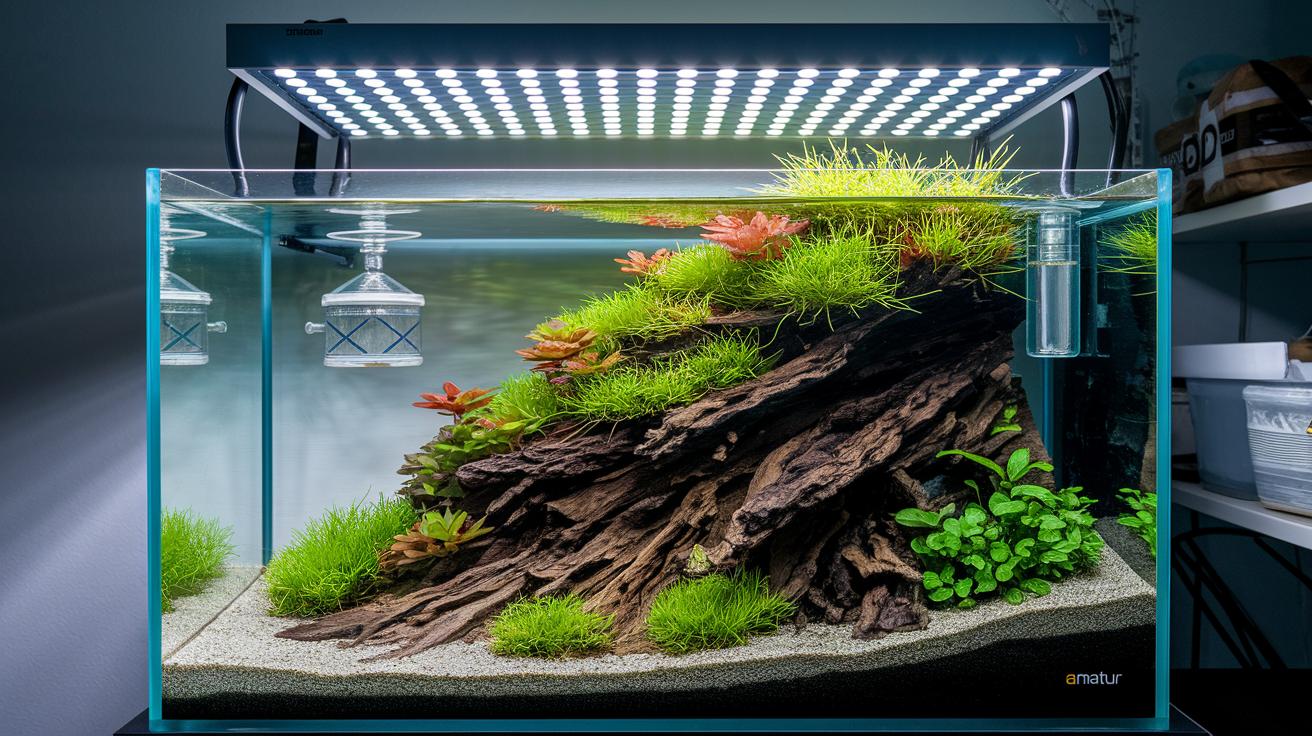
To create a beautifully lit aquatic home, your LED lighting setup needs to be just right. Start by choosing a way to mount your light that fits your tank size perfectly. Whether you pick rail brackets, clip-on arms, or a built-in canopy system for tanks ranging from 20"x12" to 48"x24", a secure fit makes sure your light shines evenly.
- Use rail brackets, clip-on arms, or canopies to attach your fixtures.
- Place the light 8–12 inches above the water so it lights up your whole tank.
- Adjust the tilt to around 5–10° so the light spreads evenly from front to back.
- Think about using a smart controller that links your LED light with your CO2 tools, like regulators, diffusers, and bubble counters, to help your plants thrive during the day.
Imagine setting your fixture 10 inches above your tank and tilting it 5° to cover every part of your underwater garden, much like positioning a gentle spotlight on a delicate, blooming flower.
Also, remember to leave some gaps in your canopy for ventilation. These little breaks help keep the heat and moisture in check, so your light stays steady and effective.
Maintenance and Optimization of LED Lighting for Planted Aquariums
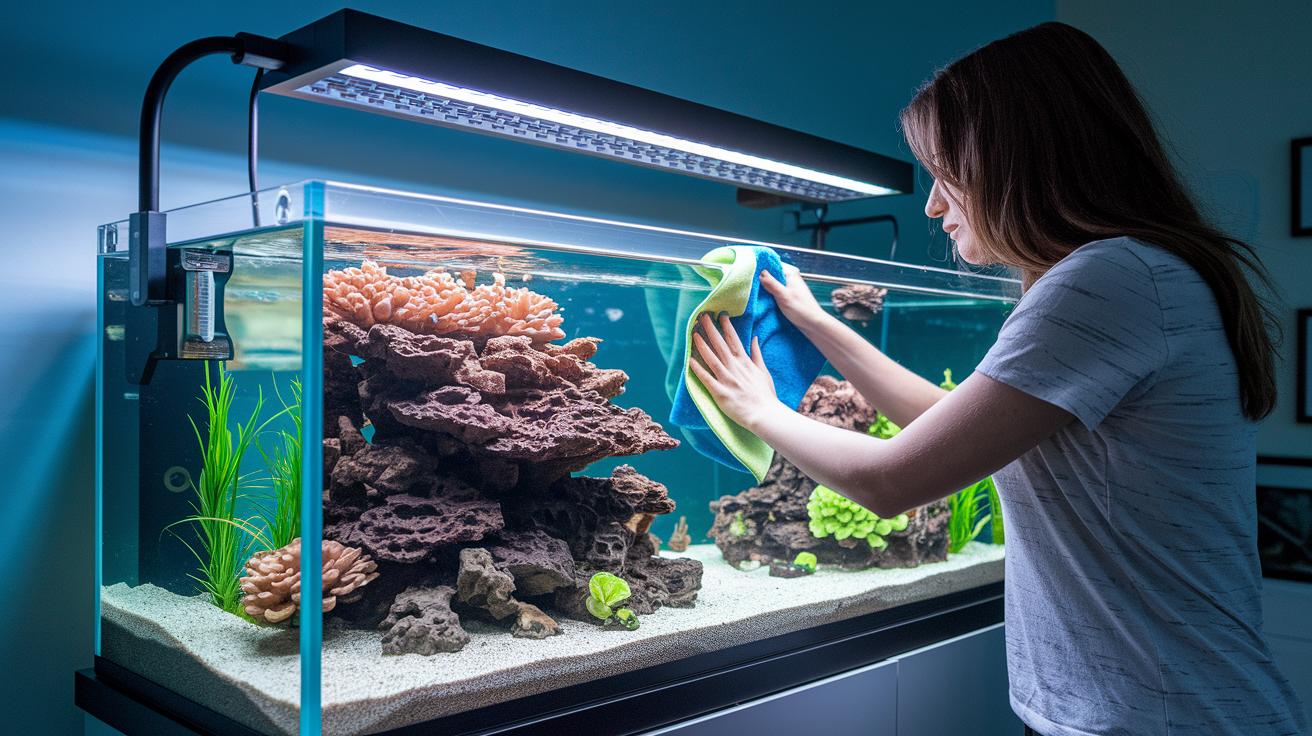
Ever notice how a little care can make your aquarium glow even brighter? Keeping your LED lights in top shape is all about a bit of regular attention, kind of like tidying up your favorite little underwater world. A weekly wipe of the lens gets rid of mineral buildup that can suck away up to 15% of your light. This simple step makes sure your plants always get the full beam they need to grow strong.
Next, think of recalibrating your LEDs like a friendly check-up. Every 9 to 12 months, replace or adjust the diodes to ensure your plants are soaking up enough light (that’s what we mean when we talk about high PAR levels, it’s the measure of light that really fuels plant growth). A quick fix here means every ray counts, just like when you fine-tune your favorite aquarium setting.
Another neat trick is to tweak the photoperiod. Setting your lights to run for about 8 to 10 hours each day helps balance plant needs and keeps algae from taking over. A small adjustment, like reducing the blue light channel just a bit, can make a big difference by limiting unwanted algae while still providing plants with their essential energy.
LED fixtures are also surprisingly efficient. They run at around 0.3 to 0.5 watts per gallon, saving you up to 40% on energy compared to those old fluorescent lights. It’s like giving your tank a power-saving mode that helps both the environment and your wallet.
| Tip | Action |
|---|---|
| Clean Weekly | Wipe the lens to remove mineral buildup. |
| Recalibrate Diodes | Replace or adjust them every 9-12 months. |
| Modify Photoperiod | Set your lights for 8-10 hours and trim the blue light slightly. |
| Energy Efficiency | Enjoy savings with fixtures at 0.3-0.5 W per gallon. |
Regular upkeep and these small tweaks keep your planted aquarium in perfect harmony, ensuring every splash of light supports vibrant plant life and energy efficiency alike. Pretty neat, right?
Final Words
In the action, this post breaks down how led aquarium lighting for plants transforms your aquatic environment. It explained the best light fixtures, technical specs, and the ideal setup for keeping aquatic greenery thriving. A breakdown of installation tips and simple maintenance routines shows that caring for your tank can be both fun and rewarding.
The guide brings clear tips and practical advice to ensure a balanced, healthy underwater habitat. Enjoy setting up your tank and watching your aquatic life flourish!