

Ever wonder if changing your large tank’s water could be easy and worry-free? It really doesn’t have to feel overwhelming. Using smart, gentle techniques is like feeling the soft ripple of water on smooth stones, keeping your fish happy and your underwater home sparkling clean.
In this guide, we share simple, step-by-step tips that turn what seems like a huge task into a quick routine. Each step is designed to protect your gear and keep your tank calm, much like the quiet murmur of a well-working filter.
Join us as we dive into these techniques and show you that smooth water changes are easier than you might think. Enjoy the process, and soon you’ll see how it can be as refreshing as a swim on a sunny day.
Core Steps in Efficient Water Change Techniques for Large Aquariums

Keeping your aquarium’s water fresh is like giving your fish a gentle, refreshing bath. When you change the water regularly, your fish feel less stressed and everything stays clean. For bigger tanks, taking a careful, step-by-step approach helps you handle everything, from making sure your gear is safe to watching the water's chemistry, so your tank remains a peaceful underwater haven.
First, turn off any electrical items like heaters, filters, and lights. This stops any accidents and keeps your equipment safe while you work. Then, gently clean the glass by wiping down the sides with an algae pad. It’s also good to flip any decorative rocks to get rid of hidden algae that might be lurking.
Next, grab your siphon, such as the Marina Aqua Vac with a 25 ft or 50 ft hose. Place the wide end of the siphon about 1 inch into the gravel so you can remove water while tidying up the substrate. Aim to remove between one-third and one-half of your tank’s water. If your tank is very dirty, you might take out up to 75% of the water. Always add back slightly warmer water than what’s in your tank so your fish don’t get shocked by a sudden temperature change.
Finally, mix in a water conditioner like Aqua Plus, Seachem Prime, Nutrafin Cycle, or Seachem Stability. Keep an eye on the water’s pH and adjust it as needed to match your fish’s preferred environment.
Following these easy steps creates a sparkling, balanced habitat for your fish and plants. It’s a routine that turns a chore into a moment of care where every little detail helps your aquascape thrive. Enjoy the process and appreciate the calm beauty of a well-maintained aquarium!
Key Equipment for High-Capacity Fluid Exchange in Large Aquariums
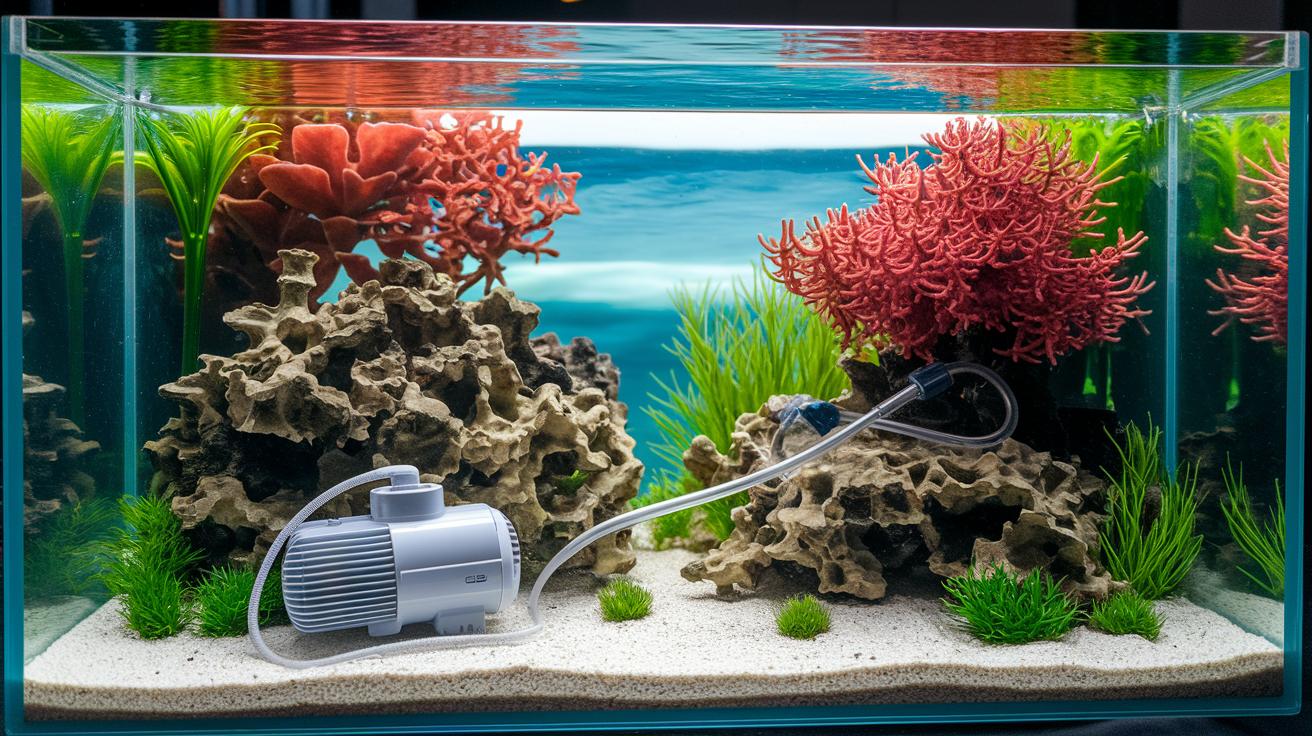
When you're planning a big water change for your tank, choosing the right tools is just as important as knowing how to do it. For instance, the Marina Aqua Vac siphons come with 25 ft or 50 ft hoses and push water at about 1 to 2 GPM, giving you a steady, gentle flow that fits your tank’s size. If you need things to happen a bit quicker, there are submersible pumps that move from 500 to 1,000 GPH. It makes sense to pick equipment that matches the size of your aquarium so nothing gets overworked. These guidelines help keep your fish and plants happy and healthy.
The main gear for a smooth water change includes parts that stop spills and help you stay in control. Think food-grade vinyl hoses, quick-connect fittings, leak-proof valves, and elbow connectors. They all work together to ensure that tap water and cleaned, dechlorinated water stay separate. Using heavy-duty items like these takes the guesswork out of your routine, making the whole process much easier.
Getting everything hooked up correctly is just as crucial as having the right tools. Big buckets or water storage drums, usually between 5 and 10 gallons, let you remove and refill water at the same time. Gravity-fed manifolds allow you to fill and drain simultaneously, while dosing pumps or dispenser bottles help you add conditioners with care. And inline check valves prevent any unwanted backflow. All these pieces make a secure, efficient system for high-capacity water exchange.
Scheduling and Automation Strategies for Efficient Water Change Techniques in Large Aquariums

Taking care of your aquarium doesn’t have to eat up your time. With a few smart tools and a clear plan, keeping your tank balanced can feel as smooth as a gentle current. Automation is like having a reliable friend who helps keep both your plants and fish happy, all while cutting down on unexpected work.
For a lightly stocked tank, try smaller water changes, about 10–20% every week works great. If your tank is home to a busier aquatic community with lots of waste, go for 25% changes every two weeks or 50% once a month.
You can also make life easier by using programmable solenoid valves and timer outlets. These nifty devices get your pumps running during quieter hours. And don’t forget to set up handy smartphone apps and calendar alerts. Water-level sensors and easy-to-understand pH/ammonia probes can even shut things off or start a dosing sequence by themselves.
Using these smart scheduling and automation ideas turns regular water changes into a breezy part of your routine. It keeps your water clear and your workload light, just like a calm stream on a sunny day.
Precision Testing and Chemistry Balancing for Efficient Water Change Techniques in Large Aquariums
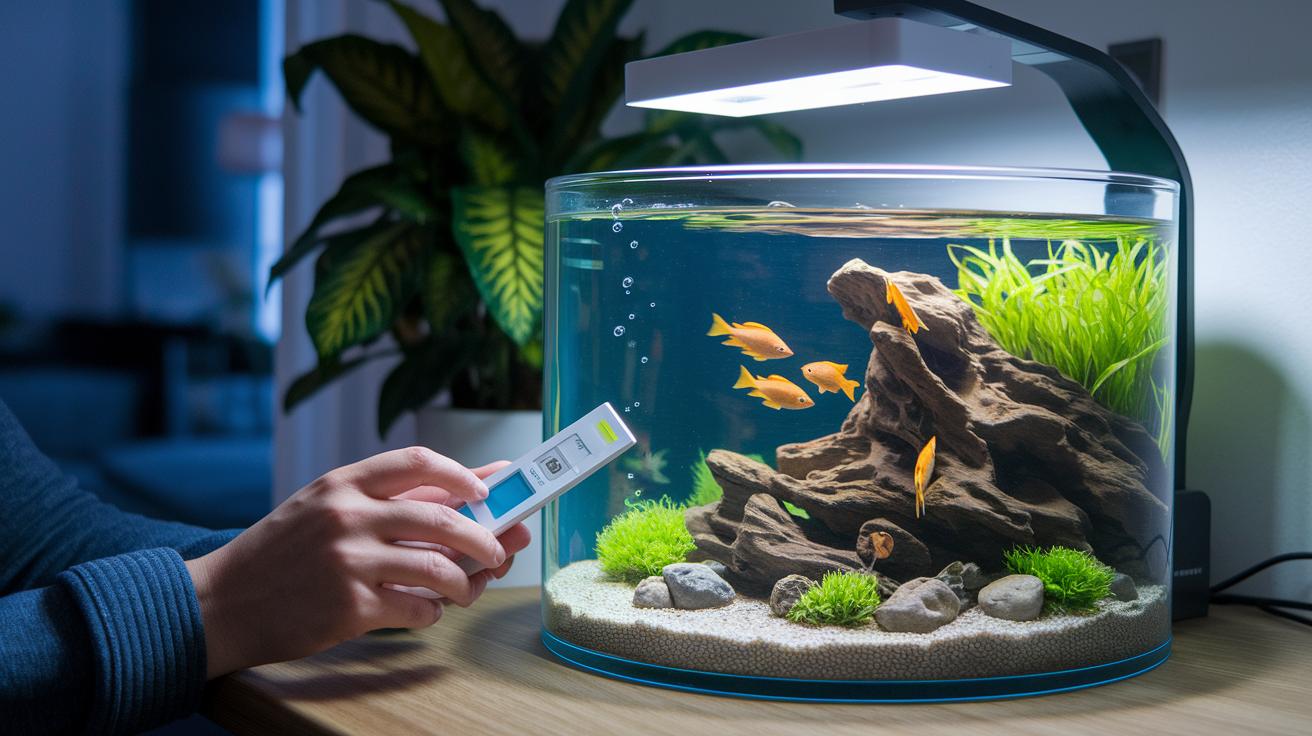
After you finish your water change, it’s a good idea to test your tank’s water right away. Start by measuring ammonia and nitrite levels and aim for a 0 ppm reading so your fish feel safe and sound, kind of like giving your tank a mini check-up. Then, check the nitrate levels every week and try to keep them below 20 ppm. With easy-to-use tools like Seachem or API liquid kits or even digital probes, it’s as simple as checking if the sun is shining.
Keeping an eye on your water’s important numbers is key for a balanced tank. For freshwater setups, you’ll want a pH between 6.8 and 7.8, while saltwater tanks should be around 8.1 to 8.4. Also, make sure your alkalinity stays within 4 to 8 dKH, and watch the overall hardness too. Picture the soft, steady ripple of water, a routine check like this helps you catch any little changes before they turn into big problems.
If your readings need a little adjustment, grab some pH Up/Down solutions, KH Buffer, or nitrate-reducing resins. These tools work like vitamins for your water, helping you fine-tune the balance. With these careful steps, you create a stable and inviting home that keeps your fish and plants happy, a true underwater haven.
Troubleshooting Challenges in Efficient Water Change Techniques for Large Aquariums

When you’re changing the water in a big tank, you might run into a few bumps along the way, like a blocked siphon, a pump that fails to start, or a leak in the quick-connect fittings. These little troubles can put extra stress on your fish, especially if the water flow changes suddenly or the temperature jumps by more than 5°F. Taking a few simple steps before you start, such as giving your hoses a good rinse, fitting an inline mesh filter sock to catch debris, and checking your valves regularly, can keep everything running as smoothly as a calm stream.
| Issue | Cause | Fix |
|---|---|---|
| Siphon clog | Build-up of sediment and debris | Rinse hoses before use and add an inline mesh filter sock |
| Pump failure | Debris jamming the impeller | Inspect and clean the check valves and impeller ahead of time |
| Fish stress | Sudden changes in water flow and temperature swings over 5°F | Warm up the new water slowly and use a spray bar to diffuse the flow |
By following these simple tips, you can keep disruptions to a minimum and maintain a steady, peaceful environment for your aquatic friends. With the right care and regular maintenance, you’ll help your fish enjoy a calm, healthy habitat, making every water change feel like a refreshing dip on a sunny day.
Maintenance Checklist and Interval Planning for Efficient Water Change Techniques in Large Aquariums

Keeping your large tank in tip-top shape is a lot like tending to a lively underwater garden. A steady cleaning routine makes sure both your fish and plants have a happy, balanced home. This guide breaks down your tasks into weekly, monthly, and quarterly steps so you can take care of your tank without fuss. For a printable checklist, check out Aquarium Cleaning Schedule for Optimal Fish Health.
Every week, try testing your water’s key details to keep its clarity and health. Changing out 10 to 20% of the water works like a gentle, fresh current that sweeps away unwanted impurities. Plus, give your hoses a good rinse to clear out any buildup that might slow things down. It’s like a quick splash of refreshment that keeps your aquarium as vibrant as a bubbling stream.
Each month, spend a little time rinsing your filter media using water straight from the tank instead of tap water. This keeps the good bacteria happy and thriving. At the same time, replace about 25% of the water and take a close look at seals and hoses for any signs of wear. These simple checks can help stop small issues before they grow into bigger problems, much like trimming a vine to keep it healthy.
Every few months, go for a deeper clean by vacuuming the gravel to remove any settled debris. Make time for a complete check of your equipment, including a sensor calibration and a look at your manifold valves to ensure steady water flow. These thorough steps set a strong foundation for a long, flourishing life for your underwater world.
Final Words
In the action, we explored the key steps for handling large-tank water changes with care and precision. We broke down each stage, from preparing your tank and equipment to scheduling regular changes and testing water chemistry, to help create a healthy aquatic home.
These efficient water change techniques for large aquariums help keep fish happy and water clear. The guide offers practical tips and friendly advice that make maintenance a breeze, promising a bright future for your aquatic friends.
FAQ
Q: What are the most efficient water change techniques for large aquariums?
A: The efficient water change techniques for large aquariums involve using a siphon to remove a portion of the water, cleaning substrate, and refilling with slightly warmer, dechlorinated water to reduce fish stress.
Q: What is a Python water changer for aquariums?
A: The Python water changer refers to an automated system programmed in Python that controls water flow and schedules water changes, making the process more precise and less stressful for your aquatic pets.
Q: How can you change fish tank water safely without harming your fish?
A: The safe water change method means gradually siphoning and replacing part of the water with dechlorinated water that is a bit warmer. This careful approach helps keep your fish comfortable throughout the process.
Q: Should you ever perform a 100% water change in an aquarium?
A: The idea of a 100% water change is not recommended because it can disrupt beneficial bacteria and shock the fish. Partial water changes help maintain a stable environment and healthy water conditions.
Q: How often should you change water in a large or 75-gallon fish tank?
A: The suggested schedule for a large or 75-gallon tank is to change 10–20% weekly or 25–50% monthly, adjusting based on fish load and water quality to keep your aquatic environment optimal.