

Have you ever seen a saltwater tank that shines like a rainbow? The secret is choosing the perfect light to bring out your corals’ true colors.
It’s like finding the right balance of sun and shade for your underwater garden. You might go with a bright metal halide lamp, a soft T5 glow, or the playful touch of an LED. In this post, you'll discover how to match the light to your coral's needs, making your aquarium burst with life. Ready to dive into a bolder, brighter underwater world?
Top Expert Picks: Saltwater Aquarium Lighting Solutions
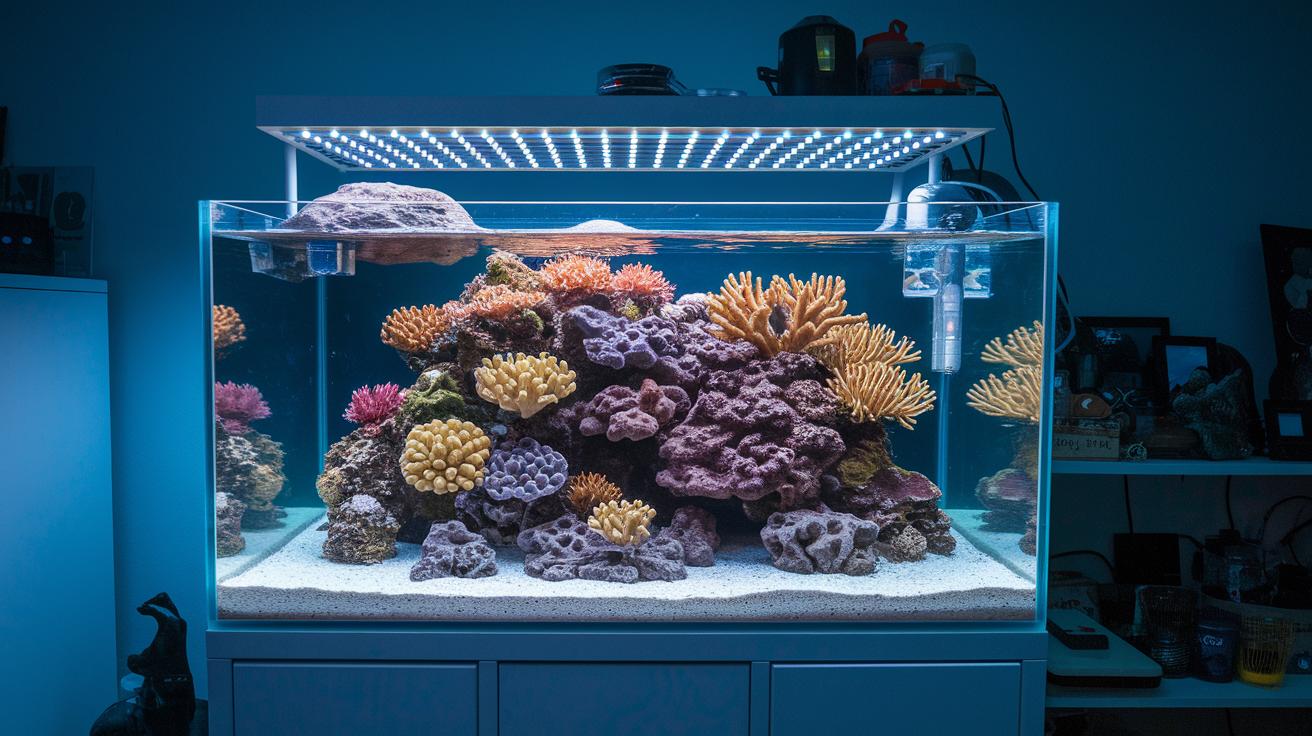
Metal halide fixtures bring a strong, steady glow to your saltwater tank. They work by mixing gases like xenon, argon, or mercury with metal salts to create a burst of bright light. They’re perfect for those times when you need a bit more brightness, even though they tend to heat up more and pull in extra power, which might require a closer watch in sensitive setups.
Fluorescent T5 lights come in a slim tubular design that spreads a soft, even light ideal for showcasing branching corals. These lights create a gentle shimmer that reduces harsh shadows and keeps heat low, much like the early morning light softly glowing over a quiet reef.
LED fixtures are a top favorite among hobbyists because they offer easy control over color and brightness through simple digital settings. Lasting over 50,000 hours and using about 40% less power than metal halides, they make it simple to recreate nature’s rhythms in your tank. Imagine each sunrise and sunset in your aquarium carefully crafted to bring out the vibrant life of every coral polyp.
A few key tips: match your light output with the needs of your corals, 15 lumens for soft corals, 30 for LPS, and 60 for SPS. And, setting up a routine of 12 hours of light followed by 12 hours of darkness helps keep your aquatic friends happy, just like nature intended.
LED Lighting Options for Saltwater Aquariums Compared
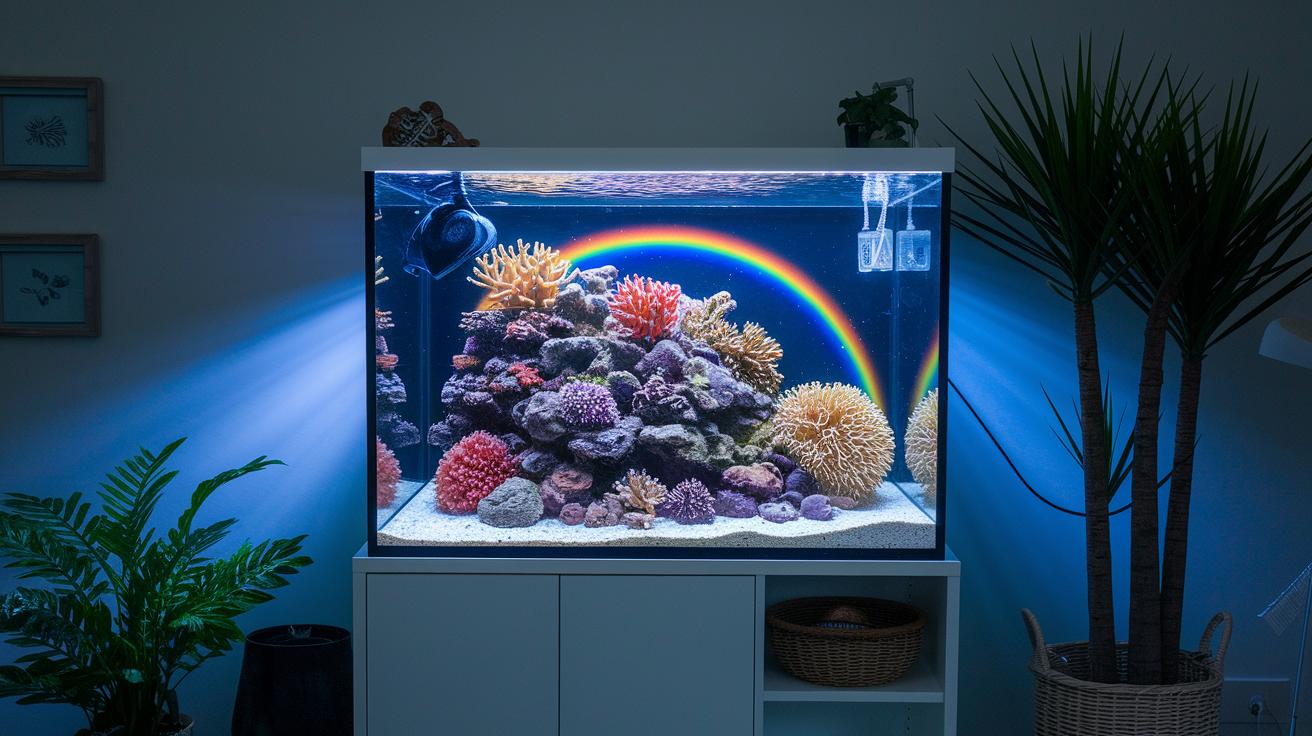
LED systems for saltwater tanks add a modern touch and a vibrant splash of color. They let you adjust both the light’s hue and brightness with a simple digital control, switch effortlessly from soft blue and violet to a deep, warm red. This careful balancing makes coral colors sparkle while keeping the heat much lower than older metal halide lights. Picture each setting blending as smoothly as a gentle ocean current.
Today’s LED lights usually use between 50 and 200 watts and even come with app integration so you can set schedules on your phone. You might choose a preset that mimics a slow sunrise or a calming sunset, making your tank’s lighting shift naturally over the day. It’s pretty amazing to think that some of these LEDs can work for over 50,000 hours, turning your aquarium into a dynamic seascape with just one fixture. These high-performance marine LEDs offer lots of flexibility, making quick adjustments both easy and fun.
Recent smart LED designs bring neat options like multi-channel color mixing, strobing effects, and simple digital controls that let you customize your setup without hassle. Even though the initial expense can be between $200 and $600, the lower energy use and longer lifespan save you money in the long run. With adjustable presets and mobile control, you can create natural light cycles that boost vibrant coral growth and bring the wonder of underwater life right into your home. Embrace this ease of control and watch your reef flourish.
Spectrum Essentials for Coral Growth in Saltwater Aquariums

When you're setting up your saltwater tank, the right lighting is like a magic touch that makes your corals shine bright. Blue light around 450 nm and a mix of violet light from 400 nm to 420 nm dive deep into the tank, boosting the tiny algae inside your coral polyps so they can happily perform photosynthesis. Meanwhile, softer red light between 620 nm and 630 nm is perfect for the more sun-loving reef species that stay closer to the top.
Imagine your full-spectrum lighting as a rainbow that spans from 380 nm to 780 nm. This wide range not only creates a stunning underwater display but also supports all kinds of marine life. Soft corals feel good with about 15 lm, LPS species thrive at 30 lm, and SPS corals really light up best at around 60 lm. Using these tailored underwater light solutions makes sure every coral gets just the right glow.
It’s also a great idea to mimic nature by setting up a photoperiod of 12 hours of light followed by 12 hours of darkness. This balanced PAR setup helps your tank feel like a natural ecosystem where corals flourish. Try gradually ramping up the light at sunrise and then gently dimming it at sunset. Ever notice how a slow start and finish can make your aquarium feel even more alive?
Energy Efficiency and Cost–Benefit Analysis for Saltwater Aquarium Lighting

When it comes to lighting your saltwater aquarium, there are a few choices that can really make a splash. Metal halide lights use about 400 watts and shine on for roughly 10,000 hours. T5 bulbs, on the other hand, sip energy at around 200 watts and glow for close to 20,000 hours. And then there are LED fixtures, they only use about 150 watts and can last over 50,000 hours. Wow. Here’s a fun fact: Switching to LED lighting can reduce your energy draw by nearly 40% compared to metal halide options, making those nightly reef shows far more energy-smart than ever.
Costs also ripple differently across these options. Metal halide lights usually cost between $150 and $400, T5 lamps fall around $100 to $300, and high-quality LEDs might run from $200 to $600. Check out this quick breakdown:
| Lighting Type | Power Use | Lifespan | Cost Range |
|---|---|---|---|
| Metal Halide | About 400 watts | ~10,000 hours | $150 – $400 |
| T5 Fluorescent | About 200 watts | ~20,000 hours | $100 – $300 |
| LED | About 150 watts | >50,000 hours | $200 – $600 |
Given that electricity costs hover around $0.12 per kWh, many hobbyists find that switching to LED lights pays off in just 2 to 3 years. This means you not only cut down on frequent bulb replacements but also keep extra cash for upgrading other parts of your aquarium. In truth, the long-term savings on energy and upkeep really make LEDs a smart choice for those underwater worlds we all love.
Installation and Maintenance of Saltwater Aquarium Lighting Systems
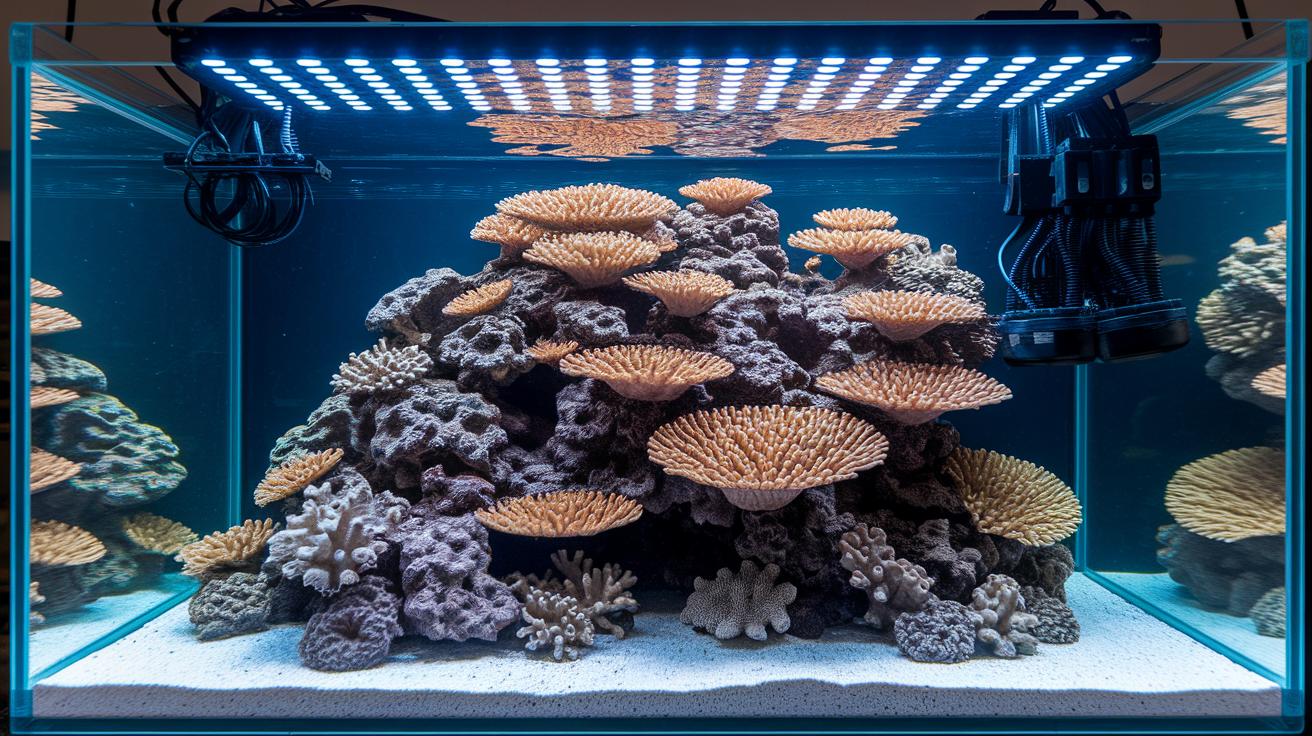
Getting your tank lighting set up the right way is like preparing your underwater world for a big reveal. Start by placing your light fixtures about 8-12 inches above the water so that the glow spreads evenly, much like sunlight dancing over a calm pond. Use adjustable hangers to keep everything secure, and make sure nothing blocks the cooling fans. Don’t forget to use waterproof connectors to keep splashes or spills at bay, think of it as guarding a priceless treasure.
When it comes to smart LED setups, these systems are really user-friendly. With programmable timers and controllers, you can easily adjust the lights. Gradually increase the brightness over two weeks, letting your corals get used to the change as if they were welcoming a gentle sunrise. And just like you’d check on a friend, remember to inspect your control light systems regularly to fine-tune the brightness and color.
Keeping your lighting running well is all about a few simple maintenance steps. Clean the lenses and heat sinks once a month, just like wiping away dust from a window so you can see clearly. Every six months, take a peek at the cables and update the digital firmware to fix any hiccups in the system. These small efforts help maintain a vibrant underwater scene and a healthy marine environment. Enjoy nurturing your little piece of the ocean at home.
Expert Brand Evaluations for Saltwater Aquarium LED Systems

Brand A brings a fresh take on saltwater LED systems by offering custom spectrum control paired with an app that lets you fine-tune your tank’s lighting like you would adjust the brightness in your living room. Imagine changing your tank’s vibrant hues right from your phone, it’s as simple as tapping a button. Their lights shine at up to 2000 lumens even at 100 cm depth and come with warranties ranging from 2 to 5 years, so you know they pass strict tests for quality and reliability.
Brand B puts a spotlight on staying cool while delivering clear, precise control. With innovative heat sinks and a 5-channel control system, these lights work hard while keeping their cool, even on the sunniest days. Picture your reef basking in light that never overheats, all while maintaining that solid 2000 lumens at 100 cm. Their warranties, too, stretch from 2 to 5 years, giving you peace of mind as your underwater world thrives.
Brand C is the smart, budget-friendly solution for reef enthusiasts who want quality without a high cost. These dual-channel units perform much like the pricier options, reaching up to 2000 lumens at 100 cm and backed by warranties from 2 to 5 years. Their design is straightforward yet effective, meeting the key certifications and keeping light control hassle-free.
| Brand | Key Features | Lumens Output | Warranty |
|---|---|---|---|
| Brand A | Custom spectrum & app integration | Up to 2000 lm | 2-5 years |
| Brand B | Advanced heat sinks & 5-channel control | Up to 2000 lm | 2-5 years |
| Brand C | Budget-friendly dual-channel units | Up to 2000 lm | 2-5 years |
Final Words
In the action, we explored top lighting choices for saltwater tanks, from metal halide and fluorescent T5 to LED fixtures with smart features. We touched on spectrum essentials and proper setup tips to keep your underwater friends thriving.
We wrapped up a clear look at energy efficiency and cost benefits, giving insight into maintenance and expert brand reviews. All these tips help you choose the best lighting for saltwater aquarium care, leaving you inspired and ready to brighten your aquatic environment.
FAQ
What reef lights work best for coral growth, including models like Orphek, Nicrew, and Radion?
The best reef lights for coral growth provide a full spectrum that supports coral health. Models like Orphek, Nicrew, and Radion offer adjustable settings and energy-efficient performance for various budgets and reef sizes.
What light is best for a saltwater aquarium?
The ideal light for a saltwater aquarium balances full-spectrum output with energy efficiency and lifespan. LED options with programmable features are popular due to their ease of control and minimal heat output.
Do corals prefer white light or blue light?
Corals benefit from blue wavelengths, which help with deeper penetration and photosynthesis, while white or full-spectrum lighting also supports shallow-water species. A mix of both often best meets coral needs.
Are LED lights good for reef tanks?
LED lights suit reef tanks well by offering customizable spectrums and low heat output. Their energy-efficient design and long lifespan make them a popular choice for promoting healthy coral growth.
What is the ideal light schedule for a saltwater aquarium?
An effective light schedule typically includes about 12 hours on and 12 hours off. This routine mimics natural cycles, helping maintain coral vitality and overall tank balance.