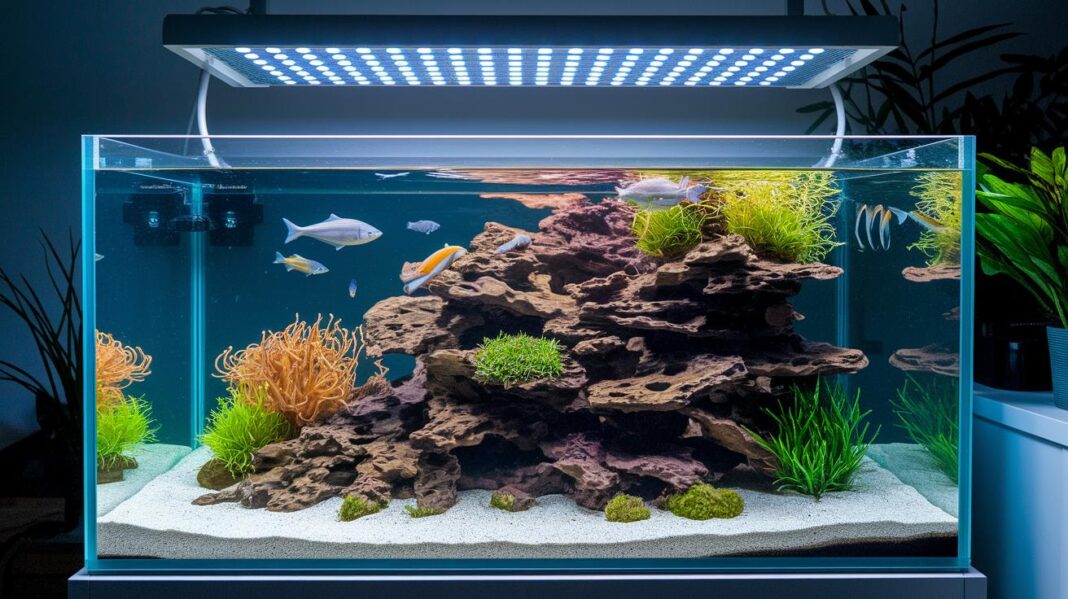

Ever wonder if spending a bit less on aquarium lights can really make your fish colors pop?
Imagine catching that perfect current that flows through your tank while keeping your wallet happy.
Smart, cost-effective lighting is like a gentle stream that guides your fish into bright, vibrant growth, all while saving energy.
Models such as the Seaoura SR616 and Hygger 058 can light up your underwater home with beautiful colors and low bills.
Stick around and I’ll show you how a few simple tweaks can make your aquarium glow without overspending.
Key Considerations for Cost Effective Aquarium Lighting
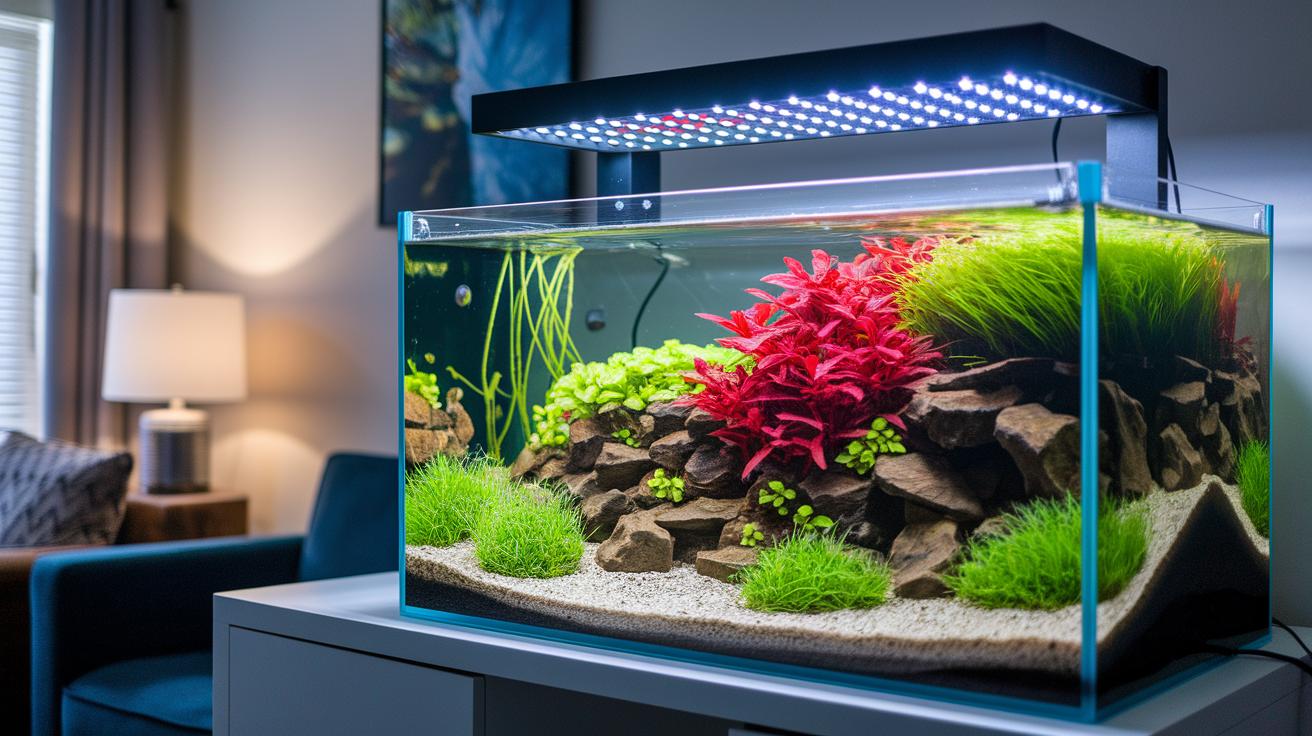
Choosing the right, budget-friendly aquarium lighting is a lot like finding that perfect current in a gentle stream. You want to balance what you pay now with how well it performs over time. For example, one common method is the 1-to-1 rule, think of using a 40-watt light for a 40-gallon tank. But if your tank is larger, say 55 gallons, you might need to double the wattage to around 110 watts. Fun fact: many aquarium enthusiasts have discovered that switching to budget models like the Seaoura SR616 or Hygger 058 not only cuts the initial cost but also boosts long-term energy savings, as they can safely run at full brightness for about 6 hours a day.
When it comes to sparking lush plant growth and showing off your fish’s natural colors, lighting is key. Specific wavelengths make a big difference, bright blue light near 480 nm encourages plant growth, while a splash of red around 680 nm really brings out your fish’s color. Sure, a generic full-spectrum light might sound tempting, but lights with distinct peaks can do a better job for both plants and fish. And remember, just like our own eyes adjust to sunlight, fish see light in a very natural way. Still, too much direct brightness over time might subtly influence how some species, like ricefish, breed and grow.
So, when you’re setting up your tank, think about a mix of factors, tank size, what your plants need, energy costs, and the exact light colors you want. It’s all about creating a beautiful, healthy underwater scene that feels just right.
Comparing Top Budget Aquarium Light Models
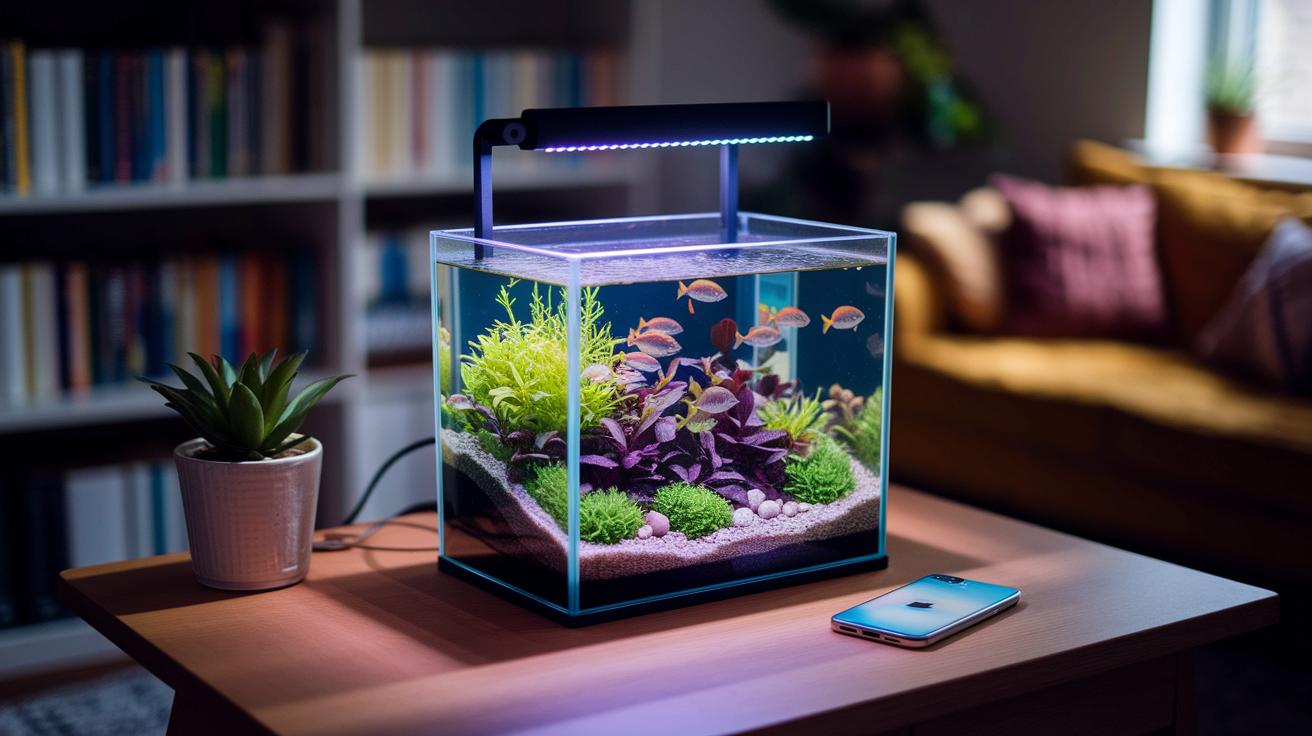
If you're on the lookout for affordable aquarium lighting, you'll be happy to know there are plenty of options that fit your tank size and style. For example, the Seaoura SR616 and Hygger 058 are like the friendly morning sun, giving your small to medium planted tanks a full spectrum of light that helps them thrive. They’re designed to run safely for about 6 hours a day, keeping everything within the UK Ofgem guidelines set for April 2025. So if you want to boost plant growth and highlight your fish’s natural colors without spending a fortune, these lights are a great catch.
Next, the Hygger 957 and Hygger 076 take things up a notch with extra brightness settings and maintenance features that add a bit of extra sparkle to your setup. Even with these extra features, they work on par with the entry-level lights when it comes to supporting healthy plant growth. If you're ready for a splash of luxury, the Chihiros A2 series offers a strong white LED light along with handy app controls and steady legs. However, it misses out on the extra red and blue light peaks that many aquarists use to maximize photosynthesis and color enhancement.
Then there’s the Twinstar Light II 30B, a true economical gem. With just 11 watts of power, it casts 840 lumens over a 30 to 40 cm area, all for around €44.73. Each of these lighting options is designed to suit different budgets and tank sizes, making it easy for you to find the perfect lighting that fits your aquatic world.
| Model(s) | Output & Control | Recommended Tank Size | Budget Category |
|---|---|---|---|
| Seaoura SR616 & Hygger 058 | Full-spectrum LED, 6h/day runtime | Small to Medium | Entry-Level |
| Hygger 957 & Hygger 076 | Advanced brightness controls | Small to Medium | Mid-Tier |
| Chihiros A2 | Strong white LED with app control | Requires precise sizing | Upper-Budget |
| Twinstar Light II 30B | 11W, 840 lm output | 30–40 cm coverage | Economical |
Technical Specs of Energy Efficient Aquatic LEDs
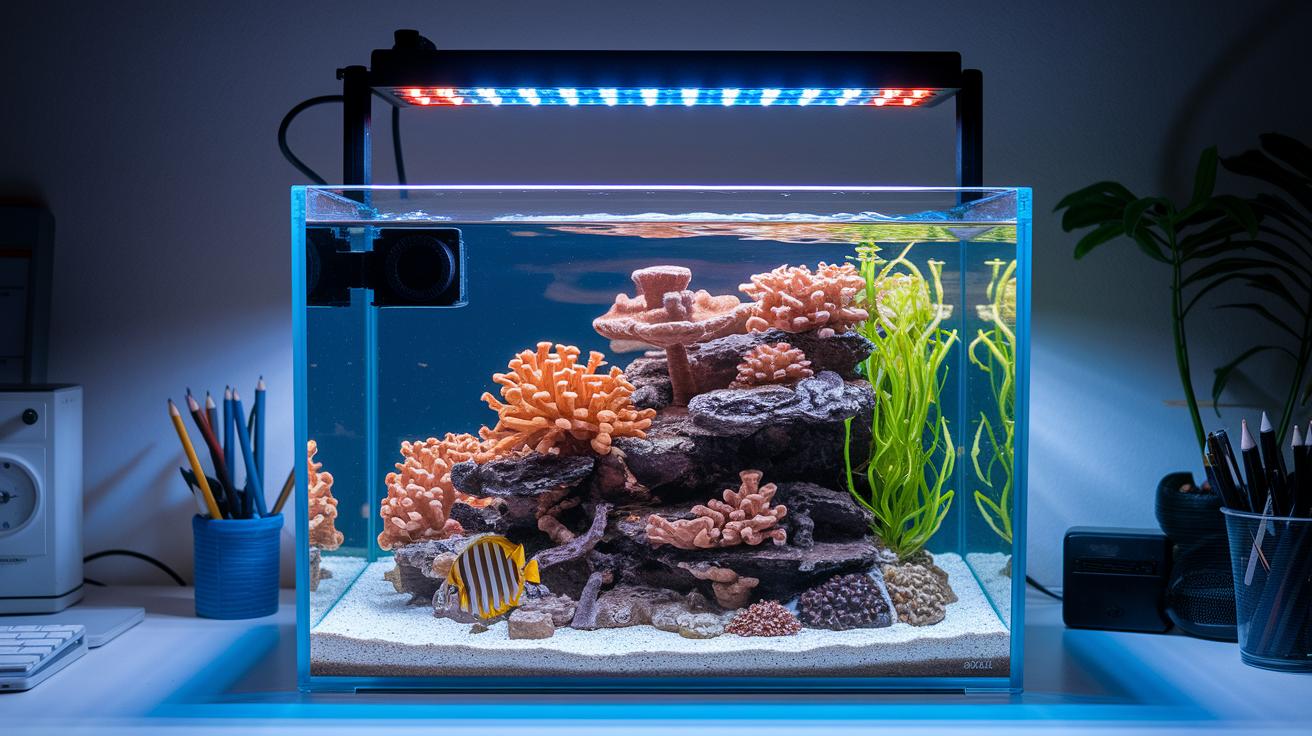
When you're picking out LED lights for your aquarium, it helps to focus on the right colors rather than just watching the brightness. You'll want a touch of blue around 480 nm paired with warm red near 680 nm to boost photosynthesis and bring out the natural colors in your tank. For example, consider the Marggoo light, a 12-watt fixture made for a 10-gallon aquarium, and the Sea Lantern, which uses 18 watts for the same size tank. It's all about matching wattage to your tank’s needs.
It’s easy to get confused by numbers like lumens, but the real star here is PAR output, which tells you how well the light can support plant growth. Instead of being swayed by lumen counts, look for lights with specific color peaks. This way, your aquatic plants receive the best light possible while you enjoy reduced energy bills and a more vibrant underwater world.
Modern LED systems are a real game changer. They use a lot less power compared to those old fluorescent fixtures and can last over 25,000 hours, imagine all the calm, sparkling evenings your tank will witness. Keeping an eye on how bright your lights are and setting the right timer makes a big difference, ensuring your plants and fish thrive in a balanced, healthy environment.
Installation Cost and Setup Tips for Low Cost Tank Light Solutions
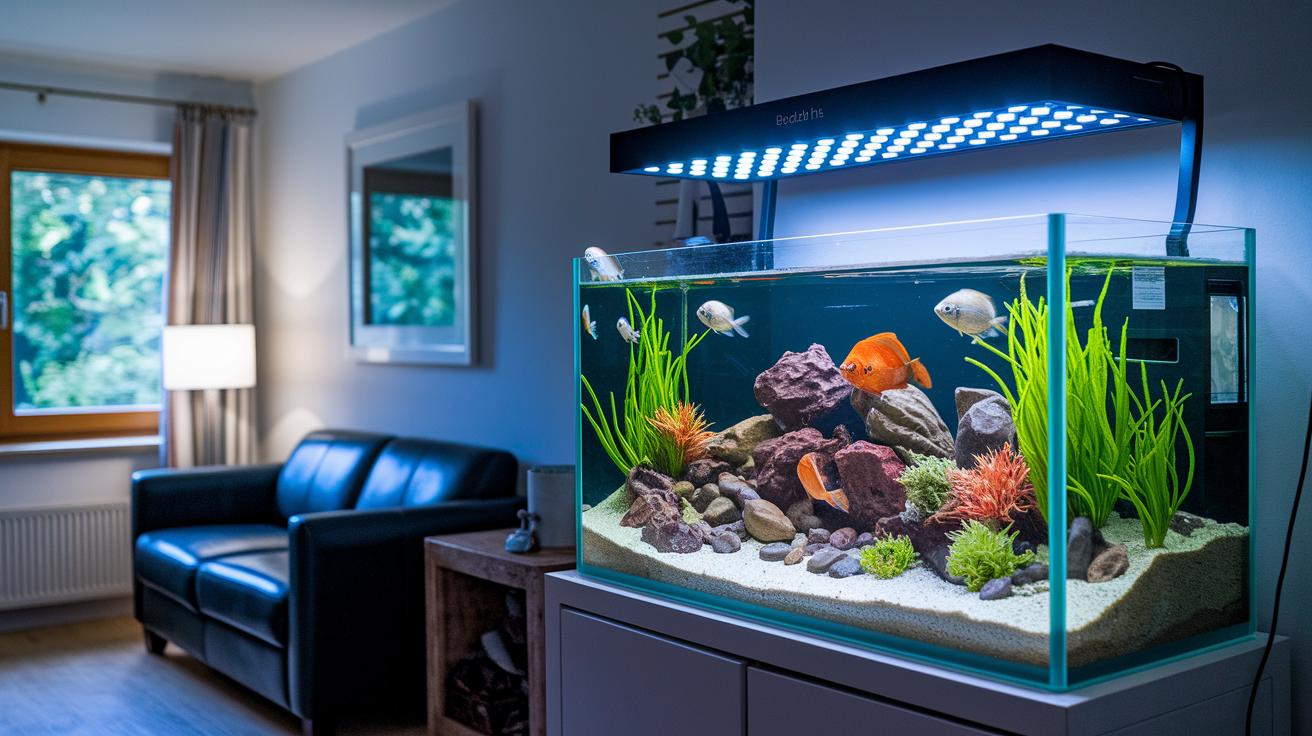
LED fixtures are a smart, budget-friendly way to brighten your aquarium without breaking the bank. They come with built-in brackets, arms, or hangers so you don't have to buy extra parts like you often do with T5 or T8 lights. This means fewer expenses and an easier setup, kind of like finding the perfect shell on a sandy beach.
Getting the light in the right spot is very important. If you mount it near the center or back of the hood, it stops the bottom from getting shaded and keeps algae from growing too fast. Even if the light seems very bright at first, your fish will be just fine. A steady light schedule creates a calm home for your fish and even helps them breed naturally.
Using a digital timer is a great idea because it takes care of turning the lights on and off. It keeps your tank lit for 6 to 8 hours a day, giving your plants the right amount of sunshine without inviting unwanted algae. Think of it like a gentle heartbeat for your aquarium, keeping everything in balance while saving energy.
- Measure your tank's length and width to pick the right light.
- Mount the light using the provided brackets or DIY hangers.
- Set the timer for 6 hours a day and slowly increase the time.
- Position the light so it covers the whole tank evenly without hot spots.
- Keep an eye on algae growth and adjust the light or timer as needed.
Maximizing Long-Term Savings with Economical Fish Tank Lighting
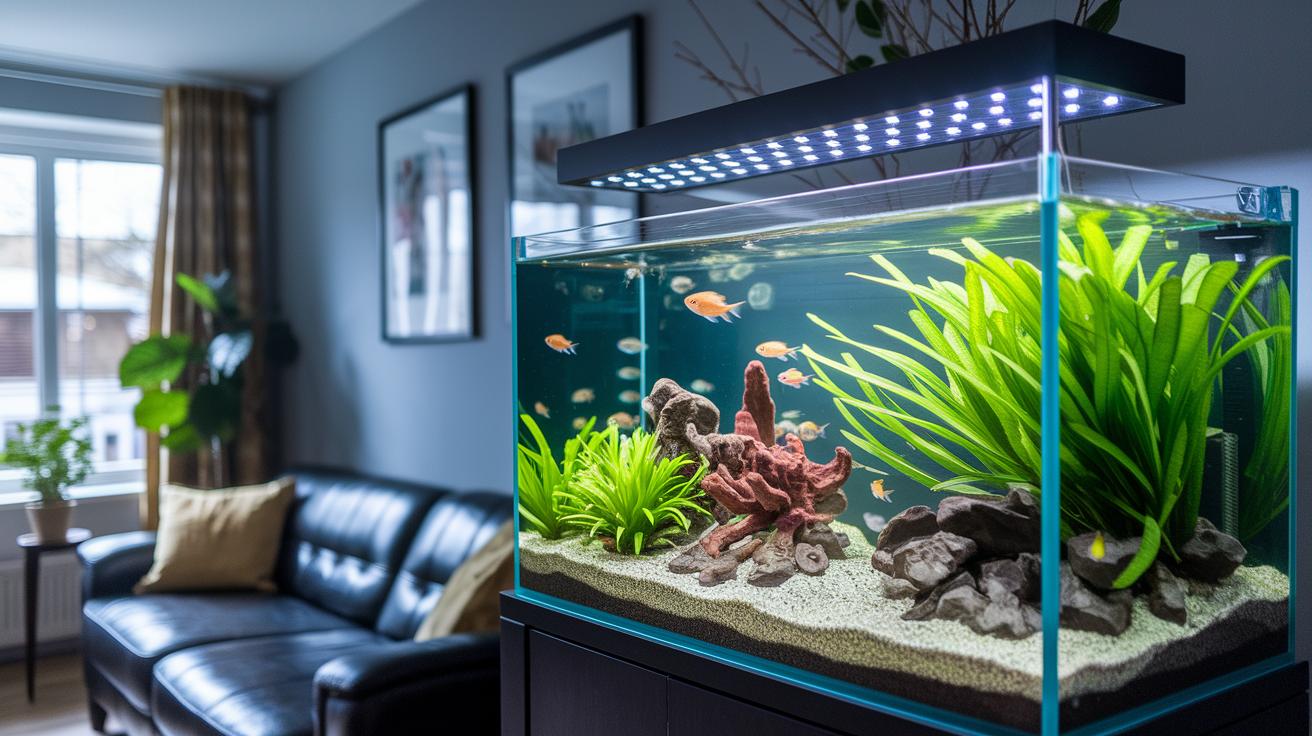
Imagine this: a 12–18 W LED running for about 6 hours a day costs just a few cents under the Ofgem April 2025 price cap. Old fluorescent bulbs, on the other hand, could run two or three times pricier. Pretty cool, right? It’s like watching a calm ripple through water, small changes that really add up.
Another neat perk is that LEDs never need a yearly bulb replacement. They last for years, which means less hassle with maintenance and fewer extra costs when it's time to toss old bulbs. Good quality LEDs hold their brightness steady over time, making sure your aquatic plants get the perfect light they need for healthy growth for three to five years.
By lowering daily energy use and cutting back on long-term upkeep, these smart lighting choices really make a splash on your savings. They keep your plants vibrant and your fish lively while making your whole aquarium setup more energy-efficient and friendly on your wallet.
DIY Cost Effective Tank Lighting Ideas
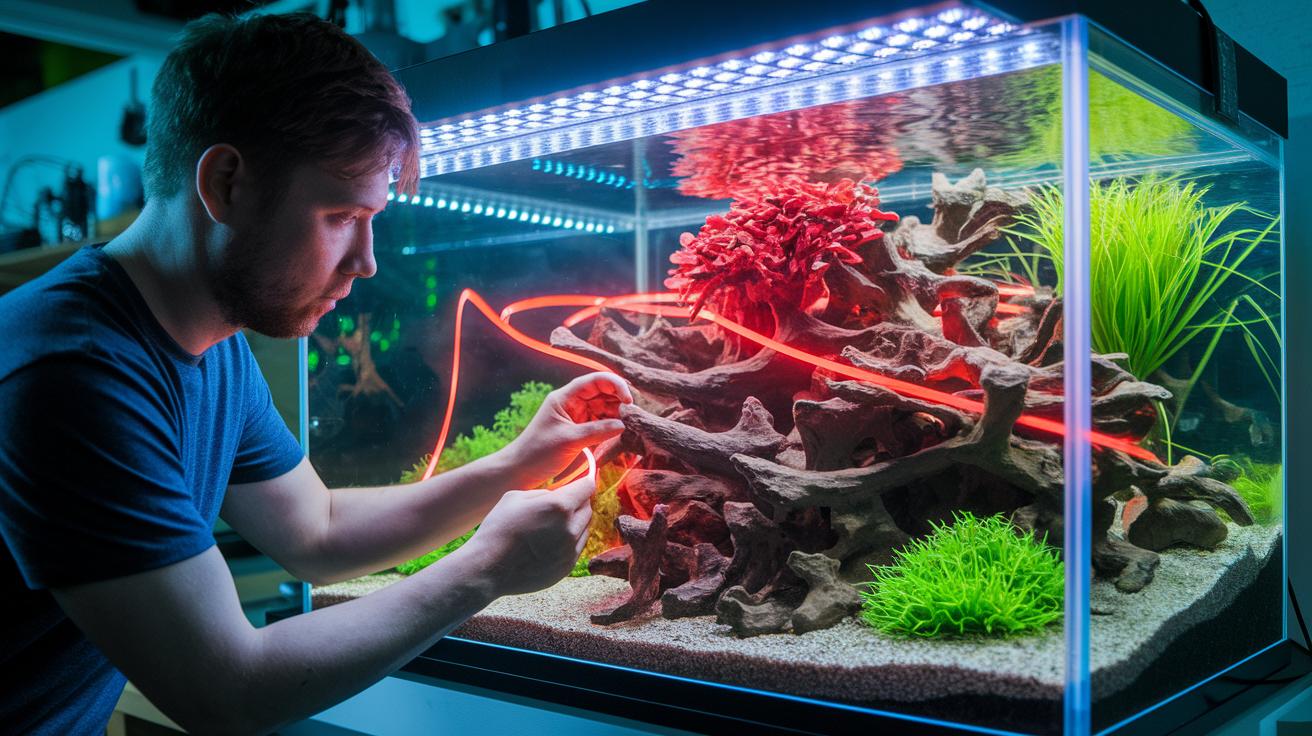
If you're looking to brighten up your tank without breaking the bank, why not try repurposing high-output LED strips? These clever light strips use blue diodes at about 480 nm and red diodes near 680 nm. Basically, they hit that sweet spot that aquatic plants love, following a handy 1-to-2 watt rule. With a dash of creativity, you can mount them neatly under a clear hood to spread light evenly, like watching soft ripples on a quiet pond.
Low-voltage LED modules are another cool option if you want to adjust the brightness. Pair these modules with adjustable drivers and you can fine-tune the light just the way you need it. Many hobbyists have discovered that mixing these budget-friendly parts can give you a setup that works just as well as pricier store-bought lights, both in durability and energy use.
You can even use DIY techniques like 3D-printed brackets and reflectors to better distribute the light. These clever add-ons make sure your tank gets full coverage without costing a fortune, much like how a smart design can turn a small stream into a lively watercourse.
- Grab high-output LED strips, low-voltage modules, and adjustable drivers.
- Plan your layout by matching the LED strips to your tank’s dimensions.
- Use 3D-printed brackets to securely attach the lights.
- Test and adjust the brightness with the driver.
- Finally, mount the lights under a clear hood to achieve an even glow.
Final Words
In the action of selecting new lighting, we covered key factors such as matching wattage to tank size, balancing brightness with plant needs, and easy installation tips. We explored budget models and looked at energy readings so you can keep your tank safe and stunning. Every tip helps you design a neat underwater home. Embracing cost effective aquarium lighting not only boosts fish health but also makes your setup both smart and charming. Enjoy creating your peaceful, vibrant aquatic world!
FAQ
Frequently Asked Questions
What makes cost effective aquarium lighting popular on Reddit and Amazon?
Cost effective aquarium lighting is valued for its balanced price and lasting performance. Discussions and reviews highlight models like Seaoura SR616 and Hygger options that offer the right spectrum for healthy plant growth.
What are the best LED aquarium lights for plants on a budget?
The best LED lights for plants focus on bright blue and red peaks. Budget-friendly options, such as certain Hygger or Seaoura models, deliver strong photosynthetic light while keeping costs low.
How do aquarium lights prevent algae and support planted tanks?
Aquarium lights that prevent algae use a controlled spectrum to avoid over-stimulation. They evenly cover the tank and favor wavelengths that support plant growth without causing unwanted algae blooms.
Why do some aquarium lights come at such a high price?
The higher cost comes from advanced LED tech, long lifespans, and precise spectral tuning that boost plant and fish vitality over time, making them a smart long-term investment.
How many hours per day should aquarium lights be on?
Aquarium lights generally run about 6 to 8 hours daily. This duration helps plants thrive and keeps fish relaxed by mimicking natural day cycles without overexposure.
Are LED lights good for aquarium plants?
LED lights bring specific blue and red wavelengths that promote photosynthesis. Their energy efficiency and longevity make them a popular and effective choice for supporting aquarium plant health.
Is moonlight or no light better for fish tanks?
Low-intensity moonlight can mirror natural cycles, helping fish maintain a sense of day and night. This subtle lighting can be more beneficial than complete darkness for fish behavior.
What features do Chihiros LED Light models offer?
Chihiros LED Light models, including WRGB II Pro, Slim, and others, deliver defined spectral peaks and smart controls. They cater to various tank sizes and user needs while enhancing both plant and fish aesthetics.