

Have you ever thought of your axolotl’s tank as something more than just a box? It can become a cozy underwater home where your little friend feels safe and happy.
Our easy guide shows you how to turn a simple 20-gallon tank into a peaceful aquatic space. We start by covering the basics, picking the right gear and setting it up so the water feels like a gentle stream through smooth rocks.
Next, we share tips on creating secret hideaways and quiet corners in your tank. Think of these spots as little rest areas, where your axolotl can relax just like you might settle into a comfy chair after a long day.
Imagine the soft murmur of your filter and the light dancing on the water’s surface. With step-by-step advice that feels like chatting with a friend over coffee, you’ll learn to create a tank that brings joy to both you and your pet.
Ready to dive in and make your axolotl’s home a cheerful retreat? Let’s get started!
Quick Start Guide to Axolotl Tank Setup
First, pick a tank with at least 20 gallons of space. This ensures your axolotl has plenty of room to move and helps keep the water calm and balanced.
Then, follow these simple steps to create an inviting aquatic home:
- Start with a reliable stand to support your tank safely. For instance, I once chose one that felt like a trusted old friend, giving my axolotl a peaceful spot.
- Next, set up a water-only habitat. Since axolotls spend their entire lives in water, skip any land features that might disrupt their serene environment.
- Then, get the essential equipment. Use a low-flow filter, like a sponge filter or a gentle canister model, to keep the water moving softly. Pair it with an air pump connected to a bubble wand or airstone to boost oxygen.
- Before handling anything, wash your hands with warm water only and use a clean paper towel. Think of it as starting with a fresh canvas, protecting the delicate balance of your axolotl’s new home.
- Now, add some décor to make the tank feel secure. Look for several hiding spots, such as small caves or PVC shelters, and add weighted rocks or driftwood to anchor them in place. You can also include live or realistic plants to bring in some natural charm.
- Set up a temperature control system using a fan or chiller to keep the water between 60 and 64°F. This cool and comfy range is just right for your axolotl.
- Once you fill the tank with water, start the cycling process. Use an API Freshwater Master Test Kit to check for ammonia and nitrite every 48 hours. If levels get too high, add treatments like Fritz Complete and then Turbo Start based on your tank’s volume.
- Follow these steps one by one, and soon you'll have a bright, inviting underwater space where your axolotl can thrive.
Axolotl tank setup: Cheerful aquatic space

When you're setting up a home for an adult axolotl, think big, a tank of at least 20 gallons gives your friend plenty of room to glide around. A bigger tank works like a buffer, keeping harmful chemicals like ammonia and nitrite in check while letting fresh oxygen dance on the water's surface. This spacious setup means your axolotl can move freely in a well-balanced, inviting environment.
For young axolotls, a 10 gallon tank can be a good start. But as they grow, you'll definitely need to upgrade their space. It’s like when you outgrow your old shoes; more room means the water stays stable and your axolotl gets to enjoy every ripple and current. A handy rule of thumb is one axolotl for every 10 to 20 gallons of water.
Also, try to pick out a tank with a wide base rather than a tall, narrow one. A wide tank gives the water surface the room it needs to exchange gases properly. I once had a young axolotl in a snug 10 gallon tank, and it didn’t take long to see it needed more space as it got bigger. When I moved to a roomier 20 gallon aquarium, I noticed the water looked much clearer and my axolotl seemed happier and more active. This shows just how important it is to choose the right tank size for a joyful, thriving aquatic space.
Establishing Optimal Water Conditions and Filtration for Axolotl Tanks
Axolotls bloom in watery homes, so leave out any land bits. The goal is to create a calm, slowly moving water space that feels as gentle as a quiet stream. Try using a low-flow filter like a sponge filter or a low-power canister. These filters craft a soft current that cleans the water without stressing your little friend.
Keeping the pH level between 6.5 and 8.0 is really important for your axolotl’s health. This range supports the delicate balance of their body functions. Test your water every 48 hours for ammonia and nitrite with an API Freshwater Master Test Kit. And if you notice a small spike, add the right dose of Fritz Complete and Turbo Start based on your tank’s size to help keep the good bacteria that break down harmful compounds thriving.
Also, consider doing a weekly water change of about 20 to 30 percent. This simple step helps keep the water quality high and steady. Adding aeration devices like bubble wands or airstones boosts oxygen levels so the dissolved oxygen stays above 6 mg/L. Picture those little bubbles floating up like tiny orbs of life, keeping every corner of the tank fresh and inviting for your axolotl.
Selecting Safe Substrate and Decor for Your Axolotl Enclosure
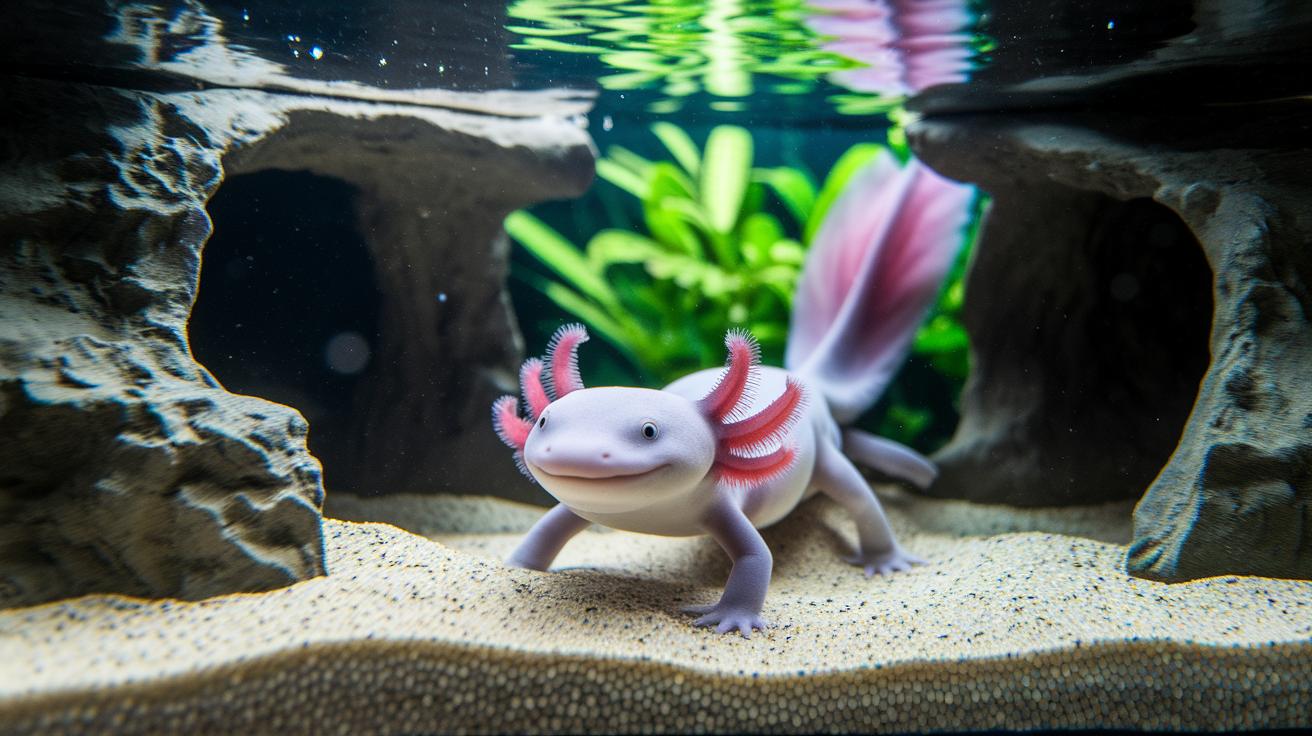
Fine aquarium sand is a top pick for your axolotl’s tank. Its soft grains help cut down on the chance your little friend might accidentally gulp something too rough. Picture your axolotl happily rummaging through a gentle spread of fine sand, it's like giving it a delightful underwater playground.
Be sure to steer clear of substrates with particles that are smaller than your axolotl's head. This simple rule can help avoid problems that might come from tiny bits stuck in its throat, letting your pet explore safely.
Adding a few cozy hiding spots not only makes the tank look charming but also makes your axolotl feel secure. Try using natural-looking caves, PVC hideaways, or rock ledges to create several snug spaces. I remember once crafting a little hideout from smooth rocks, it soon became the axolotl's favorite quiet corner and really helped it feel at ease.
Using weighted decorations such as driftwood or solid rocks keeps everything in place at the bottom of the tank. That way, nothing shifts around and startles your axolotl. You can even anchor real or top-notch fake plants to add extra cover and a touch of nature.
- Use fine aquarium sand to cut down on accidental ingestion.
- Add multiple hiding spots for a safe, cheerful aquatic space.
- Choose weighted decor to keep your tank setup steady and inviting.
Cycling the Tank and Acclimation Procedures for New Axolotls
Before you bring your new axolotl home, get your tank’s nitrogen cycle flowing. This means you’ll let nature do its work by giving the water time to develop good bacteria – a process that might take weeks or even months. Think of it like the gentle ripple of water settling into a calm pond. Using products like Turbo Start and Fritz Complete will help fill your tank with tiny helpers that turn dangerous ammonia into safer nitrite and then into nitrate. Always keep an eye on your ammonia levels; if they sneak above 0.25 ppm, a quick partial water change will ease stress on your little aquatic buddy.
Once the water feels just right, it’s time to welcome your new friend. Start by gently floating the closed bag of your axolotl in its new home for about 20 minutes. Imagine it as a slow dance, letting the creature feel the soft pulse of its environment. After that, add small amounts of tank water every 5 minutes so your axolotl can slowly adjust to its new home.
It’s also a good idea to set up a quarantine tank – a small, separate space for 2 to 4 weeks. This extra time helps ensure that harmful ammonia or nitrite haven’t made their way into your axolotl’s system and keeps diseases at bay. By taking this time with care, you help make sure your axolotl settles in safely and comfortably.
Maintenance Routines and Troubleshooting Common Axolotl Tank Issues

Taking care of your axolotl's tank is a bit like tending a small underwater garden. With a little daily love, you can keep your aquatic friend happy and healthy.
First, give your water a little refresh by changing about 20–30% each week using water that has no chlorine. It’s like giving the tank a gentle shower that clears out unwanted stuff.
Next, check your water quality twice a week for ammonia and nitrite, and once a month, test the pH. Think of it as a quick health check-up for your tank, making sure every drop feels just right, like the soft hum of water on smooth stones.
Cleaning is key. Every month, gently rinse and squeeze your filter sponges to remove any hidden debris. Also, take a moment each day to remove any leftover food or waste. This simple routine keeps the water looking crystal clear and inviting.
Lastly, keep an eye on your axolotl. If it seems lethargic, its color changes, or it loses its appetite, it might be sending a small distress signal, almost like noticing gentle ripples that hint at trouble below the surface.
- Do a weekly water change of 20–30% with dechlorinated tap water.
- Test for ammonia and nitrite twice a week, and check the pH once a month.
- Rinse and gently squeeze filter sponges every month.
- Remove uneaten food and waste daily.
- Monitor the tank temperature, ensuring it stays between 60–64 °F, using fans or chillers when needed.
Axolotl tank setup: Cheerful aquatic space
Want your axolotl’s home to feel as cozy as a little underwater cave? Try adding some DIY twists that mix smart design with a splash of style. You can start by crafting small hiding spots from PVC pipe and aquarium-safe silicone. Your axolotl will love having its personal nooks to relax in, just like finding a quiet corner in its vast tank.
And why not brighten things up with low-heat LED strips along the tank’s rim? These lights help your aquatic plants get the sunlight they need while keeping the water nice and stable. It’s like blending a bit of tech with the gentle charm of nature.
For keeping the water just right, add inline temperature controllers and small fans. This gives you exact control over the tank’s climate without disrupting the soothing flow that axolotls enjoy. Next, think about building modular media racks next to your filter. These racks make cleaning a breeze and leave space for future upgrades.
Don’t forget automatic dosing pumps for minerals, trace elements, or dechlorinators. They work steadily to keep your water balanced and healthy over time. With these upgrades, your tank becomes not only smarter but also a cheerful space celebrating both innovation and the wonderful world of axolotls.
Final Words
In the action, this guide has laid out a clear, step-by-step checklist, from choosing a spacious tank and gentle filtration to selecting safe substrate and decor. We touched on key maintenance routines, cycling, and even a few smart DIY upgrades to bring personality to your space. Every tip aims to help create an inviting, healthy home for your aquatic friends. Embrace these tips to build an ideal axolotl tank setup that keeps your aquatic world balanced and beautiful. Enjoy the process and have fun!
FAQ
Frequently Asked Questions
What does an axolotl tank kit include?
An axolotl tank kit includes a 20-gallon tank, a low-flow filter, an air pump or bubble wand, shelter items, and a water test kit. It gives you the basics to build a stable home.
What do axolotls need in their tank or enclosure?
Axolotls need a water-only setup with gentle filtration, cool water (60–64°F), ample hiding spots, and regular water tests. These help keep their underwater home safe and steady.
What are the basic requirements for an axolotl setup?
An axolotl setup requires a minimum 20-gallon tank for adults, a low-flow filter, aeration devices, secure decor like caves or PVC shelters, and testing tools. This creates a secure, healthy water environment.
Can axolotls have tank mates?
Axolotls can share a tank with similar, calm species. It’s best to keep them with mates that have similar sizes and water needs to avoid overcrowding and stress.
Are axolotls high maintenance?
Axolotls aren’t high maintenance if proper routines are followed. They need regular water testing, weekly water changes, and filter cleaning to stay healthy and comfortable.
How do I set up a DIY axolotl tank?
A DIY axolotl tank setup means choosing the right tank, installing a gentle filter and aeration system, adding safe decor, and cycling the water carefully before adding your axolotl.