

Ever wonder if your shrimp tank could seem more lively? With a few simple plants, it instantly transforms into a charming underwater garden. These greens act like a natural pantry and a cozy hideout, they give your shrimp both tasty treats and a safe place to relax.
Imagine your little shrimp exploring this vibrant space, where every plant helps keep the water balanced and inviting. Our guide shares the top choices to turn a plain tank into a dynamic, living retreat where your shrimp can truly thrive.
Best Aquarium Plants for Shrimp: Natural Food and Shelter
When you add living plants to your shrimp tank, it becomes a lively underwater garden that gives your little friends both tasty food and cozy hideouts. These green additions build up biofilm – that natural, slimy layer shrimp nibble on – help lower nitrates, and keep the water balanced with a pH around 6.5 to 7.5. It’s a win-win: safe plants that add beauty and extra security to your aquarium.
Mixing different kinds of plants can make your mini underwater world even more special. Some plants like to cling to rocks or driftwood, while others spread out like a soft, green carpet on the bottom. For instance, Java Moss grows a hearty layer of biofilm that shrimp love to graze, and Christmas Moss forms thick mats that serve as natural nurseries for baby shrimp.
- Java Moss – Grows a rugged biofilm and easily sticks to wood and rocks.
- Christmas Moss – Creates dense mats that give shrimp snug hiding spots.
- US Fissidens – Also called Phoenix Moss, it has a fine texture that helps build good biofilm.
- Marimo Moss Balls – Offer a flexible refuge; they can float around or be planted for extra cover.
- Anubias Nana – With its thick, sturdy leaves, it encourages helpful biofilm growth.
- Java Fern – Its hanging fronds add both charm and a practical shelter area.
- Water Wisteria – Quickly roots into the substrate, giving a splash of lush green.
- Amazon Frogbit – Floats on the surface, providing gentle shade that also aids in water cleaning.
- Dwarf Hairgrass – Carpets the front of your tank, creating a look like a soft aquatic lawn.
- Rotala Indica – A stem plant that, when pruned, keeps the water fresh by adding oxygen.
Together, these shrimp-friendly plants set up natural grazing spots and safe zones, ensuring your shrimp have the perfect place to feed, breed, and truly thrive.
Aquarium Plant Care Guidelines for Shrimp Tanks
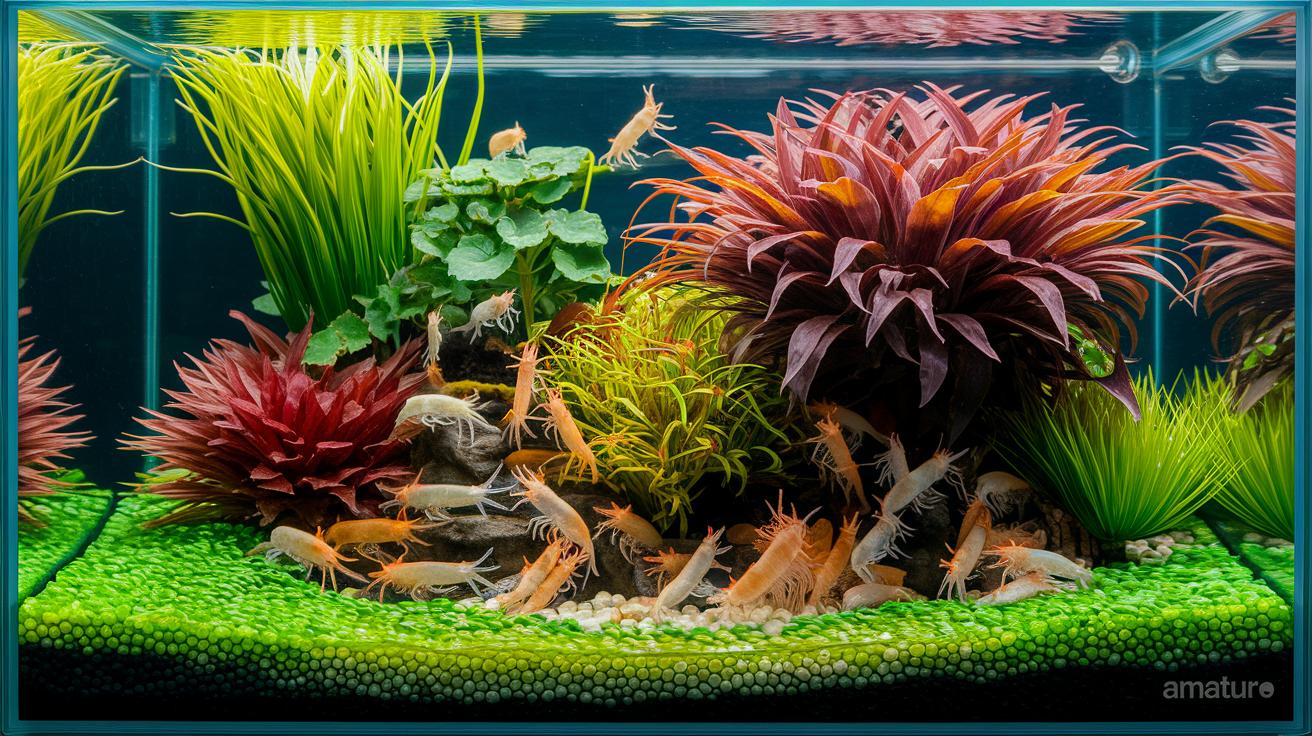
Shrimp tanks can feel like a mini underwater garden when you get the conditions just right. Using moderate to high light, around 0.5 to 1 watt per liter, helps stem and carpeting plants grow strong and vibrant. But don’t worry if you have low-light plants, because species like Anubias and Java Moss do just fine with less extra lighting.
Adding a dose of shrimp-friendly fertilizer about once a week gives a boost to lively plants such as Rotala Indica and Water Wisteria. A bit of CO2, around 10 to 20 parts per million, works like magic to create denser, richer foliage. And using nutrient-rich aqua soil with a pH of 6.5 to 7.5 and a hardness (GH) of 4 to 8 dGH makes sure the roots get all the essential goodness they need.
| Plant | Light Requirement | Fertilizer Frequency | CO2 Injection |
|---|---|---|---|
| Java Moss | Low-light (0.5 W/L) | Occasional | 10 ppm |
| Anubias Nana | Low-light (no extra fixture) | None | 10 ppm |
| Water Wisteria | Moderate-High (0.5–1 W/L) | Weekly | 15 ppm |
| Rotala Indica | Moderate-High (0.5–1 W/L) | Weekly | 15–20 ppm |
Keeping these settings in check will help you create a lush, healthy tank where your shrimp flourish. Tweaking the light, CO2, and fertilizer based on each plant’s needs offers a balanced environment, giving your aquatic friends plenty of cozy hiding spots and room to grow. Ever notice how calming it is to watch your little underwater world come to life?
Tank Setup Techniques for Shrimp-Friendly Aquascapes
Creating an enchanting underwater garden for your shrimp is all about thoughtful planning and a little creativity. Start with a nutrient-packed layer of fine gravel or sand that nourishes your plants and keeps them firmly in place. Next, imagine your tank divided into clear zones, an inviting foreground with lush carpets, a middle area dotted with cozy moss and little clings, and a backdrop filled with taller, graceful stems. Secure anchoring plants like Anubias and Java Fern by tucking them under smooth stones or tying them lightly with fishing line so they stay where you want them, while open swimming paths give your shrimp plenty of room to explore and hide. Each zone works together like a tiny ecosystem, balancing nutrient uptake with plenty of nooks for your aquatic friends.
Foreground Vegetation
Picture a soft, continuous carpet made of Dwarf Hairgrass or Micranthemum Monte Carlo right at the front of your tank. Space the plants evenly so each shoot has room to grow strong and healthy. Regular trims keep the carpet neat and ensure plenty of grazing spots for your shrimp. It’s like laying out a smooth, green rug in your underwater home.
Midground Moss and Rhizome Plants
In the middle section, try attaching lively mosses, like Java Moss or Christmas Moss, to driftwood or rocks. Secure them gently with cotton thread, a simple method that encourages biofilm growth. This biofilm acts as a natural snack and safe hideaway for shrimp, adding both texture and life to your aquascape.
Background Stem Plants
At the back of your tank, group fast-growing stem plants such as Water Wisteria or Rotala Indica. These taller plants create a dense, shady layer that soaks up extra nutrients and enhances water quality. They add depth and a natural vibe that beautifully rounds out your balanced, shrimp-friendly underwater world.
Algae Control Strategies in Shrimp Plant Ecosystems

Dense plant cover in your tank acts like nature's little cleaners. It soaks up extra nitrates and phosphates, the nutrients algae need to flourish. Plants like Hornwort and Water Sprite quickly use up these nutrients so there’s not much left over for unwanted algae. Running your light for about 8-10 hours a day helps keep everything balanced, much like the soft glow of a sunset over a calm lake. And doing water changes of about 20-30% each week washes away those extra nutrients, cutting down on algae blooms.
Adding little helpers such as Amano shrimp and Nerite snails is another smart move. They nibble on any thin algae film trying to sneak in, keeping your tank as clear as a mountain stream.
Keeping a balanced mix of plants and shrimp creates natural grazing spots and supports friendly bacteria that work to keep the whole setup in check. Regular care, like checking water quality and trimming back plants that grow too wild, ensures your tank stays a cozy retreat for shrimp and a tidy home for plants. This thoughtful approach makes your aquarium both beautiful and easy to maintain, where every creature and plant can shine together.
Propagation and Trimming Techniques for Shrimp-Safe Flora
Keeping your shrimp tank lively starts with the right approach to growing and trimming your plants. When you multiply your favorite plants and trim them carefully, you give your little shrimp a home full of hiding spots and food. Think about how Java Moss, Christmas Moss, Anubias, and Java Fern come to life with a little bit of care, each one adds natural charm to your aquarium. It’s like creating a mini underwater garden where every plant helps keep the water balanced and healthy.
Moss Propagation Methods
A fun way to help your tank grow is by plucking small bits of Java Moss or Christmas Moss. You can gently attach these tiny pieces to rocks or driftwood, much like sticking a little treasure on a smooth stone. Over time, these bits join together to form dense mats, making extra places for your shrimp to explore and snack on.
Stem Plant Propagation
For plants like Rotala Indica and Ludwigia Repens, try taking cuttings about 5-8 cm long. Plant these cut pieces in a rich, nutrient-packed substrate and watch as new shoots burst out, creating a bushy, colorful display. It’s like planting a seed, only faster and with a splash of underwater magic. Keeping these cuttings in water full of nutrients helps them grow strong and beautify your tank even more.
Trimming Schedules and Troubleshooting
A regular trimming routine is the secret to avoiding overgrown plants. Trim fast-growing plants by cutting off about 2-3 cm each week and thin out hairgrass every two months so it doesn’t turn into a soggy mat. If you see yellow leaves on plants like Cryptocoryne, it might be a sign of a nutrient hiccup. In such cases, a little tweak in your fertilizer routine can bring back that lush, balanced look to your aquatic paradise.
Creating Hidden Shrimp Refuges with Aquarium Plants
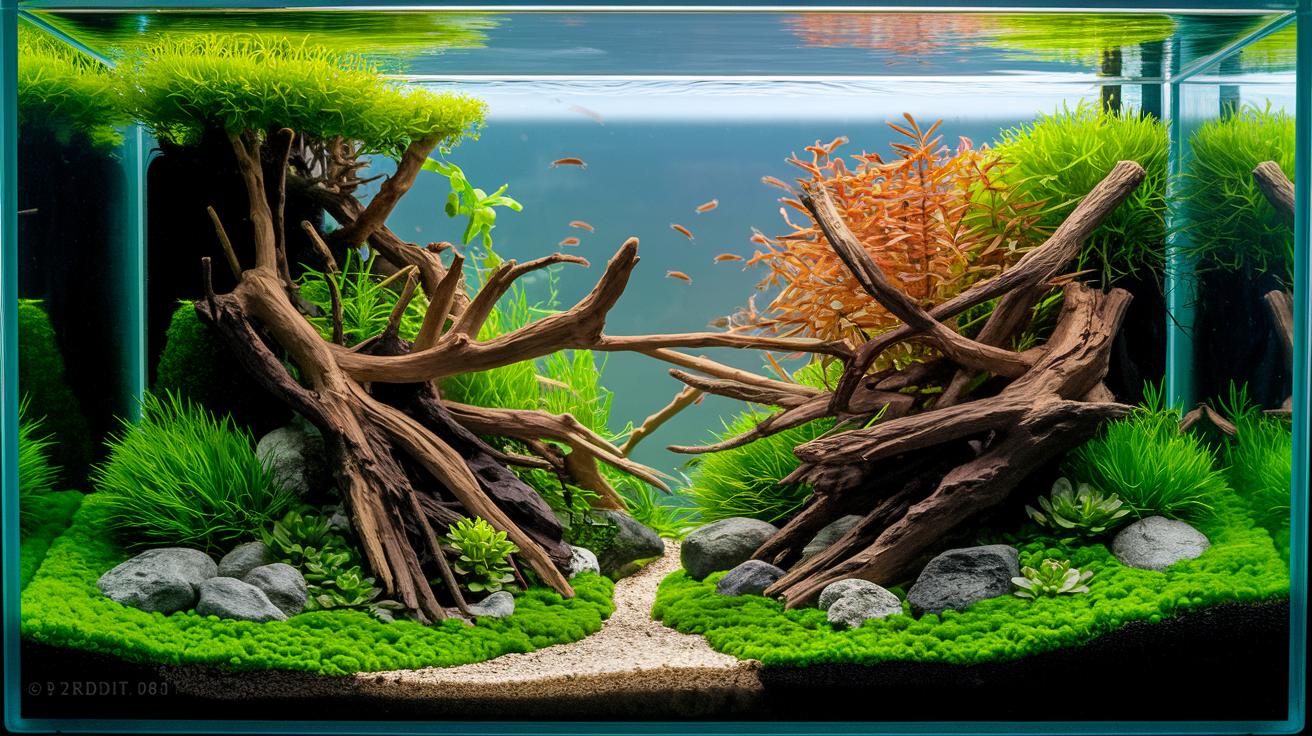
Imagine your tank as a cozy underwater hide-and-seek playground. Cluster soft green moss like Marimo Balls and Christmas Moss into little crevices to form snug shelters. These tiny, tight clusters give your shrimp safe spaces to brood and play. Floating plants such as Red Root Floaters and Frogbit create patches of gentle light that look like scattered leaves and bring a natural, organic feel to your aquascape. You might even wrap Java Moss around a piece of driftwood to make twisted tunnels where your shrimp can dart about, and tuck Anubias into rock cracks to boost these secret spots.
By grouping dense green plants in the midground, you create cool, shady alleys where shrimp can explore and settle. This method not only builds well-hidden havens but also helps keep your water clean naturally and adds to the calm underwater vibe. When you arrange your plants with care, every corner of your tank becomes a living, breathing habitat that feels as safe and nurturing as a natural pond.
Final Words
In the action, we explored smart ways to build a lively aquascape with appealing décor, balanced water quality, and clever techniques to nurture your aquatic friends. We shared ideas on selecting a top list of shrimp-safe plants, caring for them, anchoring them in creative tank setups, and managing algae naturally.
These tips help you craft a soothing underwater display full of life and flavor, making your hobby satisfying and fun. Keep experimenting and enjoy your aquarium plants for shrimp!