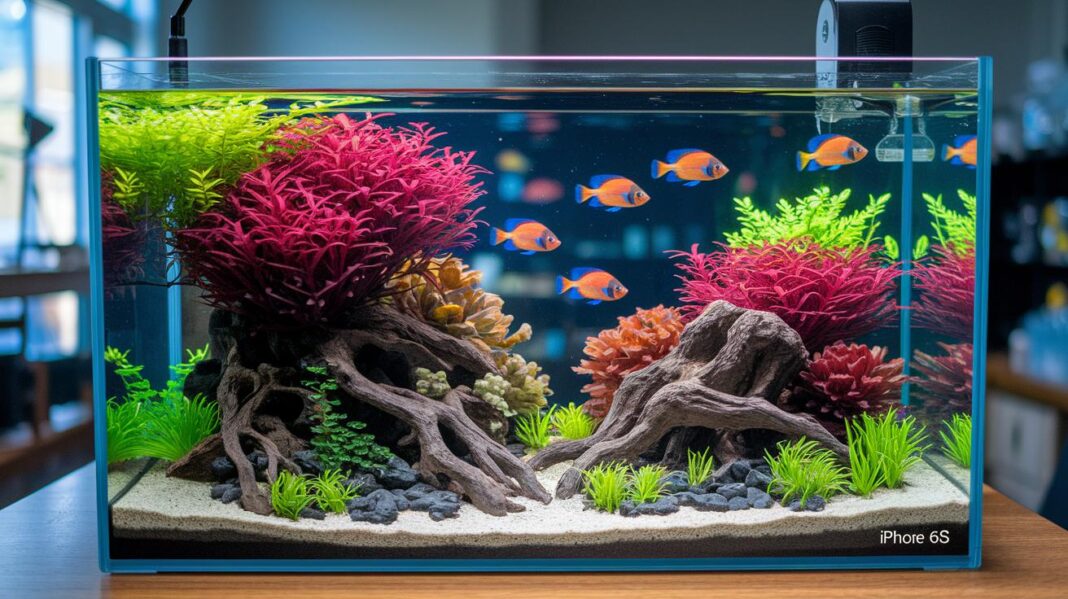

Ever thought about turning a basic tank into a lively underwater haven? Aquascaping may sound a bit tricky at first, but with a few easy tips, it's as refreshing as a cool dip in the sea. In this guide, you'll learn how to transform a simple glass aquarium into a charming retreat by picking the right tank size, adding healthy plants, and choosing smart gear that keeps your water clear and your fish smiling. Picture your very own little slice of nature right at home, pretty neat, huh?
Beginner’s Guide to Setting Up Your First Aquascape
Imagine turning a plain glass tank into your own little oasis, bubbling with life and greenery. Live plants are not just a pretty sight, they gently soak up chemicals like ammonia, nitrite, and nitrate to keep your water clean and healthy. It’s like nature’s own water filter that makes your fish feel right at home.
A tank with 20 to 30 gallons gives you the perfect balance of space and control. For example, a 25-gallon tank can be an ideal stage for a thriving underwater garden without being too hard to manage.
Start with a basic glass aquarium from your local pet store to keep things friendly on your wallet. Build your tank with plants first, and add fish later once the little ecosystem has settled in. Pick a quiet spot away from direct sunlight or heat sources like radiators, which helps keep algae at bay. I once heard someone say, "A well-set tank is like a small park in your living room," and it really made me smile.
- Tank Size – Choose a tank that holds between 20 and 30 gallons to give your new aquatic home plenty of room and stability.
- Location – Place your tank in a calm area away from harsh sunlight and heat to help keep the water clear.
- Substrate Budget – Pick quality gravel that nourishes plant roots without breaking the bank.
- Plant Focus – Start with a healthy base of plants; this sets the stage for clean water and a balanced mini-ecosystem.
- Lighting – Use a lighting solution, like LED lights, that not only brings out the natural beauty of your tank but also supports strong plant growth.
Essential Equipment for Your Beginner Aquascape
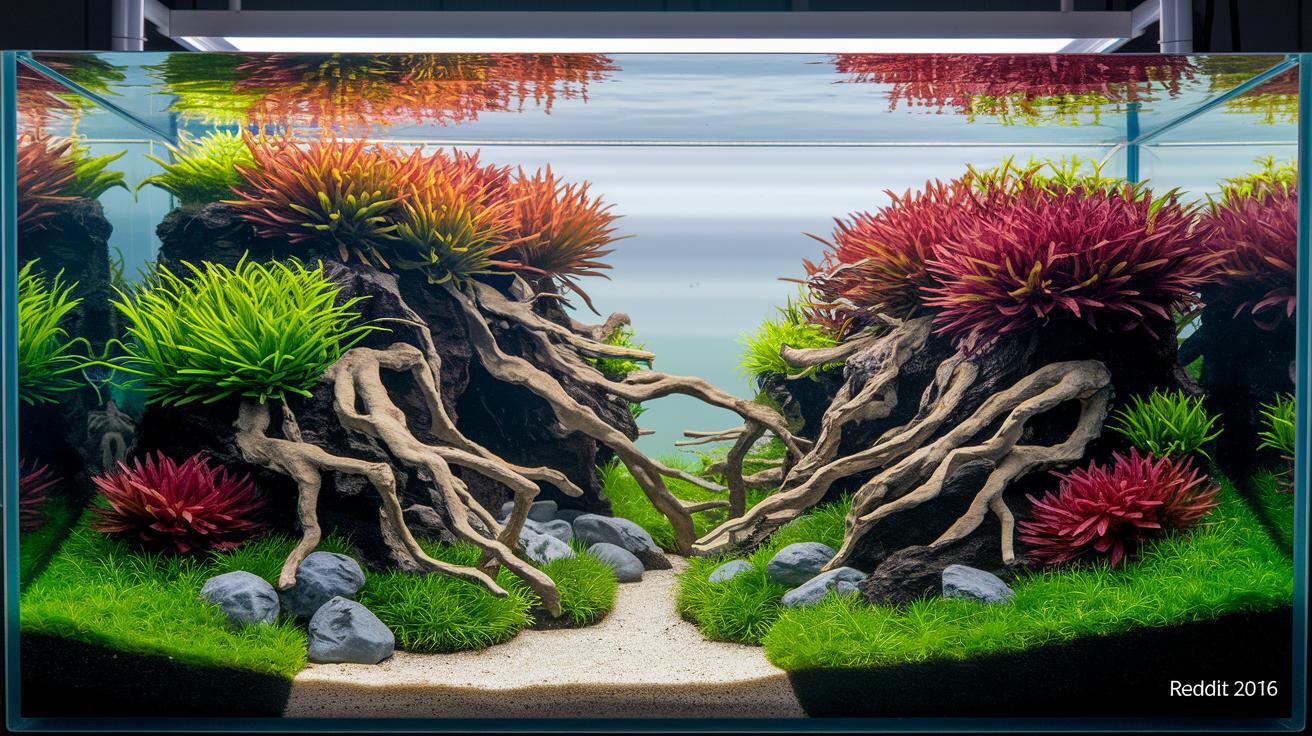
Setting up your planted tank is like creating your own underwater masterpiece. The right equipment not only makes your aquascape look stunning but also supports your fish and plants, keeping them happy and healthy. Here are six must-have items to help you build a lively aquatic retreat:
-
Filter: Think of your filter as the quiet helper that sweeps away debris while nurturing good bacteria. It’s like having your own little cleaning crew working silently behind the scenes.
-
LED Lighting: With quality LED lights, your plants can soak up the right energy, and the vibrant colors of your tank truly shine, much like a spotlight that brings every detail into view.
-
CO₂ Supplementation: Adding CO₂ gives your plants a boost, helping them grow fuller and greener. Imagine it as a gentle wave that enlivens your tank with natural life.
-
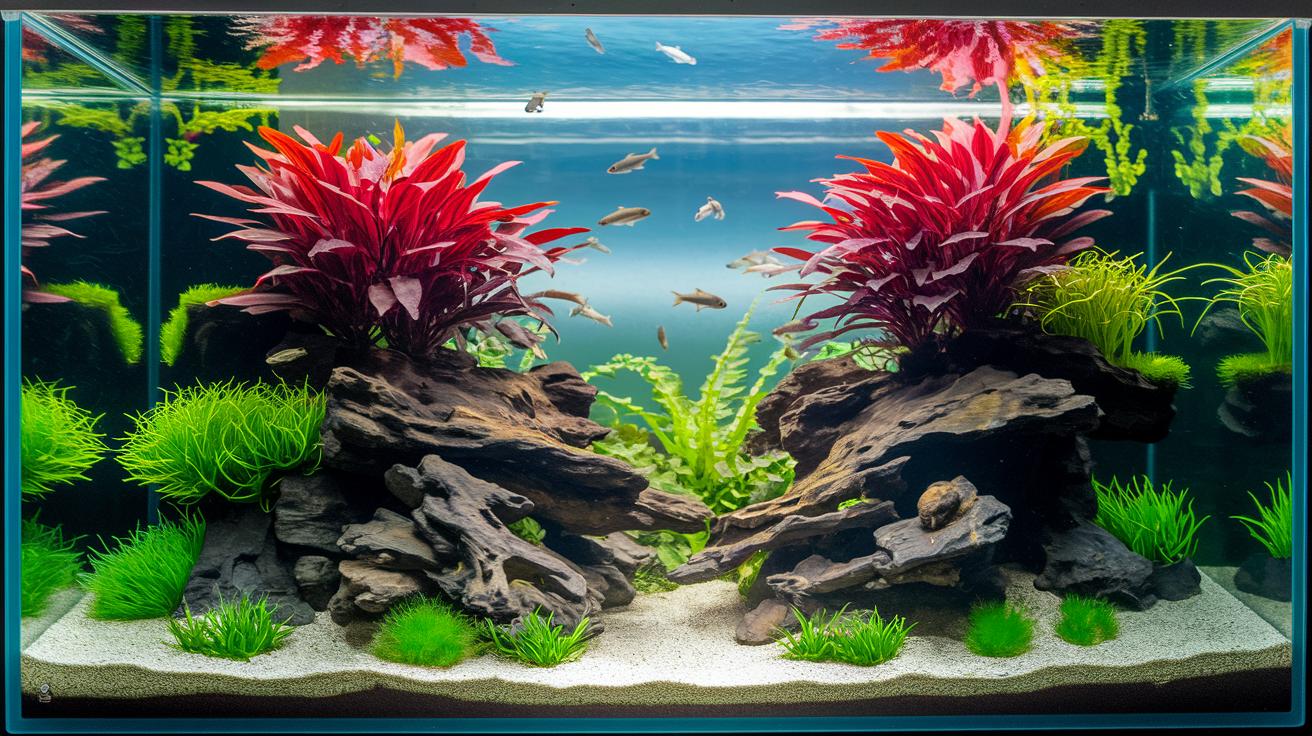
Weekly Fertilizer Dosing: Regular dosing of fertilizers, such as Easy Life Profito and iron supplements, keeps red plants bright and full of life. It’s like giving your plants a nourishing treat every week.
-
Tool Set: A handy set that includes tweezers, scissors, tongs, a plant weight, and a thermometer lets you arrange your aquascape with care and precision, just like an artist perfecting their work.
-
Substrate and Hardscape Elements: Choosing a solid substrate is key for strong plant roots, while a mix of rocks and driftwood adds texture and structure to your underwater garden.
| Equipment | Function | Recommended Model |
|---|---|---|
| Canister Filter | Removes debris and supports beneficial bacteria | AquaPure FilterX |
| Sponge Filter | Gently cleans and oxygenates water | EcoSponge FT |
| Hang-On Filter | Ensures steady water flow and easier upkeep | CleanWave HangOn |
Simple Aquascape Techniques and Design Principles
Rule of Thirds for Focal Balance
Imagine your aquarium as a living painting. The rule of thirds means you divide the tank into nine equal parts with two vertical and two horizontal lines. This simple grid helps you place a favorite plant or an eye-catching rock off to the side so that it naturally draws the viewer in. It’s a bit like arranging knick-knacks on a sunny windowsill where nothing feels cramped.
Golden Ratio for Natural Proportion
Using the golden ratio in your aquascape is like letting the tide guide your design. This idea, often linked to the Fibonacci spiral, suggests that placing elements in a gentle curve can create a natural flow. When you arrange your plants, try sketching a soft, sweeping line that leads the eye from one corner of the tank to another. It’s a subtle way to create a scene that feels as naturally beautiful as a quiet stream.
Contrast for Visual Interest
A touch of contrast makes your underwater world come alive. Mixing plants of different sizes, textures, and colors can add bold pops that stand out against softer backgrounds. Picture large, leafy plants tucked near smaller, delicate ones; the difference makes each element shine. Here are some layout ideas to try:
| Layout Type | Description |
|---|---|
| Concave | High points at both ends, creating a gentle curve |
| Convex/Island | A central high point that dominates the view |
| Triangle | A single focal point with a smooth, rising slope |
| Classic Staging | Arranging elements in foreground, midground, and background layers |
Imagine a simple grid floating over your tank, a friendly reminder to balance each element as you design your very own aquatic paradise.
Choosing Plants and Hardscape Layouts for Beginners
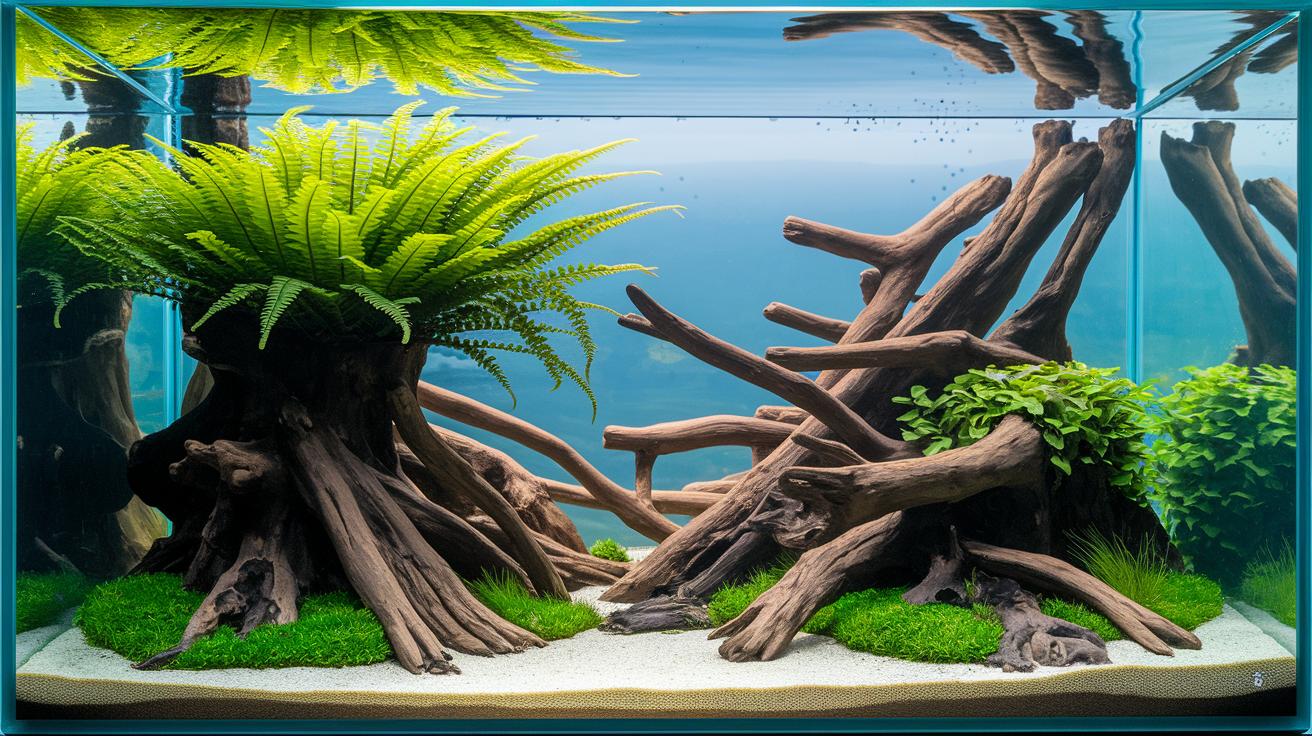
If you want to build a peaceful underwater garden, start by picking plants that do well in your tank and match your overall design. Keeping your plant choices simple can make your aquascape look natural without feeling too busy. Think about how each plant looks, whether your tank’s water is just right for them, and how much care they need. It’s a good idea to choose plants that are kind to your wallet and easy to find. Also, using one kind of rock and one type of driftwood helps keep your water clean and free from unwanted chemicals. And don’t forget to wear gloves when handling rocks so that your skin oils don’t upset the natural balance. If you see driftwood floating away, stick it in place with aquarium silicone.
Here are some friendly plant choices for beginners:
- Java Fern
- Anubias nana
- Cryptocoryne wendtii
- Vallisneria spiralis
- Amazon Sword
Along with your green friends, choose hardscape materials that create structure and add interest to your tank. Using just one rock type and a single kind of driftwood gives your aquascape a neat, natural look. The table below shows three common materials along with what they offer and any quirks you might encounter:
| Material | Pros | Cons |
|---|---|---|
| Granite | Durable and has a natural look | Heavy and may not hold steady |
| Sandstone | Light and easy to arrange | Can slowly break down in water |
| Driftwood | Adds a warm, organic feel | May drift if not anchored well |
Try to arrange your driftwood and rocks to look as if nature itself placed them. A bit of playful experiment with their positioning can turn your tank into a calm, lively sanctuary that helps both your plants flourish and your eyes enjoy a naturally beautiful scene.
Step-by-Step Tutorial for Novice Aquascapers
Starting your first planted tank is an exciting and soothing adventure. Think of it as crafting a tiny, underwater world that not only looks beautiful but also helps your aquatic friends thrive. Let’s dive into these simple steps to create a tank that’s both smart and easy to build.
-
First, collect all your supplies, the tank, substrate, hardscape elements like rocks or driftwood, plants, and any required tools. This is like gathering your favorite art supplies for a creative project. I remember my first setup, and having everything ready made the whole process fun and stress-free.
-
Next, rinse your substrate well, then spread about 3 to 4 inches evenly in your tank. This clean layer is like a rich garden bed that boosts plant growth and helps keep the water clear and fresh.
-
Now, arrange your rocks and driftwood to mimic nature’s own art. Picture it as placing natural ornaments, where every piece adds its own special touch to your design.
-
Then, gently plant your foreground, midground, and background species with care, using tweezers if you have them. This mix creates depth and makes your aquarium feel lively, like watching a gentle ripple in a quiet pond.
-
Slowly fill your tank with dechlorinated water. Pour the water carefully to ensure your lovely layout stays just as you arranged it.
-
After that, install your filter, heater (if your tank is tropical), lighting, and CO₂ system. These parts work together like a team, keeping your tank’s environment balanced and comfortable.
-
Now, let your tank cycle for 4 to 6 weeks before introducing any fish. During this time, beneficial bacteria develop, setting the stage for a healthy underwater abode.
-
Lastly, check key water levels every day during the cycling phase. Monitoring ammonia, nitrite, and nitrate is like keeping an eye on the heartbeat of your new aquatic world, helping everything run smoothly.
Enjoy your aquascaping journey, and remember, each step brings you closer to a beautiful, living underwater masterpiece!
Maintaining a Planted Aquarium for Beginners
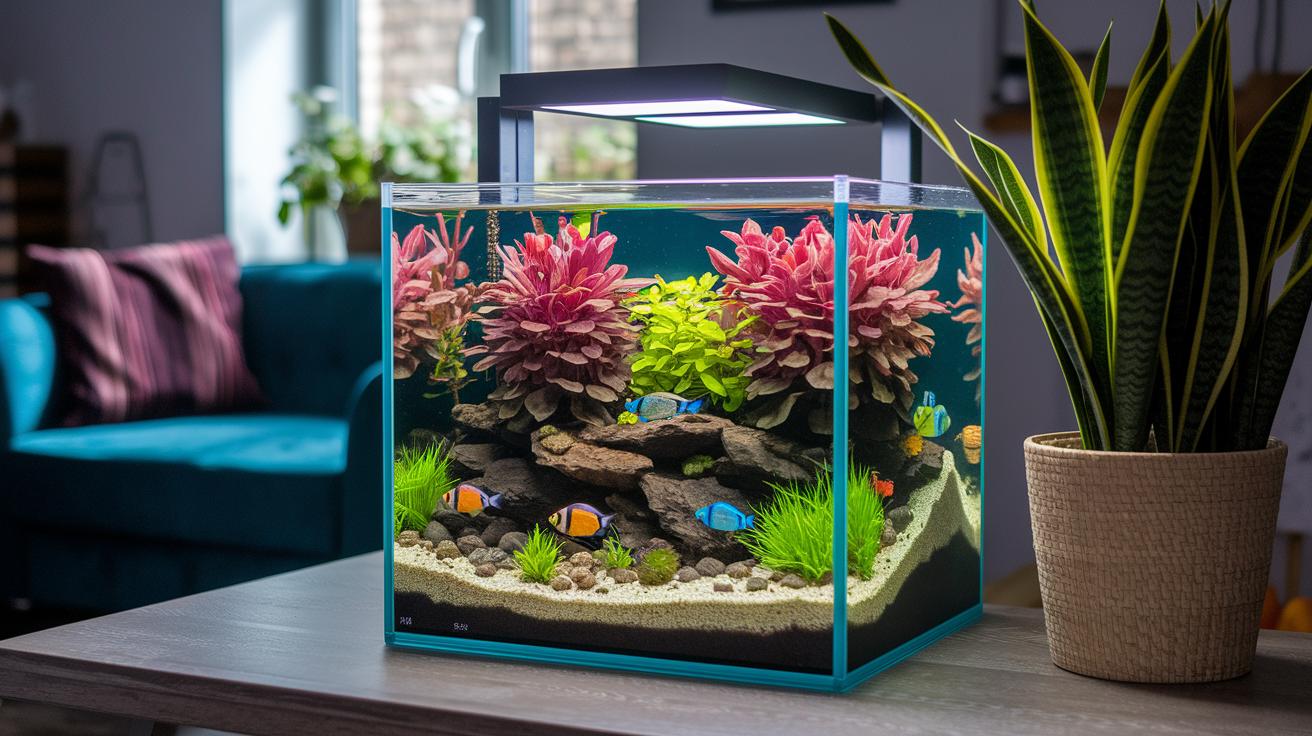
Keeping your planted aquarium happy is like caring for a little underwater garden. Every week, a few simple tasks can help your plants grow strong and your water stay sparkling clean. Regular upkeep stops problems like too much algae or wrong nutrients, making your tank a safe home for your fish.
Start each week by doing a little water change, about 20-30%, to wash away waste and refresh nutrients. Next, gently scrape any algae from the glass so your tank stays clear, and trim any overgrown plants so they keep their natural shape. It’s also smart to add a bit of liquid fertilizer; this feeds your plants key nutrients. Plus, check your CO₂ levels to ensure your plants get enough carbon dioxide, which is like their food for growth. Finally, adjust your lighting so it’s on for 8-10 hours a day, giving your plants enough sun-like power for photosynthesis without inviting too much algae.
Every month, take a moment to test your water. Look for ammonia under 0.02 ppm, nitrites at 0 ppm, and nitrates below 20 ppm. Your pH should be between 6.5 and 7.0. Also, check that the general hardness (GH) and carbonate hardness (KH) fall within the right ranges. These numbers are like little sign posts telling you that your tank is balanced and healthy. And don’t forget to use a dechlorinator on tap water to remove chlorine and chloramine; it helps every change of water turn into a boost for your underwater world.
Budget-Friendly Starter Planted Aquarium Kits for Beginners
Starting your aquatic journey doesn't have to empty your wallet. A budget-friendly starter kit bundles all the essential gear so you can dive right into creating a lively underwater scene without overspending. It’s like setting up your very own slice of a clear, bubbling stream where plants flourish and fish thrive. And, later on, you can always add your own DIY upgrades from local shops, making the experience even more personal.
-
Nano 5 gal LED Kit ($50–$65): This cozy kit comes with a small tank, a built-in filter, and a simple toolset. It's perfect if you're working with limited space or just testing the waters of aquascaping.
-
Classic 10 gal Combo Kit ($70–$90): A bit more room to grow, this kit includes a 10-gallon tank with a bright LED light and an easy-to-attached hang-on filter. It keeps things manageable while giving plants and fish a balanced home.
-
20 gal Complete Kit ($120–$140): Ready for a larger display? This kit offers a 20-gallon tank, an integrated CO₂ starter system (which helps plants breathe a bit easier), and even a sample of fertilizer. It opens up a world of possibilities for more detailed and creative aquascaping.
If you're ever on the lookout for additional savings, consider finding used tanks or retrofitting equipment from local shops. Mixing smart savings with quality supplies can help you craft a vibrant aquatic garden that feels truly your own.
Common Questions Beginners Ask About Aquascaping
-
Wondering about the best tank size? Our equipment section highlights medium tanks (20 to 30 gallons) as a great choice. They offer plenty of room for creative aquascapes yet stay manageable when it comes to upkeep.
-
Noticed too much algae in your tank? In our maintenance section, we share simple tips for keeping algae under control. It's all about managing light exposure and balancing nutrients in the water.
-
When is the right time to add fish? Check our setup section for advice. We suggest waiting until your tank is fully cycled, usually around 4 to 6 weeks, so your fish come into a stable environment.
-
Can you use tap water in your aquarium? Yes, you can! Just make sure to treat it first. Our water treatment guidelines explain how to safely use tap water by adding a dechlorinator that removes chlorine and chloramine.
-
Looking for fish recommendations? We find that small tetras and rasboras work wonderfully in planted setups. They create gentle, lively movements along the planted backdrop without disturbing your aquascape. For more ideas, have a look at our species guide.
-
Is CO₂ injection necessary? While adding CO₂ can boost plant growth and enhance those vibrant colors, it’s not essential for a healthy aquascape. For extra details, check out our equipment section.
Final Words
In the action, this guide has shown how to create a welcoming aquatic scene with simple tips and tools. We covered the basics of aquascaping for beginners, from selecting the right tank size to choosing the best plants and equipment. The step-by-step instructions and budget-friendly kit ideas help you set up a natural underwater habitat that feels both fun and manageable.
Enjoy watching your tank flourish as you build a serene home for your aquatic pets. Happy fish keeping!
FAQ
How to start aquascaping for beginners?
The process to start aquascaping for beginners involves choosing a medium tank, gathering essential gear, using live plants, and cycling the water before adding fish for a healthy, natural setup.
Is aquascaping an expensive hobby?
Aquascaping being an expensive hobby depends on your choices; many beginners find affordable kits and DIY options that let you create a stunning aquatic display without overspending.
What do you need for aquascaping?
What you need for aquascaping includes a tank, nutrient-rich substrate, proper lighting, a filter, water treatment, and a selection of live plants to form the base of your aquatic scene.
What substrate should a beginner use for aquascaping?
The substrate a beginner should use for aquascaping is one that supports plant roots well, such as nutrient-enriched planted substrates found at most pet stores, making setup simple and effective.
Where can beginners find helpful aquascaping resources?
Helpful aquascaping resources for beginners include PDFs, starter kits, books, YouTube videos, and active Reddit communities where enthusiasts share practical tips and creative ideas.