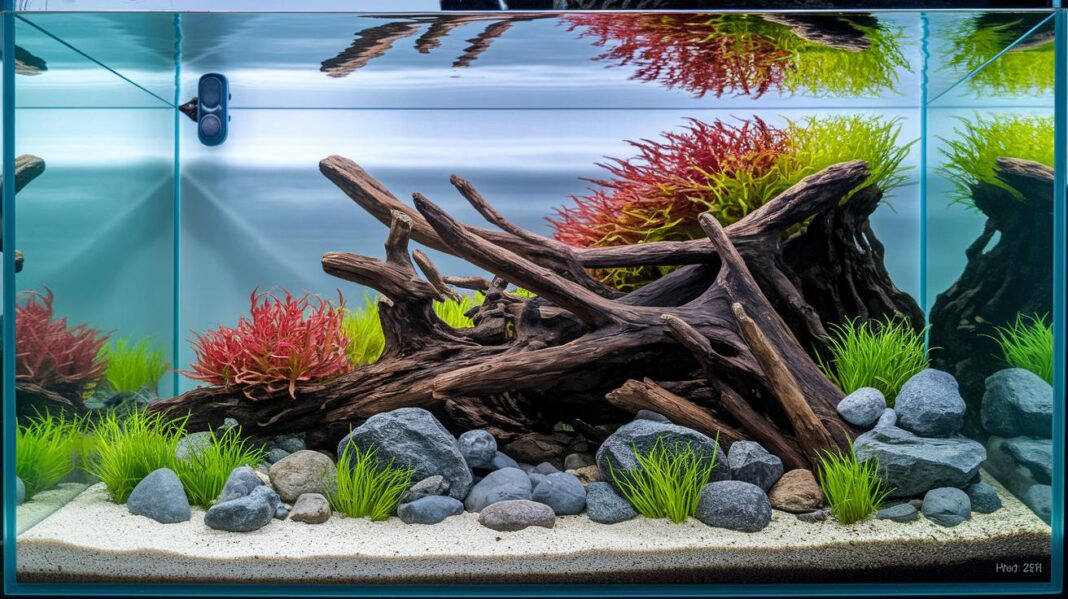

Ever thought your tank could feel as wild and natural as a flowing riverbed? With a little DIY magic, you can transform your aquarium into a lively water garden where creativity flows like a gentle current. I’m excited to share seven friendly hardscape ideas that can turn your tank into a cozy aquatic haven. Imagine clusters of strong, bold rocks acting like the roots of an ancient river, while tiny pebbles add playful splashes of detail. These easy tips can refresh your setup and spark your next underwater masterpiece. Let’s dive in and see how a few smart moves can turn your aquarium into a peaceful slice of nature.
7 Essential Aquascaping Hardscape Ideas for Inspiring Designs
Crafting an aquascape that feels alive and natural is simpler than you might think. Here are seven friendly tips to help you design a layout that flows like a gentle stream while keeping your tank fresh and inviting.
-
Mix up stone sizes by clustering big rocks that act like anchors and letting smaller ones scatter around. Ever hear about a designer who placed large pebbles right in the center and sprinkled tiny ones all over? It makes your tank look like a real riverbed.
-
Arrange rocks in little groups instead of lining them up perfectly. It’s a bit like creating a winding brook instead of a straight path through your aquarium.
-
Place your hardscape elements so they follow the flow of water. When rocks are set to match the water’s direction, it gives your scene the true feel of nature, much like stones smoothed over by a gentle current.
-
Sprinkle in fine details by adding tiny pebbles or crushed gravel around the main stones. Think of it as a pinch of seasoning that brings everything together.
-
Leave some open space in your layout to let your key features shine without feeling crowded. This empty space is like the calm between gentle waves, letting each element stand out.
-
Add layers by combining big rocks with a base of sand or gravel. This trick gives your tank depth and creates an effect similar to looking into a little mountain range.
-
Balance your design naturally by pairing pieces of driftwood with rocks. Combining different elements like these keeps the overall look interesting without one part stealing all the attention.
Each of these ideas helps lay a foundation for an aquascape that marries simplicity with creative charm. Give these tips a try and watch your tank bloom into a little natural haven that supports healthy growth and delights your senses.
aquascaping hardscape ideas: Bold DIY flair
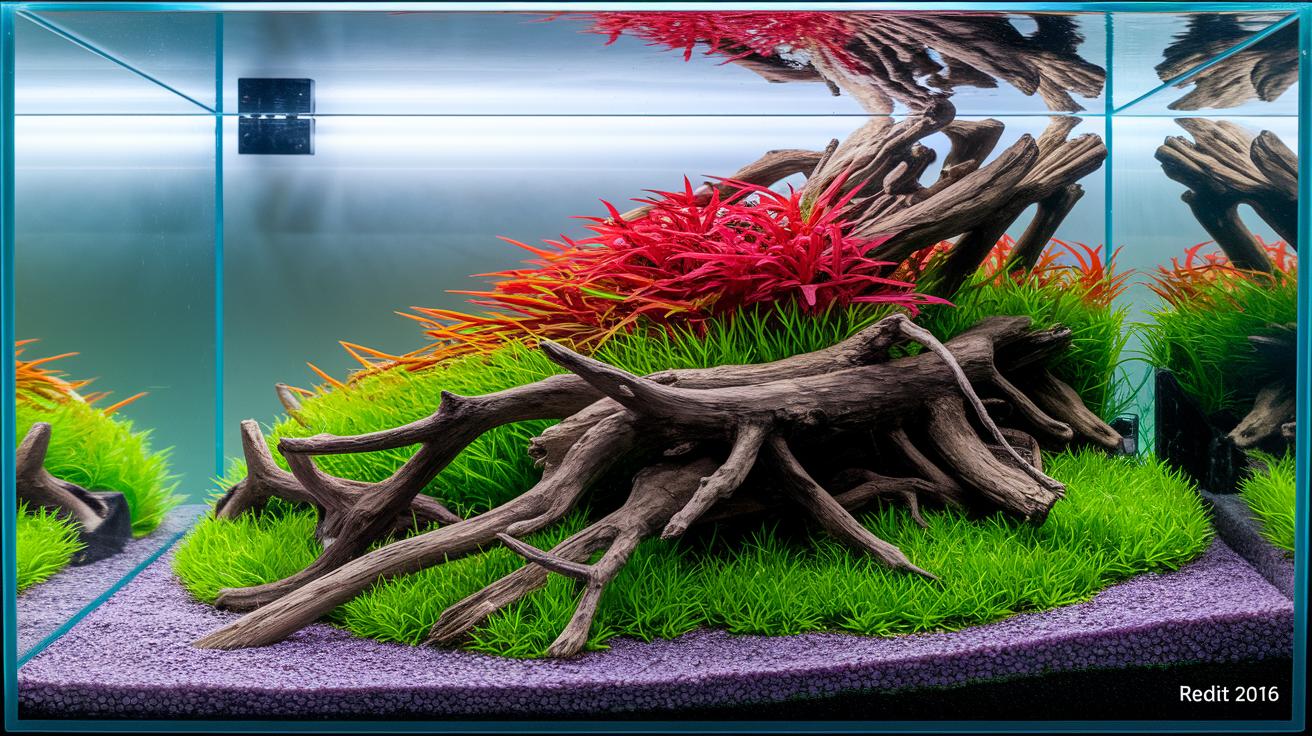
When you pick the right hardscape elements, your tank turns into a lively underwater retreat. The base you choose not only shapes the look but also plays a part in keeping your water healthy. Take Fluorite, for instance, it’s a light clay gravel that doesn’t pack down too much, which helps protect those sensitive plant roots. Then there’s Eco-Complete, brimming with more than 25 plant goodies, and Aqua Soil, which gives your plants lasting nourishment and a natural color. Laying a bed of ADA Power Sand beneath Aqua Soil can also improve water cleaning and add a nice sense of depth.
| Material | Key Characteristics | Design Tips |
|---|---|---|
| Fluorite | Light clay gravel that stays loose | Great for gentle support of soft plant roots. |
| Eco-Complete | Packed with over 25 plant nutrients | Perfect for boosting plant growth in your tank. |
| Aqua Soil | Provides long-lasting nutrition and a natural look | Pairs nicely with a sand layer for added depth. |
It’s really important to match your substrates with the needs of both your plants and fish. Healthy plants enjoy nutrient-rich bases like Eco-Complete or Aqua Soil, while fish do best with a steady setup that keeps the water calm. Choosing materials like Fluorite helps avoid compaction that could hurt plant roots, keeping things balanced. By blending these substrates wisely and adding a base layer like ADA Power Sand, you not only make your tank look stunning but also support a safe and vibrant underwater world.
DIY Assembly Guide for Aquascaping Hardscape Ideas
Get ready to start your aquascape with a relaxed vibe and the right set of tools. You’ll need some stainless steel planting tweezers, curved trimming scissors, maintenance tweezers, and sand flatteners. These little helpers make it easy to set rocks just right and smooth out the sand like spreading a bit of butter on toast. Imagine your tank as a small mountain valley, where gentle slopes and varied sands come together to create a natural feel.
Start by laying down a base layer using a sand that contrasts nicely with your chosen elements. Spread it out evenly and then use your sand flatteners to smooth everything over. Next, add a nutrient-rich substrate on top to help your plants grow, all while keeping the water just right. Then, work on creating gentle slopes by shaping the substrate with your maintenance tweezers so that light and water play over the surfaces in a graceful dance.
Now, place your larger rocks first, they act like sturdy anchors in your design. Arrange them so water flows naturally around each piece. After that, bring in some driftwood and smaller rocks, making sure they all balance well without one stealing the spotlight. Finally, add tiny pebbles around the big stones and use your curved trimming scissors to adjust any plants that might be out of place.
Keep an eye on the overall balance as you work. Rather than spacing everything perfectly, let the rocks cluster in a natural way, and make sure your driftwood complements the stones. It’s normal to use your tweezers now and then to reposition anything that has shifted a bit. Enjoy the process as your tank slowly transforms into a beautiful underwater scene where each detail plays its part.
Professional Aquascaping Hardscape Ideas: Designer Showcase
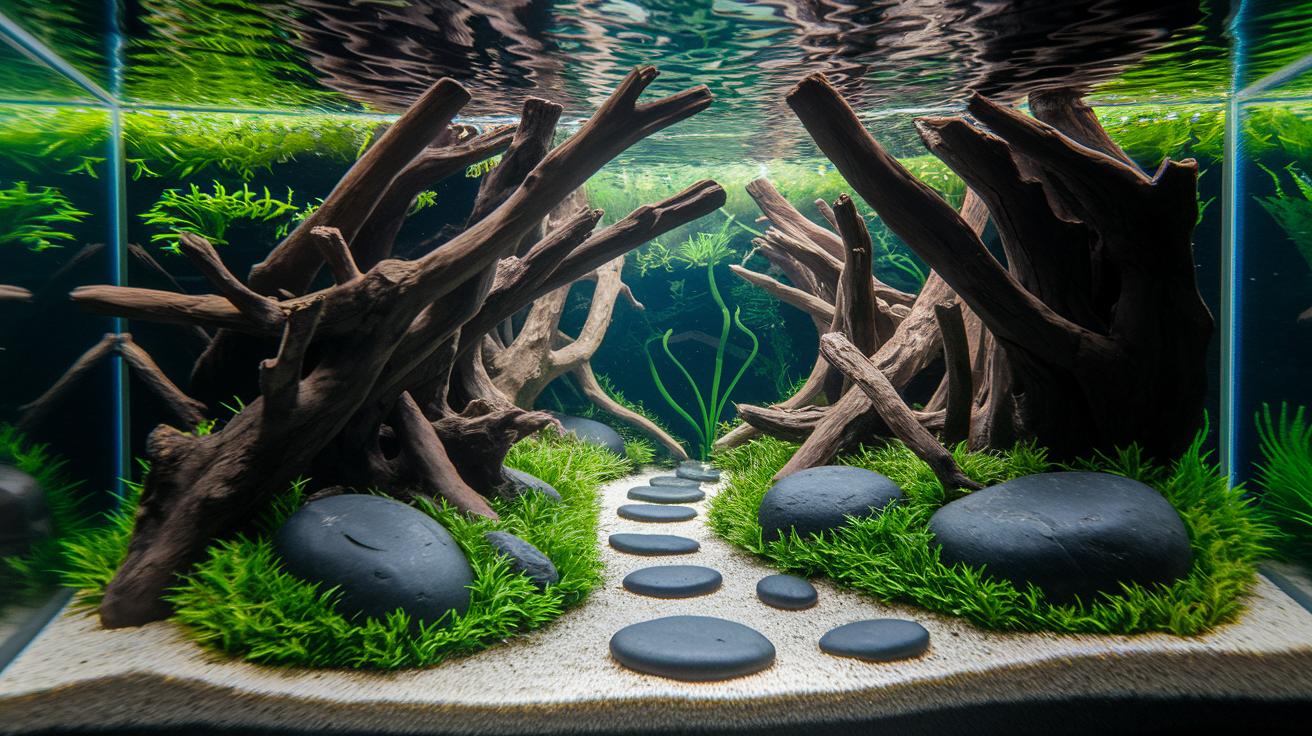
Herry Rasio creates tree-scapes that feel like nature’s secret hideaways. He carefully mixes driftwood with dark stones, letting each piece settle like a gentle ripple in a quiet stream. Imagine wandering down a forest path and uncovering hidden treasures along the way.
Takayuki Fukada is famous for his bold Iwagumi setups. He arranges large rocks to form dramatic peaks, much like miniature mountains in your tank. Every rock is placed with care, drawing your gaze upward as if you’re looking at soaring cliffs that have been tucked into a peaceful aquarium.
Paul Vitor Pacheco’s work from June 12, 2024, plays with strong diagonal lines of rocks. These lines add depth and make the scene seem to move like water over rough terrain. His geometric style brings both balance and a wild, natural spirit to the tank.
Jeff Miotke offers a view into an underwater forest. His jagged rock formations, highlighted by soft light and gentle shadows, create a mysterious and inviting world. It feels as if each stone is a part of a living story, inviting you to explore the enchanting beauty of nature.
You can take these ideas and use them to create your own aquatic masterpiece. Think about how you arrange your stones and balance your elements to set the perfect stage for both plants and fish. Let these designer showcases inspire you to craft a hardscape that feels both artful and naturally alive.
Maintaining and Evolving Aquascaping Hardscape Ideas
Keeping your aquascape in top shape is like caring for a lively underwater garden. Every month, take a peek to make sure your driftwood stays completely underwater and that your rock clusters haven’t wandered from their places. A little check-up now and then – like watching the gentle ripple of water – stops small shifts from becoming big surprises later.
Every few months, give your tank a quick cleaning by scooping out any hidden debris in the little crevices beneath your rocks. And every quarter, look over your substrate slopes, smoothing out bumps and rough patches so your aquarium feels natural and calm. Don’t forget to trim any plant roots that are nudging stones out of line; it helps your plants thrive and keeps the overall look balanced.
As your plants grow and your ideas change like the tides, it might be time to rearrange some pieces. Try shifting those rock clusters or clustering a few smaller decorations around a larger piece to create cozy hideaways for invertebrates. You could even mix up the substrate layout to offer your underwater friends neat micro-habitats. These little tweaks let your aquascape evolve naturally, keeping the scene both dynamic and inviting – much like watching light dance on a rippling pond.
Aquascaping Hardscape Ideas: Photo Gallery Inspiration
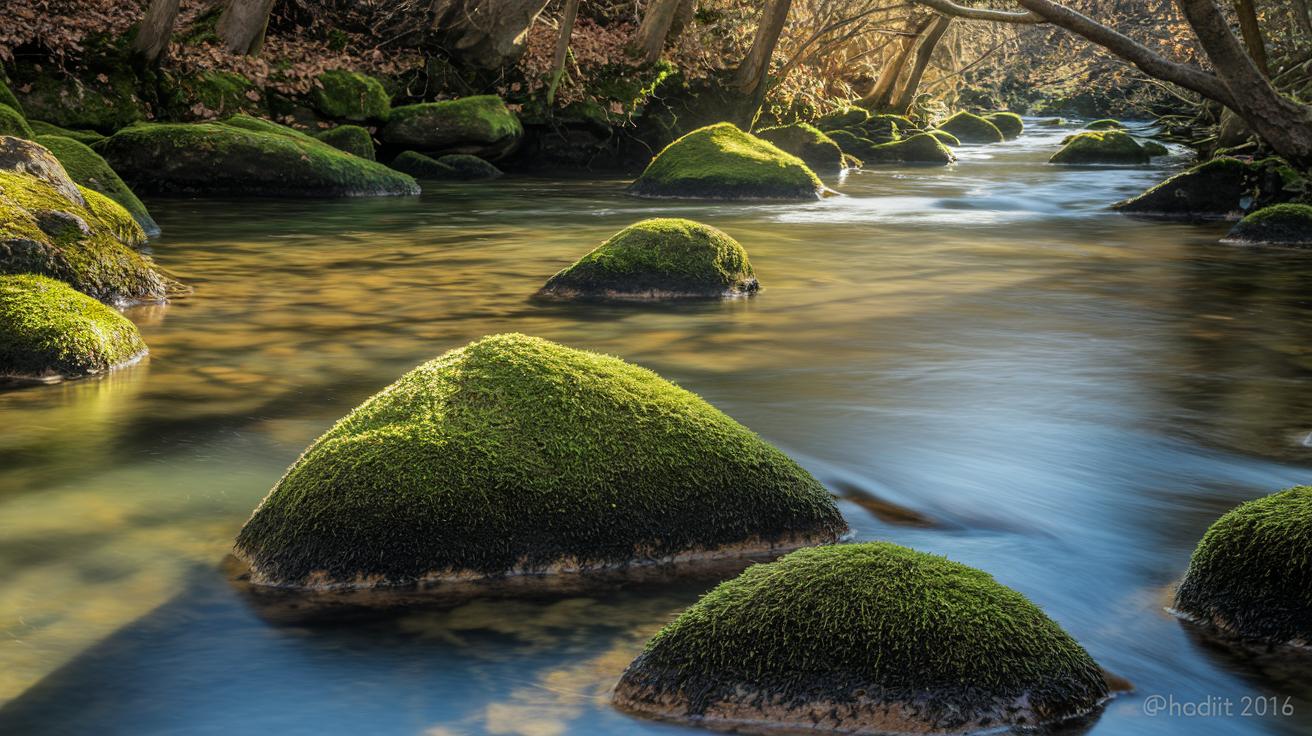
When you set up your photo gallery, imagine you are sharing the magic of an underwater world with a friend. Arrange your pictures in a simple, neat way so each one can show off its own charm. It’s like laying out a path where every stone tells its own story.
Next, try grouping photos that share a similar feel. Leave plenty of white space between each image, just like leaving room for gentle ripples in a quiet pond. This not only makes it easy to browse but also shows off how one design flows naturally into the next.
- Moss-covered rock riverbeds
- Driftwood "forest" compositions
- Sandy slope contrasts with dark gravel
- Tiered stone terraces simulating miniature mountains
When writing captions, choose plain and friendly words that point out the special details. Think of it as describing a beautiful underwater scene to someone who loves the awe of nature just as much as you do.
Final Words
In the action, this guide offered seven smart hardscape ideas to bring creativity to your aquarium, from grouping stones and aligning elements with water flow to adding tiny details that give life to your tank. The advice on material choices and DIY assembly helped paint a clear picture for setting up an inspiring underwater scene.
Keeping your aquatic haven balanced and fresh is all about regular maintenance and embracing creative design. Use these aquascaping hardscape ideas to make your tank a vibrant, thriving retreat for both fish and plant life.
FAQ
Aquascaping hardscape ideas Pinterest
The aquascaping hardscape ideas on Pinterest showcase creative setups where rock placements and water flow are highlighted, giving both beginners and pros numerous examples to spark inventive underwater designs.
Aquascaping hardscape ideas no plants
The aquascaping hardscape ideas with no plants emphasize using carefully placed stones and driftwood to create a striking underwater layout, underlining the natural beauty of minimalistic hardscape design.
Aquascaping hardscape ideas Reddit
The aquascaping hardscape ideas on Reddit combine community wisdom with imaginative rock and driftwood arrangements, offering practical DIY tips and inspiring visuals that address various skill levels in aquascaping.
Aquascaping hardscape ideas for beginners
The aquascaping hardscape ideas for beginners break down the basics of rock selection, spacing, and substrate layering, providing clear and approachable guidance to help create balanced and visually appealing aquascapes.
Aquascaping hardscape ideas DIY
The aquascaping hardscape ideas DIY guide walks aquarists through hands-on techniques for arranging rocks and driftwood, outlining essential steps that empower hobbyists to craft their own captivating underwater scenes.
Aquascape ideas for beginners
Simple aquascape ideas for beginners focus on combining key hardscape elements like rocks and driftwood with natural spacing, leading to a serene and balanced underwater display without overwhelming intricate details.
Hardscape aquarium rocks
Hardscape aquarium rocks are essential structural elements that anchor the aquarium layout, offering visual interest and practical hiding spots for fish while guiding water flow and enhancing overall tank stability.
Where to buy aquarium hardscape
The query on where to buy aquarium hardscape points to local pet shops, specialized online retailers, and aquascaping forums that offer quality rocks and driftwood, ensuring selections fit both design and functional requirements.
What rocks are good for aquascaping?
The answer on what rocks are good for aquascaping highlights natural, inert stones that maintain water quality, provide structural stability, and blend seamlessly with substrates for an aesthetically balanced underwater setup.
What is the rule of thirds in aquascape?
The rule of thirds in aquascape means dividing the tank into a three-by-three grid to position key elements strategically, ensuring the layout appears naturally balanced with pleasing visual harmony.
What is an example of a hardscape in an aquarium?
An example of a hardscape in an aquarium is a thoughtfully arranged cluster of large rocks and driftwood that acts as a focal point, introduces depth, and enhances the overall texture and appeal of the underwater scene.
Do you hardscape before or after substrate?
The hardscape should come after laying the substrate; this allows for a stable base to be set, ensuring that rocks and driftwood are securely placed for both durability and an attractive, layered aquatic design.