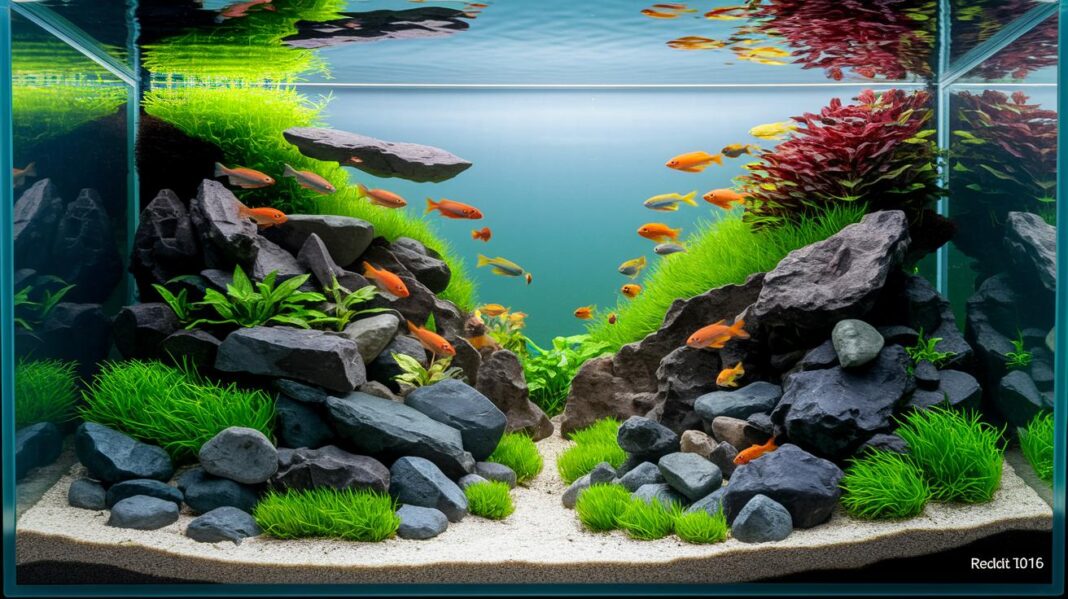

Have you ever noticed how rocks can really become the star of your aquascape? They’re much more than simple fillers, they create a strong base that links every part of your tank, like solid ground under a flowing stream.
In this post, we explore how the right rocks can change your aquarium’s look. They add a soft texture and a gentle depth that works perfectly with live plants and the calm, steady flow of water. I’ll share a few easy tips to help you pick and place rocks, turning your tank into a natural, inviting underwater scene.
Design Basics for Aquascaping with Rocks
Rocks are one of the key pieces in any beautiful aquascape, coming in right after driftwood. Think of them like the sturdy foundation of a building. They not only hold your design in place but also help set the stage for live plants and gentle water movement. Ever notice how nature likes a steady base to build on?
Using rocks is like putting together the framework of a house, each piece adds its own charm and helps everything feel balanced. When you arrange them with care, they team up with driftwood and other elements to create a pleasing mix of styles and textures. Their different shapes and sizes make your tank feel deeper and more natural, guiding the water in a gentle flow.
Picking the right rocks means you’ll need to think about how long they’ll last, their texture, and even how they change the water a bit. Some rocks may make the water a tad harder, while others keep the water just right for your fish and plants. And don’t forget the substrate, whether you choose sand, gravel, or a special aquasoil. It works with your rocks to form neat slopes and flat spots. A good tip is to let your main rock, like the Oyaishi, reach about two-thirds up your tank’s height for a balanced look.
Choosing Rocks for Aquascaping with Rocks
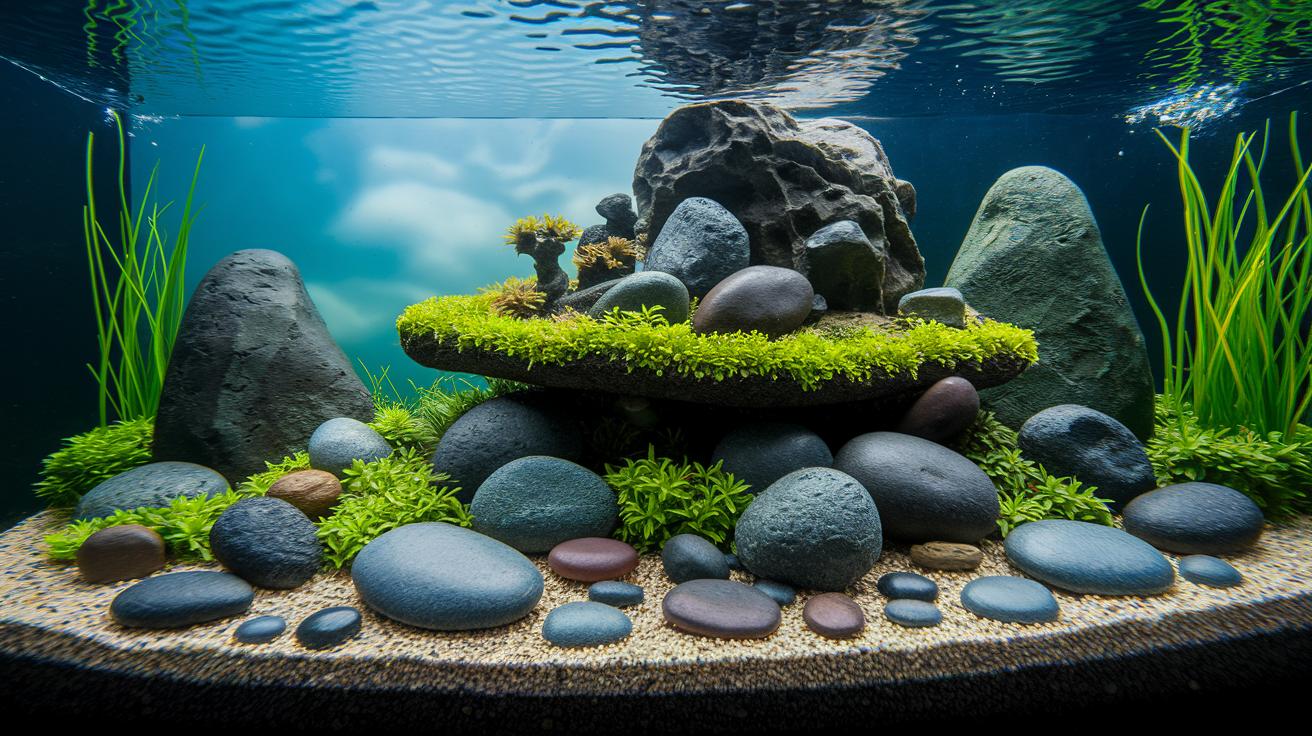
When you're picking stones for your aquascape, think about a few simple things: how sturdy they are, their shape, and whether they might change your water’s pH. Each rock has its own charm and texture that can boost your tank’s look while keeping conditions just right. For example, Seiryu rocks show off a jagged blue-grey beauty that works great in group settings like Iwagumi setups because of their uneven shape. Meanwhile, Ohko or Dragon Stones bring a warm, earthy look that keeps the water balanced, giving your aquarium a calm, neutral background.
Some stones, like Elephant Skin and Black Pagoda, have natural carbonates. They slowly increase water hardness, adding a tiny chemical twist, so you might need to keep an eye on them. Manten rocks mimic big boulders with their rugged, multi-shade surface while keeping the water steady. And if you love plants, Koke rocks are perfect since their surface invites moss, ferns, and Anubias to latch on and thrive, creating a rich green contrast. Lastly, Unzan Lava Rocks offer natural little pockets in their mountain-like contours, ideal for planting and designing a dynamic underwater scene.
| Rock Type | Appearance | Water Impact |
|---|---|---|
| Seiryu | Jagged blue-grey | Neutral |
| Ohko/Dragon | Earthy tan | Neutral |
| Elephant Skin | Grey, textured | Raises hardness |
| Black Pagoda | Layered black/brown | Raises hardness |
| Manten | Rugged, multitone | Neutral |
| Koke | Dark, moss-friendly | Neutral |
| Unzan | Red lava, pockets | Neutral |
Many aquascapers love buying stones by the pound for a perfect amount and layout, while others choose handy pre-measured nano packs for smaller designs. With free shipping on orders over $79.99, it’s never been easier to mix and match different stones to create a balanced, natural underwater artwork that looks good and works perfectly for your tank.
Implementing the Iwagumi Layout in Aquascaping with Rocks
The Iwagumi style is all about celebrating nature through carefully arranged rocks that come in odd-number groups. It uses similar stones to form a balanced look that feels both natural and lovingly planned. Every rock in an Iwagumi setup has its own role, much like pieces in a puzzle, building a sturdy yet artistic foundation. When you stick to odd numbers, it gives your aquascape a playful, lively feel. Plus, placing the rocks on a flat or gently sloping base helps create a sense of depth and harmony.
Oyaishi (Primary Stone)
The Oyaishi is the star of your underwater display. It should be the biggest and most eye-catching rock, placed right in the center. Ideally, it should reach about two-thirds of your tank’s height. This central piece sets the mood, drawing the gaze and offering a firm anchor that keeps everything balanced and steady.
Fukuishi (Secondary Stones)
Fukuishi are the rocks that stand by the Oyaishi. They’re a bit smaller but just as attractive, arranged on either side to mirror the main rock. This careful placement helps your aquascape feel united, ensuring that every stone works together without stealing the spotlight.
Suteishi (Supporting Stones)
Suteishi are the smaller rocks that fill in the gaps and add texture to the scene. Their gentle presence softens the overall design, and in simpler setups like the Sanzon style, you might even choose to leave them out. It all comes down to your personal taste and how you want your underwater garden to feel.
Using an odd-number planting scheme around these stones further enhances the blend of hardscape and live aquatic plants, transforming your tank into a peaceful, artful water world.
Step-by-Step Rock Arrangement Guide for Aquascaping with Rocks
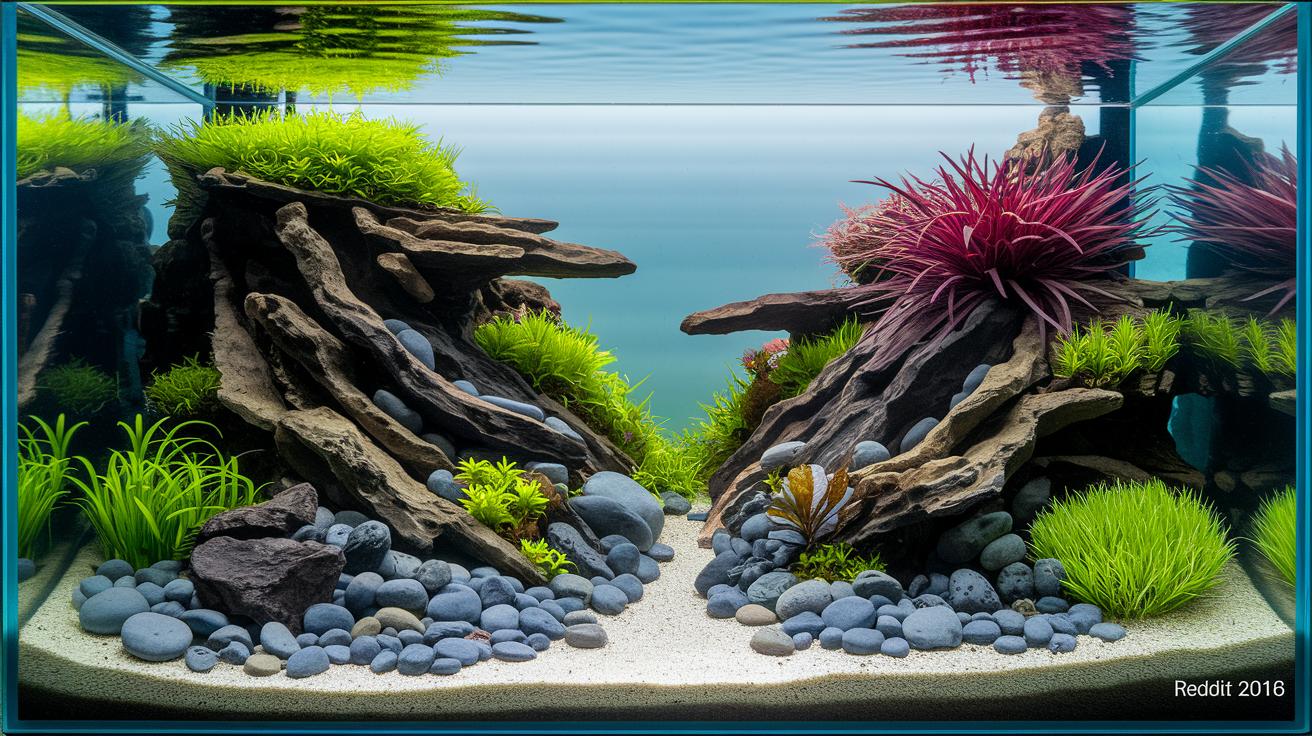
If you’re diving into the world of aquascaping with rocks, here’s a friendly guide to get you started. For more details on how to prepare your substrate, position your stones, and add plants, check out the Iwagumi Layout section. One cool tip here is to balance the sizes of stones using an A:B ratio with the main Oyaishi and the secondary Fukuishi.
- Start by leveling or gently sloping your substrate.
- Place the Oyaishi stone right at the focal point.
- Use the A:B ratio to set the Fukuishi stone at the right size and position.
- Add in the Suteishi stones as supportive accents.
- Then, plant around the rocks to soften their edges.
Before adding water, take a moment to adjust the stones until everything flows naturally. Enjoy the process, each little tweak makes your aquascape feel more alive!
Integrating Rocks with Aquatic Plants in Aquascaping with Rocks
When setting up your aquarium, the very first thing to consider is the right substrate, kind of like the healthy meal your plants need to thrive. Choosing aquasoils that slowly release ammonia gives your plants nutrients such as calcium, magnesium, potassium, iron, and zinc, and at the same time, it creates a firm base for their roots. Adding a mix of sand and gravel provides a gentle hold for delicate roots, and arranging the substrate in layers that match your tank's slopes creates smooth, natural gradients. It's a lot like planting in your garden: you want rich soil that both nourishes and supports your plants.
Rocks like Koke are wonderful companions to your aquatic plants. Their rough, porous surfaces offer a cozy place for moss, ferns, and Anubias to grow, forming little pockets of green life on hard edges. When you nestle Koke near clusters of plants, it creates beautiful green carpets that blend stone and plant life naturally, like a mini forest wrapped in a gentle morning mist.
Keeping an eye on your tank's water chemistry is just as important. The substrate holds essential ions that help keep the pH in check and maintain steady nutrient levels for all the inhabitants, creating a balanced little world in your aquarium.
Finally, be thoughtful about where you place your rocks. Arranging them to frame the plant groupings can enhance both their appearance, allowing the stones and the greenery to elevate each other. It all comes together to form a scenic underwater landscape that feels as natural as a serene pond.
Maintaining Rocks in Aquascaping with Rocks
Before you drop your stones into the tank, take a little extra time to prep them. A good scrub, soak, or even a quick boil can wash away any dirt and extra tannins that might change your water's color. A simple water rinse removes loose bits, and a soak or boil helps clear off stubborn gunk. This step keeps the natural feel of your rocks so you can enjoy their beauty just as it is.
Once your aquascape is up and running, keep an eye on your water's hardness and pH levels, especially if you're using stones like Elephant Skin or Black Pagoda, which can boost water hardness. Every so often, pull out a stone and gently brush away algae or buildup, using only a soft brush to avoid scratches. Regular checks, especially after big water changes, help maintain a balanced home for your aquatic friends and keep your rocks looking their best.
Advanced Design Concepts in Aquascaping with Rocks
Imagine designing an underwater mountain where layers of rock create a stunning highland look, or setting up a calm, minimalist zen garden right in your tank. It’s like painting a picture with water, each stone adding a bit of its own story. Picture a bold centerpiece that stands out against a peaceful background, much like nature’s own sculpture.
Adding layers to your design really brings your aquascape to life. Think of mixing in mossy crevices and natural planting nooks that add charm and invite a closer look. The mix of rugged rock textures with soft, green sprouts turns plain stones into living art, a gentle burst of nature interwoven with carefully placed rock clusters.
Today’s aquascaping trends are all about caring for the environment. Designers are choosing eco-friendly stones and using customizable kits that match your personal style. With these modular sets, you get endless possibilities to create a tank that is both modern and respectful to nature, a true aquatic masterpiece.
Final Words
in the action, this guide walked you through designing balanced underwater setups. You learned how to select, position, and care for your rocks while pairing them with supportive substrates and plants. Each step, whether it was establishing the Iwagumi layout or fine-tuning rock arrangement, adds a touch of magic to your tank.
Taking these techniques into your routine can boost your confidence in aquascaping with rocks, leading to a vibrant, healthy aquatic environment. Enjoy every moment as your creation comes to life!
FAQ
How do I start aquascaping with rocks as a beginner?
The aquascaping with rocks for beginners means planning a layout where you select stones that match your tank size and balance mass and scale, setting a natural scene with subtle plant pairings.
How do driftwood and rocks work together in aquascaping?
The aquascaping with driftwood and rocks design blends warm wood elements with sturdy stones, creating an arrangement that feels both organic and structured in your aquarium.
Where can I find rocks for aquascaping?
The aquascaping with rocks for sale market offers natural stones from online vendors and local suppliers, often sold by the pound or in nano packs to suit different tank sizes and designs.
How do I create an Iwagumi aquascape using specific stones?
The Iwagumi aquascape uses odd-numbered, same-type stones where the largest stone acts as the centerpiece, balanced by secondary and supporting stones for a peaceful, balanced underwater layout.
What are creative rock aquascape ideas with rocks and wood?
The rock aquascape ideas with rocks and wood combine varied textures and sizes to craft natural aquatic scenes, blending sturdy stones with organic wood elements for visually dynamic setups.
Which rocks are best for aquascaping?
The aquarium rocks best for aquascaping are those with durability, attractive textures, and a neutral pH impact. Popular choices include Seiryu, Dragon Stone, and Koke, which offer both beauty and balance.
Can aquarium plants grow around rocks?
The chance for aquarium plants to grow around rocks is strong because many stones support moss or Anubias, while a proper substrate provides a firm base for plant roots in a rock-based setup.
Do rocks cause ammonia issues in aquariums?
The effect of rocks on ammonia levels is minimal if you pre-clean them. Scrubbing, soaking, or boiling rocks removes debris and tannins, ensuring a safe environment for fish and aquatic life.
How do I rockscape an aquarium?
The process to rockscape an aquarium starts by leveling your substrate, positioning a focal stone first, placing balanced support stones, and finally integrating plants for a soft, natural finish.