

Ever wonder if your fish tank could be the coolest underwater hangout? Picture a little aquatic world where every finned friend adds its own splash, like pals gathering for a joyful get-together.
In this post, I'll share which fish blend best to create a calm yet lively setting. From gentle bottom dwellers to playful swimmers gliding in the middle, each fish brings a burst of color and serenity to your tank.
Keep exploring, and you'll see how these friendly fish make your aquarium feel like a warm, vibrant mini-community.
Top Community Tank Fish Picks
Every fish here was chosen for its friendly nature and its knack for blending harmoniously with others in a community tank. Each species adds a splash of color and a warm, calming energy to your underwater world.
They work wonders together, with every fish playing a specific role. Some like hanging out at the bottom, while others glide through the middle of the tank. This mix keeps your aquarium balanced, lively, and a joy to watch, like the gentle ripple of water on smooth stones.
- Cory Catfish (Corydoras): These peaceful bottom dwellers, about 2 to 3 inches long, help tidy up by scavenging leftover food at the tank’s floor.
- Neon Tetra (Paracheirodon innesi): Small and lively, they grow up to 1.5 inches and flash vibrant red and blue hues. They shine best when kept in groups of six or more.
- Cherry Barb (Puntius titteya): These friendly fish are known for the males turning a bright red as they mature. They mix well with plants and keep a calm demeanor.
- Guppy (Poecilia reticulata): Hardy and colorful, guppies bring endless variations in color and tail designs, making them an energetic addition to your tank.
- Platy (Xiphophorus maculatus/variatus): With sizes around 2 to 3 inches, platys do well in temperatures between 70°F and 82°F and show off a range of lovely colors.
- Bristlenose Pleco (Ancistrus sp.): Growing to about 4 to 5 inches, this algae eater is a standout with its unique facial bristles and helpful cleaning habits.
- Otocinclus Catfish (Macrotocinclus affinis): A petite and shy algae eater, these fish, about 1.5 to 2 inches long, are great at keeping your plants free of algae.
- Dwarf Gourami (Trichogaster sp.): Measuring around 2.5 to 3 inches, this beautiful centerpiece fish is best kept on its own to avoid territorial spats.
These selections bring a sense of balance to your freshwater community tank. With bottom feeders, mid-level swimmers, and a standout solo swimmer, no spot feels overcrowded. Their different sizes, temperaments, and roles help create a thriving, dynamic aquatic ecosystem that’s as calming and colorful as a coral reef at sunrise.
Behavior Traits of Community Tank Fish
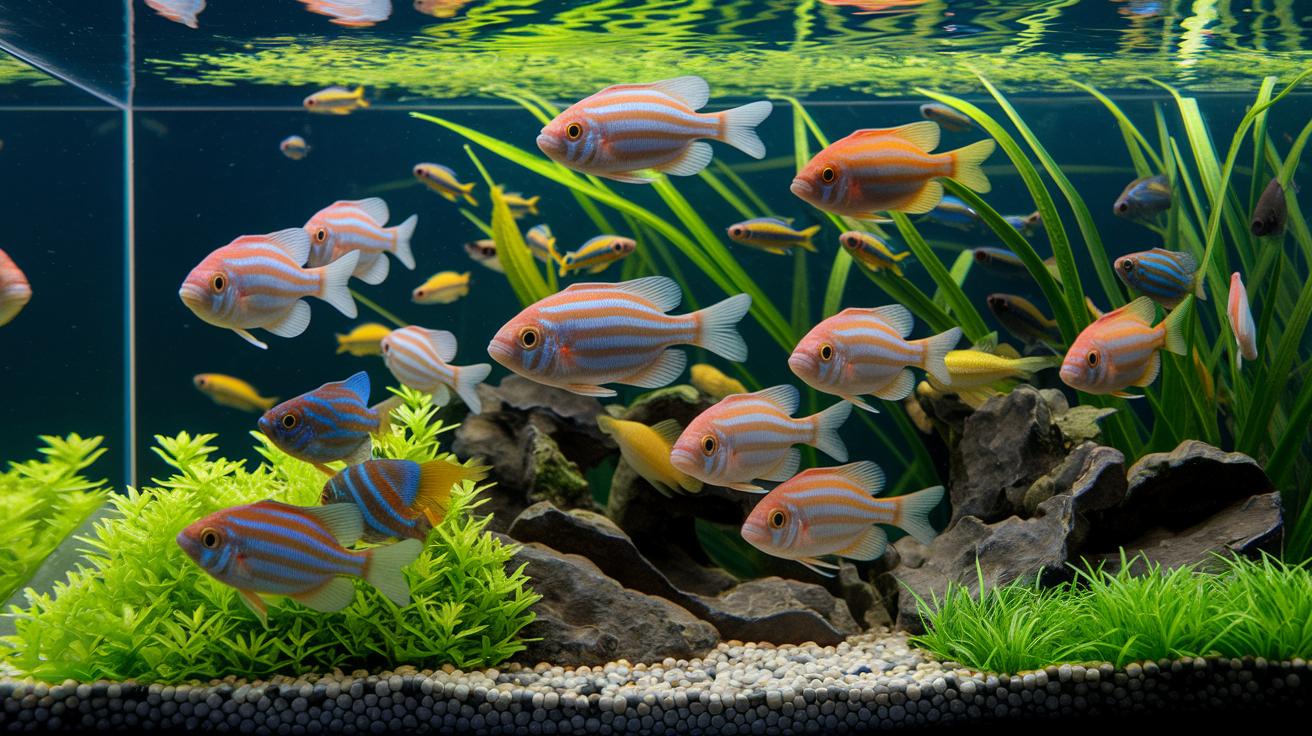
When you peek into a lively community tank, you'll notice each fish finds its own cozy corner. The fish that hang out at the bottom, like Cory Catfish, quietly wander over to pick up any spare food. In the middle, the Neon Tetras shimmer as they swim together in a sparkling school. Meanwhile, the friendly Cherry Barb enjoys a relaxed vibe with a dash of playfulness, while the Dwarf Gourami prefers having its own little lounge near the top. And then there are the gentle Otocinclus, who thrive in small groups, busily tidying up algae like little underwater cleaners.
| Species | Temperament | Recommended Group Size | Compatibility Tips |
|---|---|---|---|
| Corydoras | Chill bottom dwellers that keep things peaceful | 6 or more | Fits in well with other gentle fish |
| Neon Tetra | Lively mid-level swimmers with a calm spirit | 6 or more | Best enjoyed in a group to show off their bright hues |
| Cherry Barb | Easygoing with a touch of playful energy | 6 or more | Mixes perfectly with other mellow tank mates |
| Dwarf Gourami | Likes its own space, a bit territorial with its own kind | Best kept solo | Enjoys being the lone star; avoid pairing with another gourami |
| Otocinclus | Shy, small algae-eaters that work best in a team | 3-6 | Stick them together for efficient cleaning |
Use this handy guide to mix different fish species that naturally swim at varying levels in your aquarium. With the right blend, every fish finds its spot, and your tank stays balanced and full of life.
Tank Setup & Water Parameters for Community Tank Fish
Choosing the right tank size is like laying the foundation for a peaceful underwater neighborhood. Even a 20-gallon tank can be a great home for many fish. Figuring out how many fish a 20-gallon tank can comfortably hold helps prevent overcrowding and ensures every finned friend has plenty of room to swim.
Keeping the water just right is super important for your fish. For example, Neon Tetras do best in waters between 72°F and 78°F. Platies, on the other hand, enjoy a range of 70°F to 82°F and can even handle a dip to 60°F sometimes. Corydoras and Otocinclus feel most at home around 72°F to 78°F, while Cherry Barbs and Plecos thrive when it stays between 72°F and 80°F. A pH level of 6.5 to 7.5 with a bit of hardness makes the water a welcoming space for everyone.
A soft bed of fine gravel or sand is perfect for bottom dwellers. Dense plants and decor like driftwood provide snug little hideaways, especially for shy species such as Otocinclus. A medium flow filter keeps active swimmers like Neon Tetras and Cherry Barbs happy, and balanced lighting makes the plants and vibrant fish colors truly shine.
Keeping your water steady is key for happy, healthy fish. When your tank is set up just right, every species enjoys a calm, secure home, a little underwater paradise to call their own.
Feeding & Care Tips for Community Tank Fish
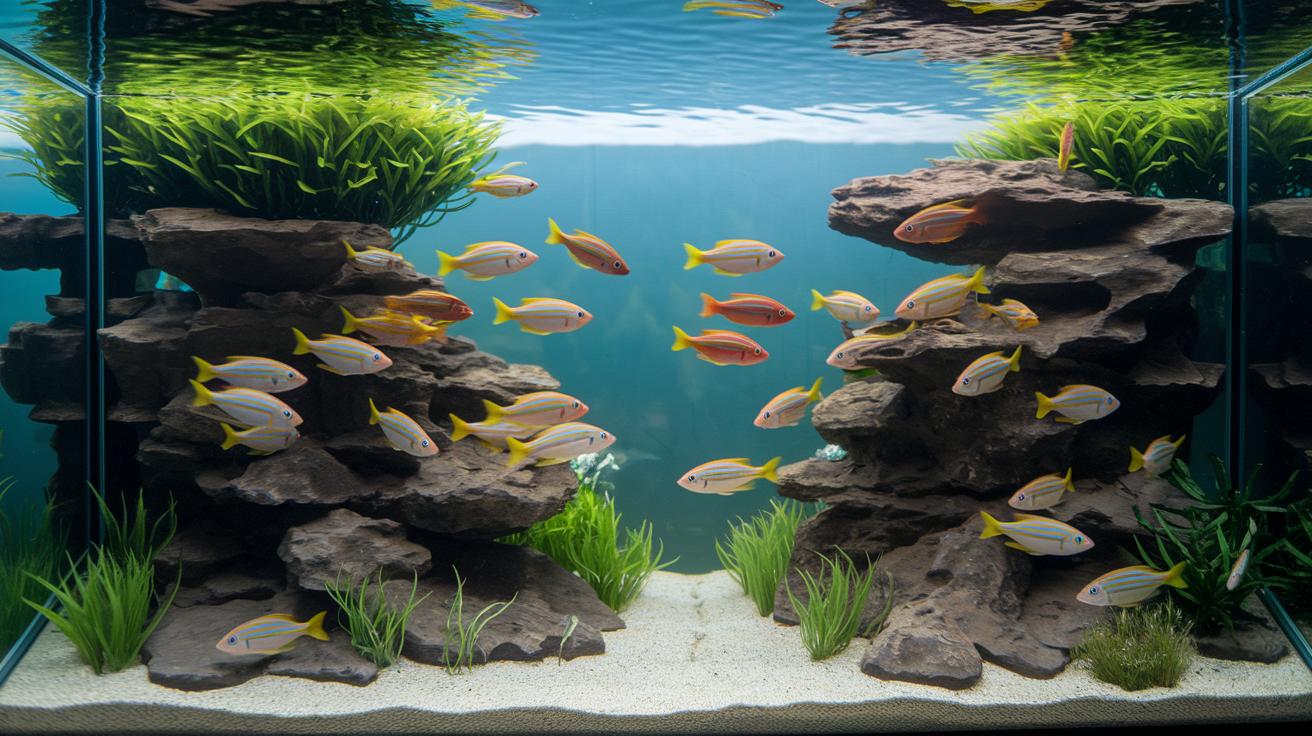
A good feeding schedule is like a gentle tide that keeps your tank happy and lively. Most fish do best with small meals given once or twice a day, which helps them stay energetic and keeps the water clear like a calm pond. You might try rotating foods during the week, maybe a day of high-quality flakes, another day with tiny pellets, and a treat of freeze-dried goodies, to keep mealtime fun and full of variety.
Each fish has its own taste. Neon Tetras, for example, love a mix of flake food and tiny pellets, while Cory Catfish do great with sinking pellets and maybe a nibble of bloodworms or brine shrimp now and then. Guppies and Platies enjoy a pinch of protein pellets paired with flakes and a hint of plant matter. For Dwarf Gouramis, a simple blend of flakes and small pellets is just right, and Rummynose Tetras appreciate basing their diet on flakes with a surprise micro pellet every so often. Some species, like Otocinclus and Celestial Pearl Danios, prefer algae wafers mixed with pellets to keep them active and content.
Taking care of your fish goes beyond feeding. Regular water changes, about 25% each week, help keep the tank as pristine as a clear mountain stream. Keeping nitrate levels low (under 20 ppm) and giving the filter media a good rinse every month also adds up to a healthier, happier underwater world. Enjoy watching the water ripple and dance as you care for your little aquatic friends.
Advanced Community Tank Fish Pairing Strategies
When building a peaceful tank, start by picking fish that thrive in similar water. It’s like setting a stage where every actor loves the same lighting. For instance, Neon Tetras feel happiest in groups of 6 to 10, and Corydoras need a group of at least 6. Mixing boisterous, larger fish with smaller, gentle ones can lead to stress, so choose your companions wisely.
Layered Tank Zoning
Think of your tank as having its own layers, like the water's surface, middle, and bottom. Top dwellers like Gouramis adore the upper levels of the tank, while colorful Tetras often swim in the middle. Bottom feeders such as Corydoras and Otocinclus enjoy the calmer lower areas.
Adding decor that breaks the tank into different zones gives each fish its personal nook. Visual barriers and quiet hiding spots can keep conflicts at bay and make the tank feel as balanced as a calm river.
Stocking Density Guidelines
A good rule is to allow about 1 inch of fish for every gallon of water. This simple tip helps ensure that your fish aren’t cramped and always have enough space to glide around.
Watch your tank closely and be ready to adjust group sizes if you notice any signs of stress. With a few small tweaks, you can keep your fish community thriving and your aquarium a peaceful underwater haven.
Recommended Community Tank Fish Combinations
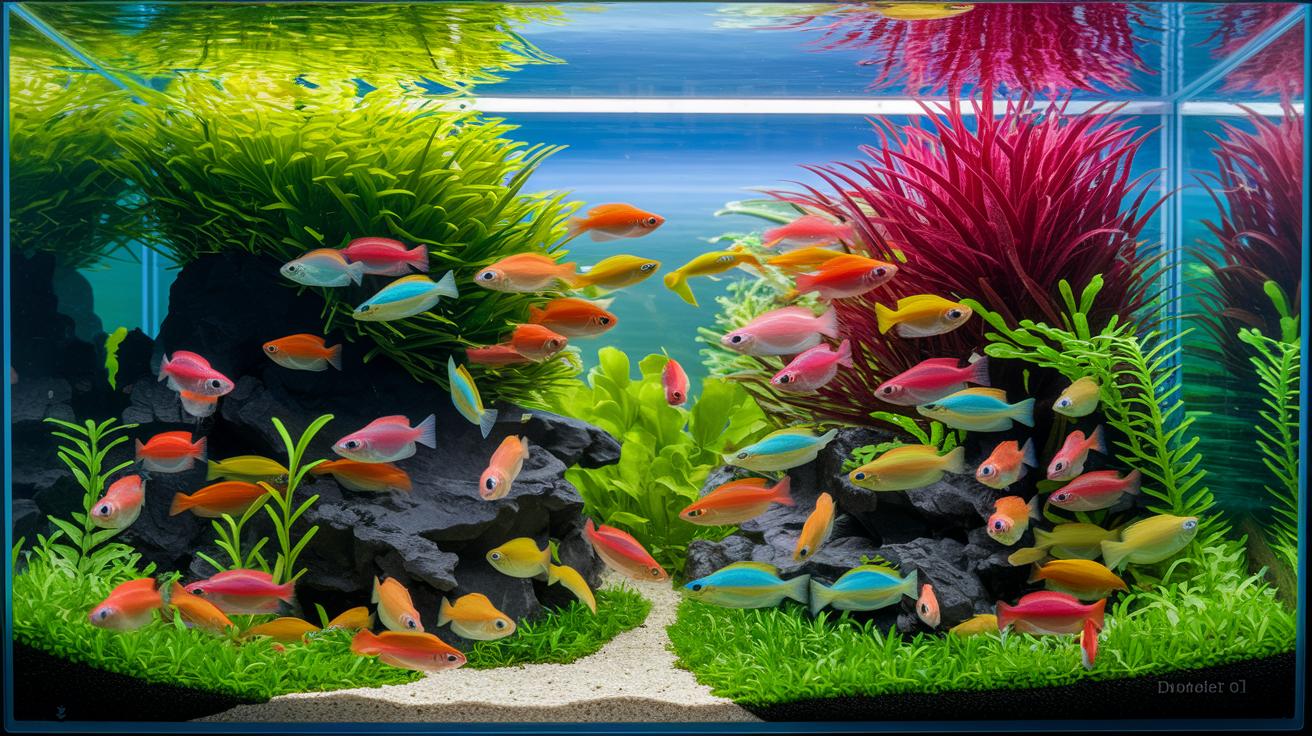
In a lush, planted 20-gallon tank kept at 72°F to 78°F, a lively trio of Neon Tetras, Corydoras, and Otocinclus work together beautifully. These fish bring plenty of movement and help tidy up the tank naturally, while their bright colors make the tank sparkle. This mix is really friendly for anyone setting up their first community aquarium.
Next, imagine a 30-gallon tank maintained between 74°F and 82°F. Here, Cherry Barbs, Platies, and a Bristlenose Pleco form a balanced group. The bright Cherry Barbs and Platies swim at mid-levels, while the Pleco hangs around the bottom. Together, they create a peaceful habitat with lots of room for swimming and exploring.
Then there is a cozy 15-gallon setup with water temperatures from 70°F to 80°F, where Celestial Pearl Danios, Guppies, and a single Dwarf Gourami live in harmony. The Danios and Guppies zip around the tank with energetic movements, and the Dwarf Gourami becomes the charming centerpiece. This small mix offers a burst of color and motion, making every viewing a treat.
Finally, in a 20-gallon tank with driftwood and caves, Rummynose Tetras pair up with Corydoras and Otocinclus for a perfect blend of fun and function. In this setup, the tetras add lively movement, while the Corydoras and Otocinclus help keep the tank clean by gliding along the bottom. It’s an ideal mix for beginners who want both beauty and practicality in their aquarium.
Final Words
In the action of building your aquarium, you explored top picks, balanced behavior, ideal water setups, careful feeding practices, expert pairing, and ready-to-go species mixes. Each tip guides you toward creating a lively underwater scene where every fish plays a part.
Your tank can become a colorful haven of calm and care. With these insights, you’re well on your way to enjoying the best community tank fish, living in a peaceful and well-tended aquatic display.
FAQ
Q: What fish are best for a community tank?
A: The best community tank fish include Neon Tetra, Corydoras, Guppy, Cherry Barb, Platy, Bristlenose Pleco, Otocinclus, and Dwarf Gourami. They mix well and live in peace together.
Q: Which fish are ideal for beginners in community aquariums?
A: Beginner-friendly options such as Guppies, Neon Tetras, and Corydoras offer hardy and low-maintenance choices, making setup simple and fun while keeping a calm tank environment.
Q: Which fish are recognized as friendly and low maintenance?
A: Friendly, low-maintenance choices include Neon Tetras and Corydoras. These fish are calm, require little upkeep, and add vivid color and activity to a peaceful community tank.
Q: What centerpiece fish can brighten a community tank?
A: A bright Dwarf Gourami or a vibrantly colored Guppy can serve as a captivating centerpiece, drawing attention with stunning hues while staying gentle with other tank mates.
Q: Is a Siamese fighting fish suitable for a community tank?
A: A Siamese fighting fish often exhibits territorial behavior and may not mix well with other species. They are best kept alone or paired with very careful selection of companions.
Q: Are goldfish appropriate for a community aquarium?
A: Goldfish require cooler water and extra space, which makes them less compatible with tropical species. They need separate care and are best housed in their own setup.
Q: What are good options for a 40-gallon community tank?
A: In a 40-gallon tank, combining larger peaceful fish like Bristlenose Pleco or Cherry Barb with smaller species such as Neon Tetras and Corydoras creates a balanced and vibrant community.