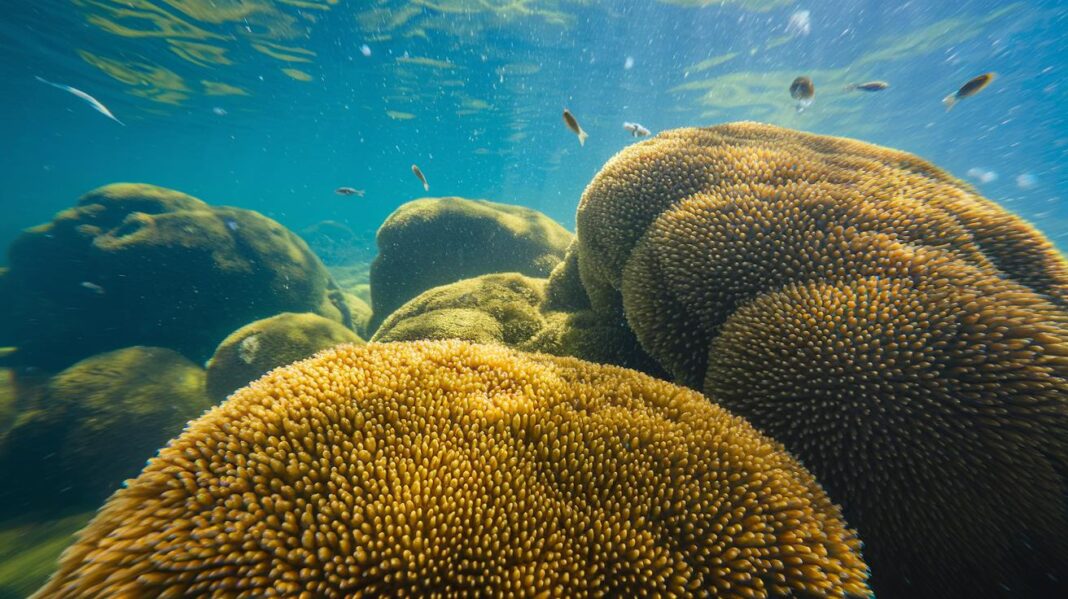

Have you ever noticed a light brown film in your tank and wondered if it's an issue?
At first, brown algae might seem unsightly, but it’s really a sign that your tank is starting to find its balance, like a gentle ripple guiding you toward a clearer, healthier aquarium.
Think of it as nature’s way of setting the stage for a brilliant setup.
In this post, we explore what triggers these algae blooms and reveal how they can lead to an even more vibrant tank over time.
Stick with us and you'll soon see how this common visitor might just be a promise of good things to come.
Overview of Brown Algae: Identification and Impact in Fish Tanks
Brown algae, also known as diatoms, often show up as a light brown film on your tank's surfaces. This film is like a mix of broken down bits, frothy organic slime, and tiny living creatures that you might not even see, all coming together to form a soft, brown haze, kind of like a thin, dusty layer on a windowpane, but inside your aquarium.
These algae usually appear in new tanks within the first one to three weeks, especially when you have the right lighting. They use sunlight to make energy, a process called photosynthesis, much like how plants work. Even though the film might not look very pretty at first, it doesn't harm your fish, shrimp, or snails. In fact, some of them actually like to nibble on it!
Over time, this brown film tends to fade away on its own, most tanks will see a big improvement after about four to six months as everything balances out naturally. You can also gently scrape it off or let algae-eating buddies, like certain snails, help keep your tank clear. It’s a bit like watching a snail slowly munch away at a layer of dust, leaving behind clearer glass and a more peaceful scene.
So, if you spot this brown film in your tank during its early days, don't worry. It’s just part of your aquarium’s natural journey towards a balanced ecosystem, adding a little extra charm to your underwater world.
Common Causes of Brown Algae Blooms in Fish Tanks
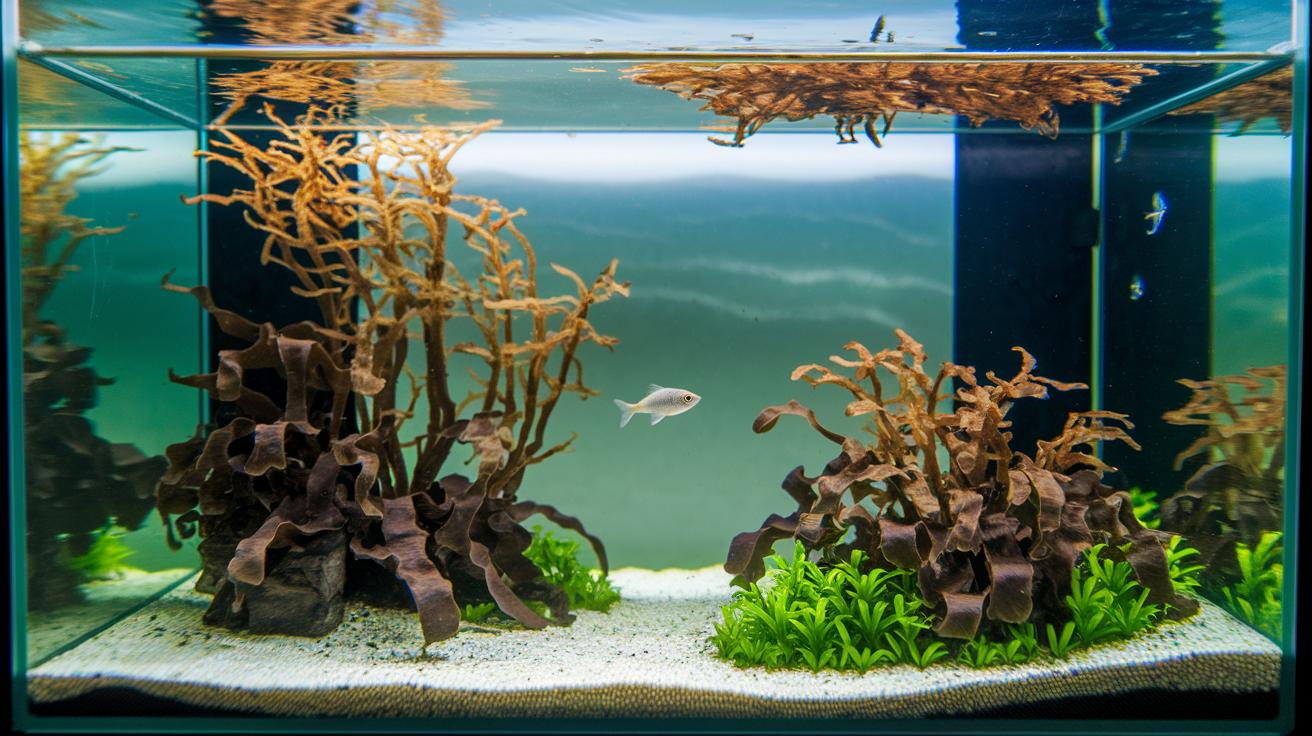
When you first set up your fish tank, you might notice brown algae beginning to appear. These algae come from tiny diatoms that love new tanks where the water is still settling. They feed on extra nitrates and phosphates in the water, much like weeds sprouting in an over-fertilized garden.
Low light can also add to the problem. Brown algae soak up blue light and are quick to show up in dark corners of your tank, especially when there aren’t enough live plants around to use up those nutrients.
Silica in the water is another factor. Silica is a natural mineral from rocks like quartz that helps build the sturdy walls of diatoms, making them even tougher. In tanks with unstable water chemistry, low light, and a sprinkle of silica, brown algae find the perfect conditions to bloom.
- Unstable water chemistry during the cycling stage
- Low-light spots that encourage algae growth
- Silica-rich water that boosts diatom structures
Proven Methods to Remove Brown Algae in Fish Tanks
Start by gently sweeping away the algae with some simple tools. Imagine it as clearing a mist from your underwater world. You can use a long scraper, an old gift card, or even magnetic cleaners. I once tried a gift card along the tank walls, and wow, that stubborn film disappeared in minutes.
Next, give your tank decorations a little extra care. Every few weeks, dip them in bleach and then let them soak in a strong water conditioner for a few hours. This step helps neutralize any leftover bleach and keeps harmful chemicals away from your fish.
Another neat trick is to mix reverse osmosis water with your conditioned tap water. This blend cuts down on nitrates and silica, the very nutrients that diatoms love. The result is a clearer tank that sets a peaceful stage for your fish.
Keeping up a regular cleaning routine is key. Weekly gravel vacuuming and partial water changes help sweep away debris and excess nutrients, which could otherwise spark another algae bloom. And remember, feeding too much is like inviting trouble, it increases waste and feeds unwanted growth.
| Step | Action |
|---|---|
| Physical Cleanup | Use a long scraper, gift card, or magnetic tool to remove algae |
| Decoration Care | Bleach and soak decorations to neutralize any leftover chemicals |
| Water Blending | Mix reverse osmosis water with conditioned tap water to lower nitrates and silica |
| Regular Maintenance | Vacuum gravel weekly and do partial water changes to clear debris |
| Feeding | Avoid overfeeding to keep nutrient levels in check |
Together, these simple steps work like a gentle current, clearing away diatom films and restoring that crystal-clear view in your aquatic haven.
Natural Brown Algae Control with Plants and Algae-Eaters
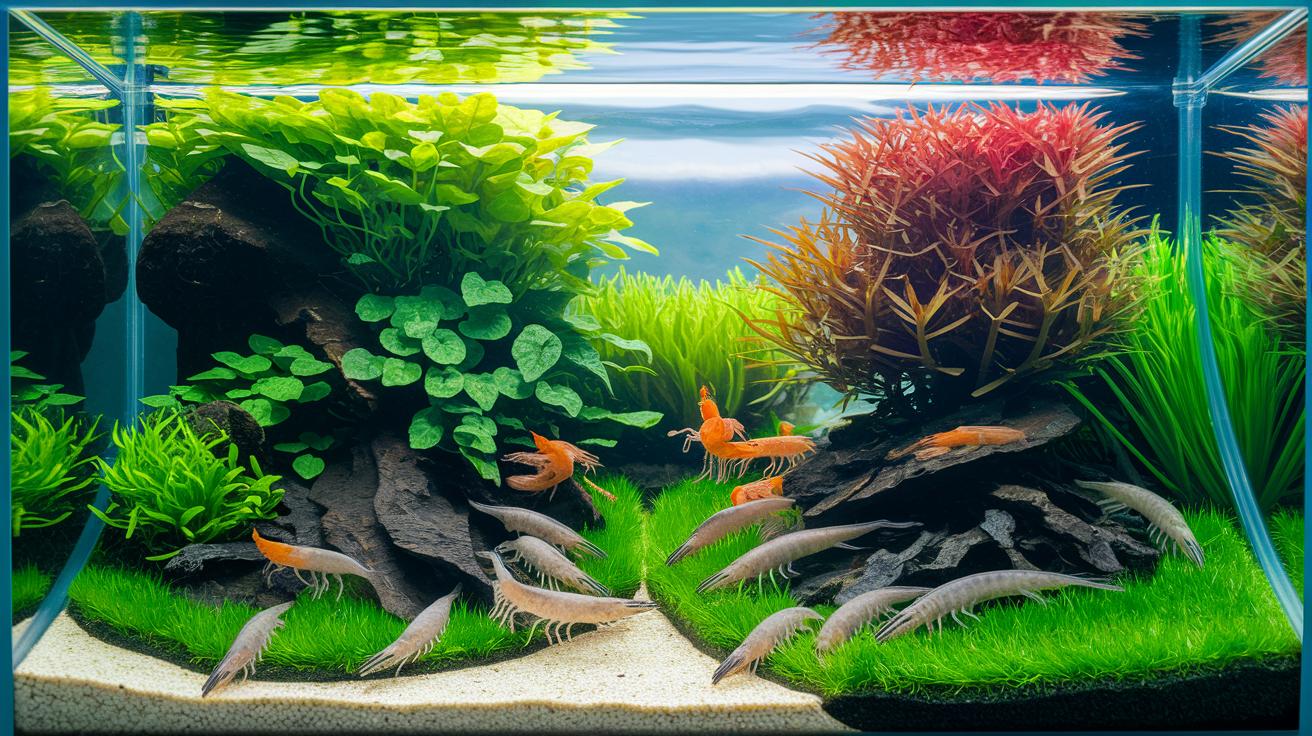
Imagine your tank as a little underwater garden, where fast-growing plants work like nature’s own cleaners. They quickly soak up extra nutrients, which means pesky diatoms can’t settle in and make a mess. I remember adding a bunch of these speedy plants, and wow, the water turned so clear, almost like the plants were scrubbing away an unwanted film.
Then, invite your algae-eating friends to join the party. Bushy-nosed plecos, friendly snails, little shrimp, and small fish all help out by nibbling on the thin brown film. These gentle creatures keep surfaces fresh, just like gardeners tending to their blooms. It’s amazing to see how each one plays a part in keeping the whole tank balanced.
Fast-growing plants lower available nutrients for diatoms.
Algae-eaters like plecos, snails, shrimp, and small fish chew on the brown film.
Putting these natural helpers together creates a team effort that brightens your aquarium without any harsh chemicals. Isn't it fun how nature offers such a simple, effective solution?
Preventive Maintenance Strategies to Combat Brown Algae in Fish Tanks
Begin by planning a water change each week and taking time to vacuum the tank’s gravel. This simple routine lowers nitrate and silica levels, nutrients that diatoms love, which keeps your tank water balanced and stops algae from finding a cozy spot. Picture your tank as a tiny underwater world; even a little extra nutrient can create a comfy home for algae, so regular cleaning really breaks up their hideout.
Then, make it a habit to trim away any dead plant matter. Removing withered leaves stops ammonia spikes that could otherwise feed the algae. I remember one sunny afternoon spent gently snipping away dead parts, and it made a big difference in keeping the water clear and the tank healthy.
Another helpful tip is to boost your water flow with a pump or a stronger filter. More circulation means fewer dead spots where brown algae can settle, like water gently streaming through every corner of your aquarium.
Also, pay attention to your tank’s lighting. Keeping it lit for only 6 to 8 hours a day lets the good aquatic plants use up extra nutrients before algae can take over. And by feeding your fish just a little, you reduce waste and help prevent organic buildup in the tank.
- Weekly water changes and gravel vacuuming
- Regular trimming of dead plant matter
- Boosting water flow with pumps or stronger filters
- Limiting light to 6-8 hours and feeding sparingly
Troubleshooting Persistent Brown Algae Issues in Fish Tanks
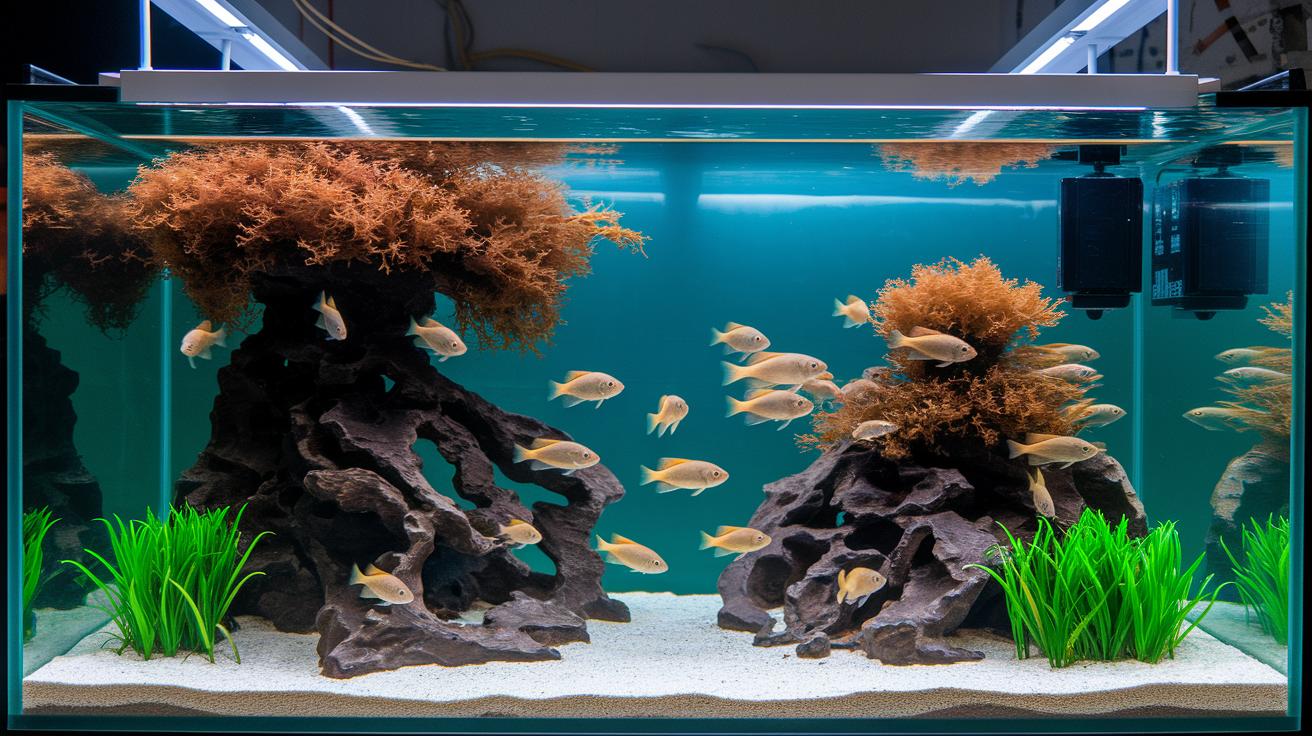
If your tank still shows those pesky brown algae patches after a good cleaning, it might be time to look closer. Sometimes, what you see isn’t really a stubborn algae invasion but a quirk in how diatoms (tiny algae-like organisms) behave. One neat trick is to ease up on the bright blue LED lights, this little change often helps calm down those persistent blooms. I once dialed down the blue intensity a bit, and to my surprise, the brown spots started to fade away.
Instead of going over the usual cleaning routines, try focusing on these small tweaks. Think of it like fine-tuning your daily setup, adjusting little things that might be letting the films hold on even when all the standard steps have been done.
Final Words
In the action, we explored brown algae in fish tanks, from spotting their brown film to understanding what triggers their blooms. We looked at how mechanical cleaning, live plants, and algae-eaters work to keep your tank clear.
We also talked about setting up a maintenance routine that keeps your water balanced and keeps algae in check. Every tip comes from real experiences with algae challenges in freshwater setups. Enjoy a clean, healthy tank and remember to keep an eye on brown algae in fish tank issues with care and consistency.
FAQ
Q: What causes brown algae in a fish tank?
A: The factors causing brown algae in a fish tank include unstable water chemistry, high nutrient levels from overfeeding, and low-light areas. Diatoms thrive under these conditions, forming a brown film on surfaces.
Q: How do you treat and get rid of brown algae in a fish tank?
A: Treating brown algae involves manually scrubbing affected surfaces, performing regular water changes and gravel vacuuming to lower nutrients, and reducing lighting duration. This natural approach helps clear the diatom film over time.
Q: Is brown algae bad for fish?
A: Brown algae is not harmful to fish, shrimp, or snails. This harmless diatom film usually fades over a few months as the tank’s balance improves and algae-eating species help keep it in check.
Q: Where can I see pictures of brown algae in a fish tank?
A: Images of brown algae typically show a slimy, brown film covering tank surfaces. A quick online search will provide many visual examples, which can help identify the algae in your aquarium.
Q: What creatures can help eat brown algae in a fish tank?
A: Certain algae eaters like bristlenose plecos, suckermouth catfish, Amano shrimp, and even some snails actively graze on brown algae, naturally reducing its presence in your tank.
Q: What do discussions on Reddit say about brown algae in fish tanks?
A: Reddit posts often share insights and personal tips on handling brown algae. Hobbyists discuss effective cleaning routines, tank maintenance practices, and natural control methods that keep algae growth in check.