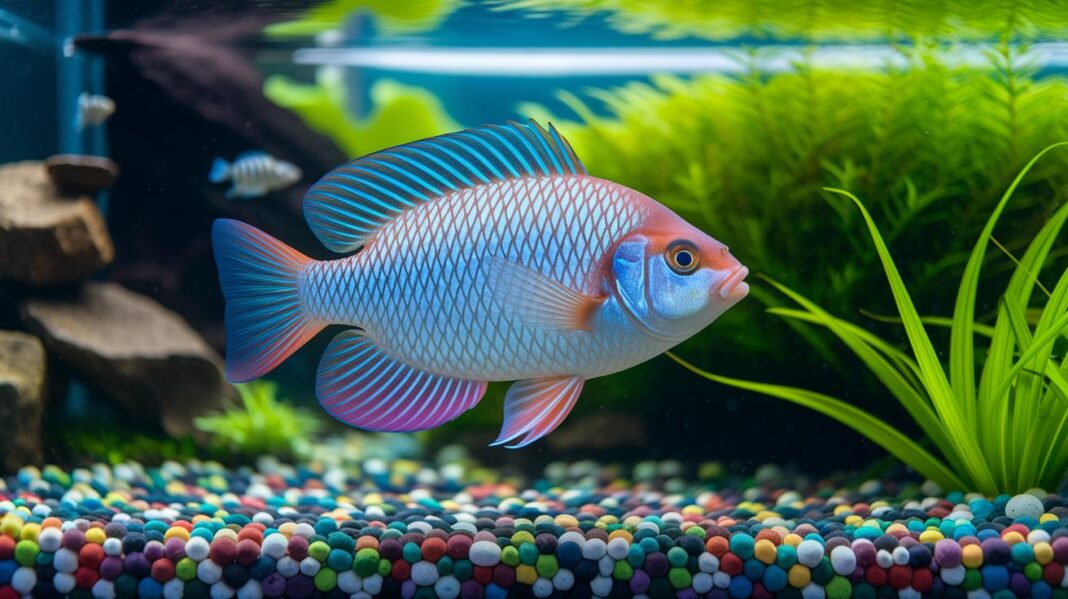

Ever thought your aquarium could be its own underwater theatre?
Cichlid fish add a splash of color with their playful chases and unique ways of interacting, turning your tank into a lively little display.
With over a thousand types swirling in nature, these fish fill any tank with charm, like a mini museum of natural wonders.
I’m excited to share some friendly tips on caring for these fascinating creatures so you can set up the perfect habitat that shows off their vibrant personalities.
Let’s dive in and discover the secrets to creating your very own thriving underwater stage.
Cichlid Fish Basics: Species Diversity and Behavioral Traits
There are officially over 1,300 types of cichlids, and some experts even think there might be as many as 3,000 roaming waters around the globe. You can spot these vibrant fish in many freshwater homes like lakes and rivers in Africa, South America, and Asia. Imagine walking through a lively underwater museum, where each fish shows off its own body design, fin shape, and stunning colors.
These fish also have some pretty exciting behaviors. They’re active when it comes to mealtime, with some darting around the tank in playful chases. They often form neat groups with clear pecking orders that help decide who pairs up and how they take care of their young. For instance, African cichlids can get quite protective when it comes to breeding, with the males choosing special spots to guard their mates and nests.
- Africa: In places like Rift Lakes, you’ll find species such as peacocks, haps, and mbuna, each with their own cool color patterns.
- Africa: Lake Tanganyika is home to cichlids with eye-catching behaviors and graceful body shapes.
- South America: Angelfish and Discus show off a beautiful mix of bright colors and smooth swimming moves.
- South America: Convict Cichlids are known for their bold looks and unique markings.
- Asia: Local cichlids might be less famous, but they add a special twist with their unique traits in different freshwater spots.
Cichlids also have a fascinating social life. Many form groups with clear roles, where males often take charge during breeding by showing off and claiming their favorite spots. Meanwhile, smaller or less dominant fish might hide behind rocks or plants during feeding time to keep the peace. This mix of behaviors not only adds beauty to their underwater world but also helps keep the community balanced and interesting.
Cichlid Fish Aquarium Setup and Water Parameters

Getting your tank set up the right way is really important for keeping your cichlids happy and healthy. When you choose the right tank size, substrate, and decor, you’re making a little underwater home that feels natural and calm, kind of like how a soft ripple soothes your day. A thoughtful setup with a good filter and proper water settings gives your fish a safe place to shine and show off their bright colors.
| Parameter | Ideal Range |
|---|---|
| Tank Size | 20–30 gal for small species; 50+ gal for larger species |
| Substrate | Sand or fine gravel |
| Filtration Rate | At least 2× tank volume |
| Temperature | 75–82°F (24–28°C); Discus: 82–86°F |
| pH/Hardness | Africa: 7.8–8.6; South America: 6.0–7.5; Zero ammonia/nitrite; Nitrates <20 ppm |
Keeping an eye on your water is like tending to a lovely garden. Regular tests for ammonia, nitrites, and nitrates, plus changing about 25% of the water each week and taking care of your filter, make sure your aquatic friends are swimming in safe, clean water.
Cichlid Fish Feeding Tips and Nutritional Guidelines
Feeding your cichlids is as unique as the colorful fish themselves. Some fish, like peacocks and haps, do best with a meat-based or mixed diet, while mbuna enjoy more plant foods. When you watch your fish while they nibble, it's like seeing a lively dance under water that shows you just the right mix of nutrients for each one.
A good meal for your cichlids might include slow-sinking, high-quality pellets and flakes. You can also add a treat with live or frozen food like bloodworms, brine shrimp, or daphnia. Don’t forget a little crunch from blanched veggies like spinach or zucchini. Try to feed them once or twice a day, just enough food that gets gobbled up in about two minutes. This helps keep their meal plan balanced and their feeding instinct sharp.
Keep an eye on the amount of food you give. Overfeeding can leave leftovers that cloud the water, which isn’t good for your fish or your tank. It's best to offer small portions that disappear quickly, and scoop out any uneaten bits right away. Regular tank cleaning and water testing are like giving your tank a little spa day, ensuring that your vibrant cichlids stay active and their colors shine true.
Cichlid Fish Breeding Techniques and Fry Rearing

When it comes to breeding cichlids, there are two main methods that feel as different as the calm surface of a quiet pond and the lively rush of a fast stream. African cichlids often keep their babies safe by carrying them in their mouths until the fry are strong enough to swim on their own. On the other hand, many South American species like Angelfish and Oscars lay their eggs on flat surfaces such as rocks and then guard the nest until the young ones hatch. It’s like nature’s own gentle way of caring for tiny lives.
A stable environment is key to letting these fish show their natural behavior. By tweaking the water a bit or adding cool spots like caves and flat rocks, you can encourage your cichlids to form their special bonds. For instance, a steady, gentle water flow paired with hidden nooks works wonders in helping these colorful fish gather in pairs or little groups, much like a community coming together by a tranquil lake.
In mouthbrooding species, caring for the little ones doesn’t stop once they’re inside the parent’s mouth; the parent keeps a close eye on them during their first days. Meanwhile, substrate spawners stick by their eggs and newly hatched fry, guarding the nest like a devoted parent over a cherished family treasure. Keeping an eye on your tank is important, too, so you can quickly notice if anything isn’t quite right. Regular water changes help keep the nursery clean and stop waste from hurting the fry. The feeding plan starts with tiny infusoria for the smallest fry and moves on to baby brine shrimp as they grow, much like slowly adding more ingredients to a favorite recipe to help them thrive.
Cichlid Fish Tank Mates and Aggression Management
Choosing the right tank mates can really help smooth out some of the rough behavior between cichlids. Often, these fish can be a bit bossy with smaller or quieter friends. So it makes sense to pair them with others of similar size and energy. For example, pairing robust cichlids with Synodontis catfish, large Plecos, or hardy barbs creates a friendly mix. Picture a big Pleco gracefully gliding along as the cichlids zip about; this calm presence can help ease out aggressive moments.
Setting up your tank thoughtfully is just as important. Adding natural touches like rock piles and caves breaks up the open water, giving a quiet spot for any shy swimmer to hide. And keeping the tank well-stocked without overcrowding is key. A good rule of thumb is about one inch of fish per gallon of water, though this can change a bit with different species. These careful placements give each fish its own little space, helping everyone thrive together.
Cichlid Fish Health Care and Disease Prevention
Keeping your cichlids happy starts with fresh, clean water. Since these fish produce a lot of waste, changing about 25–30% of the water weekly and tidying up your filter is like giving your tank a refreshing shower. Quick water tests for ammonia, nitrites, and nitrates help you check that everything is just right for your aquatic pals.
When you add new fish, it’s smart to put them in a quarantine tank for at least 14 days. This little safety net lets you watch them for any signs of parasites or bacterial issues before they join the rest of your tank. It’s a simple way to protect your whole fish family.
If common issues like ich, fin rot, or hole-in-the-head start to appear, acting fast is key. Keep your water as clear as possible and use medications that are proven safe, following the dosage instructions carefully. Watching your fish closely during treatment lets you see small improvements, which means you’re on the right track to a healthier, more vibrant aquarium.
Cichlid Fish Aquascaping and Environmental Enrichment
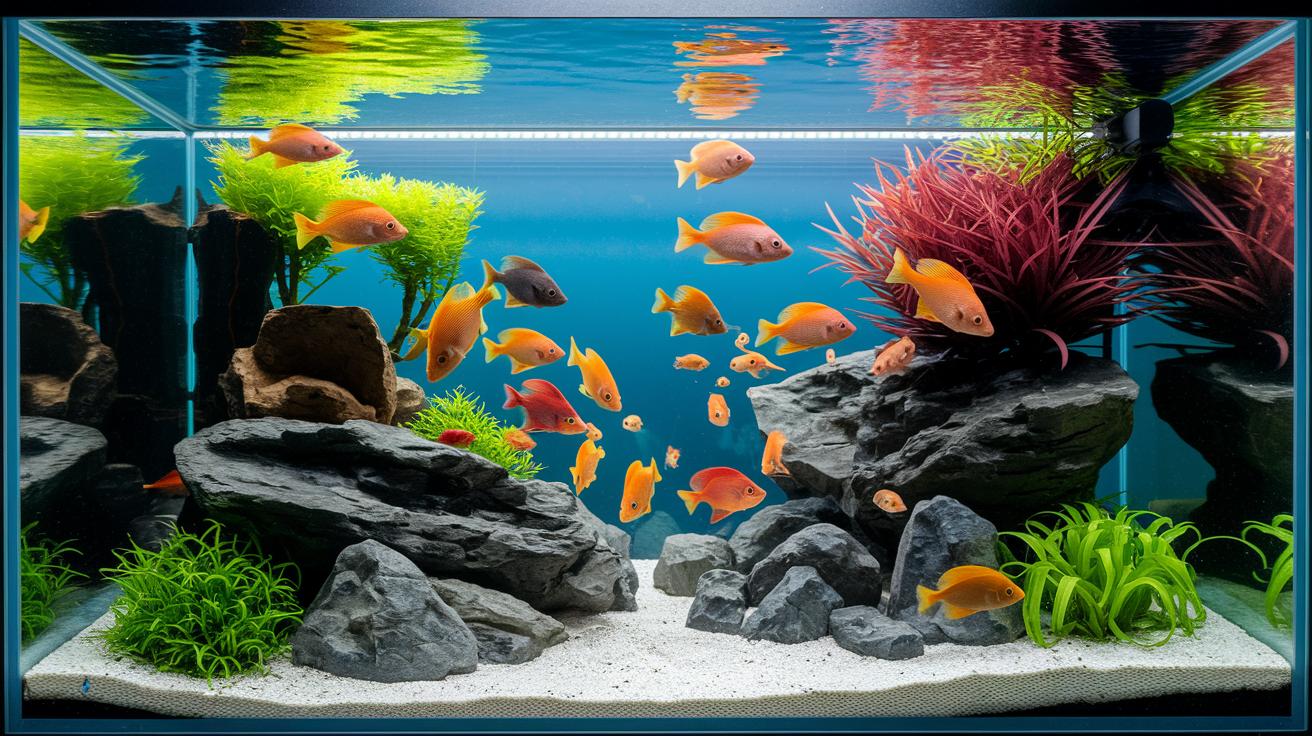
When you set up your tank, it’s a bit like creating a warm, cozy home for your cichlids. Picture carefully placed rocks forming little caves and overhangs where your fish can claim their own territory. Using sand or fine gravel lets them dig naturally and even helps them feel ready to breed. This kind of layout gives each cichlid a peaceful retreat and helps them feel less stressed.
Choosing the right plants and lighting is just as important. Friendly plants like Anubias, Java Fern, Vallisneria, and Amazon Sword add a splash of natural charm, and when you pair them with floating plants, cool shaded spots appear in the tank. Soft, moderate-low LED lights keep the plants thriving while creating a calm, relaxed vibe for your fish.
Hardscape vs Live Plants
Rock formations and other hardscape pieces create secure hiding spots where fish can stand their ground. On the flip side, live plants not only bring in extra color but also naturally clean the water. Together, they make a perfect team, turning your tank into a balanced and inviting underwater community.
Final Words
In the action, we covered the essentials of cichlid care, from understanding their unique behaviors and species mix to setting up the perfect tank, feeding routines, breeding tips, and even choosing the right tank mates.
We explored how a proper setup, clean water, and creative aquascaping can bring out the best in your aquatic pet. With these insights, you can build a comfortable home that makes your cichlid fish thrive and adds beauty to your underwater world. Enjoy creating your lively aquatic haven!
FAQ
Q: What types of cichlid fish are available for sale, including African and Malawi cichlids?
A: The different cichlid fish for sale include African varieties, Malawi specimens, and many others, each with unique colors and temperaments that suit various aquarium setups.
Q: What should I consider when setting up a freshwater cichlid fish aquarium?
A: The cichlid fish aquarium setup requires the right tank size, appropriate substrate, secure filtration, and controlled temperatures to mirror their natural freshwater habitat and support healthy living.
Q: Which popular cichlid species are common and how do their prices compare?
A: Popular species like Oscars, Convict cichlids, Angelfish, and Discus each show distinct traits and care needs, with prices varying based on their size, coloration, and availability.
Q: Does cichlid fish exhibit aggressive behavior in home aquariums?
A: The cichlid fish behavior can lean toward aggression, especially during breeding, so providing ample space and hiding spots helps manage territorial actions effectively.
Q: Are cichlids a good choice for beginner aquarists?
A: The cichlid fish can suit beginners if you select species known for being adaptable and pair them with proper tank setups that anticipate their specific behavioral traits.
Q: How many cichlid fish should be housed together in a tank?
A: The number of cichlids in a tank depends on space and species, with fewer fish recommended to ensure each has enough room to establish territory and swim freely.
Q: Can cichlid fish live with other fish, such as Siamese fighting fish or catfish?
A: The cichlid fish can cohabit with other species if companions are robust and similar in size, though careful pairing is needed to avoid stressing more peaceful fish like Siamese fighting fish.
Q: How is the word “cichlid” pronounced?
A: The term “cichlid” is pronounced “sik-lid,” with a short first syllable that matches how many aquarists refer to these colorful fish.
Q: What are some traits of species like Angelfish, Oscar, Convict cichlid, and Discus in freshwater tanks?
A: Each species, such as Angelfish, Oscar, Convict cichlid, and Discus, brings its own vibrant colors and distinct care requirements to the tank, calling for setups that meet their specific needs.