

Ever wonder if setting up your perfect aquarium might be more expensive than you thought? Many fellow fish lovers get surprised when they see how the costs pile up, from the first pumps and lights to the ongoing monthly care.
This guide helps you navigate every expense, just like monitoring the gentle flow in your tank. It shows you which costs remain steady and which ones might change over time. You know how clear water makes it easier to see what's beneath? That same clarity in your budget can help you plan smarter.
We'll break down each cost in simple, everyday language and share some handy tips to keep your aquarium budget in check. So swim on in, and discover where every dollar goes so you can invest wisely in your own little underwater paradise.
Comprehensive Expense Breakdown for Aquarium Equipment Investments
When you set up an aquarium, there are costs that never change, like buying your tank and equipment, shipping fees, and paying for help with installation. Think of these like the tank walls that hold everything in place. Then, there are costs that come up over and over again, such as electricity, water, filter media, and regular maintenance. These are like little tweaks you make to keep your water clean and clear. For example, in bigger setups, people might spend around $2,000 each month on supplies and between $5,000 to $15,000 on utilities. When you’re just starting out with a hobby, it helps to know which of these costs you can manage right from the start.
Breaking your expenses into fixed and variable parts makes it easier to plan your budget and see what you’re getting for your money. When you know what stays the same and what changes, you can set aside enough cash for both building your tank and keeping it running smoothly every day. Instead of mixing all your costs together, sorting them out shows you how much you need upfront and what to expect later on. This way of tracking your spending is a bit like watching your fish grow, you notice the changes and adjust as needed. It even helps you spot where a little extra cash might make a big difference, whether you’re building a simple tank or a more fancy display.
| Cost Category | Description | Monthly Cost Range | Annual Cost Range |
|---|---|---|---|
| Equipment Purchase | Initial setup expenses including tank, filters, lighting | $100 – $250 | $1,200 – $3,000 |
| Maintenance Supplies | Filter media, water conditioners, test kits | $50 – $150 | $600 – $1,800 |
| Utilities | Electricity, water usage fees | $50 – $200 | $600 – $2,400 |
| Replacement Parts | Components that wear out, like pumps or bulbs | $20 – $100 | $240 – $1,200 |
| Service Contracts | Professional cleaning or equipment check-ups | $30 – $120 | $360 – $1,440 |
| Depreciation | Loss in value of equipment over time | $40 – $160 | $480 – $1,920 |
Upfront Spending Considerations in Aquarium Equipment Investments
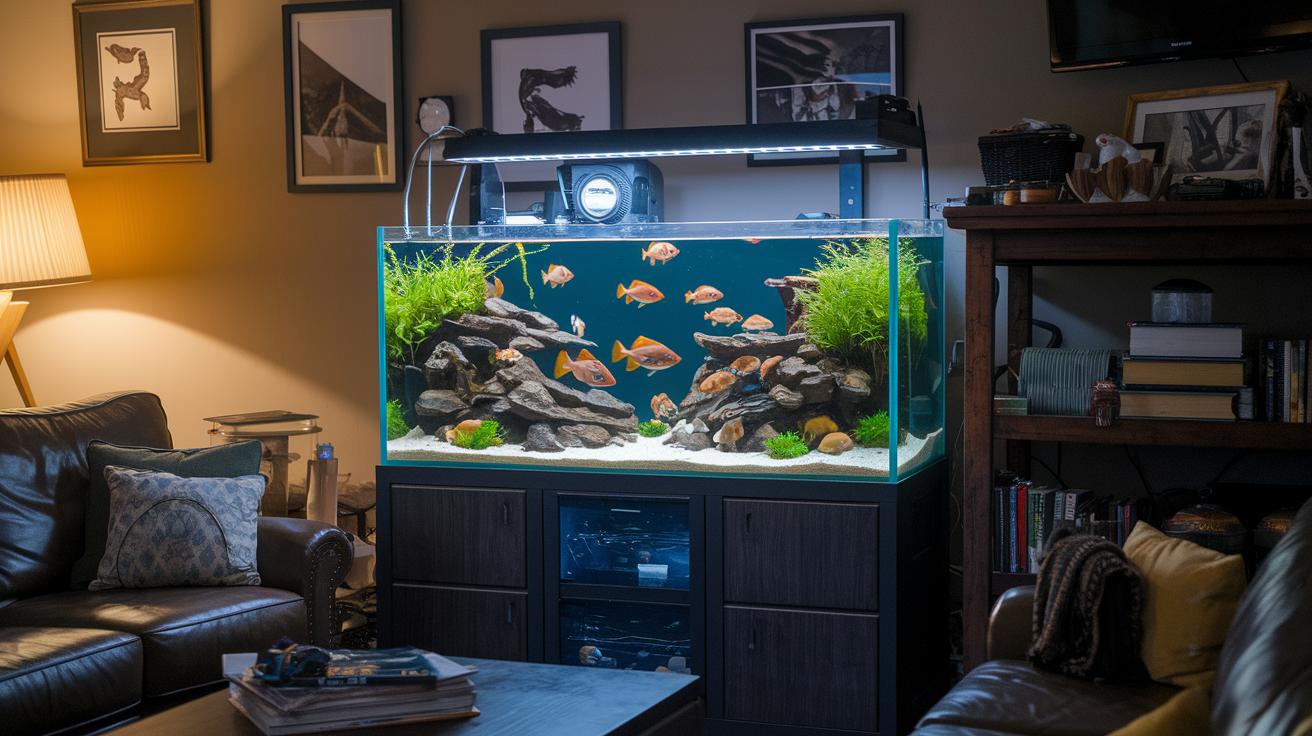
Aquarium equipment comes in many shapes and sizes, from simple starter kits that don’t break the bank to fancy, integrated systems that are built to last. Simple sets can run anywhere from $70 to $150, while more advanced systems might cost from $2,000 to over $10,000. This gap in pricing shows the care put into things like quality, durability, performance, and built-in help like automation features. When you look at each piece of gear, you’ll see some items are made for newcomers, while others are for experienced aquarists who already know the ropes. Let’s dive into some key categories:
- Filters: $50 – $1,200
- LED Lighting: $30 – $2,000
- Heaters: $15 – $100
- Protein Skimmers: $100 – $700
- Substrate: $20 – $150
- Automation Controllers: $50 – $300
If you’re just starting out, grabbing budget-friendly gear gives you a chance to learn and explore without a heavy cost right off the bat. These basic tools cover everything you need to keep your little underwater world humming along smoothly. On the flip side, splurging a bit more on higher-tier equipment from the get-go can lead to better energy use, more efficiency, and added convenience as your aquarium grows.
By matching your spending to both your current needs and your future aquarium dreams, you can create a setup that feels just right, stable, enjoyable, and ready to grow along with your passion for aquatic life.
Maintenance and Operational Cost Management for Aquarium Equipment Investments
Let’s dive into the ongoing costs of keeping your aquarium running smoothly. OPEX covers the regular expenses, such as buying filter media, water conditioners, test kits, and paying for electricity and water. We’ve chatted about these basic costs before, so now let’s explore ways to make sure your money is spent wisely.
One smart idea is to team up with fewer vendors. When you combine orders from different suppliers, you can often negotiate a better deal. For example, imagine grouping all your filter media orders to secure a special rate, kind of like buying snacks in bulk to save money at the store.
Purchasing things in larger amounts can really drop the price per unit. Think about it: when you buy chemicals in bulk, each unit costs less, much like snagging a better price when you buy a big pack of your favorite treats.
It also helps to plan your service contracts carefully. By aligning these contracts, you can avoid overlapping fees and extra paperwork. It’s similar to syncing up your bills so you end up with one clear payment date instead of several confusing ones.
For hobbyists, these business tricks can be scaled down to fit your aquarium’s unique needs. Smaller systems might only need a little extra care and fewer service visits, so tailor these tips to avoid spending more than necessary.
Return on Assets Check and Long-Term Saving Projection for Aquarium Equipment Investments
Getting a clear picture of how your aquarium gear pays off is super important. Think of it like watching smooth ripples spread across your tank; every little drop of savings matters. The most common method to check your return on investment (ROI) is pretty straightforward: you take the money you save – from lower energy use, maintenance, and other costs – and divide it by what you spent on the equipment, including installation.
Imagine setting up a cozy 100-gallon reef system. If this setup costs you about $2,500 and you end up saving roughly $500 a year thanks to efficient lighting, fewer chemicals, and lower upkeep fees, then your ROI is calculated as $500 divided by $2,500, which comes out to 20%. This clear math often helps aquarium lovers like us understand when a system starts paying off and whether it is a smart investment.
Planning for the long haul is a lot like preparing for a new school of fish to join the tank – you’ve got to look ahead. By looking at past data, you can guess what your future maintenance and upgrade costs might be. This way, you can set aside a little extra each year for future improvements, all while enjoying steady returns from your current setup. A regular ROI check gives you a solid framework for making wise and careful decisions in your aquatic world.
Market Price Comparison and Supplier Fee Variations in Aquarium Equipment Investments
When hunting for the best deals on aquarium equipment, it's smart to get quotes from different vendors. You might be surprised to find price differences as high as 20 to 30 percent for the very same items. For example, one shop could offer a filter kit with a nice warranty and a bonus service for $150, while another might charge $180 and only include basic shipping. Seeing these prices side by side makes it easier to spot the best value for your budget.
Taking a closer look at fee details is key when comparing costs. Check out what each quote covers. Some vendors throw in extras like free shipping or bundled warranties, while others charge separately for these add-ons. This extra cost can really change the overall value, so knowing what’s included helps you avoid paying too much for what you need.
To really get great deals on your aquarium gear, keep an eye out for promotions, seasonal sales, or volume discounts. Buying in bulk or making a purchase during a special sale is a bit like snagging your favorite treats at a local market, it just makes sense! Using these strategies along with comparing multiple quotes can help you make choices that benefit your investment and save you money down the road.
Asset Depreciation Overview and Equipment Lifespan Evaluation in Aquarium Equipment Investments
When you’re figuring out the cost of your underwater gear over time, you have two main options: straight-line or accelerated depreciation. With the straight-line method, you simply take your gear’s purchase price, subtract its estimated salvage value, and divide the result by its useful life. This method is like watching a gentle ripple in the water, steady and predictable. On the other hand, accelerated depreciation lets you record higher costs earlier on, just like a strong current hitting your tank at first. Think of it as choosing between a slow drift or a quick burst, depending on how your equipment wears over time.
Different aquarium pieces have different lifespans that you’ll want to keep in mind. For example, pumps generally last about 3 to 5 years. LED lighting systems can shine for roughly 3 to 7 years, while heaters usually do their job for around 5 years. Digital controllers, however, tend to stick around for more than a decade. Knowing these timeframes can help you plan when it’s time to save up for new gear. If you’re looking for more ideas on keeping your tank in perfect balance, our guide on long-term care for balanced aquarium ecosystems has lots of friendly advice.
Creating a lifecycle budget is like setting aside a little treasure chest for your aquarium. By planning out when each piece might need replacing or a quick fix, you can ease future costs and avoid any sudden financial surprises. It’s all about keeping your underwater world calm, vibrant, and ready for whatever new adventure comes next.
System Investment Insights: Case Studies in Aquarium Equipment Investments
Let’s start with the 10-gallon community kit. It comes in around $70 to $100 and is great for beginners who want to explore aquarium life without too much worry. The setup is low cost, and keeping it running is easy with affordable supplies and low energy use. You won’t be rushing to replace parts either, since they usually last a long time.
Next up is the 60-gallon cube, which is perfect for those ready to take a small step forward. Priced between $250 and $500, it upgrades your experience with better built-in filtration and improved lighting. That means your water looks clearer, and your plants truly sparkle. While you might spend just a bit more on upkeep, these systems are built strong to last, provided you do regular maintenance.
Then there’s the 100-gallon reef system, a real showstopper priced between $1,500 and $3,000. This setup is all about automation with advanced LED lights, precise water pumps, and smart dosing systems. Even though the upfront cost is higher, the energy savings over time can really add up. It’s like investing a bit more now to enjoy bigger returns later, especially if you’re keen on a finely tuned tank.
Finally, we have the 220-gallon African cichlid system. With prices from $1,200 to $5,000, this option is for those who want to invest in a bold, high-end display. It has unique features that demand some extra care and utility use, and while it might lose value faster due to its complex parts, its stunning design and advanced tech make it a favorite for true enthusiasts looking to create a captivating aquarium centerpiece.
Final Words
in the action, we explored fixed and variable costs, starting with equipment spending and moving on to recurring operations and asset care. These clear ideas help you see how different expense types play a role in building a comfortable underwater habitat. Small steps like comparing vendors and planning for replacements can make a big difference. With each tip, you gain more confidence in managing your aquarium needs. Keep moving forward with a comprehensive cost analysis of aquarium equipment investments in mind and enjoy a thriving underwater space.
FAQ
What defines fixed versus variable expenses in aquarium ownership?
The explanation clarifies that fixed expenses include one-time costs like equipment purchase, shipping, and installation, while variable expenses cover recurring items such as electricity, water, and maintenance supplies.
How do upfront costs vary across aquarium equipment tiers?
The analysis shows that upfront spending ranges from affordable starter kits to advanced systems. It details price ranges for key items like filters, LED fixtures, heaters, and automation controllers.
What recurring operating costs should be budgeted for aquarium setups?
The breakdown highlights recurring expenses such as filter media replacement, water conditioners, test kits, electricity, and service contracts, guiding you to predict and manage monthly operational fees.
How can I measure ROI on aquarium investments?
The discussion outlines that ROI is measured by dividing net benefit by total investment. Sample calculations, like those for a mid-range reef system, help refine long-term financial planning.
Why is comparing supplier prices crucial for aquarium investments?
The narrative shows that gathering multiple vendor quotes reveals fee variations in warranties, shipping, and added services, enabling you to leverage promotions and volume discounts for cost savings.
How should I plan for equipment depreciation and replacement?
The overview explains that understanding depreciation—using methods like straight-line—combined with knowing typical lifespans of items, helps you set aside funds for future equipment replacements.
What lessons do aquarium system case studies offer?
The case studies provide insights on initial costs, maintenance schedules, and ROI timelines across different tank sizes, helping you make informed decisions and tailor your investment strategy.