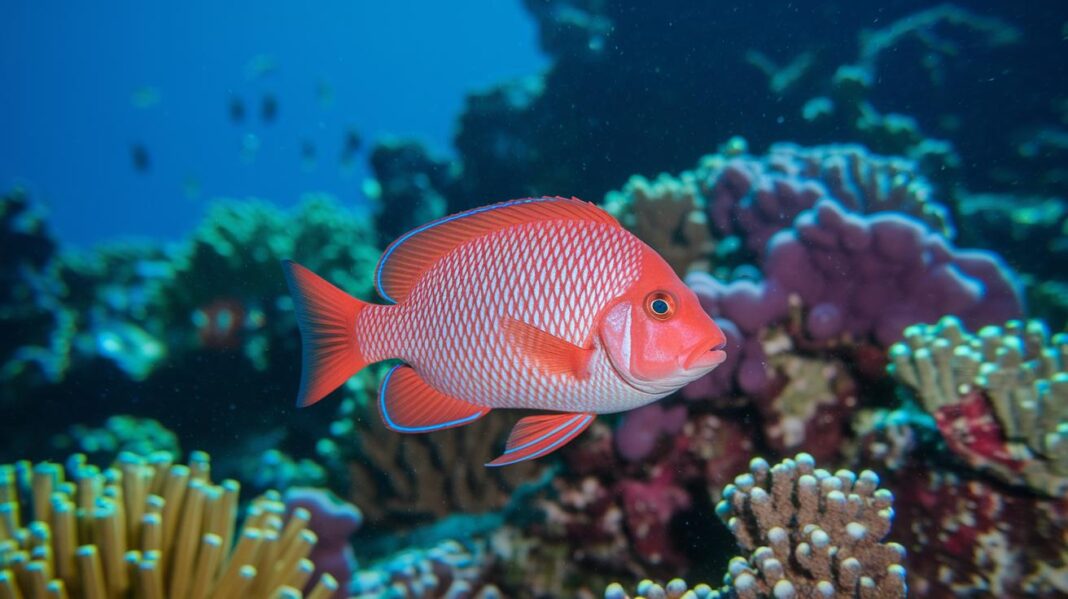

Have you ever imagined what mysterious creature might be hiding in the deep blue? Picture a fish that lights up like a burst of coral, with a warm red-orange body and a soft pink belly that gently stands out among the rocky nooks. Scientists found this striking deep sea red fish off Chile’s coast and marveled at its woven skin, a texture that feels as intricate as a coral reef.
This little wonder challenges all we think we know about life under the waves. Isn’t it amazing how nature surprises us? Next, imagine how this unique fish makes its rocky home, thriving in a hidden underwater world as enchanting as a secret garden.
Key Identification of Deep Sea Red Fish
Found off the coast of Chile during research trips, the deep sea red fish is a striking new find in marine biology. Scientists sometimes call it a "sea toad" because its bright red look and amphibious shape remind them of something unusual from the sea. Its body shines with a vivid red-orange tone and a soft pink belly, catching the eye like a flash of coral in a deep ocean.
This fish also has skin that feels a bit like handmade crochet, giving it a pattern that no other deep-sea creature has. That unique texture, mixed with its bold color, helps it blend into rocky underwater scenes while also making it easy to spot. Many researchers say, "Its skin feels like woven threads of nature," a comment that captures the fish's distinctive charm.
The fish's body is flattened and a bit like a scorpionfish, covered in rough scales with two big, round eyes that are always on the lookout for prey or danger. These features make it easier for scientists to identify the fish while they search through rocky crevices on the seafloor. Every spot and scale is a clue that helps experts classify this vivid, mysterious creature in the wild.
Deep Sea Red Fish Habitat and Distribution
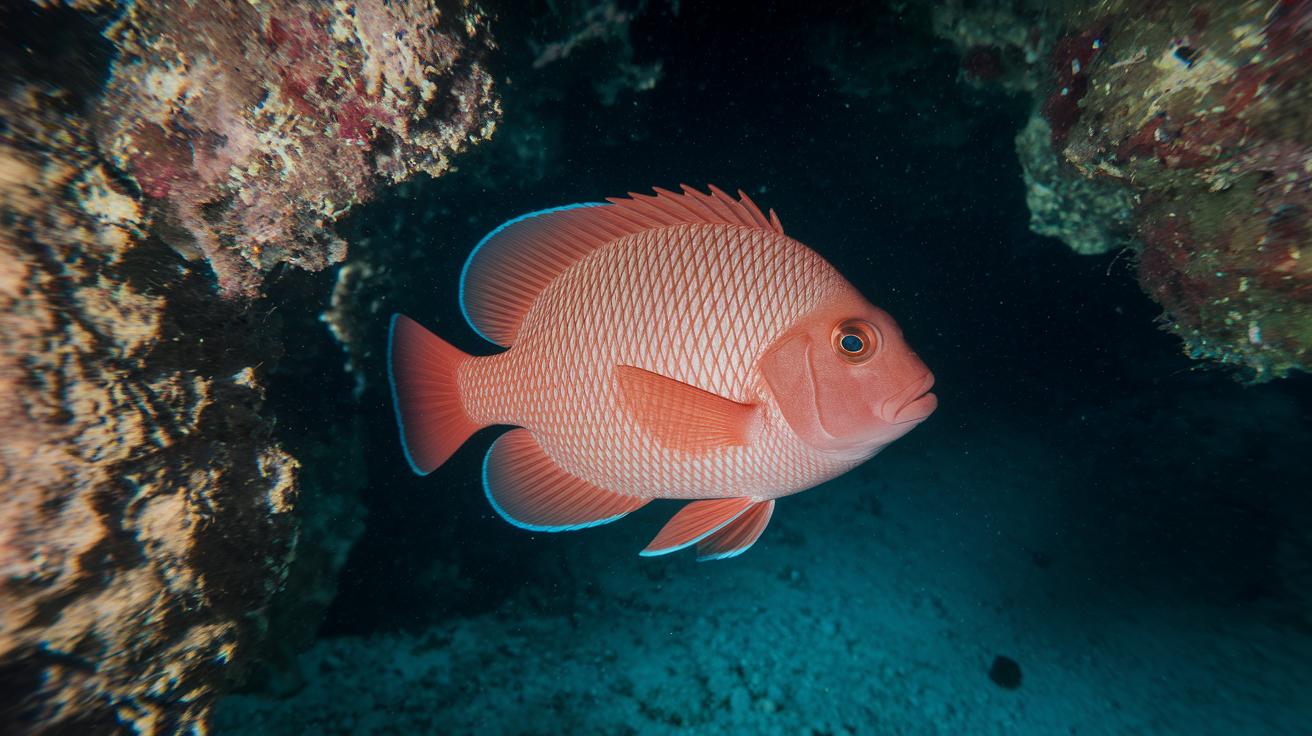
Deep sea red fish call both the Atlantic and Pacific home, and you can find them from about 50 meters deep to more than 500 meters below the surface. They really love rocky bottoms where little crevices offer safe spots, but they are happy swimming over sandy or muddy floors too. Researchers often point out how flexible and tough these fish are, thriving in many kinds of underwater settings. One marine biologist even said, "These fish do well even in the quieter parts of the ocean floor," which really shows how resilient they can be.
Off Chile's coast, scientists recently discovered four new underwater mountains along with six familiar ones that are rich with these red fish. These seamounts are like bustling underwater neighborhoods, full of different species. It is exciting to see how these underwater formations support a lively community of fish, giving us fresh clues about how deep sea life adapts to its unique environment.
In Canada's Gulf of St. Lawrence, records reveal that the deep sea red fish have bounced back in a big way, with numbers reaching into the millions. This huge comeback shows just how adaptable they are and paints a hopeful picture for the future of the species in that region.
The red fish also have interesting habits when it comes to schooling and migration. At certain times of the year, groups can grow to twice their usual size as the fish move together in sync, guided by changes in water temperature and the availability of food. This natural, group movement is a clear sign of how these fish adjust to the challenging conditions down deep, much like a well-coordinated school of fish navigating a vast ocean.
Morphology and Coloration of Deep Sea Red Fish
The deep sea red fish shows off a bright red-orange glow thanks to extra hemoglobin in its blood. This striking color doesn’t just catch the eye; it also helps the fish communicate with others in its dark underwater world. Imagine its color pulsing like a secret signal, nature’s quiet way of chatting in the deep.
It features:
- A vivid red-orange tone from its extra hemoglobin.
- A soft pink belly that helps it signal to other red fish.
- A body that is flattened on the sides, perfect for slipping into rocky corners.
- Large, upward-facing eyes, built to spot even the tiniest bit of light.
- Rough, textured scales that make it blend into coral and sponge patches.
These special traits help the red fish thrive in the deep sea. Its unique pigments make it easier to use oxygen under high pressure, while its streamlined shape and big eyes help it squeeze through tight spots and catch faint glimmers of light.
Behavior and Ecological Role of Deep Sea Red Fish
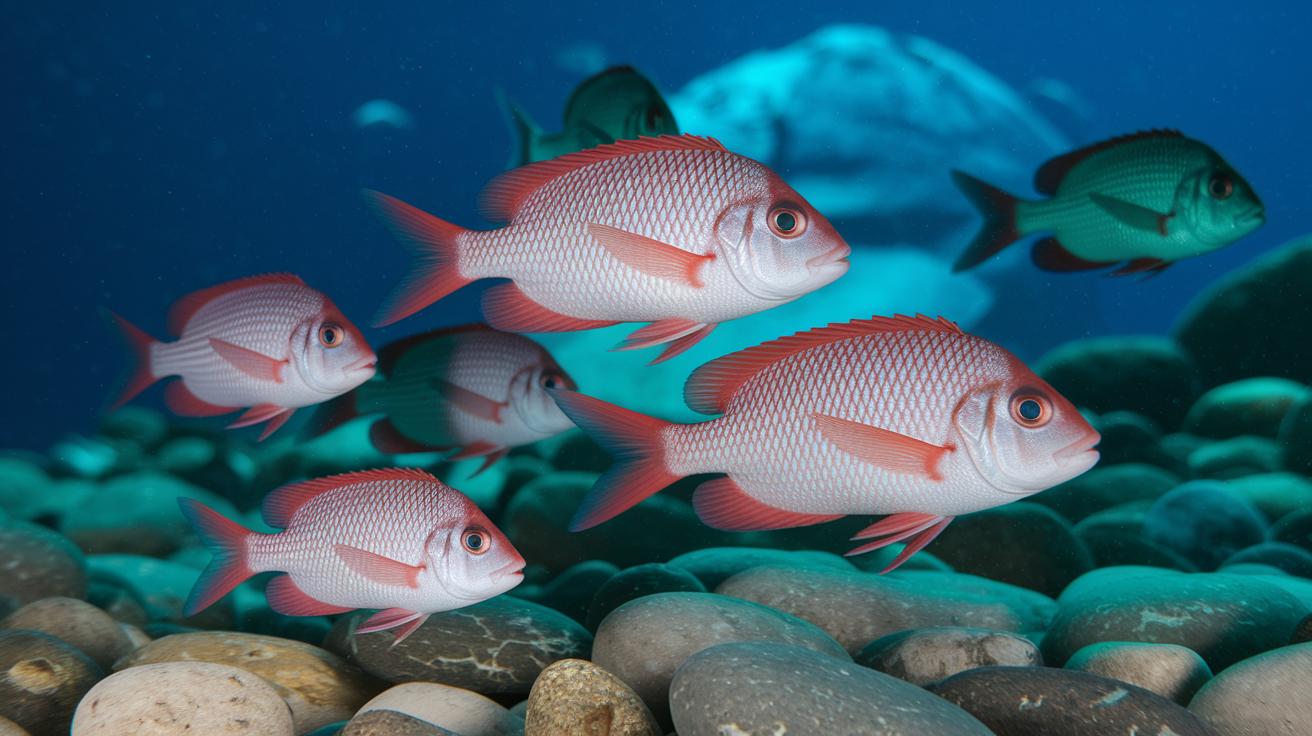
Deep sea red fish lead an active life close to the seafloor. They gather in tight groups, gliding gracefully along the ocean bottom like a school of fish dancing over smooth stones. Sometimes, when conditions are just right, you can see large numbers of them coming together, making the deep sea feel like a lively underwater party.
When it's time for a meal, these fish know just what to do. They use their sharp, upward-facing eyes, almost like a little radar, to spot tiny creatures hiding among rocks and coral. This clever way of finding food helps them grab the small treats they need to keep going in a challenging deepwater home.
In areas like seamounts, deep sea red fish play an important role. They swim among giant sponges, bright sea lilies, sturdy bamboo corals, and even curious octopuses, fitting into the underwater world like a perfect puzzle piece. Their presence shows just how connected all these sea creatures are.
These fish also help keep the ocean floor healthy. As mid-level predators, they make sure sponge and coral communities stay balanced. When they move across the seafloor, they stir up sediments, releasing nutrients that act like a natural boost for other sea life. This gentle mixing of the bottom is key to a thriving, healthy deep sea habitat.
Scientific Classification and Adaptations of Deep Sea Red Fish
Taxonomic Details:
Let’s take a closer look at our deep sea red fish. Its official name is Helicolenus dactylopterus and it belongs to the Scorpenidae family, a group renowned for their clever survival tricks in the murky depths. Researchers value this fish because its place in nature shows how well it’s designed to handle tough underwater conditions.
Below is a table outlining its classification:
| Rank | Classification |
|---|---|
| Kingdom | Animalia |
| Phylum | Chordata |
| Class | Actinopterygii |
| Order | Scorpaeniformes |
| Family | Scorpenidae |
| Genus | Helicolenus |
| Species | H. dactylopterus |
Physiological Adaptations:
Deep sea red fish live in a world more than 500 meters under the surface, a true deep dive into nature’s secret realm. They’ve developed a special blood pigment that works great even when oxygen is scarce, a bit like having a built-in survival kit for low-oxygen zones. Their large, upward-facing eyes are perfectly tuned to pick up the tiny flashes of light from bioluminescent prey. Plus, their strong muscles and uniquely built scales help them swim smoothly around rugged underwater hills and fend off harsh pressure and abrasive rocks.
All of these features come together to make the deep sea red fish a perfect example of nature’s artistry. Their scientific classification and clever adaptations show us just how wonderfully designed life can be, even in the deepest, darkest parts of our oceans.
Research Expeditions Uncovering Deep Sea Red Fish
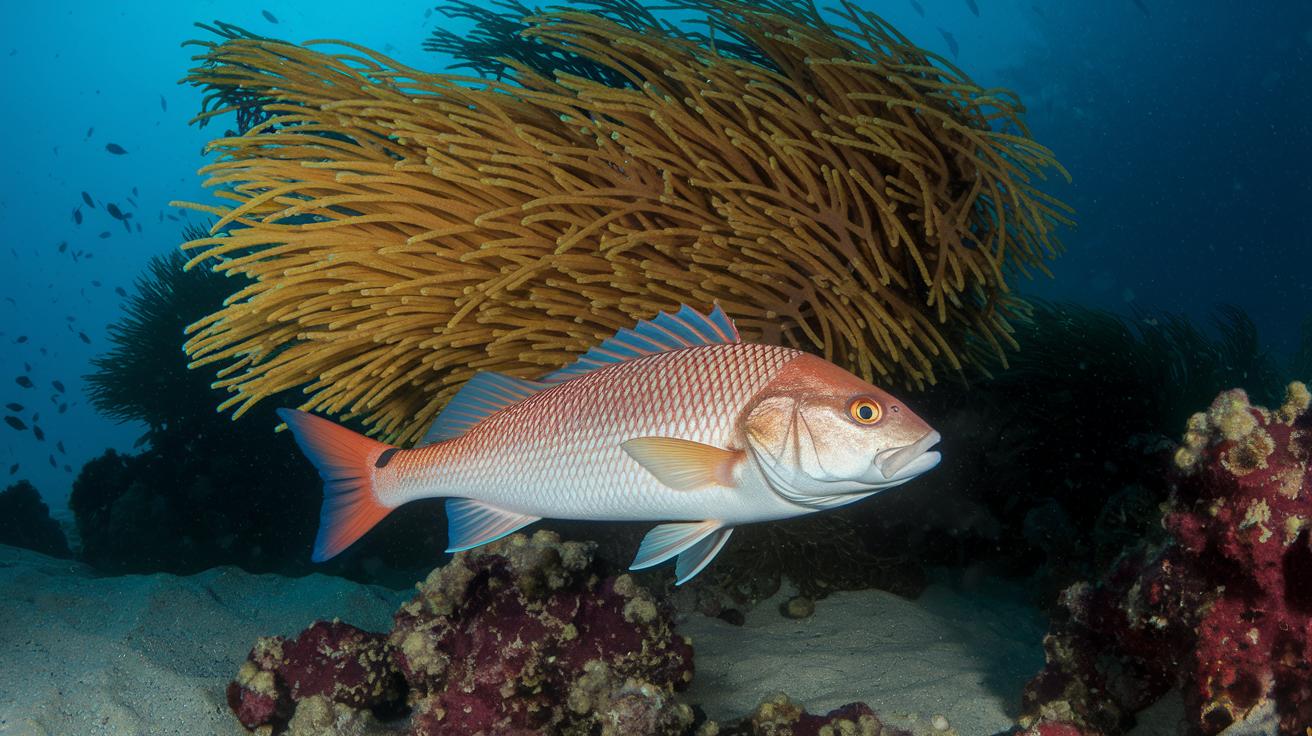
Off the coast of Chile, recent diving missions have revealed a whole new underwater world. Using smart mini-subs and detailed photos, scientists explored unknown parts of the seafloor. They charted four new underwater mountains along with six known ones, showing us a lively, multi-layer community below the waves. One scientist even said, "Seeing these underwater mountains up close felt like exploring an alien landscape." It’s clear that every dive brings us closer to understanding the many homes that deep sea life creates.
During these missions, researchers also spotted about 100 potential new species. One standout was a redfish known as "walker" because it moves along the seafloor in a way that seems almost like walking. This discovery has everyone from hobbyists to marine biologists buzzing with excitement. Other finds included giant sponges up to 10 feet tall, delicate fields of sea lilies, wandering octopuses, and towering bamboo corals. Each new species is another exciting piece of the underwater puzzle, reminding us of how much there is still to learn about life under the sea.
New technology has played a big role in these breakthroughs. Upgraded cameras on submersibles now capture crisp, strong images of rugged underwater landscapes. Plus, fresh techniques in low-light photography let scientists see the fine details of sea life that were once hidden by darkness. These advances not only help to spot and record new species but also map out the complex underwater terrain, offering important clues for protecting these unique habitats.
Fisheries Management and Conservation of Deep Sea Red Fish
Over in Canada's Gulf of St. Lawrence, redfish are bouncing back in a big way. Once thought to be at risk, there are now millions swimming around. This comeback has caught the eye of both fish managers and enthusiasts, sparking lots of conversation. Fisheries and Oceans Canada is keeping a close watch on these fish, using tried-and-true vertical line methods in waters that range from 50 to 200 meters deep (vertical line techniques are just a simple way to say they use long fishing lines to keep tabs on them). One expert summed it up nicely, saying, "Seeing such a bounce back tells us our careful management can really work."
In shallower waters, traditional methods like vertical lines work great for these redfish. But if you're fishing deeper than 200 meters, you'll need electric reels and specialized gear to bring them in. They use these methods not only to catch the fish but also to ensure they don't take too many at once. Strict rules during fishing seasons help balance the needs of recreational fishers and commercial interests, making sure redfish stay protected.
Records from both hobby and commercial fishing clearly show that redfish are a prized catch, which has even led to global stock assessments. The latest data tells us that while redfish numbers are picking up in some areas, we must keep a careful watch to avoid repeating past mistakes. All this detailed feedback sparks lively debates about sustainable quotas and the gear restrictions needed for smart fishing.
To promote sustainable harvesting, authorities now recommend fresh fishery management guidelines that include regular global stock checks and measures to protect underwater habitats. In a nutshell, these updated rules call for responsible quotas and thoughtful gear choices, ensuring that both the redfish and their unique, underwater homes remain safe.
Final Words
In the action, our post explored the unique highlights of the deep sea red fish, from its brilliant red-orange body and distinctive crochet-like texture to its smart survival skills in deep, dark waters. We talked about its habitats, social schooling behaviors, and the modern research methods that help us understand its role in the aquatic world.
Every detail gives you a clearer picture of how to care for these fascinating creatures. The insights here make aquariums more livable for deep sea red fish and inspire a positive approach to fish care.
FAQ
Frequently Asked Questions
What is the name of the red deep‐sea fish?
The red deep‐sea fish is known as Helicolenus dactylopterus. It belongs to a specific family and features a bright red-orange body with a unique crochet-like skin that helps in field identification.
Is redfish a good fish to eat and what types of red fish are edible?
The edibility question covers species like Acadian redfish and similar red fish. Many enjoy their firm, mild-flavored flesh, yet local guidelines and sustainability practices should guide safe consumption.
What kind of ocean fish are considered red?
Red fish include various species such as Acadian redfish, red drum, northern red snapper, spotted seatrout, black drum, and common snook. They share a vivid red hue while differing in build, habitat, and culinary use.
Is redfish a deep‐sea fish?
Redfish, including Helicolenus dactylopterus, are deep‐sea dwellers. They commonly live at depths from 50 to over 500 meters, adapting well to environments with limited light and high pressure.
Where are deep‐sea red fish commonly found?
Deep‐sea red fish are found in Atlantic and Pacific regions, including the Gulf of Mexico and Canada’s Gulf of St. Lawrence. They favor rocky bottoms and sandy-muddy substrates, often near seamounts.
How does redfish compare with other red fish species like red drum and spotted seatrout?
Redfish are distinct, featuring a deeper red hue and adaptations for deep-water life. In contrast, species such as red drum and spotted seatrout typically inhabit shallower waters and offer varied textures and flavors.