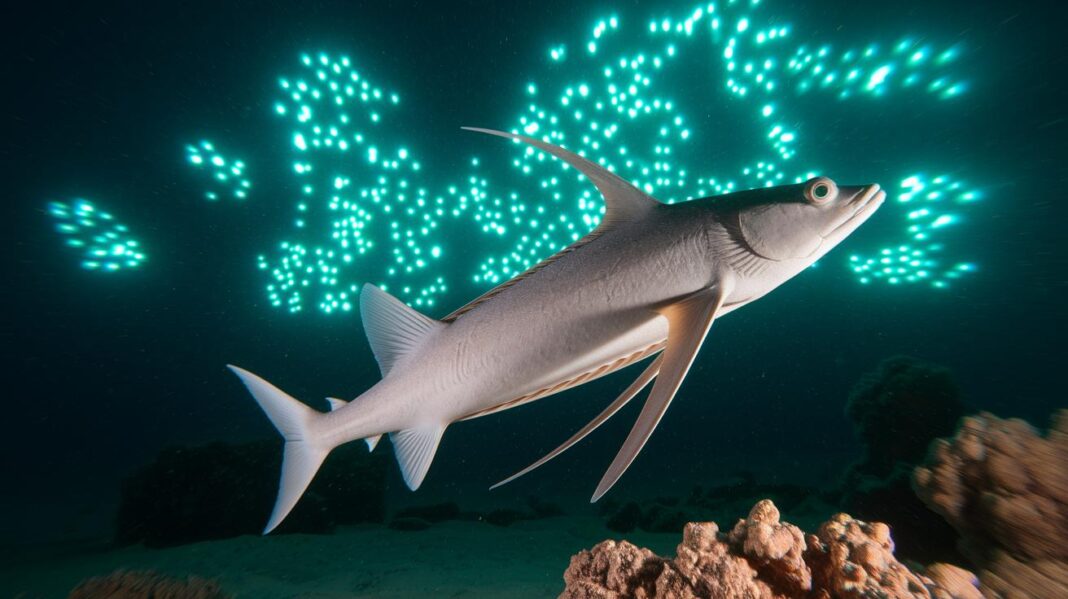

Ever wondered if a long, ribbon-shaped fish might secretly rule the dark, hidden parts of our oceans? Meet the oarfish. With its impressive size and smooth, graceful glide, this fish is as rare as a stray sunbeam lighting up a midnight sea.
Living far from the familiar, bright waters near the surface, the oarfish drifts quietly into deep, shadowy passages. Today, we’re taking a friendly dive into its mysterious world, giving you a glimpse of a secret underwater realm that few ever see.
Deep Sea Habitat and Behavior of the Oarfish
The oarfish, scientifically called Regalecus glesne, is one cool and mysterious creature. It lives in some of the ocean’s deepest parts, ranging from about 100 meters to over 1,000 meters underwater. Imagine a fish that can stretch more than 30 feet long, quietly drifting in the dark, hidden corridors of the ocean.
Down in these deep waters, the oarfish relies on its long, ribbon-like body to stay buoyant without much effort. Its smooth, streamlined shape lets it move up and down like a leaf caught in a gentle breeze. This clever design helps it glide slowly while using very little energy, which is a big deal in a place where food is hard to come by.
We rarely see this beautiful creature in action because most of our encounters happen after it washes ashore. Every live sighting is as rare as a sunbeam in the deep sea, and scientists get excited with every glimpse. These moments give them a peek into the mysterious underwater world and help us understand the important role this elusive fish plays in its deep water home.
Morphology and Adaptations of the Deep Sea Oarfish
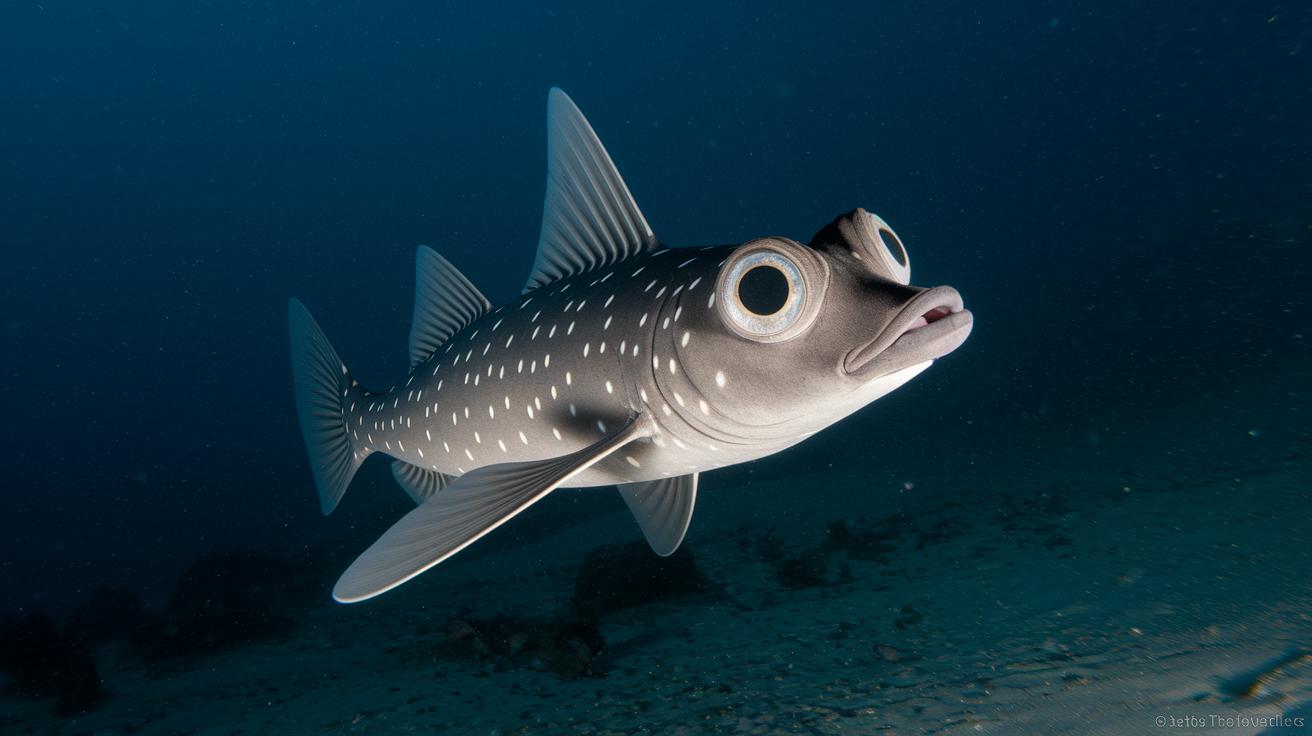
The deep sea oarfish has a bunch of cool features that help it live where the light is low and the pressure is high. Its body and senses work together like the gentle ripple of water, guiding it through the dark ocean. It relies on big, sensitive eyes to catch even the faintest glow and a smooth, ribbon-like shape that helps it drift gracefully.
| Feature | Description |
|---|---|
| Eyes | Big eyes that gather every bit of light in the deep, dark sea |
| Mouth | A small, toothless mouth perfect for snatching soft prey when it’s dim |
| Crest | A mane-like crest behind its head that makes it truly unique |
| Dorsal Fin | A long red dorsal fin that runs smoothly along its body |
| Body Shape | A flat, ribbon-shaped body that’s great for drifting with the currents |
| Length | Grows from about 12 ft in smaller fish to over 30 ft in the big ones |
These smart traits let the oarfish flourish in one of Earth’s toughest homes. Its large eyes help it see even the smallest spark of light, key for finding meals and dodging danger. The sleek body means it can glide along without using up all its energy. And that unusual crest with the continuous dorsal fin not only gives it charm but might also help it feel the water around it better when currents churn. Nature really knows how to design a survivor, doesn’t it?
Scientific Studies and Discoveries on Deep Sea Oarfish
On August 16, a 12-foot Regalecus russellii had a very detailed checkup at NOAA Fisheries’ Southwest Fisheries Science Center. A team of experts from Scripps Institution of Oceanography, CSU Fullerton, and NOAA came together for this rare deep-sea investigation. They examined everything, from the oarfish’s muscles and organs to its reproduction setup, to learn how life thrives in the hidden depths.
The study has given us exciting, new insights about the oarfish. It turns out, the fish’s muscle makeup is perfectly designed to save energy during its slow, elegant drifts. Researchers also noticed that its internal tissues are built to survive in a place where saving energy is everything. Now, scientists are taking a closer look at what these fish eat, how they grow, and which parts of the ocean they prefer, all in an effort to decode their secrets of surviving in such an extreme environment.
Myths, Legends, and Cultural Impact of the Deep Sea Oarfish

Old maps, like Olaus Magnus’s 1539 Carta Marina, show strange sea creatures such as sea serpents and giant lobsters. Back then, people mixed real sightings of the oarfish with wild tales to create images that sparked both wonder and a bit of fear.
Early mapmakers combined what they saw with local legends, telling stories of huge, mysterious creatures swimming beneath the waves. They blended fact and myth, keeping alive an age-old belief in legendary sea monsters that captured coastal imaginations.
These days, whenever an oarfish washes ashore, the media brings it right back into the limelight. Reports of these rare events stir up both excitement and worry, with some even hinting that these appearances might be linked to unusual shifts below the earth. It is a fascinating mix of truth and folklore, nudging us to wonder if nature is sending us a secret message from the deep.
People today have a wide range of reactions. Some scientists dig into the details, while others create sensational headlines that turn the oarfish into an icon of ocean mystery. TV shows, online stories, and everyday chats all echo these ancient legends, reminding us how nature can blend old myths with our modern lives.
Conservation and Future Research on Deep Sea Oarfish
Out in the deep blue, oarfish are still a mystery. Scientists don’t have enough data to truly know how many there are or how they live. It’s hard to study them because they live so far from where we usually gather fish stories. This lack of information makes many wonder about how best to protect these amazing creatures, and researchers agree that more thoughtful studies are needed.
New survey tools like underwater drones and deep-diving submersibles are lighting the way. Researchers plan to use these cool gadgets to watch over the oarfish and learn more about their habits over time. With video surveys and sensors measuring the water, we can soon see their world more clearly. Every time we catch a glimpse, it’s like a little ripple revealing secrets in this dark, deep sea.
Understanding their role in the ocean is key to keeping our seas healthy. Learning more about how oarfish reproduce and move can help guide future efforts to care for them. This research not only helps protect these mysterious giants but also deepens our love for life in the deep blue. Investing in these studies is like tending to a vibrant underwater garden, ensuring our oceans stay balanced for years to come.
Final Words
In the action, we explored the depths where these amazing creatures live and how their unique body shapes help them drift along. We talked about the gentle rise and fall as their buoyancy adaptations let them glide effortlessly. The rarity of sightings makes every encounter special, hinting at the vast mysteries of our underwater world. Each insight adds to our growing wisdom about the oarfish deep sea and inspires us to care for our aquatic pets with ever-deepening passion.
FAQ
What does oarfish deep sea size mean?
The deep sea oarfish is known to grow impressively long, often exceeding 30 feet and sometimes even longer, showcasing its remarkable scale in the ocean’s depths.
Where are oarfish deep sea found, and do they live in the deep sea?
The oarfish are native to deep waters, usually found in regions ranging from about 100 meters to over 1,000 meters deep in the mesopelagic and bathypelagic zones.
Are giant oarfish deep sea creatures dangerous?
The oarfish are not dangerous to humans since they have a small, toothless mouth and lack the traits that would make them a threat in their deep-sea environment.
How many oarfish are left in the world?
The exact number of oarfish remains unknown because their deep-sea lifestyle and infrequent sightings hinder scientists from accurately tracking their population.
Why are oarfish called doomsday fish?
Oarfish gain the nickname “doomsday fish” because folklore links their rare and mysterious appearances to ominous events like seismic activity, creating a sense of foreboding.
What is the largest giant oarfish ever found?
The largest giant oarfish ever discovered measured over 30 feet in length, highlighting the impressive and unusual size these deep-ocean creatures can achieve.
Why do oarfish come to the surface when dying?
When oarfish are nearing death, they often come to the surface due to shifts in buoyancy, which causes them to float upward as they lose the strength required to remain at depth.
What happens if you see an oarfish?
Seeing an oarfish is a rare and awe-inspiring event often tied to old sea legends, and it sparks curiosity about unusual ocean conditions and the hidden life of deep-sea creatures.