

Have you ever wondered if nature could build its own underwater machine? Meet the deep sea siphonophore. It’s a living wonder made up of thousands of tiny parts, each doing its own special job. They all move together like a well-practiced dance in the dark water. This amazing colony shows us that nature is a master at teamwork, every little piece plays a clear role. And when you see these long chains stretching out, it’s hard not to be captivated by the graceful flow beneath the waves.
deep sea siphonophore overview and significance
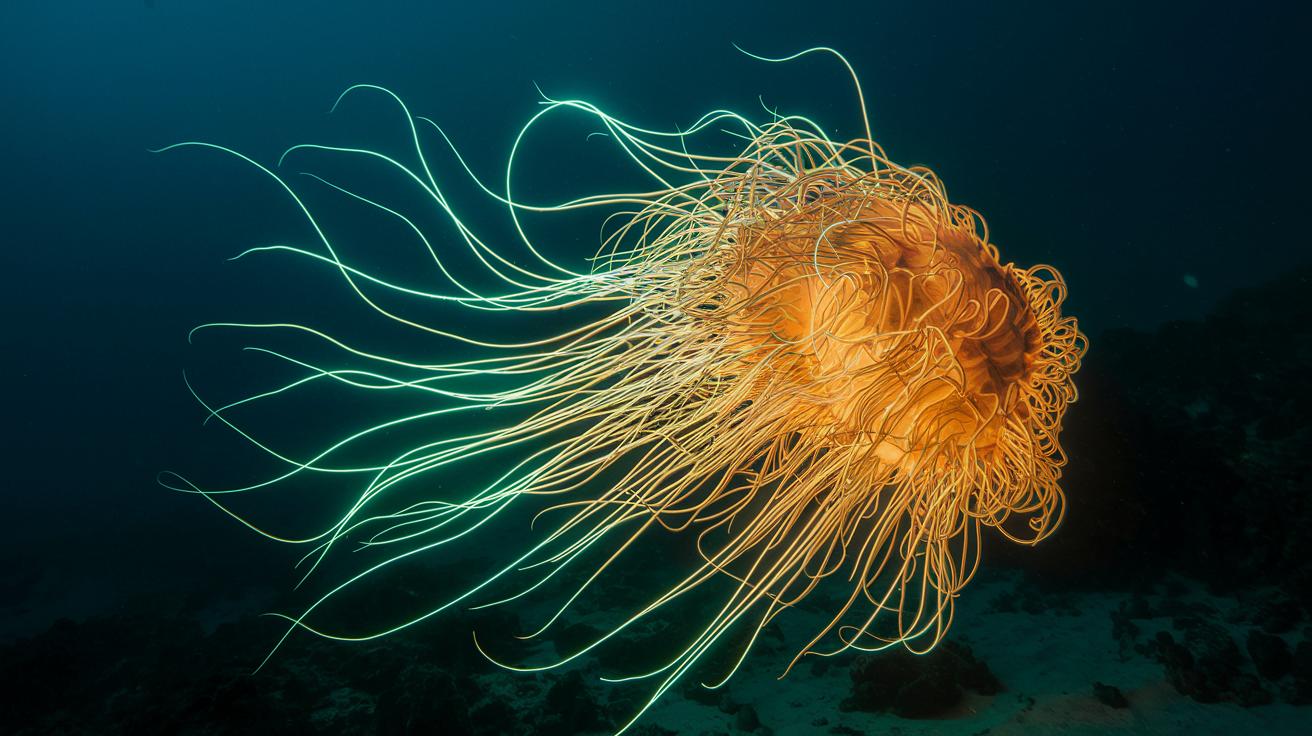
Deep sea siphonophores are amazing living examples of nature's clever teamwork. These creatures aren't a single animal but instead are colonies made of thousands of tiny zooids, each barely a millimeter long. Every little part has its own role, whether it’s helping the colony move, capturing food, or breaking down meals. It’s like watching a synchronized ballet beneath the waves. One cool tidbit is that before scientists had detailed maps of the deep ocean, ROVs discovered siphonophore colonies stretching over 130 feet, larger than even the mighty blue whale!
They all begin from one fertilized egg that forms what we call a protozooid. From there, through a series of budding events, a whole team of specialized zooids is born in a very precise order. Although siphonophores are part of the cnidarian family, like corals and anemones, they are very different because every bit is built to perform a specific job. Think of it as a team where each member is a specialist, making the whole group an incredible living machine.
More recent expeditions from 2018 to 2023 have used ROVs and eDNA sampling to uncover a lot more about these deep ocean wonders. These new discoveries give us a clearer picture of siphonophore diversity and show how perfectly nature arranges these delicate yet dynamic colonies. Their impressive size and unique way of growing make them one of the ocean's most fascinating moving marvels.
deep sea siphonophore: Ocean Marvel in Motion

Deep sea siphonophores are like tiny, living machines working in perfect harmony. Each colony starts from a single protozooid that creates different specialized parts, or zooids, in a careful order. Even though each zooid is just about 1 mm long, together they form long chains that stretch for meters through the dark ocean.
When it comes to the pneumatophore, think of it as a natural life jacket. This gas-filled float gives the colony buoyancy and helps it drift gently at just the right depth. It’s much like a sparkling bubble that keeps everything cushioned in water.
The nectophore is the power behind the whole group. These tiny, jet-like structures squeeze and release water in a steady rhythm, allowing the colony to move up, down, or sideways. Imagine them as mini water engines that carefully steer the colony through underwater layers.
Feeding is taken care of by the gastrozooids. They mix in special enzymes to break down any prey they catch, sharing the nutrients with the rest of the colony. It’s like running a small, shared kitchen where everyone gets their fair bite.
Then there’s the dactylozooid. With their venomous tentacles packed with tiny stinging cells, they snare prey just like little nets. This makes sure the rest of the colony can digest safely and smoothly.
Lastly, the gonozooids take on the role of creating new life. They release gametes, paving the way for new colonies and keeping the genetic story alive.
| Zooid Type | Primary Function | Approx. Size |
|---|---|---|
| Pneumatophore | Buoyancy | 5–10 cm |
| Nectophore | Propulsion | 2–5 cm |
| Gastrozooid | Digestion | 1–2 cm |
| Dactylozooid | Prey Capture | 0.5–1 cm |
| Gonozooid | Reproduction | 1–3 cm |
deep sea siphonophore habitat and distribution

Deep sea siphonophores live in the mysterious, shadowy parts of the ocean. They make their home mostly in the mid-level waters between 200 and 1,000 meters and even deeper between 1,000 and 4,000 meters, often called the twilight zone. These areas have a soft, dim light and high pressure, making life challenging even for the toughest sea creatures.
Between 2018 and 2023, researchers used remote-operated vehicles, manned submersibles, and water sample tests to explore these gelatinous wonders. They discovered that these colonies stretch across the Atlantic, Pacific, and Indian Oceans. It seems that little changes in water temperature and ocean currents help decide when and where these siphonophores appear.
These amazing creatures are always on the move. They swim up and down in the water to grab nutrients from different layers and to avoid predators. Every new sighting shines a light on how these delicate beings adjust to the ever-changing ocean, showing us the careful balance between nature's forces and life in the deep sea.
feeding strategies and prey capture tactics in deep sea siphonophores
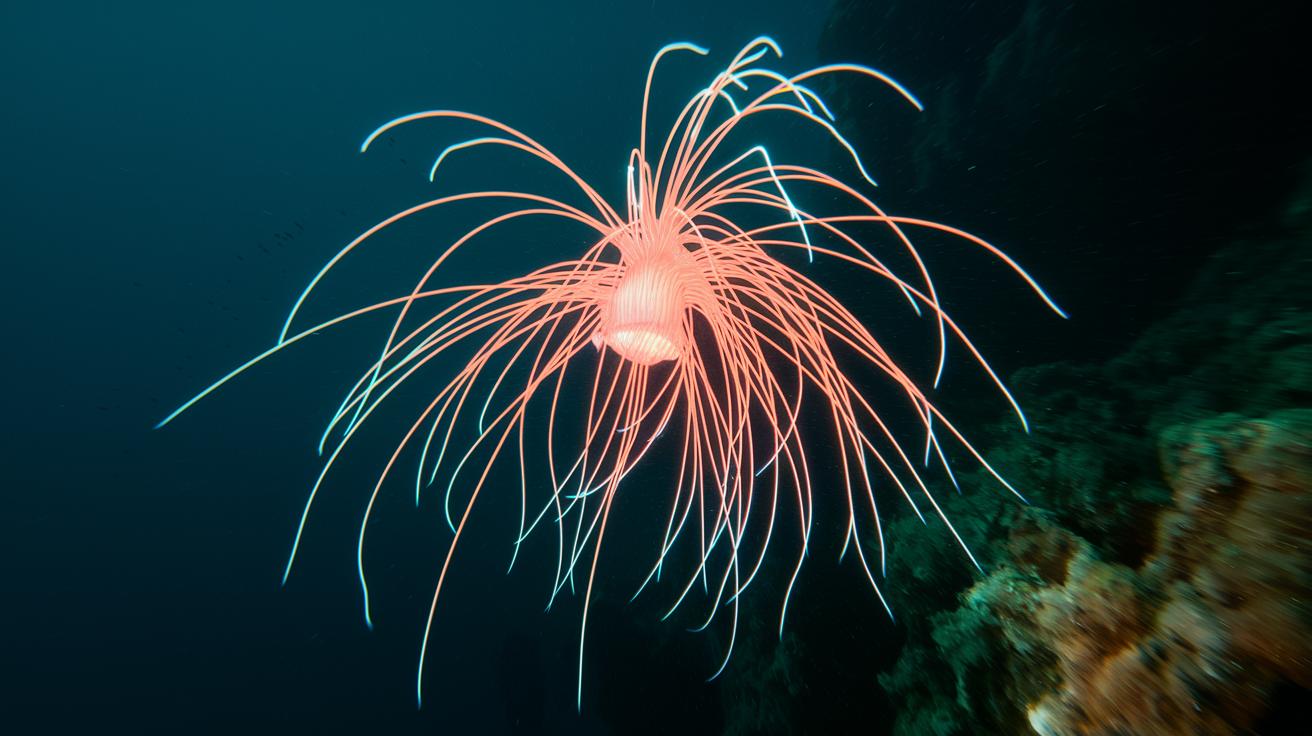
Deep sea siphonophores have some pretty cool tricks up their sleeves to snag a meal in the dark, mysterious ocean. They use special tentacles, called dactylozooids, that stretch out like underwater fishing lines up to 20 meters long. These venomous tentacles flick out swiftly, grabbing little fish and crustaceans like a well-timed net. Once their catch is secured, other parts called gastrozooids release enzymes that break down the prey, sharing all the nutrients with the colony.
Nectophores help guide the whole group to spots where food seems to be more plentiful. Their rhythmic, jet-like pulses work like the gentle current that moves a school of fish into the best feeding spots. Some siphonophore species even put on a light show with bioluminescent flashes, luring curious fish straight into their grasp. It’s fascinating how these techniques can change depending on the size of the colony and the ocean depths they call home.
Researchers believe that these clever tactics work together like a well-organized school of fish. Imagine a sudden flash misleading a small, curious fish, only to have long, stinging tentacles wrap around it with perfect precision. At the same time, coordinated pulses from several gastrozooids speed up the digestion process, ensuring every bit of the meal is enjoyed by the entire colony.
| Key Prey-Capture Tactics | Description |
|---|---|
| Drifting, extendable, venomous tentacles | Reach lengths of 10–20 m to trap prey |
| Rapid venom discharge | Quickly stuns small fish and crustaceans |
| Bioluminescent lure | Attracts unsuspecting fish with flashes of light |
| Nectophore-guided positioning | Maneuvers the colony to food-rich layers |
| Coordinated gastrozooid pulses | Ensures fast and efficient digestion and sharing of nutrients |
life cycle and reproductive biology of deep sea siphonophores

Deep sea siphonophores begin life as a tiny fertilized egg that quickly becomes a protozooid. This small start kicks off a neat process where the protozooid buds new zooids in a specific order. Each step, from budding to the zooids taking on their roles and the colony growing, shows nature’s careful planning in creating a life form that thrives way down deep.
Budding and zooid differentiation
New zooids appear one after the other from the protozooid, almost like pieces coming off a well-organized assembly line in an underwater workshop. Each one takes on a special task, some help the group move, while others grab food or share nutrients. It’s a smooth, natural flow, with every little part knowing exactly what to do.
Gonozooid gametogenesis and spawning
Inside the colony, specific zooids, known as gonozooids, form to make gametes, which are essential for creating new life. When the deep-sea environment sends the right signals, these gonozooids release their gametes all at once. This synchronized event boosts the chances that the new larvae will settle in a safe spot, keeping nature’s balance intact down below.
Growth timeline and colony longevity
The life of a siphonophore colony can last from a few months to several years, depending on the species and the ocean’s mood. Things like how much food is around and the steadiness of the water affect how quickly the colony grows. This gradual change lets each specialized zooid do its part, ensuring the colony stays strong and well-coordinated in its deep-sea home.
adaptive traits and bioluminescence in deep sea siphonophores
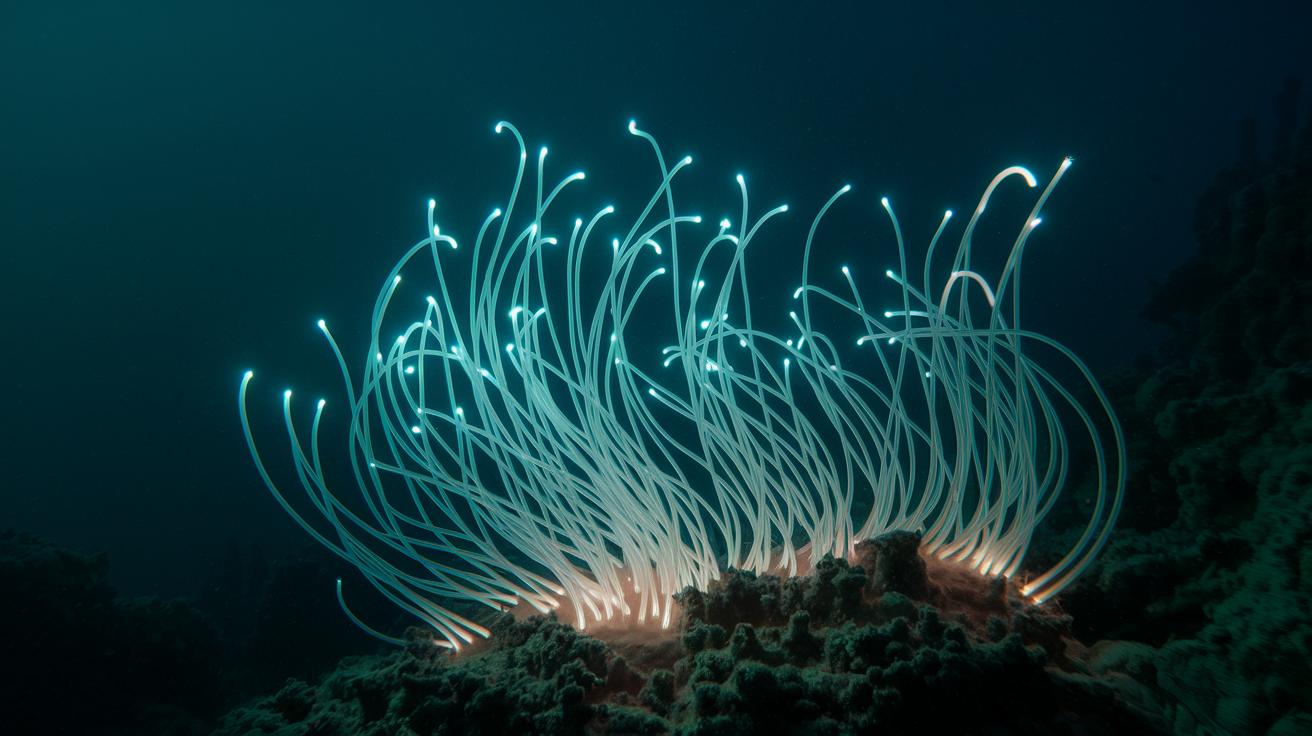
Deep sea siphonophores are truly amazing creatures that live in the dark, mysterious parts of our oceans. They combine a soft glow with strong chemicals to help them survive underwater. Each portion of their colony, called a zooid, has its own special role. Some zooids shine with a steady light while others blink like little signals. Their flexible, ribbon-like bodies also let them ride the fast currents and handle the heavy pressure with ease.
Bioluminescent mechanisms and functions
They make light through a simple chemical reaction in special proteins. Think of it like watching tiny sparks dance with the blue-green water around them. This glow not only attracts unsuspecting prey but also helps the colony communicate with each other during feeding. Sometimes, the light even blends with the faint glow coming from above, making it harder for predators to spot them. Ever notice how a gentle blink of light can feel like a secret underwater chat?
Venom composition and defensive use
Some parts of the colony, known as dactylozooids, are armed with tiny, venom-filled stingers that pack a potent punch. These stingers work quickly to stun prey and keep larger predators at bay. It’s a brilliant mix of lure and protection that keeps these siphonophores safe in the deep sea. This clever system shows just how perfectly nature balances attraction with defense in the undersea world.
deep sea siphonophore: Ocean Marvel in Motion

Deep sea siphonophores are nature’s own moving masterpieces. These chains of tiny, specialized zooids work together to feed, reproduce, and glide through the water. Imagine encountering a living chain over 130 ft long, stretching like a vibrant ribbon across the deep ocean, it’s almost as if nature decided to paint with living brushstrokes.
New imaging tools like ROV videos and sonar mapping have given us a closer look at these creatures. Even though they seem soft and delicate, these gelatinous wonders can tip the scales at hundreds of kilograms. It reminds me of how sometimes the most unassuming things end up being the strongest.
In fact, siphonophore chains are among the longest animal structures known. With the help of underwater videography and sonar, scientists are not only capturing their beauty but also learning more about their mass and design. Every new discovery reshapes our view of these mesmerizing deep sea marvels.
scientific research and exploration of deep sea siphonophores

Recent ocean surveys have gently swept away old ideas about siphonophore biology, letting us see these creatures in a whole new light. ROV missions on ships like R/V Investigator and R/V Atlantis between 2018 and 2023 have been key in uncovering species we never knew existed. Their high-resolution cameras capture every delicate detail as the colonies drift and feed beneath the dark waves. One study even described how the colonies folded and unfolded like living ribbons, hinting at their hidden complexity.
In truth, scientists now mix water DNA testing, known as environmental DNA or eDNA, with what they can visually observe to map where these creatures live. They collect small water samples and check for genetic clues, confirming a species’ presence without needing direct video sightings. This clever approach fills in the gaps left by old survey methods and shows a broader world of siphonophore diversity than we ever imagined.
High-definition video footage, especially from NOAA’s Ocean Explorer, lets us watch these creatures in their daily dance, vertically migrating through the water, feeding, and twisting into intricate shapes. Seeing these moments live helps us understand how these jelly-like colonies adapt to everything from food-rich layers to areas with more predators.
Recent genetic studies in Marine Biology Reports dive even deeper into siphonophore relationships and evolution. Researchers compare DNA sequences and uncover surprising links that shine a light on the challenges of life in the deep sea. By blending ROV observations, eDNA sampling, and genetic research, scientists now have a vibrant, full picture of siphonophore life, a real leap forward in our deep-ocean exploration and understanding.
conservation concerns and future research directions for deep sea siphonophores

Deep sea siphonophores have a rough life. Human actions and natural changes can really shake up their watery world. For instance, deep-sea trawling disturbs their delicate home, and as oxygen levels drop, these creatures feel even more stressed. Even tiny bits of plastic floating in the water can mess up their eating habits and water quality.
One big problem is that we don’t have enough long-term data on these fascinating animals. It’s like trying to navigate a deep ocean without a clear map. Without long studies, we can’t tell how these organisms will cope when conditions shift. To help protect them, scientists are suggesting ideas like making safe zones deep in the water, checking water samples with eDNA tests for a better count, and limiting rough activities on the seafloor.
In the future, researchers need to take a deep dive into how climate change and other factors affect these colonies over time. Studying how siphonophores bounce back from stress will guide us in setting up smart plans to safeguard their watery world.
- Deep-sea trawling shakes up their home
- Expanding low-oxygen zones push them into tougher conditions
- Microplastic pollution interferes with their feeding routines
Ongoing, careful studies and thoughtful management are key to keeping these beautiful, gelatinous colonies safe for years to come.
Final Words
In the action of exploring this intriguing subject, we've seen how the deep sea siphonophore fascinates with specialized zooids, coordinated feeding tactics, and innovative research techniques. Its unique structure and offshore habitat remind us that even the smallest parts of nature work together like a well-tuned team. The piece takes a close look at colony organization, bioluminescent signals, and conservation matters. What a thrilling glimpse into the underwater marvel that inspires us to appreciate every ripple in the aquatic world.
FAQ
Q: What is a deep sea siphonophore?
A: The deep sea siphonophore is a colonial marine animal composed of many specialized zooids that work together as one organism. It lives in dark ocean depths and plays a unique role within its ecosystem.
Q: How large are deep sea siphonophores and what is the longest length recorded?
A: The deep sea siphonophore can stretch over 130 ft, making it one of the longest animal chains in the ocean. Its impressive length often exceeds that of even the largest marine creatures.
Q: Are deep sea siphonophores dangerous or harmful?
A: The deep sea siphonophore is generally not dangerous to humans. While some zooids carry venom to capture prey, interactions with people rarely cause harm due to the animal’s specialized and targeted venom.
Q: Can a giant siphonophore kill you?
A: The giant siphonophore does not have the capacity to kill humans. Its venom is designed to stun small marine prey, and there are no documented cases of it causing fatal injuries in people.
Q: What does the term “siphonophore sea creature” refer to?
A: The term siphonophore sea creature refers to this group of colonial animals that, despite being made up of many tiny coordinated parts, function as a single, large organism in the deep ocean.
Q: What does a spiral siphonophore look like or mean?
A: A spiral siphonophore is described as having its body or zooid arrangement twist in a spiral shape. This unique pattern can enhance movement and may offer advantages in its deep-sea habitat.
Q: What is a woolly siphonophore?
A: The woolly siphonophore is a type of siphonophore noted for its fuzzy or indistinct outline, which gives it a soft, wool-like appearance. This characteristic adds to its distinct visual identity in the water.
Q: What is the siphonophore wall of death?
A: The siphonophore wall of death describes a dramatic, rapid contraction of parts of the colony that helps secure prey. It is a natural mechanism, not a literal death trap, used in capturing prey efficiently.
Q: Do siphonophores still exist today?
A: Siphonophores still exist in modern oceans. They continue to thrive in deep, dark waters where they contribute to nutrient cycling and the ecosystem by performing complex colonial behaviors.
Q: What does it mean when people talk about a giant siphonophore “exploding”?
A: When people mention a giant siphonophore “exploding,” they usually refer to a rapid release of internal pressure or a sudden movement. This is a natural response rather than a true explosion.